










Section 907: Removing restrictions on Azerbaijan–US cooperation Expert opinions on Caliber.Az
The repeal of Section 907 of the Freedom Support Act is once again on the agenda in the United States. Several congressmen have joined this important initiative. Several Republican lawmakers, including Celeste Maloy, Pete Sessions, Abraham Hamadeh, Burgess Owens, Randy Fine, and Derrick Van Orden, have become co-sponsors of the bill “To repeal a restriction on assistance to Azerbaijan” (repeal of Section 907), introduced by Congresswoman Anna Paulina Luna.
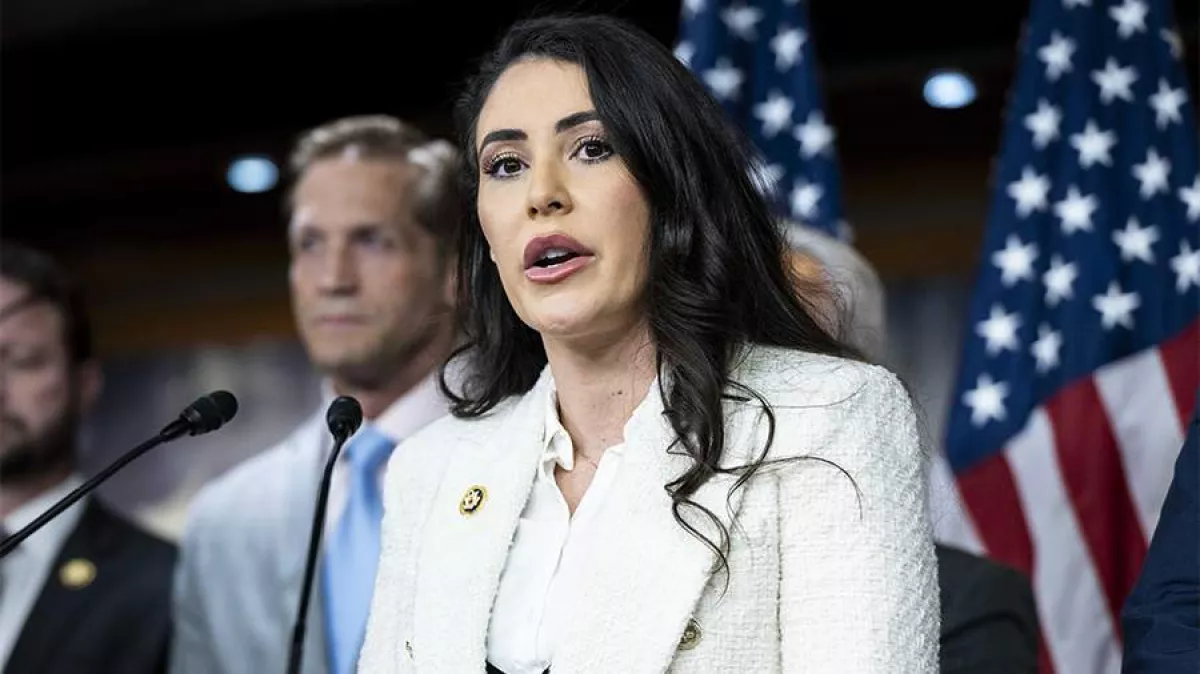
Randy Fine is a member of the US House Committee on Foreign Affairs, which reviews such foreign aid legislation, including the initiative to repeal Section 907, and decides whether it will be brought before the full House for consideration.
Baku has long been calling for the repeal of this provision; however, so far, it has only been possible to regularly suspend its application.
How likely is it that this new momentum will lead to a revision of Congress’s long-standing approach toward Baku and secure broad approval of the proposed changes? What practical benefits would Washington gain from lifting the restrictions under Section 907 as part of its regional strategy in the South Caucasus?
Well-known observers shared their assessments on this issue with Caliber.Az.
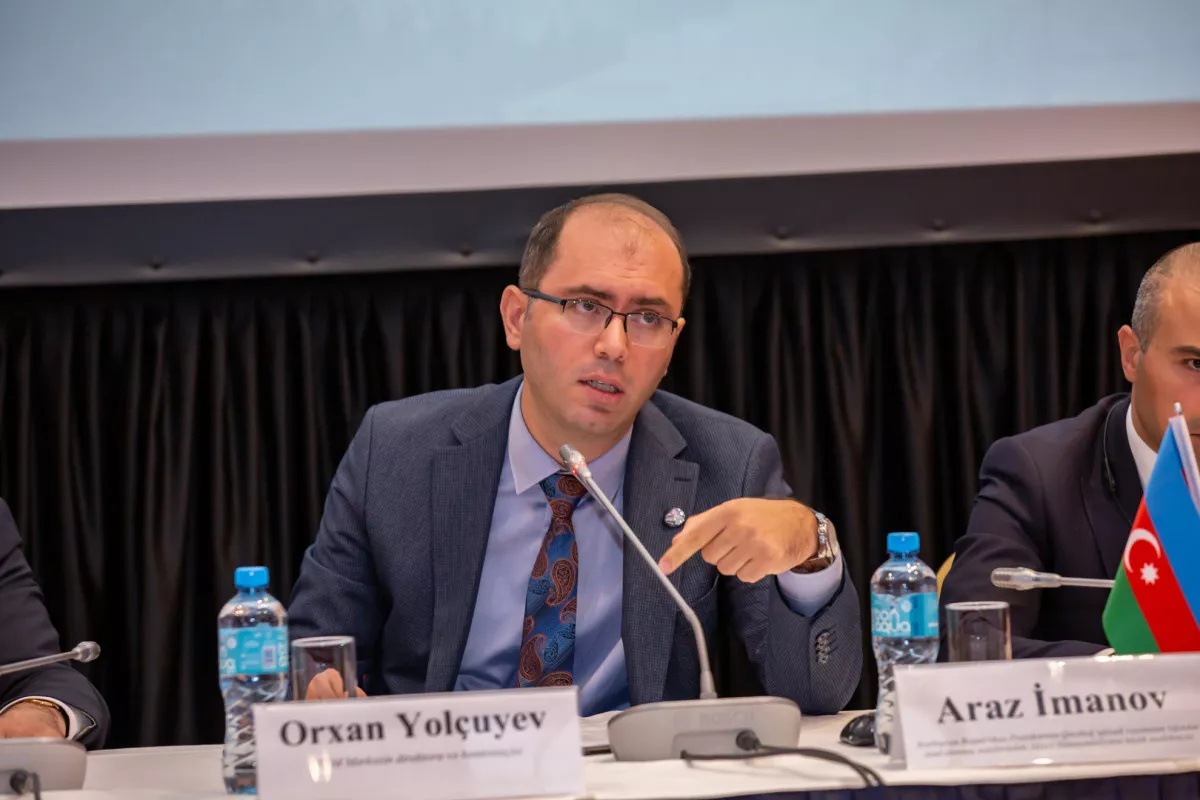
According to Orkhan Yolchuyev, Director of CASPIA (Center for Analysis of Strategic Policy and International Affairs), the very fact that the issue has once again appeared on the US Congress agenda, with an increasing number of supporters ready to vote for the repeal of the amendment and viewing it as a historical misunderstanding, is a positive signal.
“Today in the United States, there are more and more politicians who perceive this as a remnant of a bygone era. America is trying to shape a new world order, as we are witnessing the decline of the international system established after the Second World War.
Section 907 represents a serious historical injustice toward Azerbaijan. It should never have been adopted. It is clear that the amendment emerged after the collapse of the Soviet Union, when the US was shaping its policy toward newly independent states. For many, their emergence came as a surprise; there were numerous disagreements and a lack of understanding of local political processes, history, and the mentality of the peoples of the region. The political establishment did not know our region, and this gap was filled by the Armenian lobby in the 1990s. It is paradoxical that the bill was adopted on February 24, 1992 — just two days before the Khojaly genocide against the Azerbaijani people. Since 2001, US presidents have been suspending the application of the amendment through special executive orders.
A full repeal long seemed impossible. And even now the situation does not look simple, although repeal would serve the interests of the United States itself. Today, the Karabakh issue has been resolved; moreover, a normalisation process is underway in which the United States acted as a mediator (on August 8 last year). In these circumstances, the existence of this act is a relic of the Cold War,” the analyst stressed.
In his view, maintaining the amendment harms the United States itself, which is seeking to shape a new policy toward the South Caucasus, the Middle East, and West Asia as a whole.
“Azerbaijan plays a decisive role here as one of the key elements. The visit of US Vice President Vance to Azerbaijan and the signing of the Strategic Partnership Charter should be viewed precisely in the context of forming this new policy. During the signing of the Charter, one of the issues discussed was the repeal of Section 907. The bill to repeal it was introduced to the House Foreign Affairs Committee by Republican Congresswoman Anna Paulina Luna. The committee currently has a Republican majority (28 members versus 23 Democrats). We are seeing an increase in the number of Republicans supporting Azerbaijan and the repeal of the amendment. However, there are also anti-Azerbaijan Democrats in the committee, such as Brad Sherman, Dina Titus, and Jim Costa. They are the authors of anti-Azerbaijan initiatives and will do everything to block this bill. The decision-making process is complex due to competing interest groups.
At one time, Section 907 was adopted by a small group of people, but its repeal requires a complex procedure and a two-thirds majority in each chamber. We are approaching a decisive moment — the midterm elections on November 26. Ideally, the situation should be changed before these elections. The ball is in the Americans’ court, and full repeal of the amendment serves their interests given the complex geopolitical situation in the Middle East.
The United States has serious plans to build a new security architecture and logistics chains, where Azerbaijan is a key country. Such restrictions hinder full cooperation. Policy should be an example of fairness and pragmatism, which would strengthen US influence in our region — the South Caucasus, Central Asia, and the Middle East,” Yolchuyev believes.

American geopolitical and security expert, Editor-in-Chief of The Washington Outsider, Irina Tsukerman, noted that the repeal of Section 907 has today ceased to be a marginal issue and, for the first time in a long period, is becoming a full-fledged element of domestic and foreign policy competition in Washington.
“The very fact that new congressmen are joining Anna Paulina Luna’s initiative—moreover, not random figures but representatives of the Republican bloc with access to relevant committees—indicates a shift in the perception of Azerbaijan within part of the American establishment. This is no longer about formal support as a signal. What is emerging is the foundation of a coalition that views Section 907 itself as an anachronism that hinders the implementation of current US strategic interests.
It is important to understand that what has changed is not so much the content of the amendment itself, but the context around it. Today, the South Caucasus is becoming increasingly integrated into a broader geostrategic picture, where issues of deterring Russia, controlling transport corridors, Europe’s energy architecture, and the balance of power around Iran are intertwined. In this new coordinate system, Azerbaijan is increasingly seen not as an object of regulation, but as an active player with its own agency and influence resources. This is precisely what is pushing some congressmen to conclude that maintaining Section 907 appears increasingly irrational.
At the same time, one should not overestimate the current dynamics. The growing number of co-sponsors does not, in itself, mean that the bill is on a direct path to adoption. The US Congress is structured in such a way that even initiatives with noticeable support can remain in committees for years, especially when they touch upon sensitive foreign policy issues. The South Caucasus is precisely such an area, where decisions are rarely made quickly and are almost always subject to intense pressure from competing lobbying groups and ideological currents within the parties themselves,” the geopolitical analyst stated.
Nevertheless, according to her, unlike previous periods, the current initiative is based on a much clearer strategic rationale.
“For Republicans behind this bill, Azerbaijan is primarily of interest as an element of a broader construct aimed at redistributing influence in Eurasia. It is a country that simultaneously engages with Türkiye, Israel, Central Asian states, and a number of Arab actors, while not being dependent on either Moscow or Tehran.
Of particular importance is the presence among the co-sponsors of figures linked to the House Foreign Affairs Committee. In the US legislative system, such internal ‘gatekeepers’ often determine whether a bill has a chance of reaching the floor or remains in the archive.
The main obstacle to the full repeal of Section 907 lies not in procedural, but in political considerations. For a significant part of Congress, it has long become a symbolic instrument. Its repeal is not perceived as a technical legislative update, but as a political decision that would be interpreted through the prism of Armenian–Azerbaijani relations and the broader debate on human rights and regional security. That is why resistance will remain persistent and multi-layered. It will come both from organised lobbying structures and from congressmen who see the preservation of the amendment as the last remaining lever of pressure on Baku.
From a practical point of view, the current initiative is already performing an important function—even without a guarantee of adoption. It is changing the language of the debate. Azerbaijan is increasingly being discussed in Congress as a potential partner with whom the United States could benefit from building more pragmatic relations.
Looking at the issue more broadly, the full repeal of Section 907 would bring several tangible advantages for the United States. First and foremost, it would eliminate legal uncertainty. At present, Washington is forced to rely on an annual suspension mechanism, which creates a sense of temporariness and political conditionality in cooperation. A full repeal would allow for a more stable and predictable framework of engagement, particularly in the areas of security and defence. In addition, it would strengthen US positions in the competition for influence in the South Caucasus,” Tsukerman concluded.







 editor@caliber.az
 +994 55 444-88-98
 Азербайджан, Баку, ул. Низами, 203, Af Business House, 5-й этаж