










Israel, Iran and Lebanon: Why peace remains unattainable Expert opinions on Caliber.Az
The foreign ministers of Canada, Australia, Denmark, Estonia, Finland, France, Iceland, Latvia, Lithuania, Norway, and Sweden, as well as the European Union High Representative for Foreign Affairs and Security Policy Kaja Kallas, issued a joint statement expressing deep concern over the escalation of hostilities in Lebanon and supporting efforts to establish a ceasefire.
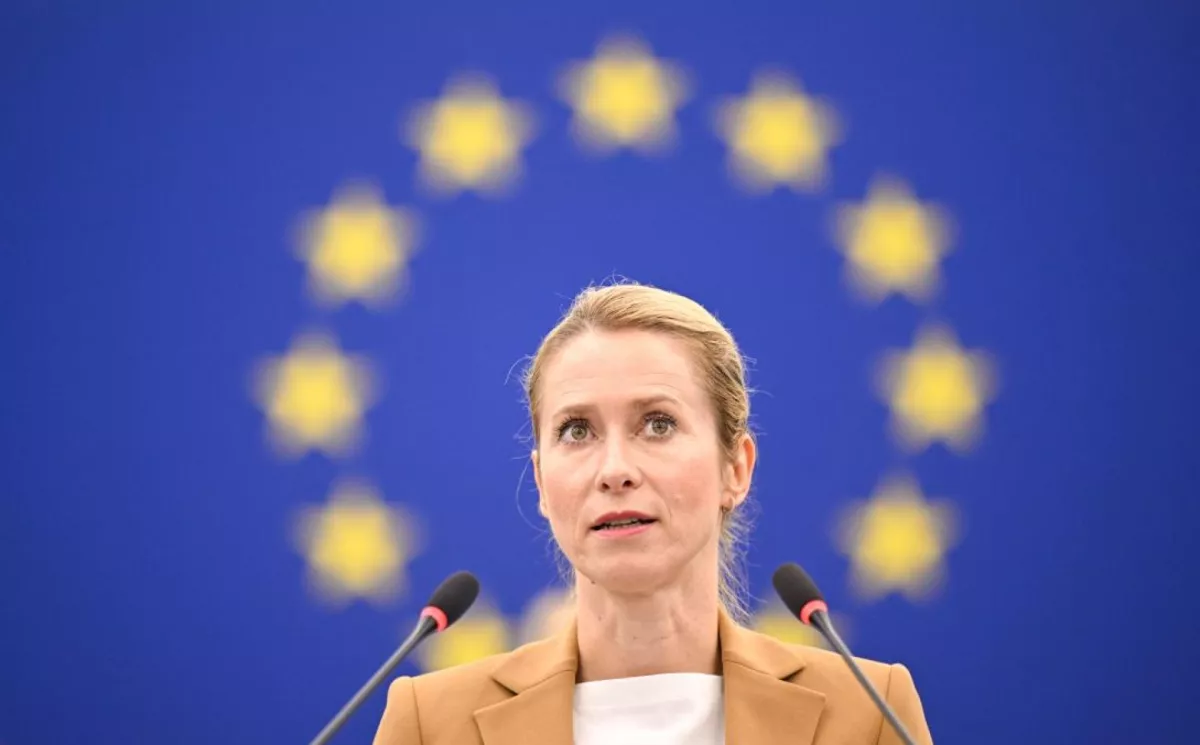
The authors of the statement called on all parties to the conflict to exercise maximum restraint, strictly adhere to the ceasefire regime, and ensure the protection of the civilian population.
The statement emphasises support for the Lebanese government in extending state authority across the entire territory of the country in accordance with UN Security Council Resolution 1701, which implies strengthening Lebanese security institutions and the complete disarmament of the Hezbollah group.
The diplomats demanded that Hezbollah stop attacks on Israel, and that the Israeli side respect Lebanon’s sovereignty and territorial integrity and halt military escalation.
In conclusion, the ministers called on the parties to facilitate diplomatic efforts under the auspices of the United States and international partners to achieve long-term stability.
The document notes that the peoples of Lebanon and Israel have an inalienable right to live in peace, security, and dignity, without facing the constant threat of renewed war.
Is long-term peace possible between Israel and Hezbollah? What are the prospects of the conflict? Could the group seize power in Lebanon, and can Israel ultimately destroy its military capabilities?
Caliber.Az has gathered assessments of well-known experts on the region regarding the situation.

Deputy Director of the Kyiv-based Association of Middle East Studies, Serhii Danylov, notes that Israel will not be able to eliminate Hezbollah by military means alone, whether through air power or a limited ground operation.
“Israel has absolute military superiority. The IDF is capable of decapitating the leadership, destroying up to 70–80% of its missile capabilities, and dismantling its logistics.
However, the complete and final destruction of Hezbollah would require a total, years-long occupation of all Lebanon, including Beirut and the Beqaa Valley, involving extremely intense urban warfare and the clearance of thousands of kilometres of underground tunnels,” the researcher stated.
According to him, Israel does not have the additional manpower for such an operation, nor the backing of its key ally, the United States, nor domestic willingness to sustain heavy casualties in a prolonged guerrilla war on foreign territory.
“At most, what Israel can realistically achieve is pushing Hezbollah forces north of the Litani River, significantly reducing their offensive capabilities, and compelling Beirut and the international community to assume real control over southern Lebanon.
Despite the ceasefire conditions agreed in June and attempts to create ‘pilot zones’ under the control of the official Lebanese army, Hezbollah has already stated that it will not accept any conditions without the full withdrawal of Israeli forces. On the other hand, Israel insists on establishing a demilitarised zone and reserves the right to strike militant infrastructure in case of a threat. Thus, the situation has reached a deadlock, and no way out is currently in sight,” Danylov believes.

Israeli political scientist, Professor at Bar-Ilan University, Zeev Khanin, also believes that full peace between Israel and Hezbollah is practically impossible under current conditions, and that the main task now is to find ways to stop their aggression.
“Hezbollah has long ceased to be just a militant group. It has evolved into a powerful ‘terrorist army’ that effectively dictates security conditions in Lebanon.
Its path to dominance began back in 1989 after the Taif Agreement: at that time, all participants in the civil war agreed to lay down their arms, except Hezbollah. Since then, it has grown from a unit of the Iranian Islamic Revolutionary Guard Corps into a ‘state within a state’, with its own banks, businesses, social services, and educational infrastructure.
A complex diplomatic game is now underway. The United States, Israel, and the Lebanese government have made progress in negotiations, but Hezbollah deliberately remains outside these agreements. At the same time, the administration of Donald Trump is exerting significant pressure on Israel, limiting its military actions so as not to derail a potential agreement with Iran, which Washington considers more important than the local conflict in Lebanon.
In my view, the root of the problem lies in Tehran. The de facto leaders of Hezbollah are Iranians, and as long as a radical military-religious elite rules Iran, any real agreement with Israel is impossible. In such a situation, only deterrence can be relied upon.
The Lebanese government is too weak to disarm Hezbollah independently and is not ready to grant Israeli forces legal status to operate on its territory. Therefore, Israel limits itself to operations along the so-called ‘yellow line’ between the international border and the Litani River, carrying out targeted strikes against the group’s infrastructure.
At the same time, not all segments of the Lebanese establishment are interested in disarming Hezbollah. International UNIFIL forces are also unable to accomplish this task. Moreover, until 2023, it appeared that they were engaged more in restraining Israel than in preventing Hezbollah’s activities.
Even the deployment of US or French ground forces in Lebanon is unlikely to change the situation. In reality, only Israel is capable of solving the disarmament problem. However, the authorities in Beirut are not prepared to grant the IDF official status as a ‘guest force’, understanding that such an initiative would not receive domestic support.
Therefore, under current conditions, Hezbollah can at best be contained but not disarmed, and it will continue to carry out attacks on Israeli territory,” the professor said.
According to him, Hezbollah will not stop its confrontation as long as it enjoys support from Iran. That is why Donald Trump opposes a full-scale war in Lebanon, fearing it could derail possible agreements with Tehran.
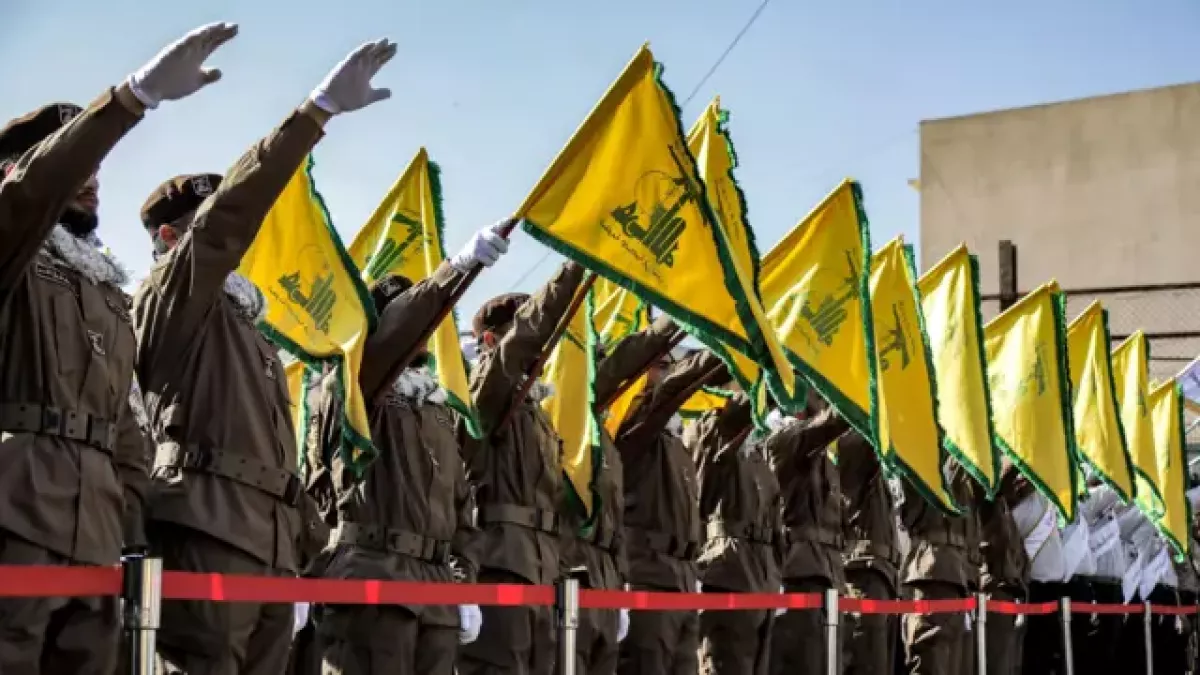
“Regarding Hezbollah’s armament, it is known that various workshops, facilities, and similar infrastructure continue to operate. Despite Iran’s severe economic difficulties, the country’s leadership, as far as available data suggests, continues to provide financial and technological support.
At present, arms deliveries via Syria have become significantly more complicated. Nevertheless, despite restrictions on external supply routes, Hezbollah is still capable of producing part of its weapons domestically.
From time to time, Israeli aviation eliminates certain depots or facilities, but overall it can be said that as long as Hezbollah continues to receive support from Iran, it retains its positions.
And there remains the question of the forceful elimination of this group — its complete destruction, including all its strongholds in Dahieh, in Beirut, in the eastern regions of Lebanon where a significant part of the Shiite population lives, as well as in other cities south of Beirut.
I believe Hezbollah’s leadership is highly interested in staging a coup d’état, in many ways similar to the one Hamas carried out in the Gaza Strip in 2007.
In my view, their ideal is the rise of a radical military-religious leadership modelled on Iran, and this is precisely what they aspire to in the context of Lebanon. However, I also observe that a significant part of the ‘sharp teeth’ this group once had has already been lost.
The implementation of such plans is only possible if all foreign forces leave Lebanon and the United States and European countries completely lose interest in it. Another important factor is the position of Saudi Arabia and other wealthy Arab Gulf monarchies: they are willing to invest in the Lebanese economy only if Hezbollah is disarmed.
Although the military and political wings of the organisation still harbour hopes of seizing official or de facto power in the country, such a scenario appears unlikely in the near term.
According to most Israelis, the IDF has the potential to destroy Hezbollah, and there are grounds for such confidence: the Israeli army has achieved significant success in its confrontations with Hamas, Iran, and Hezbollah itself.
Today, there is no army in the Middle East capable of confronting the IDF on equal terms. However, the key question is whether politicians will be able to turn Israel’s military successes into real political and diplomatic outcomes,” Khanin concluded.







 editor@caliber.az
 +994 55 444-88-98
 Азербайджан, Баку, ул. Низами, 203, Af Business House, 5-й этаж