










Hormuz crisis and prospects of Trans-Caspian oil transit Analysis by Khazar Akhundov
The ongoing conflict in the Persian Gulf and the continued blockade of the Strait of Hormuz have triggered a global energy crisis. Efforts to overcome it have become a top priority for governments worldwide, including in the Caspian region. This is only natural, as Azerbaijan and its Central Asian partners are now providing a crucial alternative to Middle Eastern energy supplies.
Enhancing the capacity of Caspian ports and railway networks to handle and transship rapidly growing volumes of oil and petroleum products, along with the development of new trade strategies, were key topics of discussion in Baku, which hosted the 2nd Caspian and Central Asian Oil Trading and Logistics Forum on April 23–24.
The two-day forum in Baku brought together representatives of leading regional companies such as the State Oil Company of Azerbaijan (SOCAR), Petronas, KMG Kashagan, Pakistan Railways, and Black Sea Terminal, along with other specialised organisations. During the sessions, participants discussed ways to enhance the transshipment capacity of Caspian ports and railway networks to accommodate rapidly growing volumes of crude oil and petroleum products. The discussions also focused on prospects for optimising regional operations, aligning them with international quality standards and environmental requirements to ensure long-term competitiveness.
The relevance of the issues raised in Baku is particularly high, given that an effective partnership between Azerbaijan and the countries of Central Asia, Georgia, and Türkiye has for many years been a key element of Europe’s energy security. Together, these countries ensure reliable and uninterrupted international energy transit. Critical routes run through their territories, with crude oil, petrochemical products, fuel, and natural gas transported via pipelines and railways to the European Union—an arrangement that is vital under the current crisis conditions.
“The world has been going through a difficult phase over the past six years, which can be described as a ‘supercycle’: the COVID-19 pandemic, the Russia–Ukraine conflict, and now the crisis in the Strait of Hormuz, considered a key chokepoint for global commodity supplies,” said Taghi Taghizade, Chief Commercial Officer of SOCAR Trading (the trading arm of SOCAR), speaking at the forum in Baku. “The closure of the Strait of Hormuz had long been studied in textbooks and research as the most extreme scenario—and for the second month now, this scenario has become a reality.”
According to him, due to the blockade of the Strait of Hormuz, the world has already lost around 700–800 million barrels of oil, and there is currently a shortfall in Middle Eastern oil supplies of 13–15 million barrels per day.

Taghizade noted that despite the global push toward a “green” future, the world economy still heavily depends on traditional energy sources and refined petroleum products, as well as on high-tech industries that consume large amounts of electricity. For this reason, the current situation is causing significant volatility across all markets and the global economy as a whole.
At the same time, the Middle East crisis is creating conditions for other players in the global energy market—including those in the Caspian region—to increase supplies and launch new initiatives. However, this will require coordinated efforts to strengthen regional transport connectivity, diversify energy routes, expand the share of oil and gas processing, and boost exports of higher value-added products.
In particular, according to Shehryar Omar, CEO of the Pakistan Oil Institute, traditional Western markets, including Europe, are likely to lose significance in the long term due to demographic changes and the gradual shift away from fossil fuels. Accordingly, over the next decade, the energy potential of Central Asia and Azerbaijan will increasingly be in demand in the southern direction, where a rapidly growing market of around two billion people is accompanied by steady economic growth. This makes it essential to start investing now in the necessary energy transport infrastructure.
Emphasising Pakistan’s role as a potential transport and energy corridor to the Arabian Sea, Omar also highlighted the country’s successful cooperation with SOCAR in the supply of liquefied natural gas, among other areas.
In the foreseeable future, the southern energy vector indeed has significant potential; however, for now, the countries of Central Asia and Azerbaijan remain actively engaged in hydrocarbon transshipment projects targeting the sizeable European Union market. Considerable efforts are still required to expand these supplies.
In particular, the ongoing fifth year of the Russia–Ukraine war has had a highly negative impact on transport and energy routes passing through Russia that connect Central Asian countries with Europe. Kazakhstan, for instance, has for several years been facing repeated disruptions in the stable operation of the Caspian Pipeline Consortium (CPC) pipeline and the Novorossiysk terminal.
According to Asylbek Jakiyev, Chairman of Kazakhstan’s Oil and Gas Council Petro Council, the northern route may remain constrained for the next 5–10 years. This, in turn, increases the importance of alternative corridors, with China emerging as a key priority direction, alongside transit routes through Azerbaijan.
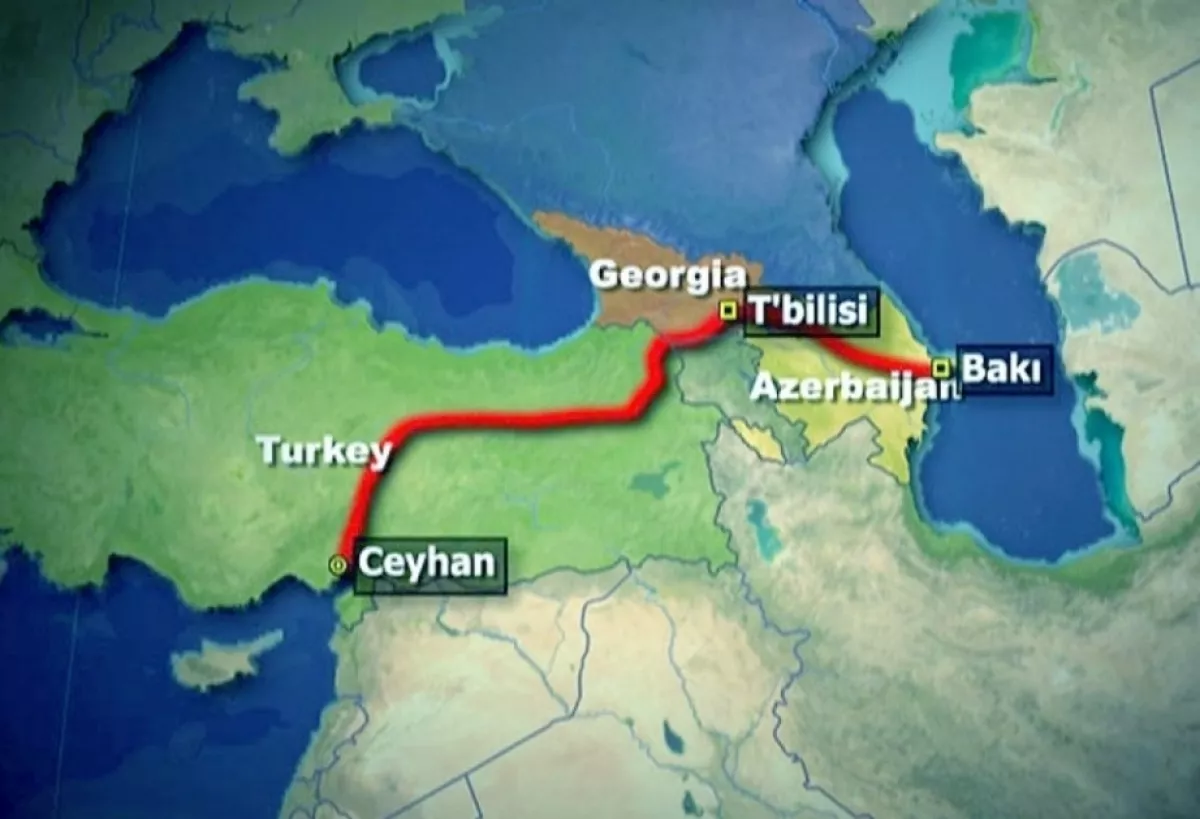
Against this backdrop, under an agreement between KazMunayGas and SOCAR, Kazakh oil has been transported via the Baku–Tbilisi–Ceyhan (BTC) pipeline system since 2023, with supplies reaching 1.5 million tonnes last year. By 2027, it is planned to significantly increase these volumes.
“The BTC pipeline remains the most secure and valuable export route for the region: factors such as oil quality, transportation timelines, transport costs, pricing, and insurance expenses make this pipeline a safer and more valuable export route,” said Taghizade.
For its part, Kazakhstan views the Middle Corridor as an important alternative for oil exports; however, its development is constrained by infrastructure limitations and higher transportation costs, said Kuanysh Keskinbayev, Deputy General Director for Commercial Affairs at KMG Kashagan, speaking at the 2nd Caspian Forum.
“About 80% of Kazakh oil is still transported via the CPC. At the same time, the Trans-Caspian route is gaining particular importance, as from a regulatory compliance perspective it remains one of the few routes operating without serious disruptions,” the representative of KMG Kashagan emphasised.
As noted by Keskinbayev, the “Druzhba” oil pipeline is currently facing certain political issues that limit diversification and transit flows. This is likely to contribute to an increase in oil volumes transported via the Middle Corridor.
At present, the throughput capacity of the Middle Corridor is up to 5 million tonnes of oil per year, and any expansion would require investments in the port infrastructure of Aktau, tanker fleet capacity, and related facilities. He also noted that transportation along this route is more expensive; however, part of the costs is offset by the higher price of Azerbaijani oil (BTC blend) compared to the CPC blend.
At the same time, Azerbaijan is also making efforts to modernise its transit capacity. Port facilities in Alat, Dubandi, as well as SOCAR’s oil terminal in Kulevi, are being developed. According to Ismayil Karimov, CEO of Georgia Black Sea Terminal and a forum participant, transshipment volumes at the Kulevi oil terminal have increased due to the transition to 24-hour operations. A project to construct four new storage tanks, each with a capacity of 20,000 cubic metres, has also been launched. The $25 million project is being fully financed through state investment.
However, the countries of the region are not limiting themselves to expanding crude oil exports. Over the next five years, Kazakhstan plans to attract around $15 billion in investments into refining and petrochemicals, including a $7.6 billion polyethylene production project with a planned output of 1.2 million tonnes per year, as well as a $1.1 billion butadiene production project with a planned capacity of 900,000 tonnes.
Similar projects are also expected to be developed in Azerbaijan in the long term. Production capacities for nitrogen fertilisers may be expanded, polymer manufacturing is set to be modernised, and as offshore wind energy in the Caspian Sea develops, facilities for producing “green” hydrogen could also be established, among other initiatives.
In this context, noticeable changes are taking place globally, according to Mevlut Cetinkaya, advisor to SOCAR Türkiye. “The rise in energy prices has significantly worsened the position of European petroleum product manufacturers, making them less competitive compared to the United States, China, and Asian countries,” he said.
The petrochemical sector is undergoing a transition to a new development model, where increasing importance is given to the integration of refining and petrochemical production, the scaling up of facilities, and the implementation of a new “crude-to-chemicals” approach, in which crude oil is processed not into fuel, but directly into petrochemical products.
Given these global shifts, Cetinkaya believes that cooperation between Türkiye and Azerbaijan could turn the two countries into an important petrochemical hub in the long term.







 editor@caliber.az
 +994 55 444-88-98
 Азербайджан, Баку, ул. Низами, 203, Af Business House, 5-й этаж