










Baku and Prague: Cooperation at the strategic level Overview by Khazar Akhundov
In recent years, Azerbaijan has significantly intensified its economic ties with the countries of Eastern Europe, which constitute an important pillar of its long-term oil and gas export strategy. Moreover, the war in the Persian Gulf and the resulting turbulence in global energy markets have further strengthened this mutual interest. One of Azerbaijan’s key partners in this regard is the Czech Republic, with which Baku is steadily expanding cooperation in both the energy sector and non-hydrocarbon areas.
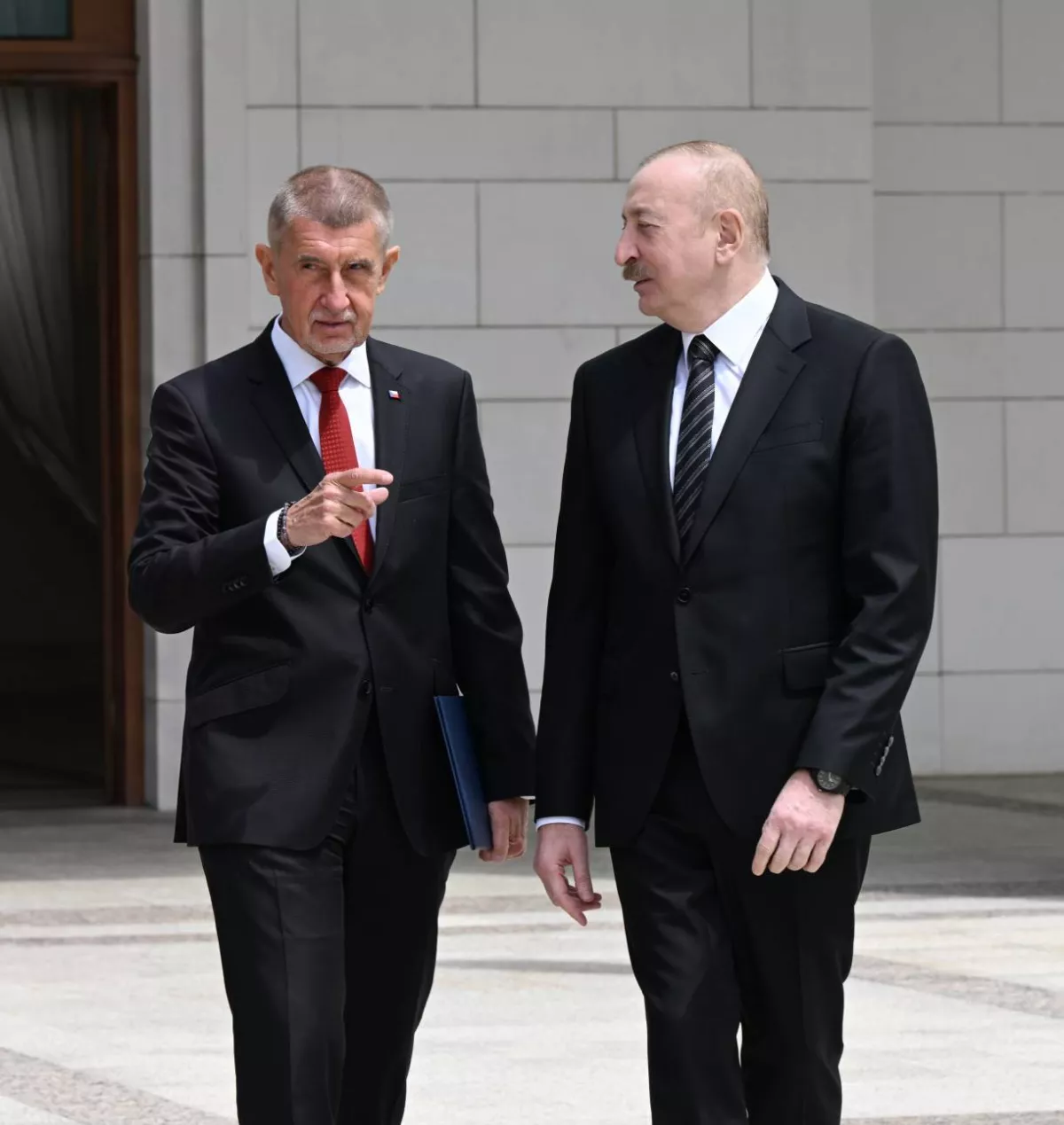
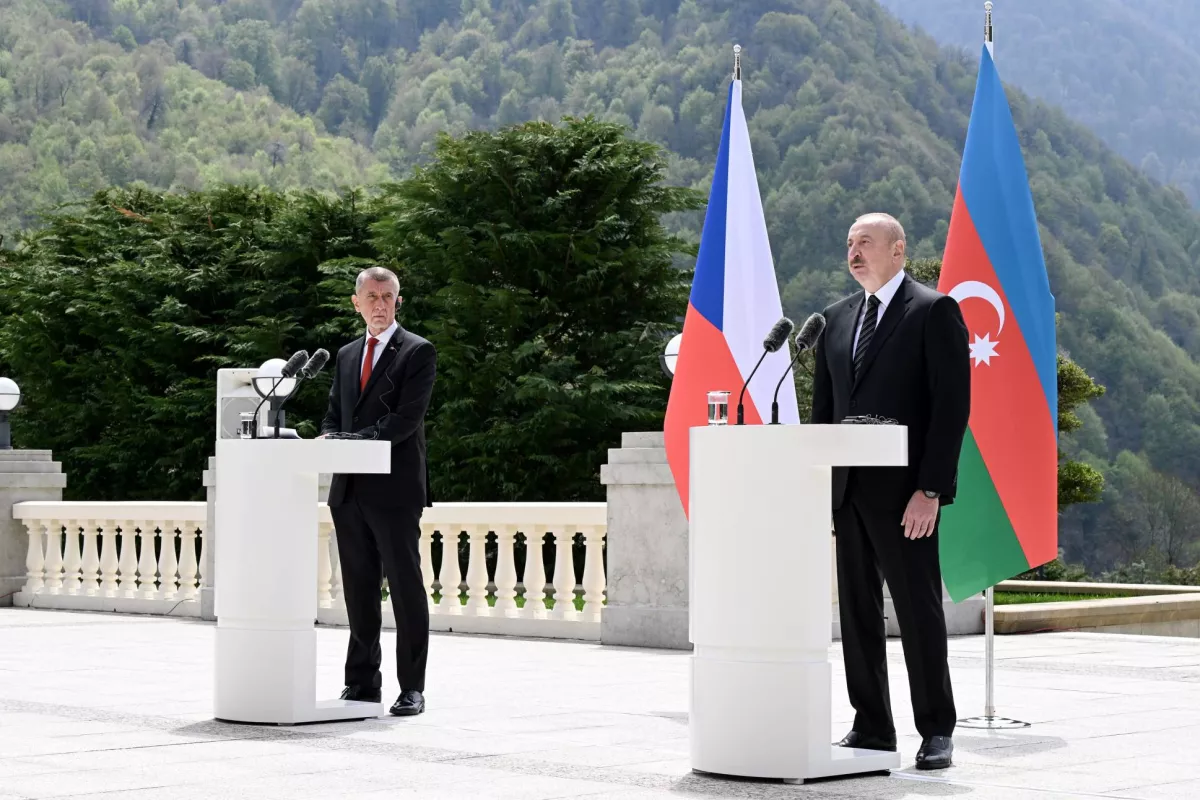
The prospects for expanding mutual cooperation, including natural gas supplies via the Southern Gas Corridor (SGC), were discussed during the official visit of Czech Prime Minister Andrej Babiš to our country, in the course of talks held in the resort city of Gabala with the President of Azerbaijan, Ilham Aliyev.
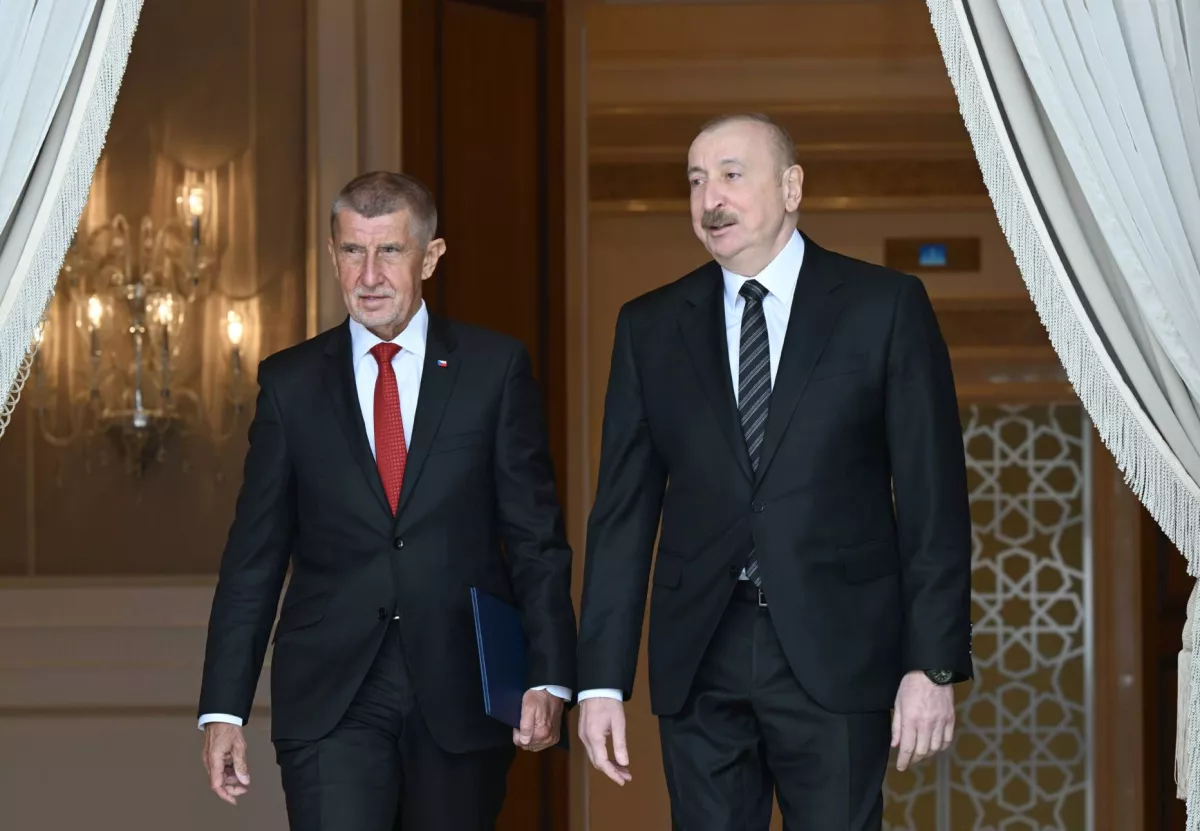
Since diplomatic relations between Azerbaijan and the Czech Republic were established on January 29, 1993, the two countries have been building cooperation on a solid foundation of mutual respect and partnership, including within international organisations. This pragmatic approach, together with a well-developed contractual and legal framework comprising around thirty documents—primarily covering business relations—has had a highly positive impact on the development of trade and economic ties between the two countries.
In 2011, the “Agreement on the Promotion and Mutual Protection of Investments” was signed, and since the same year, the Azerbaijan–Czech Intergovernmental Commission on Economic, Scientific-Technical and Cultural Cooperation has been operating. In 2014, a permanent office of the Czech Republic’s export support agency CzechTrade was opened in Baku. A Joint Declaration on Strategic Partnership signed in 2015 played an important role in strengthening long-term cooperation between the two countries.
A special memorandum on cooperation has been signed between the agricultural ministries of the two countries. At the same time, the Ganja Automobile Plant and the Czech company Tatra are actively cooperating. The Czech Republic is one of the most popular tourist destinations for Azerbaijani citizens, and following the launch of direct passenger air connections between Prague and Baku fifteen years ago, as well as the introduction of electronic visas, inbound tourism to Azerbaijan has also been developing successfully.
Azerbaijan–Czech trade has been developing steadily, and in the past decade, Azerbaijan has accounted for roughly four-fifths of the Czech Republic’s total trade turnover with the countries of the South Caucasus. The structure of Azerbaijani exports is mainly based on supplies of crude oil and petroleum products, while smaller volumes include vegetable oils, cotton, dried fruits, and nuts.
Czech imports are primarily represented by passenger cars, trucks and other vehicles, as well as industrial and electronic equipment, chemical products, glass, food products, and more.
At the same time, the backbone of bilateral trade in recent years has been the supply of Azerbaijani hydrocarbon resources, which significantly exceeds one-third of the Czech Republic’s total oil imports. This trend has grown noticeably over the past two years. In 2024, Azerbaijan exported over 2.6 million tonnes of crude oil to the Czech market, marking an increase of around 30%, making Azerbaijan the second-largest oil supplier to the Czech Republic with a 40% share.
In 2025, this figure increased further. According to the Czech publication České noviny, Azerbaijan exported 2.9 million tonnes of oil, up by 10%, and as a result, the share of Azerbaijani hydrocarbons in the Czech Republic’s total imports exceeded 42%, elevating Azerbaijan to the position of the country’s leading oil supplier.
Nevertheless, despite progress in the volume of oil supplies, the high volatility observed in the oil market last year and the decline in commodity exchange prices had a negative impact on trade turnover indicators. Thus, while in 2024 the total Azerbaijan–Czech trade turnover exceeded $1.153 billion, by the end of last year this figure amounted to $814.730 million, reflecting a decline of 29%.
Today, it is difficult to make reliable assumptions about average annual oil price levels. However, judging by the ongoing crisis in the Persian Gulf and the need to restore damaged port terminals and other oil infrastructure in the Strait of Hormuz, prices are likely to remain noticeably higher than last year’s levels. In this context, an increase in the value of Azerbaijani raw material exports to the Czech Republic can be expected.
At the same time, the steadily developing cooperation between Baku and Prague in the energy sector is taking on a new format, including expected supplies of Azerbaijani natural gas. The gas agenda became a key topic of discussions during the visit of the Czech Prime Minister to Azerbaijan.
As Czech Prime Minister Andrej Babiš noted in a joint press statement, Europe’s oil refineries require raw materials, while natural gas is essential for the production of various industrial goods. In this context, the national energy operator ČEZ also expects to conclude a long-term contract for the supply of Azerbaijani gas. Work in this direction is ongoing.
According to Czech media reports citing Deputy Prime Minister Karel Havlíček, Prague is aiming to purchase up to 2 billion cubic metres of gas per year. The relevant agreement has not yet been signed, but the contract has reportedly already been agreed upon and is at an advanced stage of preparation. Following its conclusion, Azerbaijani gas deliveries could begin in 2028–2029.
Notably, beyond the energy sector, the two countries are actively developing cooperation in transport, chemical industry, mechanical engineering, agriculture and food processing, information and communication technologies, energy, railway infrastructure, pharmaceuticals, and environmental protection.
Czech companies have participated as contractors and equipment suppliers in eight major infrastructure and industrial projects in Azerbaijan, with a total value of around 2 billion manats ($1.17 billion). This process is expected to expand further and be complemented by joint investment initiatives, as evidenced by talks with a delegation of around fifty leading Czech companies that visited Azerbaijan to participate in a business forum.
“I am glad that a large group of businesspeople from the Czech Republic has come to Azerbaijan together with the Prime Minister, and at the business forum to be held today, new contacts will be established and views will be exchanged on existing projects. Our strong expectation is to raise our trade turnover to an even higher level. Even so, our trade turnover has already increased significantly and stands at over 800 million dollars,” noted President of Azerbaijan Ilham Aliyev, speaking in Gabala in a joint press statement.
“However, if we look at its structure, we see that it mainly consists of Azerbaijani oil exports. Therefore, we aim for the trade turnover to be more balanced and for its structure to be improved,” he added.
The President of Azerbaijan also added that a wide range of issues of regional, bilateral, and broader global importance were discussed during the meeting, including an exchange of views on the forthcoming joint session of the Azerbaijan–Czech Intergovernmental Commission.
Speaking about the prospects for bilateral cooperation at the Azerbaijan–Czech business forum, the Head of State also noted that a reliable partnership has been established in the energy sector, characterised by uninterrupted oil supplies from Azerbaijan. He further stated that during the Gabala meeting, the possibilities of initiating cooperation in the field of natural gas were discussed in detail, and this issue was considered in a broader context—with a view to establishing a strategic energy partnership that could encompass oil, gas, petroleum products, petrochemicals, fertilisers, electricity, artificial intelligence, and data centres—all areas in which both countries are actively engaged on a bilateral basis and which hold significant potential.







 editor@caliber.az
 +994 55 444-88-98
 Азербайджан, Баку, ул. Низами, 203, Af Business House, 5-й этаж