










How the Iran war is reshaping the global system Analysis by Preigerman
Regardless of how the Iran war ultimately concludes, it will inevitably have long-term consequences for the entire system of international relations. Some of these effects are already becoming clearly visible today.
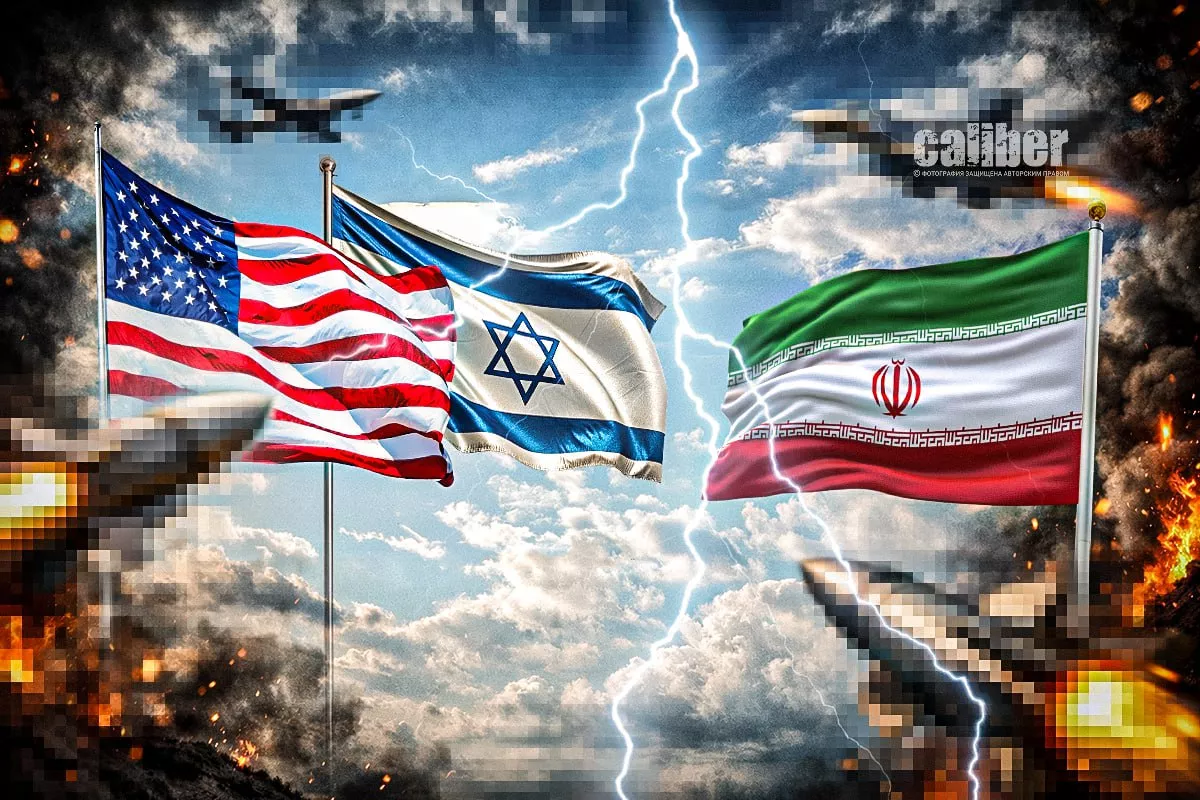
The war in the Middle East continues. The many contradictions that caused—and further escalated—remain unresolved, while any framework for compromise between the United States and Iran still exists only in theoretical form. It is therefore, of course, far too early to draw any definitive or far-reaching conclusions about the conflict.
Nevertheless, it is already possible to state with confidence—and to further elaborate on a thesis previously put forward—that the US–Israeli military campaign launched on February 28 will produce structural consequences for the entire system of international relations.
In other words, this war will go down in history as a systemic one. This does not mean that it alone will be the cause of a series of long-term changes in global affairs. To a large extent, this iteration of the Middle Eastern conflict is itself a result of already accelerating long-term trends in international relations. Nor does it mean that, once the war ends, the processes of transformation in the global system will also come to an end and the system will settle into some stable form. Clearly, these transformations will continue further; there is still no visible end to them.
However, this Middle Eastern war has not only significantly accelerated systemic changes and forced many countries to confront painful questions they had hoped to postpone. It has also shaped the trajectory of certain future developments, which might otherwise have taken very different directions.
Analysts around the world will continue to engage with this topic for a long time to come. At the same time, the further course of the war is certain to bring new variables into play. For now, however, we can identify and record several already evident systemic consequences.
The US in the eyes of the world
When states that claim a dominant position in regional or global affairs resort to military force to justify their ambitions in the eyes of other international actors, they always reach a crossroads. If they succeed in achieving a rapid and overwhelming result against their opponent, others—whether they wish to or not—begin to perceive these claims as legitimate and are compelled to treat them with respect, even if such military actions violate international law and are deeply immoral.
However, if a forceful action launched from a position of overwhelming power fails to produce a decisive impact and instead drags on over time, the outcome is the opposite. The geopolitical “assets” of the state that initiated it rapidly lose value in the perception of others.
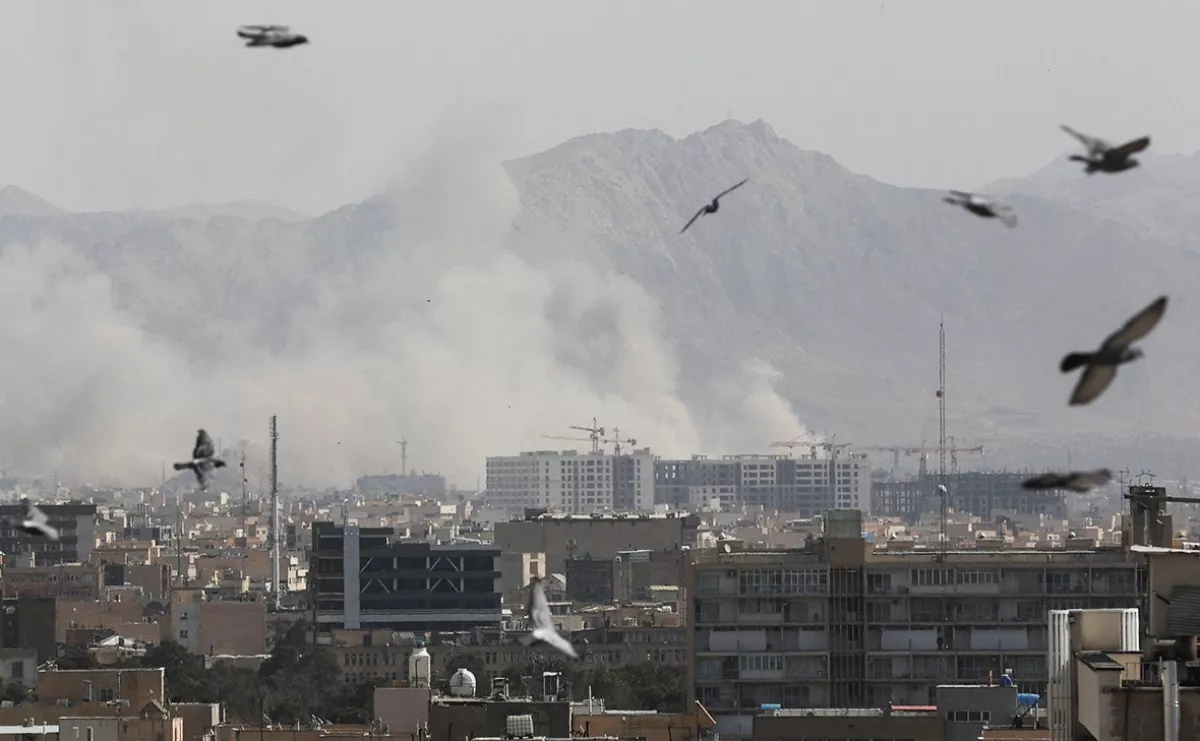
By launching Operation “Epic Fury,” the White House clearly expected the first scenario. The experience of airstrikes on Iran’s nuclear facilities in June 2025, as well as the success of the airborne operation in Venezuela in January 2026, likely played a cruel trick on the Trump administration. A certain sense of overconfidence, fueled by previous successes, may have contributed further to self-assurance and an overestimation of its own capabilities, which in turn overshadowed rational analysis. And two months later, this has already led to the second path of the crossroads: for the entire world, it is evident that the United States today no longer possesses the kind of overwhelming military superiority that would allow it to resolve any issue at a stroke in key regions of the world located thousands of kilometres away from North America.
In a context of total uncertainty regarding the real balance of power in international relations and unpredictability even about the near future, this is extremely important information that is being instantly registered across the globe. Whatever the further course of events may be, the main development has already taken place: the rumour that "the emperor has no clothes" has begun to spread.
And this is a far more serious problem than a mere issue of Washington’s status and image. In conditions of incomplete information, any such rumour easily pushes interpretations and perceptions toward extremes. If not long ago, the United States’ power was often unjustifiably overestimated in the eyes of the international community, it is now just as likely to be unjustifiably underestimated or called into question by many.
As a result, the United States finds itself in a situation where it must either undertake urgent and far-reaching measures to further escalate its commitments and reaffirm its status as a superpower. However, this approach carries even greater risks and potentially painful consequences. Alternatively, American policymakers may already need to adjust their international behaviour to align with a new global perception of the United States following the failure of the Iran blitzkrieg.
Both the first and second alternatives are extremely dangerous, as they encourage other geopolitical actors to exploit the problems that Washington has, to a significant extent, created with its own hands. As a result, the potential for further—and even greater—destabilisation increases, including far beyond the Middle East. Additional incentives emerge to take advantage of the current vulnerabilities of the former global hegemon in order to establish new regional power balances and rules of the game.
In addition, growing uncertainty about the actual global balance of power and about the United States’ capacity to pursue an active military-political agenda naturally raises a question among Washington’s allies across different continents: to what extent does close military and political cooperation with the United States remain reliable and sufficient for their own security? This is especially relevant given that, in the context of the Middle Eastern war, American allies in the Persian Gulf and Europe have already begun to experience the practical implications of this question.
And this is a question that can no longer be reduced merely to the unpredictability of Trump’s policies. It cannot simply be postponed in the hope of waiting out a period of “Trumpian turbulence.” In the context of developments in the Middle East and the global shocks they have triggered, the issue has become structural in nature. Long-standing U.S. allies have come to the realisation that American resources and capabilities are limited—both in quantitative terms and in terms of the political will to deploy them outside Washington’s core priorities.
The world in American eyes
The Middle East war will also have equally profound transformative effects within American society—possibly even more far-reaching ones. This is because domestic debate in the United States will respond not only to events in the Middle East, but primarily to the post-Iran perception of the United States in the eyes of the world described above. All future challenges that Washington will now additionally face in international affairs will be reflected in U.S. foreign policy discourse, reshaping it more rapidly and with greater amplitude than before.
And this is not simply a matter of how the ongoing Middle Eastern crisis will affect domestic approval ratings in the United States or how it will influence the results of the November midterm elections. The issue concerns a far more fundamental impact on American public and elite attitudes, and their future projection onto foreign policy.
For more than a decade, American citizens have increasingly demanded greater foreign policy restraint—that is, international engagement by their own government that reduces the costs associated with the previously familiar role of global policeman. This dynamic was a key factor in Donald Trump’s rise to the political pinnacle in Washington in 2016, and later in his return to the White House in 2025. In his slogans, “America First” and “Make America Great Again,” many voters saw the promise of a more restrained foreign policy focused on core domestic interests.
Foreign policy as such plays a relatively secondary role in U.S. electoral campaigns. However, the link drawn by the MAGA movement and some other political groups between costly international engagement and domestic prosperity clearly resonated with many citizens. Now, against the backdrop of the Middle Eastern crisis, this resonance is likely to grow even stronger. The demand for foreign policy restraint and prioritisation, rather than ambitions of global dominance, will continue to increase. It will further shape perceptions of the national interest—something that both Republicans and Democrats will have to take into account.
Of course, it would be unrealistic to expect that all of this will immediately lead to a nationwide American consensus on a new model of focused and non-wasteful foreign policy. However, in the context of the Iran war, this line of thinking is clearly gaining strength. Its manifestations will, in one form or another, be observed around the world for a long time to come.
Thus, with a certain degree of irony, it can be noted that Trump, at the cost of his own approval ratings and foreign policy challenges, is ultimately paving the way toward the very MAGA ideals on which he built his election campaigns prior to both of his rises to the presidency.







 editor@caliber.az
 +994 55 444-88-98
 Азербайджан, Баку, ул. Низами, 203, Af Business House, 5-й этаж