










Belarus in the nuclear crosshairs France and Poland redraw Europe’s military map
France and Poland are preparing military exercises in which scenarios of nuclear strikes on Belarus will be practised. The exercises will take place in the context of the formation of new “European nuclear forces.” Thus, the republic, which makes no territorial or other claims and is not involved in conflicts, is once again coming under the targeting of nuclear warheads — as during the Cold War period.
Simulation of nuclear strikes
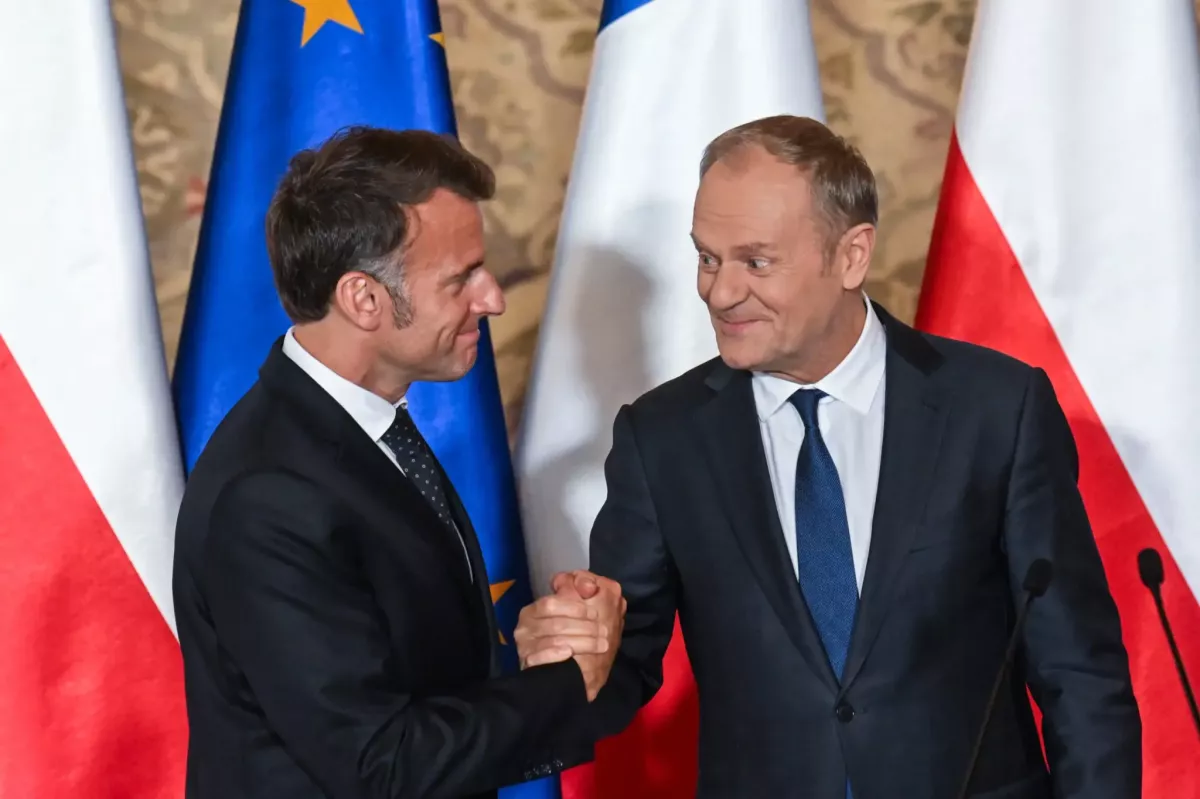
During a recent visit to Poland, French President Emmanuel Macron stated that he had discussed with Polish Prime Minister Donald Tusk the holding of joint exercises on the use of nuclear weapons. Germany, Greece, the Netherlands, Belgium, Denmark and Sweden are also expected to take part.
Polish outlet Wirtualna Polska reported that the main activities will take place in northern Poland and over the Baltic Sea. Polish F-16 fighter jets will practise long-range reconnaissance and strike missions using JASSM-ER cruise missiles, while French Dassault Rafale aircraft will simulate launches of ASMP missiles with nuclear warheads. The main objective of the exercises will be to rehearse scenarios of nuclear strikes on the territory of Russia and Belarus. In particular, Saint Petersburg is mentioned as a potential target in Russia, while targets in Belarus have not yet been specified.
Three Rafale fighter jets have already been deployed in Poland on a rotational basis, and they are also capable of operating from airbases in France.
“The range of the Dassault Rafale allows it to fly directly from France to the strategic line between Budapest and Kaliningrad. From this position, the aircraft can strike targets in Russia and Belarus,” French media report.
The meeting between Macron and Tusk also addressed issues of strategic cooperation between Warsaw and Paris.
France 24 notes that the key objective of the Franco-Polish partnership is the “creation of a more sovereign and stronger Europe in the face of Russia and the United States.” Tusk stated at the meeting in Gdańsk: “Our cooperation — whether in the nuclear sphere or in joint exercises — knows no limits.”
All of this is being implemented within the framework of the so-called “enhanced nuclear deterrence system” announced by the French president on March 2. Nine EU countries have already joined it, with Poland and Germany among the most active participants.
France remains the only European Union state possessing its own nuclear weapons. As the EU continues to transform into a more fully-fledged military-political bloc, Paris, relying on its nuclear capability, is seeking to position itself as a military leader. At the same time, the authority to authorise the use of nuclear weapons is expected to remain solely with the President of France.
In the field of European “nuclear matters,” Macron has ambitious plans. At a joint press conference with Tusk, he stressed the need to implement these initiatives before the summer. So where exactly are Warsaw and Paris in such a hurry to go?
Paris and Warsaw on a military orbit
Macron and Tusk also discussed broader military cooperation, including areas such as air defence and the creation of a satellite constellation for space operations. The meeting was also attended by Poland’s Defence Minister Władysław Kosiniak-Kamysz and France’s Defence Minister Catherine Vautrin.
An agreement on intelligence cooperation was signed, along with the approval of a bilateral defence cooperation plan for 2026–2028.
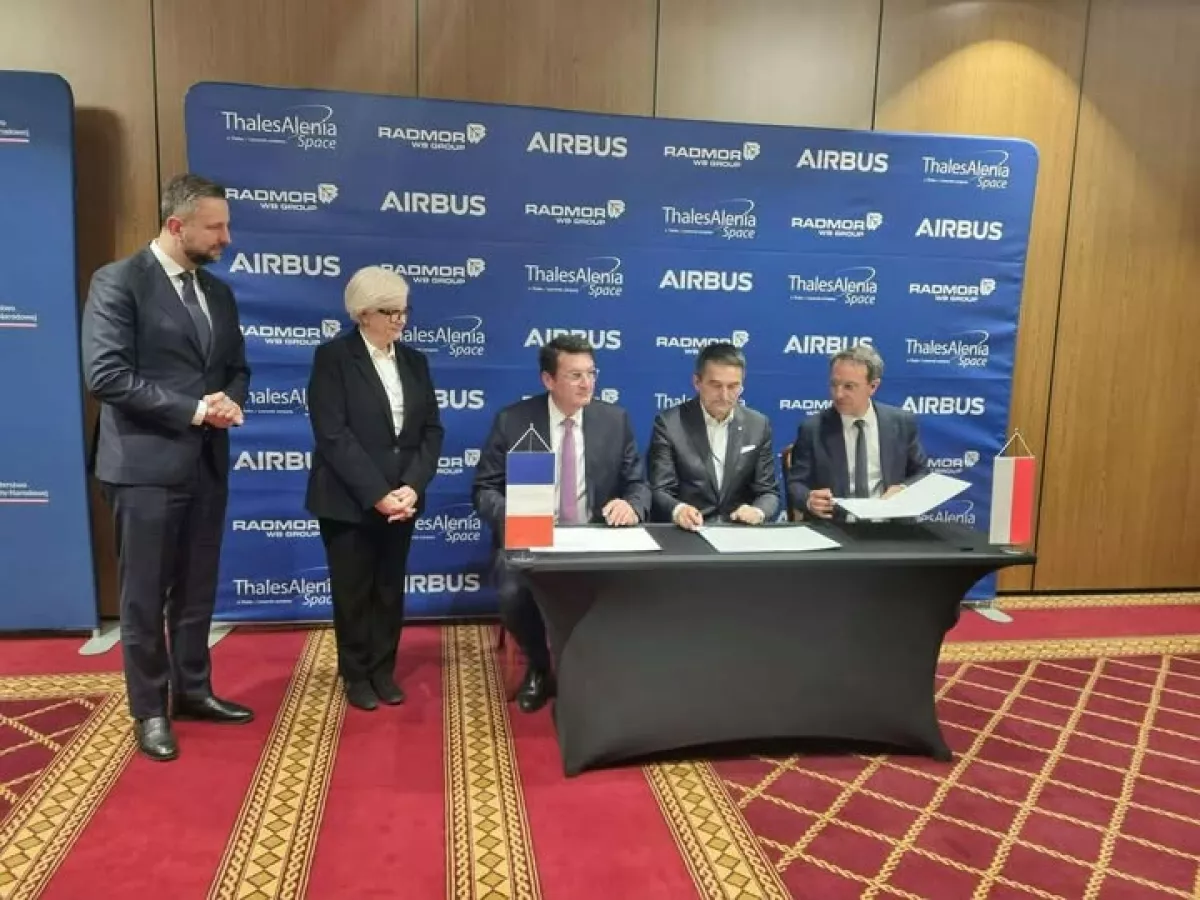
French corporations Airbus and Thales, together with the Polish group Radmor, have signed a contract to develop military satellites for the Polish army. Two reconnaissance satellites are expected to be delivered to Poland as early as next year.
An agreement has also been signed to create a geostationary communications satellite. Its launch is intended to ensure the independence of the Polish armed forces’ communications from external providers, including the hypothetical American Starlink. The new telecommunications satellite will be placed into an orbit at an altitude of around 36,000 kilometres, ensuring continuous communication over the designated area and a high level of cyber protection.
Issues such as ammunition supplies, long-range strike capabilities, military logistics, aerial refuelling, the use of UAVs and countermeasures against them were also actively discussed. According to the French Ministry of Defence, the armed forces of France and Poland are already participating in joint overseas operations and are increasing the scale of exercises to enhance operational interoperability.
Currently, around 50 Polish servicemen are taking part in the “Orion” exercises, while French units are planned to be deployed to Poland to participate in the “Dragon” exercises.
From Napoleon to Macron
Alongside Macron, ministers for European affairs, energy, and culture also arrived in Poland.
The energy minister discussed the development of nuclear energy in Poland with his Polish counterparts, which, in theory, could also create the basis for a potential future nuclear capability. Today, Warsaw is already implementing a project to build its first nuclear power plant in cooperation with the United States. At the same time, Macron is actively lobbying for the participation of the French company EDF in the construction of Poland’s second nuclear power plant.
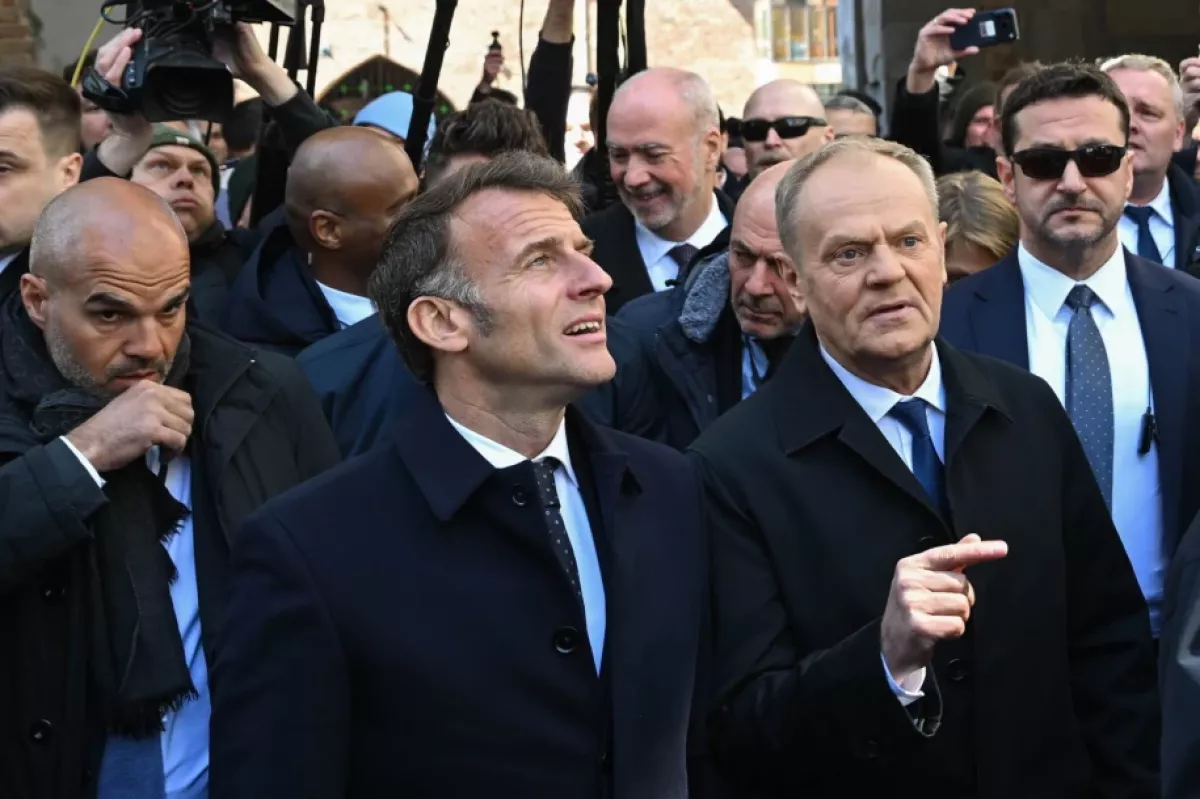
There was also a cultural programme during Macron’s visit. In particular, he visited the graves of French servicemen in Gdańsk. However, the French army did not take part in the liberation of Poland from Nazism: Gdańsk was liberated by the multinational Red Army under the command of Konstantin Rokossovsky.
French soldiers and officers were present in Gdańsk (then the German city of Danzig) as prisoners of war during the Franco-Prussian War of 1870, as well as during the First and Second World Wars.
The shared military history of Poland and France includes many significant episodes. In particular, the Polish Legion within the army of Napoleon Bonaparte was considered one of the most loyal among foreign formations. During the uprising in Spain against the French occupation, the Spanish called Polish uhlans the “hellish pikemen,” while the corps of Józef Poniatowski took part in Napoleon’s invasion of Russia in 1812.
On May 9, 2025, a friendship treaty between Paris and Warsaw was signed in Nancy, providing, among other things, for expanded military cooperation. At the same time, April 20 was declared the Day of Franco-Polish Friendship. However, the first celebration of this date was accompanied by negotiations between Macron and Tusk on further militarisation of the region.
Battle for defence contracts
Experts note that a major deal for the purchase of French weapons in Gdańsk did not materialise. Poland continues to orient itself primarily towards American armaments, making exceptions mainly for South Korea.
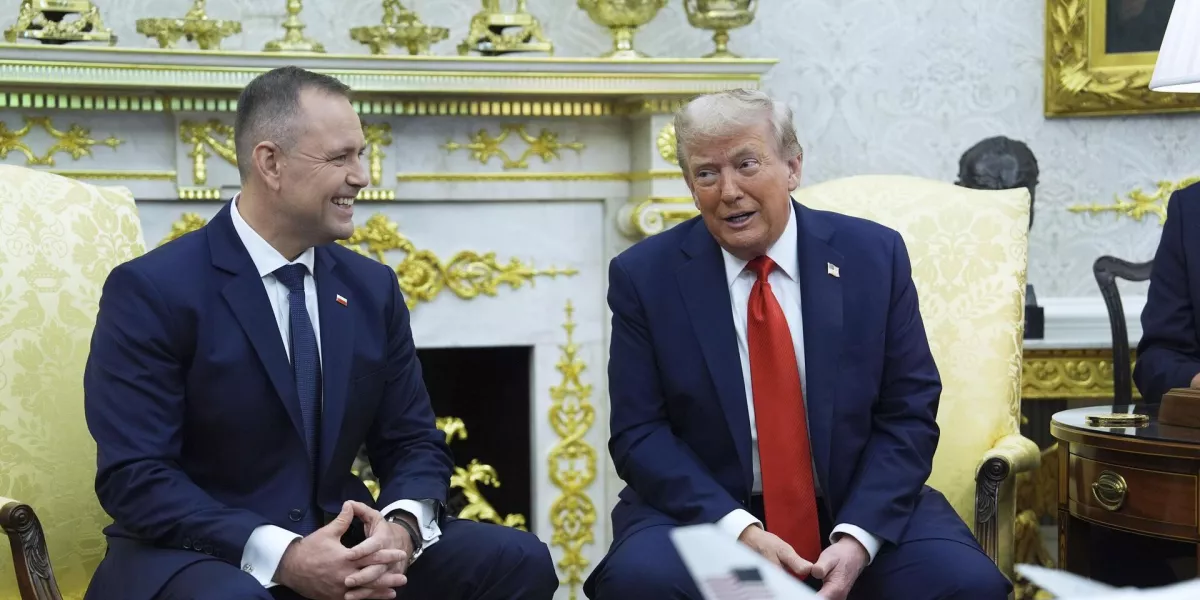
President Karol Nawrocki, regarded as a supporter of Donald Trump, has vetoed Poland’s participation in the EU’s SAFE military credit programme, which was promoted by Donald Tusk and his pro-European team. As a result, domestic political tensions in the country are intensifying: US-oriented conservatives (President Nawrocki and the Law and Justice party, PiS) and the pro-European coalition led by Tusk are increasingly competing in a more confrontational manner.
Nevertheless, the agreements signed in Gdańsk can be seen as a first serious step towards diversification — from the American military-industrial complex towards European manufacturers.
At the same time, not everyone in France and Poland supports the policy of accelerated militarisation. The French newspaper L’Humanité writes that Macron is seeking to expand France’s nuclear potential through Poland, attempting to compensate for a decline in Paris’s global influence.
Additional resonance was caused by a recent interview given by Donald Tusk to the Financial Times, in which he questioned NATO’s readiness to defend Poland and stated that Russia could launch an attack within a matter of months. In response, the administration of President Nawrocki demanded clarifications, arguing that such statements undermine relations with the United States, and also requested evidence of the alleged threat.
Within the opposition Law and Justice party (PiS), Tusk came under sharp criticism, being called a “clown,” a “madman,” and even a “Russian troll.”
Factory of military alliances
In any case, Europe’s military and political realignment continues. Alongside NATO, the European Union is increasingly shaping its own military coalition, in which France and Poland are seeking to occupy leading positions.
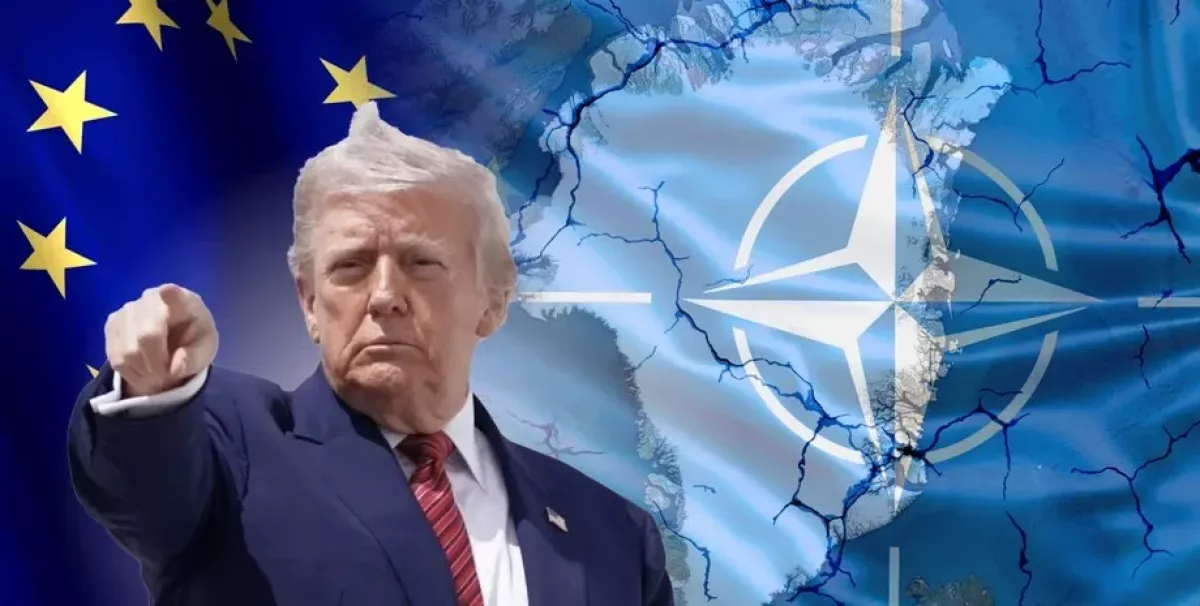
At the same time, within the EU, responsibility for these developments is often attributed to Donald Trump, who is accused of deepening divisions within the North Atlantic Alliance. However, in reality, on both sides of the Atlantic there is a growing drive toward greater strategic autonomy.
Against the backdrop of global economic and political turbulence, driven by intensifying competition and China’s growing efficiency, Europe and the United States are increasingly acting in accordance with their own interests. At the same time, a complete breakdown of the transatlantic partnership is not taking place.
The Franco-Polish nuclear exercises are planned to be conducted outside the NATO framework — “in order to avoid lengthy bureaucratic procedures.” In practice, however, the formation of a close Paris–Warsaw alliance within the emerging European military coalition points to a strategic redistribution of power on the continent. The creation of pan-European, group-based, and bilateral military alliances opens up opportunities for more flexible and rapid use of military force.
At the same time, statements are increasingly heard in Europe about readiness for a large-scale military conflict with Russia by 2030. Belarus is also considered as a potential theatre of operations, against which various accusations are made, despite the fact that its geopolitical position is largely defined by its location between the EU and Russia.
It is noteworthy that the Day of Franco-Polish Friendship is linked to the memory of Marie Skłodowska-Curie, who was reinterred in the Panthéon in Paris on April 20, 1995. The irony lies in the fact that on the day commemorating a scientist who devoted her life to the study of radiation — and, at the cost of her own health, demonstrated its dangers — the political leaders of France and Poland took another step towards strengthening nuclear capabilities.







 editor@caliber.az
 +994 55 444-88-98
 Азербайджан, Баку, ул. Низами, 203, Af Business House, 5-й этаж