










Another step toward peace Azerbaijani deputy prime minister visits Yerevan
An Azerbaijani delegation led by Deputy Prime Minister Shahin Mustafayev has visited Armenia on April 29. This marks an unprecedented development, as there have previously been no high-level visits by Azerbaijani officials to Armenia.
The visit follows another significant diplomatic step taken in November 2025, when Armenian Deputy Prime Minister Mher Grigoryan travelled to Azerbaijan — also a first of its kind. At that time, the 12th meeting of the State Commission on the delimitation of the state border between the two countries was held in Gabala.
It is worth noting that both deputy prime ministers chair the State Commission on the delimitation of the state border between the Republic of Azerbaijan and the Republic of Armenia.
Mustafayev’s visit to Yerevan is likewise dedicated to discussions on the border delimitation process.
Such visits and meetings, as well as the concrete actions associated with them, represent practical steps towards establishing peace between the two countries and their peoples. In this context, it is also necessary to mention the “Bridge for Peace” initiative, within the framework of which civil society representatives from both countries travel to each other and organise meetings to discuss important issues.
While the “Bridge for Peace” initiative is a project with a humanitarian dimension whose practical significance will unfold over time, the meetings of the deputy prime ministers and the delegations they lead are purely applied in nature. Back in May 2022, the State Commission on the delimitation of the state border between the Republic of Azerbaijan and the Republic of Armenia was established under the leadership of Deputy Prime Ministers Shahin Mustafayev and Mher Grigoryan, and on May 24 of the same year, the first meeting of this commission took place on the border between the two countries.
Already on April 23, 2024, at the border between the two countries, as part of work to clarify coordinates based on geodetic measurements on the ground, the first border marker was installed.
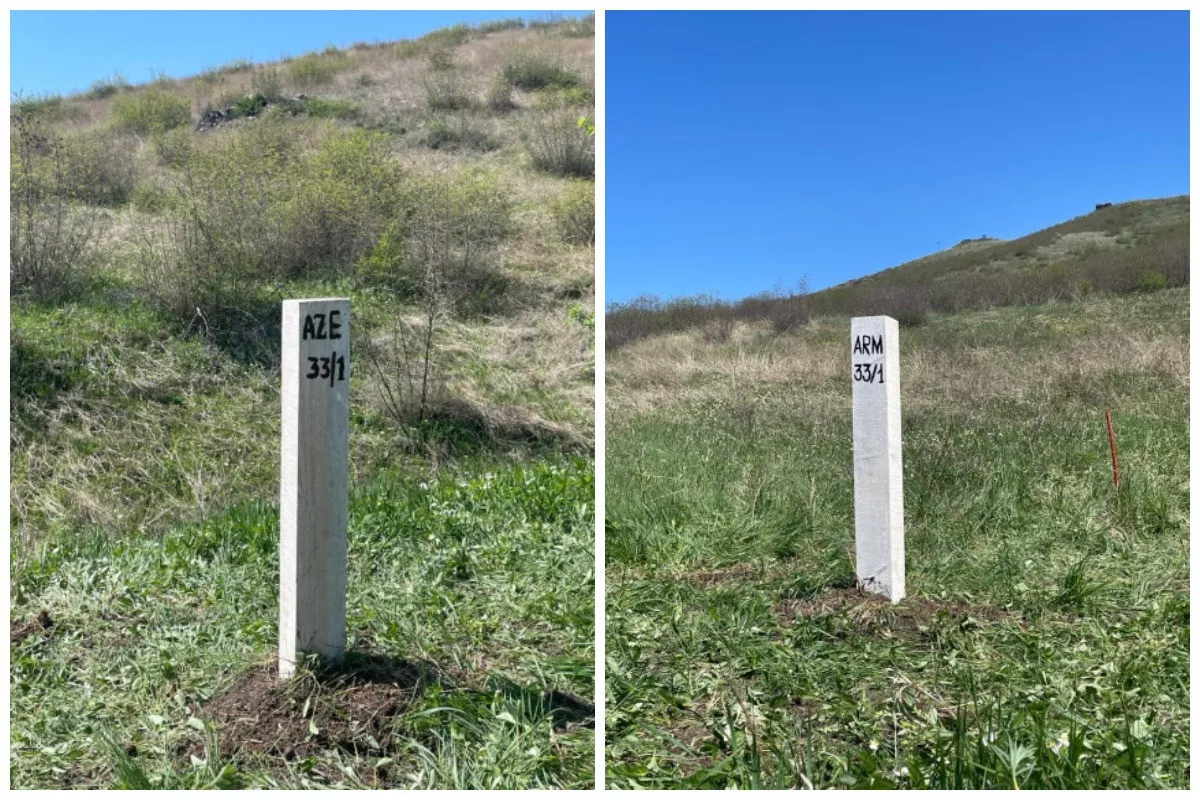
In addition to issues of delimitation and demarcation of the border, the two countries are currently discussing transport hubs, the TRIPP project, power transmission lines, and, in the future, possible gas routes. Azerbaijan is contributing to Armenia’s energy security — an increasingly relevant issue amid expected complications in gas supplies from traditional exporters such as Iran and Russia.
However, while Azerbaijan and Armenia are engaged in peacebuilding efforts and are seeking ways to establish mutual trust and cooperation after decades of conflict, certain circles in Europe are taking steps that run counter to the peace agenda. For the second week in a row, we have been witnessing a wave of anti-Azerbaijani initiatives from the Old Continent.
For instance, the parliaments of Belgium and the Netherlands have adopted openly hostile initiatives containing unsubstantiated accusations against Baku, including provisions that challenge Azerbaijan’s sovereignty over the Karabakh region.
Subsequently, a draft resolution titled “Supporting democratic resilience in Armenia” was submitted to the European Parliament. This “document”, presented as a programme of assistance to an ally, in substance functions as an act of hybrid pressure on the peace process between Baku and Yerevan. It relies on the same narratives promoted by segments of the Armenian opposition — represented by figures such as Robert Kocharyan, Samvel Karapetyan, and other revanchists — regarding the alleged forced relocation of Armenians from Karabakh, the “destruction of Armenian heritage in Karabakh”, the “holding of Armenian hostages”, and even, most notably, the claim that the signing of a peace treaty with Armenia is being obstructed.
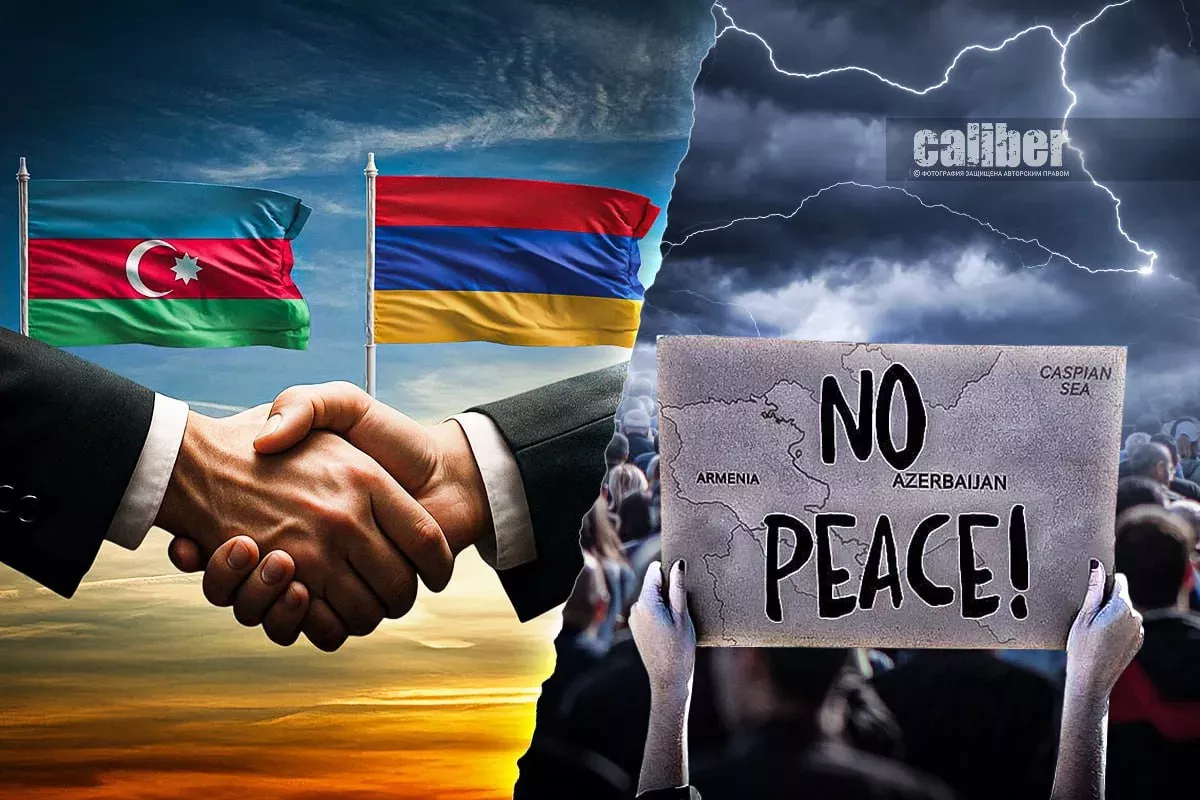
The actions of certain European political circles, in fact, run counter to the interests of Armenia itself, which has embarked on a course of normalisation of relations with Azerbaijan and Türkiye and a rejection of revanchist rhetoric. This demonstrates that these circles are indifferent to Armenia’s own interests; instead, they use the country and its people merely as a façade to cover their anti-Azerbaijani actions and to pursue their own geopolitical objectives.
Today, it can be stated with greater confidence that there are two distinct dimensions within global Armenian society.
One is linked to the Armenian diaspora, supported by political centres in various countries. These forces, living far from the realities of Armenia itself, are largely inclined towards hostility in relation to the peace process and advocate for the revival of territorial claims against Azerbaijan.
The other segment of global Armenians is directly connected to the Republic of Armenia. Here, a more complex process is unfolding. Yes, revanchist ideas still persist within parts of Armenian society, but at the same time there is a noticeable public demand for the policy of Prime Minister Pashinyan’s government, which is oriented towards peace with neighbouring states and the abandonment of territorial claims.
Baku is working with this government, and therefore with this segment of Armenian society as well, and this cooperation should demonstrate that peace with Azerbaijan is preferable to war. Today’s visit by Shahin Mustafayev has become another milestone on this difficult path.







 editor@caliber.az
 +994 55 444-88-98
 Азербайджан, Баку, ул. Низами, 203, Af Business House, 5-й этаж