










Interference on the line Putin and Trump hold another phone call
The day before, Russian and US leaders Vladimir Putin and Donald Trump held a phone conversation. Details of this exchange were shared by Russian presidential aide Yuri Ushakov, who briefed journalists. President Trump spoke about it in less detail.
From Ushakov’s comments, we learn that the conversation lasted more than an hour and a half, and that in the international agenda, the two leaders first paid “primary” attention (and this is very important in the context of Russia’s positioning) to the situation around Iran and in the Persian Gulf. “Vladimir Putin considers it the right decision by Donald Trump to extend the ceasefire regime in relation to Iran,” Ushakov began.
Further, according to the presidential aide, Putin drew attention to the inevitable, highly detrimental consequences not only for Iran and its neighbours, but also for the entire international community, if the US and Israel were to resort to force again. The inadmissibility and danger of a ground operation on Iranian territory were particularly emphasised. Ushakov also spoke about Moscow’s diplomatic efforts and “a number of considerations” aimed at resolving disagreements over Iran’s nuclear programme. This apparently refers to Moscow’s proposal to transfer enriched Iranian uranium to Russia, to which Washington has not yet agreed.
Ushakov then moves on to the presidents' discussion of Ukraine, rather incongruously creating the impression that the situation is entirely under Russia's control. Consider, for example, the peculiar report on the situation at the front: "At Trump's request, Vladimir Putin described the current situation on the line of contact, where our troops are holding the strategic initiative and pushing back enemy positions." It is not difficult to notice that, in order to create a sense of Russian military success, the most neutral formulations among those reflecting victory over the adversary were chosen, which rather indicates the Kremlin’s dissatisfaction with the situation at the front.
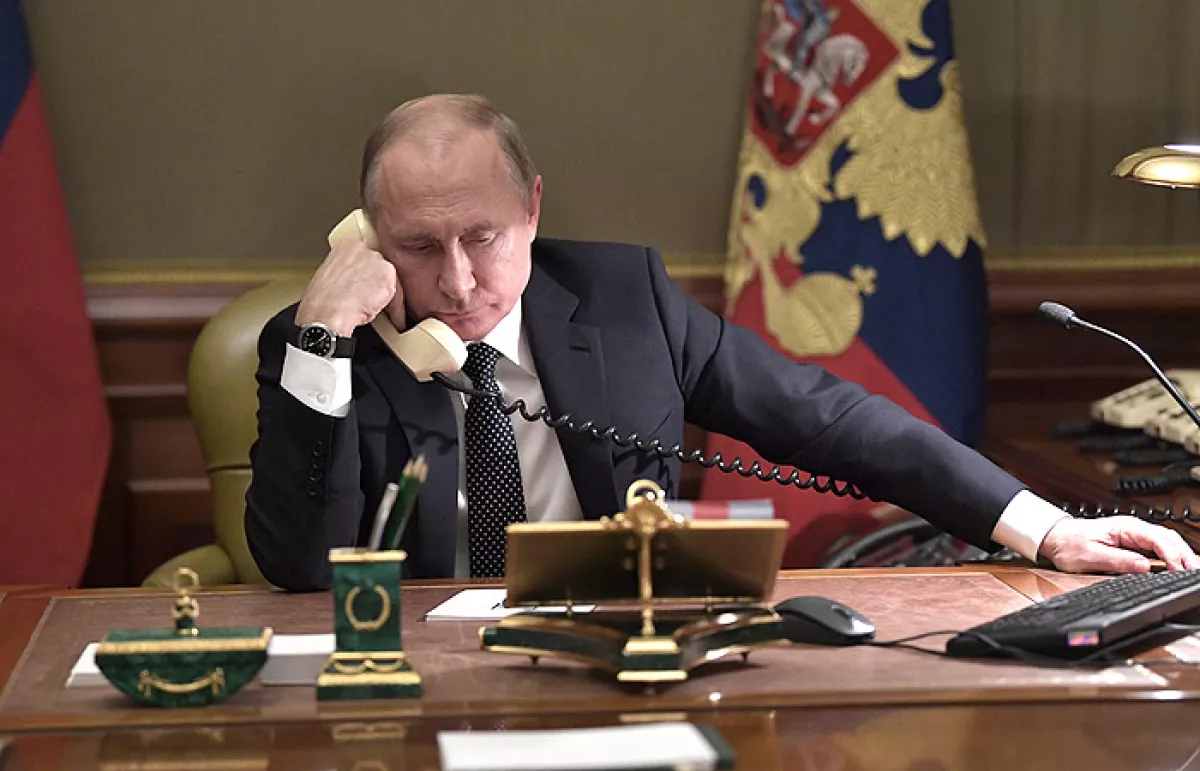
This is followed by perhaps the most interesting passage in the entire commentary: “Our president once again confirmed that the goals of the special military operation will, in any case, be achieved. Of course, we would prefer this to be the result of a negotiation process, for which Zelenskyy must respond positively to the known proposals that have been repeatedly presented, including by the American side.”
As we can see, having begun with a firm preamble that the goals of the “special operation” will be achieved in any case, Moscow implicitly admits that it is asking Washington to put pressure on Kyiv. And it seems that circumstances are indeed becoming favourable for this. Ukrainian drone strikes on Russian oil refineries threaten Moscow with unpredictable consequences. The city of Tuapse, as a result of a series of Ukrainian attacks, is effectively in the epicentre of an environmental disaster. In Perm, where an oil refinery is also burning, similar risks are being observed. If tensions in this sphere continue to rise, this could seriously undermine the stability of Russia’s power vertical.
There are also other threats. It has become known that the traditional Victory Day parade in Moscow on May 9 will, for the first time in a long time, take place without military equipment, and mass events on that day are being cancelled in the regions. The Russian Ministry of Defence explained this by the “operational situation”, which, of course, primarily refers to security considerations. It is not by chance, in this context, that Putin informed his American counterpart about the readiness to declare a ceasefire for the period of the May 9 celebrations.
Ukraine is unable to retake the annexed territories, but by preventing Russia from achieving even the minimum of its stated objectives (reaching the administrative borders of Donbas) and simultaneously striking strategic targets inside Russia, it is seeking to generate internal pressure in its adversary’s rear, with the expectation that the mounting strain in the “pressure cooker” will eventually lead to an inevitable rupture.
This entire situation raises many questions, one of which is: what did the Kremlin offer the White House in exchange for exerting pressure on Ukraine? Another, equally important question is: does Washington currently have real leverage over Kyiv?
At the end of the event, Ushakov was asked from the floor, “on whose initiative the phone conversation took place?”, to which he replied: “I would like to note that this was an initiative of the Russian side, of the Russian president.”
And it is important to understand what the main topic of the conversation actually was. If, as Ushakov emphasises, it was Iran, then Putin’s initiative to hold a phone call with Trump looks like an attempt to demonstrate Moscow’s influence over an international conflict involving the United States. If, however, Ukraine was the main topic, then the request for the conversation points to a somewhat weakened position of Russia, which urgently needed assistance from across the Atlantic.
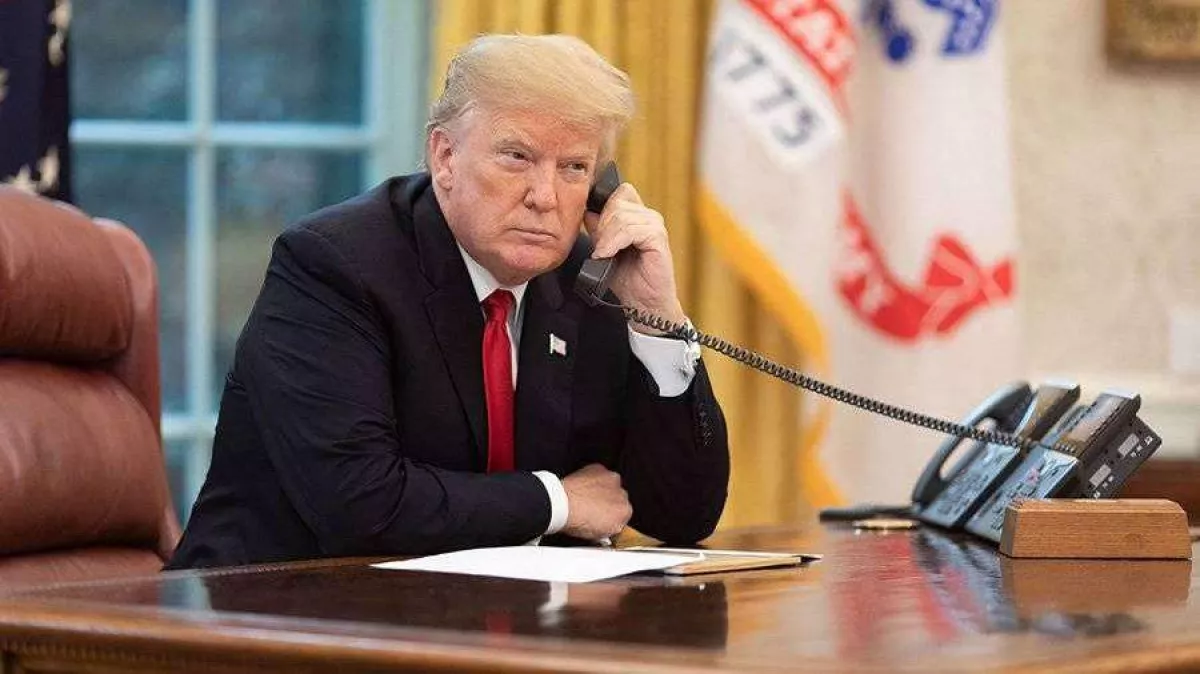
A plausible scenario also appears to be that Moscow proposed a deal to the United States based on an exchange of services: Russia on Iran, and the US on Ukraine. It is not excluded that, given Trump’s position in relation to the Iran situation and the time factor ahead of the midterm elections to Congress, Moscow is indeed prepared to offer some kind of mediating move that would allow the White House occupant to make an elegant exit from the conflict while simultaneously claiming victory.
Incidentally, here is what Trump himself says about this, or something close to it: “He told me he would like to be involved in enrichment (of uranium — Ed.) if he can help us get it; I said I would rather have you involved with ending the war with Ukraine.” As we can see, the American side downplays the importance of the Iran topic in its negotiations with Russia.
How things actually stand, we will find out in the near future.







 editor@caliber.az
 +994 55 444-88-98
 Азербайджан, Баку, ул. Низами, 203, Af Business House, 5-й этаж