










EU–Armenia and the “ceremonial document” Connectivity with a dead end
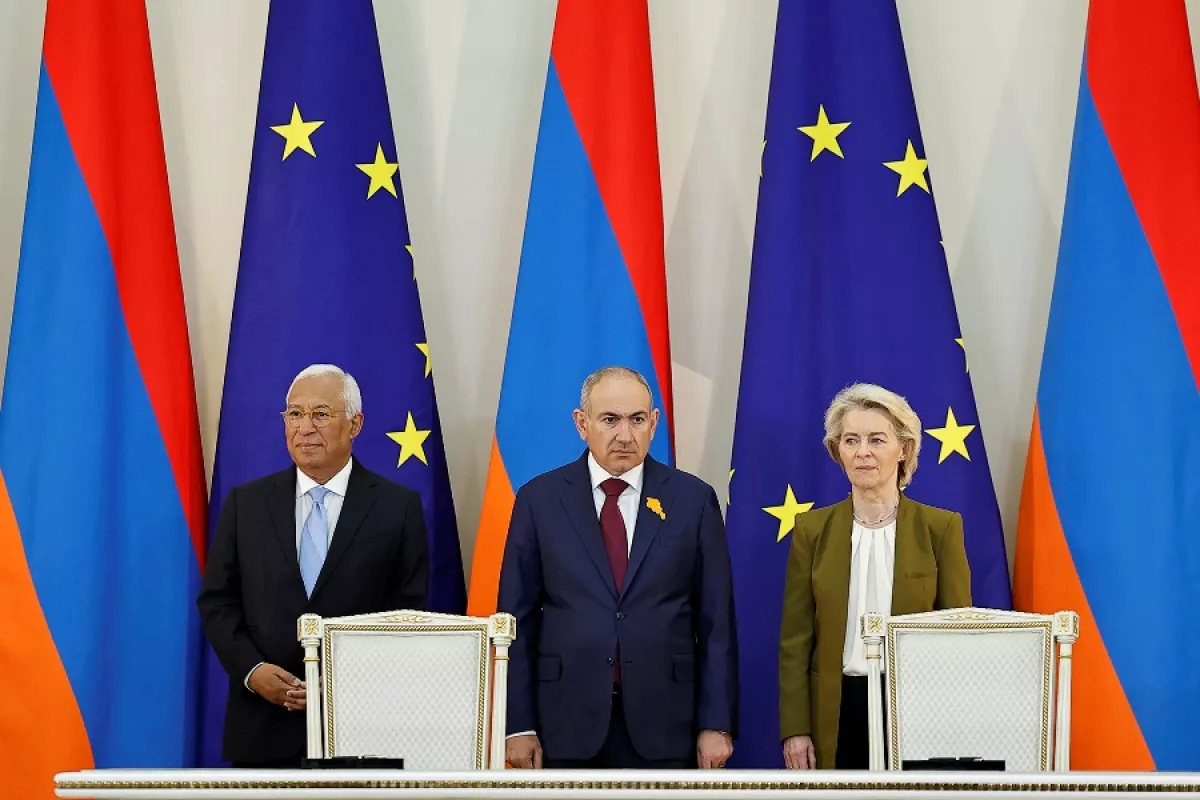
Yerevan, May 5, 2026 — The first-ever EU–Armenia summit was held in the Armenian capital, bringing together European Council President António Costa, European Commission President Ursula von der Leyen, and Armenian Prime Minister Nikol Pashinyan.
The day before, Yerevan also hosted the 8th European Political Community summit, which brought together nearly fifty heads of state and government in one place. It marked an unprecedented concentration of international leaders in the South Caucasus, as Armenia has never before hosted an event of such scale.
What should be noted first and foremost regarding the inaugural EU–Armenia summit? A Joint Declaration was adopted at its conclusion. Its key points are as follows: the EU officially recognised Armenia’s March 2025 law launching the process of accession to the European Union; under the Global Gateway strategy, European investment in Armenia will amount to €2.5 billion; the European Union officially supported Armenia’s regional connectivity initiative “Crossroads of Peace” and the TRIPP project; the EU welcomed Armenia’s efforts to strengthen energy security, diversify its economy, and increase resilience to external shocks, and recognised the potential of regional flagship initiatives of mutual interest, such as Armenia’s prospective participation in the project to lay a submarine cable in the Black Sea. The document also records significant progress in dialogue on visa liberalisation.
However, if we move away from the glossy presentation and look at geography, a very different picture emerges. Armenia has four borders: with Türkiye, Azerbaijan, Georgia, and Iran. The first two remain closed for now — there is neither a final peace treaty with Baku nor a clearly established normalisation with Ankara. The third — the Georgian border — is the only functioning one, and through it already passes everything that can physically pass.
The Iranian border, the fourth, is formally open, but this is essentially sanctioned traffic bypassing the international banking system, and the EU is unlikely to scale flows through it. Especially since one of the points in the above-mentioned declaration states that Armenia and the European Union have agreed to strictly curb sanctions circumvention, particularly in the field of dual-use goods.
So where, and with whom, is Armenia supposed to be “connected” in this case?
Regional transport corridors — the direction for which the entire initiative has essentially been packaged — present a different reality. The “problem” is that the Trans-Caspian Transport Route, which originates in China, then crosses Kazakhstan, the Caspian Sea basin, Azerbaijan, Georgia, and continues into Türkiye and European countries, bypasses Armenia altogether.
The shortest and only economically viable route from the Caspian to Türkiye runs through Azerbaijan. If it goes through Armenian territory, it would pass via Zangezur, which Baku and Ankara view as an additional branch of the Middle Corridor, while some in Yerevan see it as a threat to national sovereignty.
The status of this section was recorded in the Trilateral Statement of November 10, 2020 and later reconfigured in Washington in August 2025 in the form of the TRIPP project. To sign a partnership with Yerevan on regional connectivity under the “Crossroads of Peace” framework while leaving outside the equation the region’s only real logistical hub is the analytical puzzle of the document: connectivity with whom, exactly, is being discussed?
To put it simply, in regional logistics what matters is not elegant rhetoric or ambitious branding, but solutions that can actually function in practice.
Against this backdrop, a notable imbalance becomes apparent. The EU is placing its emphasis on Armenia’s “Crossroads of Peace” initiative — a project that has, for several years now (more precisely, since October 2023, when Prime Minister Nikol Pashinyan formally presented it), remained largely a conceptual framework without the necessary infrastructure or internationally binding guarantees.
A more pragmatic focus, however, would arguably be the concrete understandings reached in Washington last August regarding the so-called “Trump Route” — a tangible, negotiated, and strategically structured project designed to deliver benefits extending beyond the South Caucasus itself.
In this sense, it is this route that is shaping the underlying architecture of future regional logistics, rather than the “Crossroads of Peace,” which continues to exist primarily at the level of declarations.
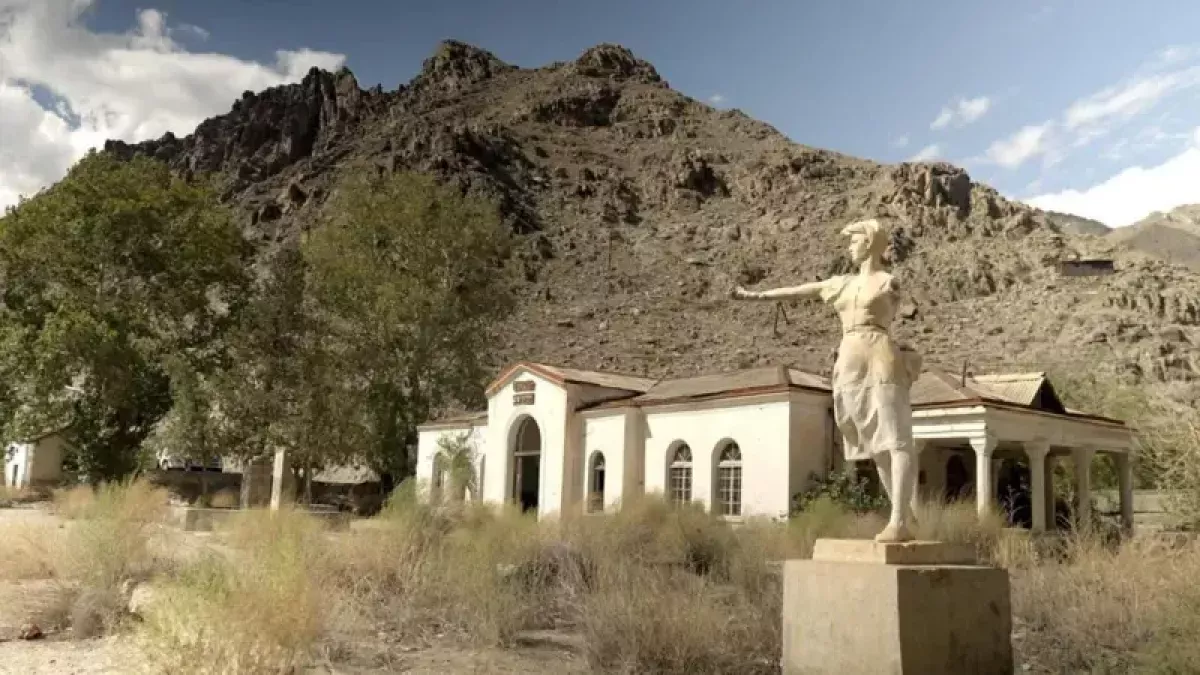
The energy component appears even more formal in nature. The declaration envisages Armenia’s participation in the Black Sea submarine cable project and outlines a “roadmap” for the decommissioning of the Metsamor Nuclear Power Plant by 2040 with EU support.
At the same time, Armenia’s energy system rests on two main pillars: the Metsamor Nuclear Power Plant and Russian gas supplied via Georgia. The nuclear facility was built in the Soviet era, shut down after the Spitak earthquake, and restarted in 1995 out of necessity, as Armenia had no alternative energy sources. Its fuel is Russian, and maintenance is carried out with the involvement of Rosatom. The operating licence has been extended until 2036. In practical terms, there is no clear replacement for the plant — renewable energy remains limited and relatively inefficient in the country’s specific conditions. Likewise, substituting Russian gas with European LNG is not feasible, given Armenia’s lack of access to the sea.
This raises a fundamental question: through what mechanisms does the EU intend to reduce Armenia’s energy dependence in practical terms? In reality, the current approach largely consists of grants and small-scale projects that have little impact on the overall structure of the country’s energy balance.
The digital component, by contrast, is the most dynamic element of the package. Armenia does have a developed IT sector, but it is primarily oriented toward the U.S. and Russian markets, while its presence in the European market remains limited and selective.
A more clearly defined component of the package is visa liberalisation, which in practice implies a future move toward a visa-free regime. Here, Brussels already has a tested model — Georgia.
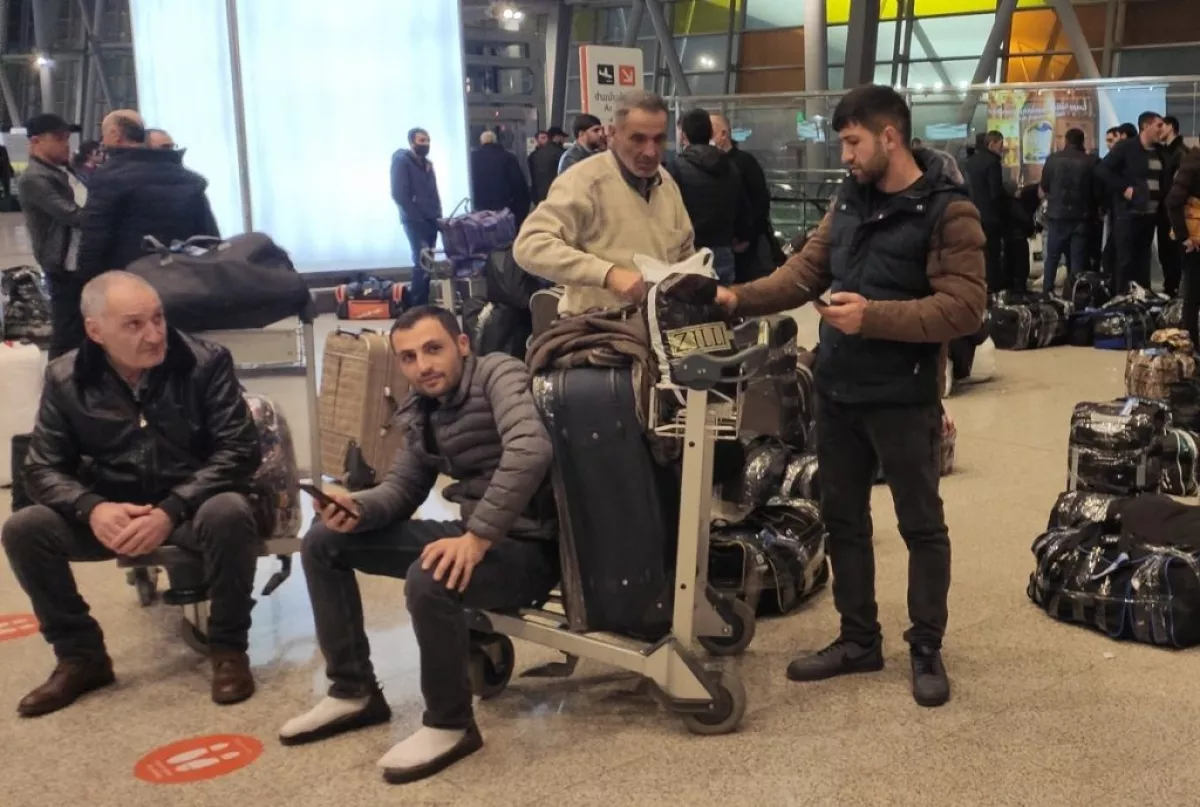
Georgia was granted visa-free travel to the EU in 2017, after which labour migration from the country to the Union increased significantly, primarily to Poland, Germany, and the Czech Republic, reaching levels that the Georgian economy had not anticipated. According to various estimates, several hundred thousand Georgian citizens are now permanently residing in the EU — a substantial share for a country with a population of under four million.
Armenia would approach a potential visa-free regime from a more vulnerable starting position. The country has been experiencing population decline for the past three decades: from around 3.5 million in the early 1990s to approximately 2.9 million today, according to official data, with some unofficial estimates suggesting an even steeper decline.
In such conditions, any further liberalisation of mobility could accelerate outward migration trends. The EU, which continues to require affordable labour, would likely secure a stable supply of it, while Armenia risks a further weakening of its demographic base.
If one combines three core promises — transport corridors that lack clear routes, energy projects where there is little practical capacity for transformation, and digitalisation without a clearly defined implementation framework — and adds the only element with tangible domestic consequences, namely visa liberalisation that effectively works against Armenia’s own demographic interests, then the underlying logic of the summit becomes easier to read from the calendar itself.
Parliamentary elections in Armenia are scheduled for the summer. Held back-to-back in Yerevan, the eighth European Political Community summit and the first EU–Armenia summit produced a series of carefully staged images — handshakes with Ursula von der Leyen, Emmanuel Macron, Keir Starmer, Donald Tusk, Volodymyr Zelenskyy, and others in a single frame. This becomes the main media product of the external dimension of Prime Minister Nikol Pashinyan’s domestic campaign for the coming weeks.
António Costa and Ursula von der Leyen did not travel to Yerevan to relaunch transport routes or to close the Metsamor Nuclear Power Plant. Their presence was primarily about signalling the EU’s political footprint in the region.
The European Union’s foreign policy apparatus operates largely through signalling logic. In this case, the message of the summit was directed at two audiences: externally, toward Moscow — indicating that the post-Soviet space of gravitational influence is continuing to shrink; and internally, toward Armenian society — conveying the message that the West stands with you, and that Pashinyan should not be undermined.
This ends up resembling what in Soviet diplomatic practice was referred to as a “ceremonial document” — a text formally drafted in accordance with all procedures, signed by all necessary parties, but without any meaningful practical consequences.
What makes 2026 distinct is that such a “ceremonial document” is simultaneously useful to both sides: to the host, as a tool for navigating a difficult electoral period in June, and to the visitors, as a way of formally registering their presence in the region.
On May 5, Armenia received a photograph with Ursula von der Leyen. The EU received a line in its enlargement and engagement reports confirming its presence in the country. The Armenian public, meanwhile, received no immediate tangible outcome — apart from, over time, potentially easier pathways to labour migration to Poland.







 editor@caliber.az
 +994 55 444-88-98
 Азербайджан, Баку, ул. Низами, 203, Af Business House, 5-й этаж