










Europe dismantles NATO, Americans withdraw troops The West unravels
On May 1, U.S. President Donald Trump spoke about the withdrawal of American troops from Spain and Italy. At the same time, reports emerged about a reduction of the U.S. contingent in Germany. In addition, Washington is raising tariffs on products of Europe’s already struggling automotive industry. As we can see, the attempt by the British King, who visited Washington to ease tensions in the Europe–America conflict, has failed. However, his chances of success were minimal from the outset: European politicians are sending too many contradictory signals. Behind the fog of triumphant rhetoric about militarisation and the supposedly successful accession of new countries to the EU in Eastern Europe and the South Caucasus lies a lack of any coherent vision for the continent’s future, while the most absurd foreign policy initiatives are gaining the upper hand.
The King — the Democrats’ last resort
The British King was sent across the Atlantic out of desperation, as liberal-democratic European leaders found themselves in a difficult position. Disagreements with the United States are growing. Despite their bravado, Europeans fear being left without an American patron, especially in the context of a possible open war with Russia. But whom could they send to negotiate with President Trump? The European Union itself is in a dire state when it comes to this.
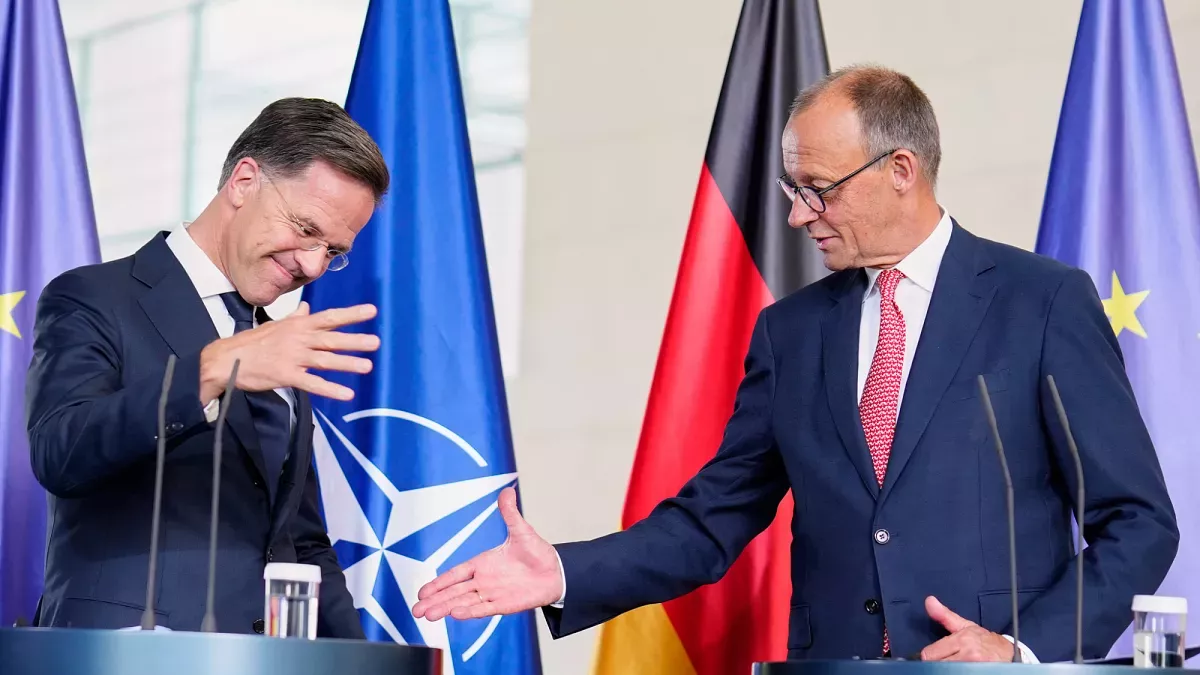
Even such prominent Euro-liberal politicians as NATO Secretary General Mark Rutte and German Chancellor Friedrich Merz have failed to achieve results during their recent meetings with Trump. On April 27, it was even announced that, in order to reduce the risk of conflicts, NATO would abandon the tradition—established in 2001—of holding annual summits. This is the tactic of an ostrich burying its head in the sand.
Given the special nature of UK–US relations, it was logical for the Brussels establishment to use the “British channel” to restore transatlantic ties. Moreover, in recent times the British leadership has once again moved closer to the EU, actively participating in attempts to “outmanoeuvre” Trump. However, sending British Prime Minister Keir Starmer to Washington was a clearly doomed idea from the outset. The press has already circulated White House leaks suggesting that Trump refers to Starmer as a “failure with no future.” And it is not only about the British leader’s “junk-level” approval ratings—his predecessors were not much better off either. The issue lies in Starmer’s policy, as he aligns himself with Euro-liberal elites and undermines the global political recalibrations that the U.S. president has been urging the countries of the collective West to adopt.
That’s why there was essentially no alternative—the King, by virtue of his traditional status, was the only figure with a chance to present the views of European states in Washington, both in direct conversation with Trump and in public. The latter was especially valuable for the Euro-liberal establishment: by voicing, at the highest level within the United States, an agenda running counter to Trump’s line, they also hoped to indirectly support the U.S. Democratic Party in its attempts to stage a comeback. By their simple calculations, Trump is expected to lose his congressional majority this autumn, which would paralyse his political initiatives—making him, in American political jargon, a “lame duck.” This is a risky assumption, given the absence of any new positive ideas among Trump’s opponents in the United States and their reliance mainly on criticism of Trump and on older figures, such as Kamala Harris, who lost the previous election. Nevertheless, the global liberal establishment, anchored in Europe, is already beginning to anticipate the decline of the current U.S. administration.
Russia — first and foremost
Accordingly, the King’s speech in the U.S. parliament was framed in line with this approach: the expected set of European liberal talking points was mixed with ambiguous jokes (such as a reminder of the British burning of Washington in 1814 during their aggression against the United States).
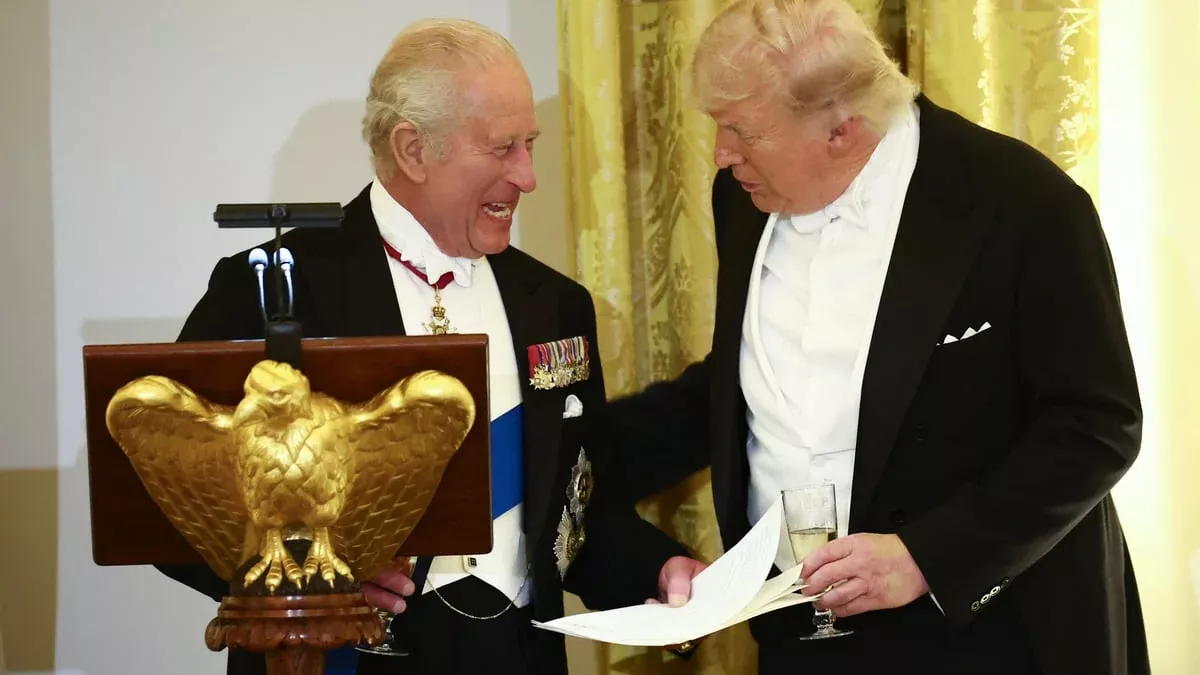
The liberal press immediately declared: “King Charles III’s engagement with Donald Trump proves that, despite certain contradictions, UK–US relations are leaning more towards ‘good health’.”
However, before the King had even returned to Buckingham Palace, it became clear that nothing had been achieved at all. On May 1, the White House responded point by point to all of Charles III’s appeals. Tariffs on EU automobiles were raised to 25%—a highly painful blow to one of the key sectors of Germany’s economy, which has set aside ceremonial rhetoric and is once again aspiring to leadership in Europe. In addition, Washington decided not only to abandon plans to redeploy long-range rocket artillery forces essential for countering Russia to Germany, but also to withdraw 5,000 of the 36,000 troops stationed there. At the same time, Trump spoke about the withdrawal of the U.S. military from Spain and Italy.
As we can see, liberal commentators rushed to present the polite reception of the English King by President Trump and his messages from European leaders as an implicit agreement to reconcile with ideological opponents. This interpretation was questionable from the outset. There were, in fact, no reasons for Trump to agree to a rapprochement with the EU and states aligned with it, such as the UK or Canada. Essentially, the monarch’s speech contained nothing new—only calls to roll everything back to the previous status quo. Charles III spoke cautiously, but the meaning of his remarks is clear.
First, he was urging Washington to abandon trade wars—Trump had promised to revise the trade agreement with the British and introduce additional tariffs if London did not abolish the digital services tax on U.S. companies.
Second, there was an attempt to revive old alliances (with NATO as a whole and the United Kingdom in particular) and return to previous geopolitical priorities. Among other things, this implies maintaining the course of confronting Russia (rather than China) as the main priority of the collective West, as well as continued support for Ukraine. At the same time, the monarch’s statements can also be interpreted as a call to refrain from the urgent redeployment of forces toward containing China.
Since the King brought nothing new from the European side to Trump, it is unclear why the latter should have reconsidered his position. On trade issues, Trump had already made it clear that the current situation was unsustainable—rising U.S. national debt is pushing toward urgent and tough measures.
In foreign policy and military alliances, Washington is increasingly dissatisfied with the actions of its NATO partners. The U.S. sees that the main beneficiary of the prolonged conflict in Eastern Europe is China, which is steadily moving toward replacing the United States as the global hegemon and reshaping the Western-designed world order.
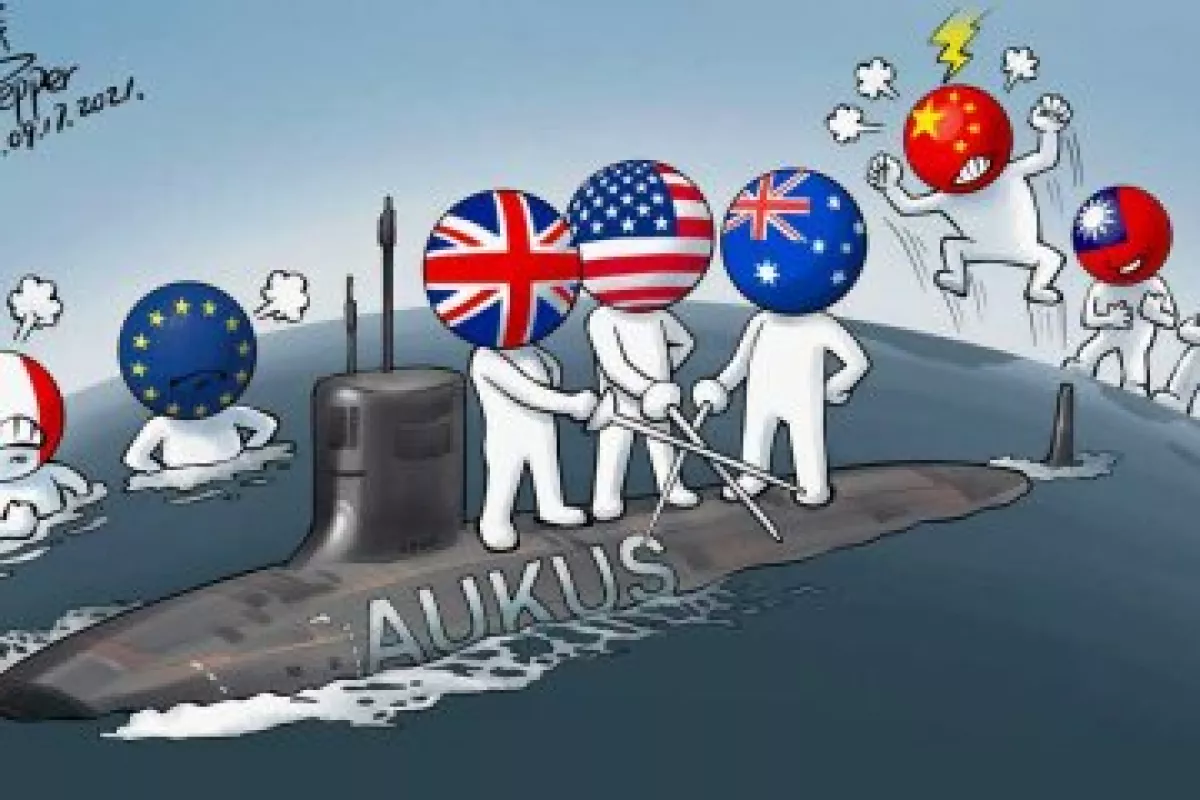
The alternative approach to containing China hinted at by Charles III is highly unconvincing. It referred, in particular, to reliance on the so-called “AUKUS” alliance. Within this framework, the United Kingdom, Australia, and New Zealand planned to deploy a large number of advanced submarines into the Pacific in order to limit China’s ambitions. This option cannot satisfy Trump, who recognises the implausibility of such overly optimistic plans regarding China’s rise. In addition, AUKUS is based on cooperation with India as a key partner in containing China on land. This assumption is now questionable, since it has recently emerged that China has overtaken the United States as India’s main trading partner.
The issue of prioritising confrontation with China versus Russia is a fundamental point of divergence between European states and the United States. This is compounded by a less strategic but more immediate issue—the war with Iran. The EU and the UK, as is known, have preferred to distance themselves from U.S. and Israeli actions and pursue their own separate course in the Middle East.
Trump initially appeared to gain a greater understanding from the King on this issue and wrote: “We have militarily defeated that particular opponent, and we're never going to let that opponent ever... Charles [as we can see, the elaborate titulature of the American president makes no impression; there is no trace of deference] agrees with me, even more than I do... we're never going to let that opponent have nuclear weapons.”
However, shortly after this, the British side refuted the statement, noting that the King “naturally remembers” the established policy of the British government on this issue.
No matter how much liberal politicians and commentators insist that the visit was a triumph, or try to identify signs of concessions and deference from Trump toward the royal figure, all of this amounts to political illusionism. Europeans were ultimately unable to provide the British King, during his transatlantic visit, with anything that would be of real interest to Trump. It is therefore not surprising that earlier French President Macron stated that he does not expect any change in the American position and that Europe, in general, should build its own security architecture rather than rely on the United States.
The Euro-Atlantic divide
But how coordinated is the respective policy of key EU members and the United Kingdom, which has moved closer to the EU on this issue? After all, simultaneously with Charles III’s visit to the United States, other moves by Euro-liberal leaders created a loud dissonance, effectively calling into question the King’s mission to Washington.
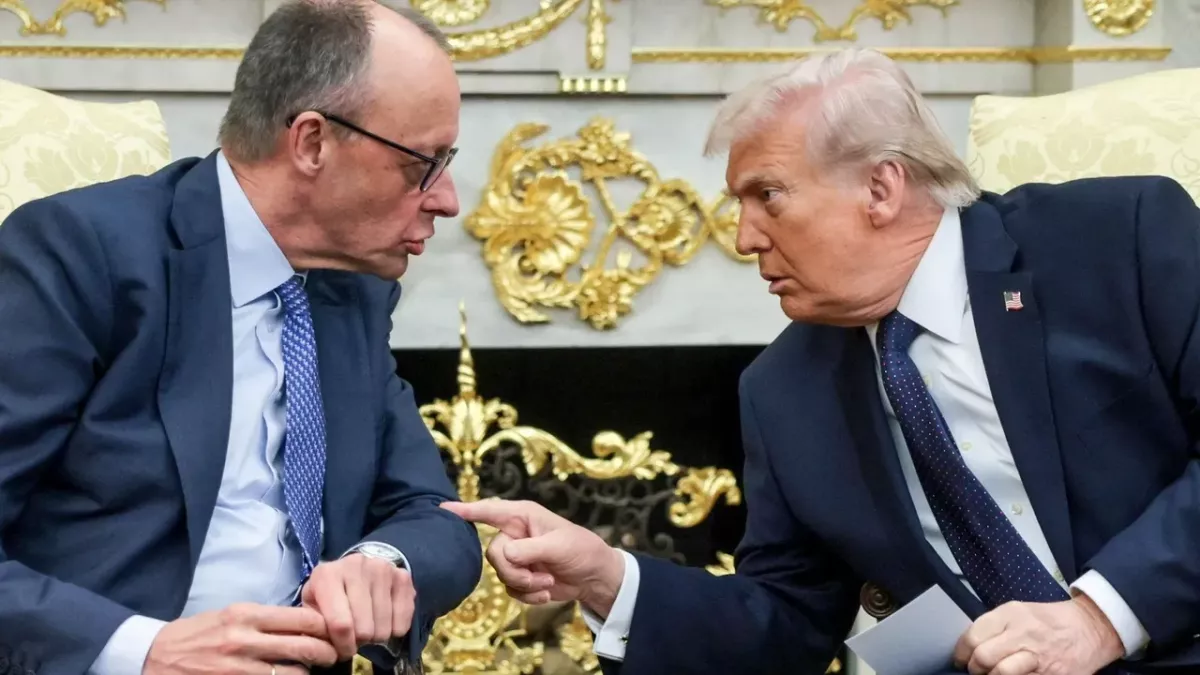
For example, Chancellor Merz’s criticism of Trump’s strategy regarding the war with Iran, as well as his expressed doubts about whether Trump has any coherent negotiating strategy with Tehran at all. If the goal is to restore Western unity under U.S. leadership, then such criticism of Washington’s key military operation certainly does not contribute to that objective.
However, Merz’s statements pale in comparison to the recent actions of French President Emmanuel Macron. Just a week earlier, immediately before the British King’s trip to Trump to explore the prospects for reconciliation, Macron made a highly symbolic visit to Greece. It began with a direct challenge to Trump.
According to Macron, “We should not underestimate that this is a unique moment where a US president, a Russian president and a Chinese president are dead against the Europeans.” Therefore, Europe, which allegedly has overcome centuries of civil wars and achieved prosperity, should “write the next chapter and become a geopolitical power.”
Macron went further in his reassessment of Western policy, claiming that Article 42(7) on collective defence in the EU treaty is “stronger” than Article 5 of the NATO Treaty. He did not spare rhetorical flourish when speaking about a provision that has never been meaningfully tested in practice: “It [Article 42(7)] is not just words. We know that for us, it is clear and there is no room for interpretation or ambiguity.”
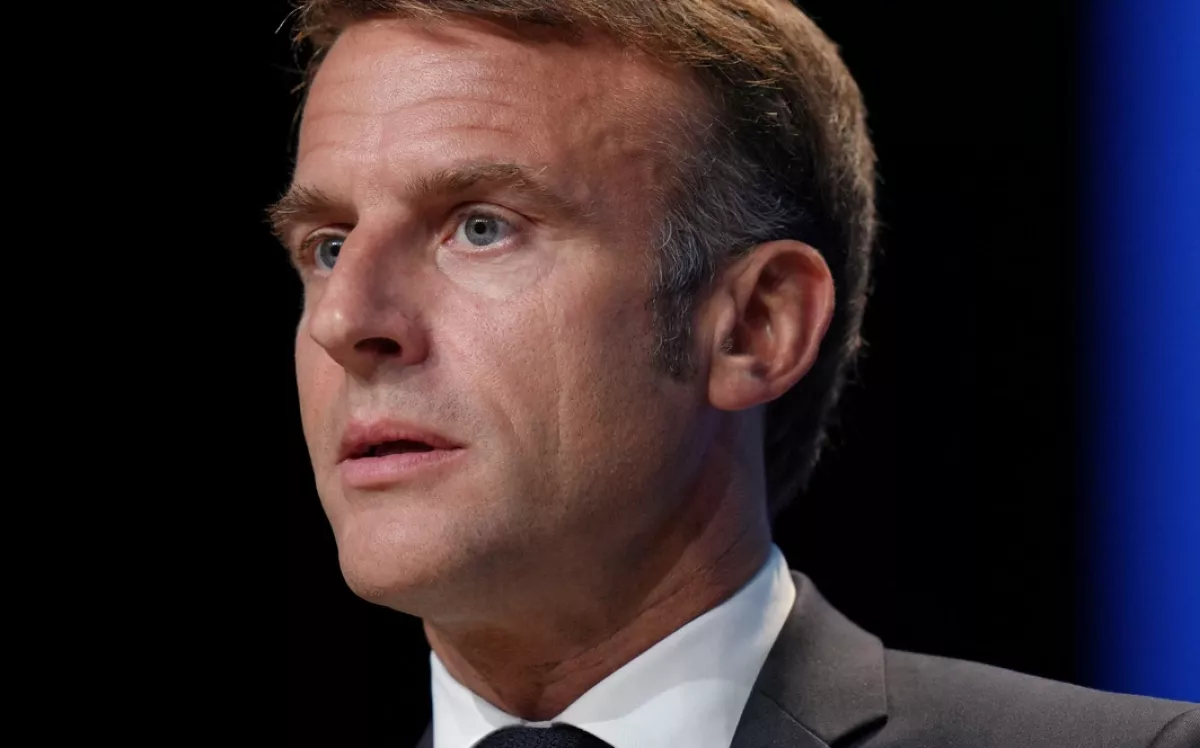
Against the backdrop of such sharp criticism of NATO and Macron’s emphasis on the EU as a potential substitute for the Alliance, it was quite logical that he shed all restraint during discussions with the Greek leadership on relations with Türkiye. He declared readiness to assist Greece in its conflict with… Türkiye. Macron promised unwavering French support for “Greek sovereignty” in the Aegean Sea.
It should be recalled that this effectively concerns Greek territorial expansion through the reinterpretation of legal norms. This would allow Greece to gain access to additional resources and would, in practice, deprive key Turkish economic zones of their previously free access to the sea.
As we can see, while searching for solutions to their military dilemmas—intensifying amid the gradual erosion of transatlantic ties with the United States and the growing risk of open war with Russia—European leaders are not only contradicting one another in the signals they send to Trump. They are also beginning to pursue increasingly assertive policies against NATO allies themselves. And this is no longer limited to occasional provocations by Macron.
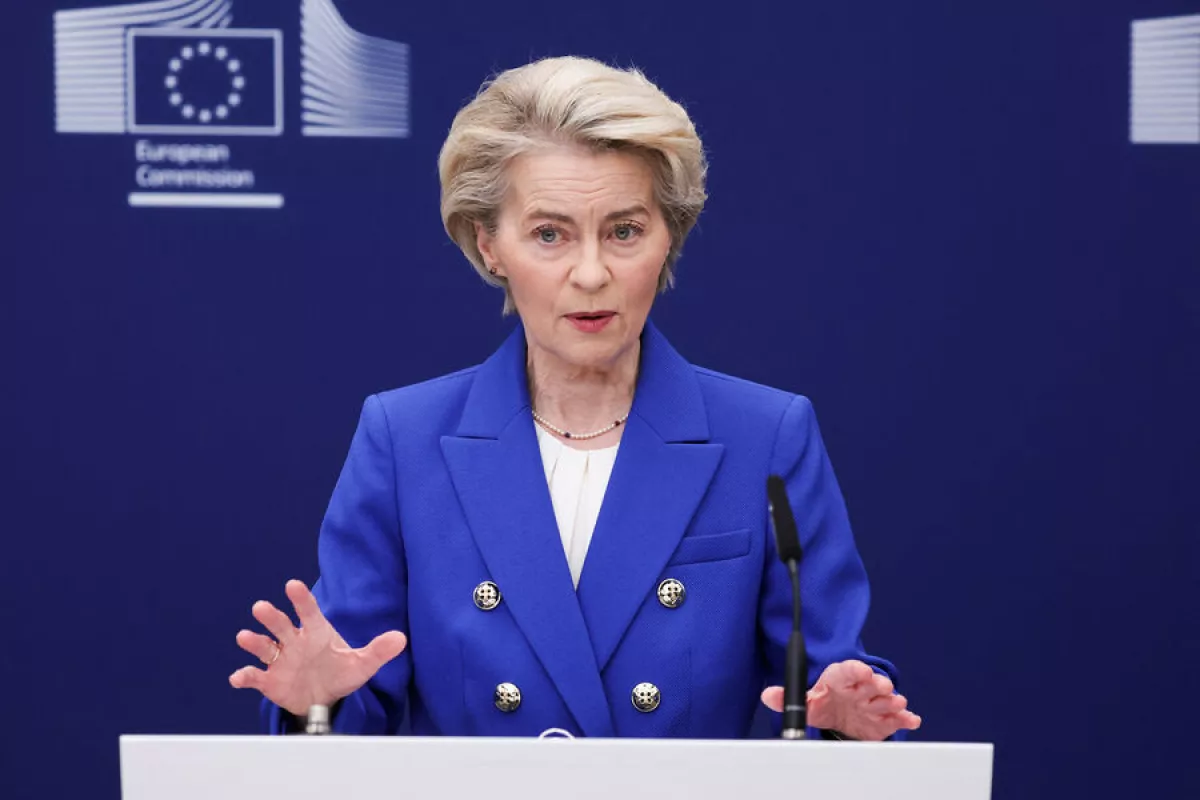
Recently, a similar remark was made by European Commission President Ursula von der Leyen, who referred to Türkiye, Russia, and China as adversaries of Europe. Macron, for his part, has for several years been building his alignment with Greece on the basis of a confrontational stance toward Türkiye and what critics describe as France’s own geopolitical ambitions in the Mediterranean.
For instance, as early as autumn 2020, he began openly supporting Greece against Türkiye and even redeployed French military assets to the Eastern Mediterranean. At the time, however, his actions were still constrained by the framework of NATO. Today, he appears to regard those constraints as effectively obsolete, which explains the more unrestrained tone of his statements toward Türkiye.
The implausibility of such remarks is so evident that, outside France, sections of the European press have even attempted to downplay the anti-Turkish rhetoric of both Macron and von der Leyen. Relevant portions of their statements were reduced to a minimum and buried deep within coverage of other aspects of their speeches.
The risk of Europe’s geopolitical paralysis
The most significant aspect of all this is Europe’s lack of a realistic, coordinated, and proactive policy on these crucial issues. While speaking of unity, liberal elites across EU countries—and the United Kingdom aligned with them—are in fact pulling in different directions and sending contradictory signals. In relations with the United States, their strategy essentially boils down to “waiting out” Trump’s presidency and, if possible, accelerating a comeback by his domestic opponents—regardless of the severe consequences such an approach could have for the transatlantic alliance that underpins the West.
As for the Russia–Ukraine war and the U.S.–Iran confrontation, Europeans have found themselves in a peculiar position. The EU is effectively acting as a passive supplier of resources and funding, hoping for Russia’s defeat in the first case and a draw in the second. Yet Europe is reluctant to play an active role in achieving these outcomes. Real-world developments are already demonstrating the damaging consequences of such a policy for European states. Yes, Russia has become entangled in Eastern Ukraine, but there is no sign of collapse. Yes, Trump has not “wiped Iran off the map,” as he once threatened. But what, in the end, have the EU and its partners actually achieved through this approach?
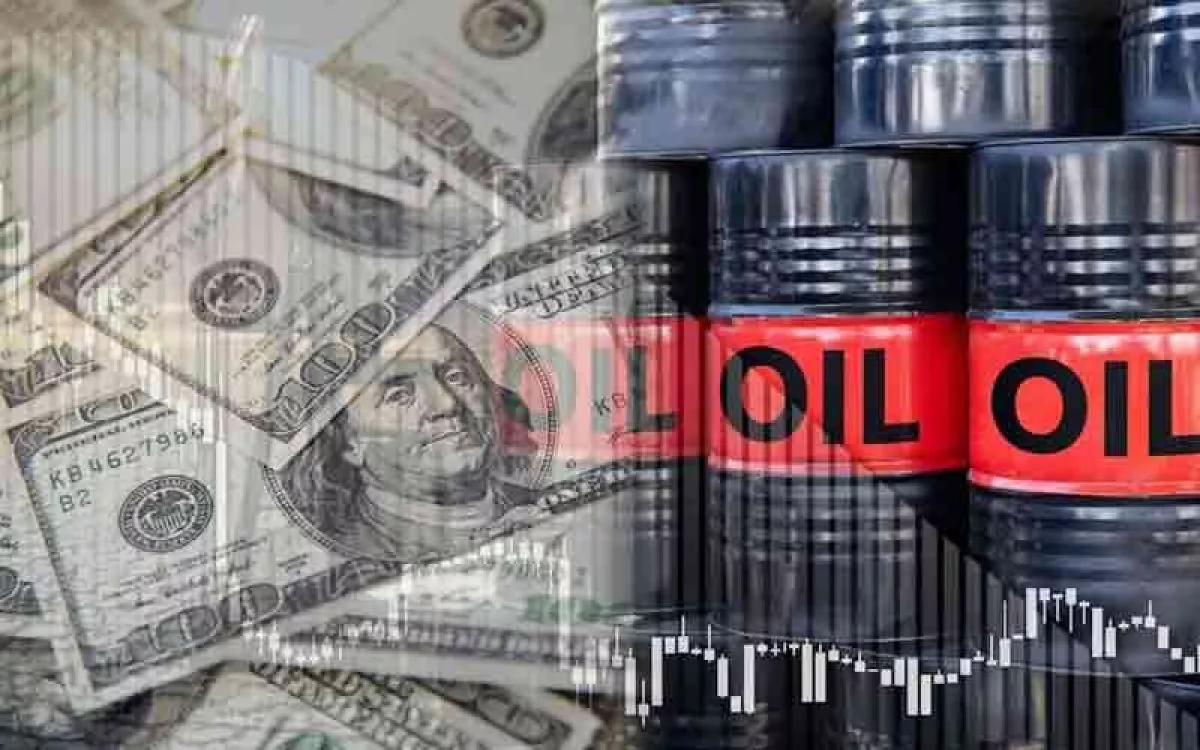
Due to the prolonged conflict in the Persian Gulf, energy prices have surged to record levels. Oil, for instance, was trading at around $120 per barrel this week. Russia’s budget had been calculated on the basis of prices at roughly $59 per barrel (although this refers to a different grade of oil, so comparisons should be made with caution). As a result, Moscow stands to generate substantial additional revenues from this situation, enabling it to sustain—and potentially expand—its military efforts. In an attempt to curb this financial flow, Ukraine, with European backing, has launched a series of highly risky strikes on Russian export terminals, effectively playing with fire and with limited prospects of success.
For the United States, the situation is challenging but far from critical—arguably even advantageous. Given Washington’s strategic focus on energy exports, it can afford to wait while continuing to apply pressure on Iran—and not only Iran. The recent decision by the United Arab Emirates, a significant player in the global energy market, to withdraw from OPEC this week may also work to the advantage of the United States and Israel in this context.
For Europe, however—unlike Russia and the United States—the situation is far more severe. Having already paid a heavy economic price for the conflict with Russia, it now faces the threat of new energy shocks. In short, the EU’s strategy of “waiting out Trump,” which has led to an unprecedented divergence between European and American policies on key issues, ultimately reflects a lack of substantive ideas behind the grand rhetoric of European liberal democracies. Slogans such as “EU enlargement” or “building the strongest army” amount to little more than demagoguery, as they are not backed by a clear vision of the future—something the original architects of European integration once possessed.
This suggests that the EU is not truly growing stronger, but rather accumulating excess weight—risking what could be described as a form of geopolitical paralysis. Instead of advancing decisively, it hesitates and loses control of the situation, rather than patiently waiting for a strategically favourable moment. It is a loose and indecisive force that is not only incapable of replacing NATO, but whose own future appears increasingly uncertain.







 editor@caliber.az
 +994 55 444-88-98
 Азербайджан, Баку, ул. Низами, 203, Af Business House, 5-й этаж