










Armenia–Georgia border: the price of unilateral “adjustments” Article by Vladimir Tskhvediani
Recently, claims emerged in the media suggesting that Armenia had allegedly reached an agreement with Georgia, within the framework of border delimitation and demarcation, to transfer the border village of Jiliza, which is currently administratively part of the Alaverdi community in the Lori region of Armenia. However, the press secretary of the Armenian prime minister, Nazeli Baghdasaryan, has officially denied this information.

“Some media outlets have circulated ‘information’ claiming that, within the framework of the delimitation process, an agreement has allegedly been reached under which Armenia would transfer the village of Jiliza in the Alaverdi Municipality.
Any statement, idea, or ‘information’ about the intention, plan, or agreement to transfer any part of the sovereign territory of the Republic of Armenia to another country cannot correspond to reality by its very nature,” the press secretary of the Armenian prime minister said in an official statement.
The emergence of information about the “transfer” of the village of Jiliza from Armenia to Georgia came shortly after Armenian Prime Minister Nikol Pashinyan, speaking at an event dedicated to Border Guard Day of the National Security Service, stated that his country would continue border delimitation with Azerbaijan in the near future. He also announced the imminent completion of border delimitation with Georgia.
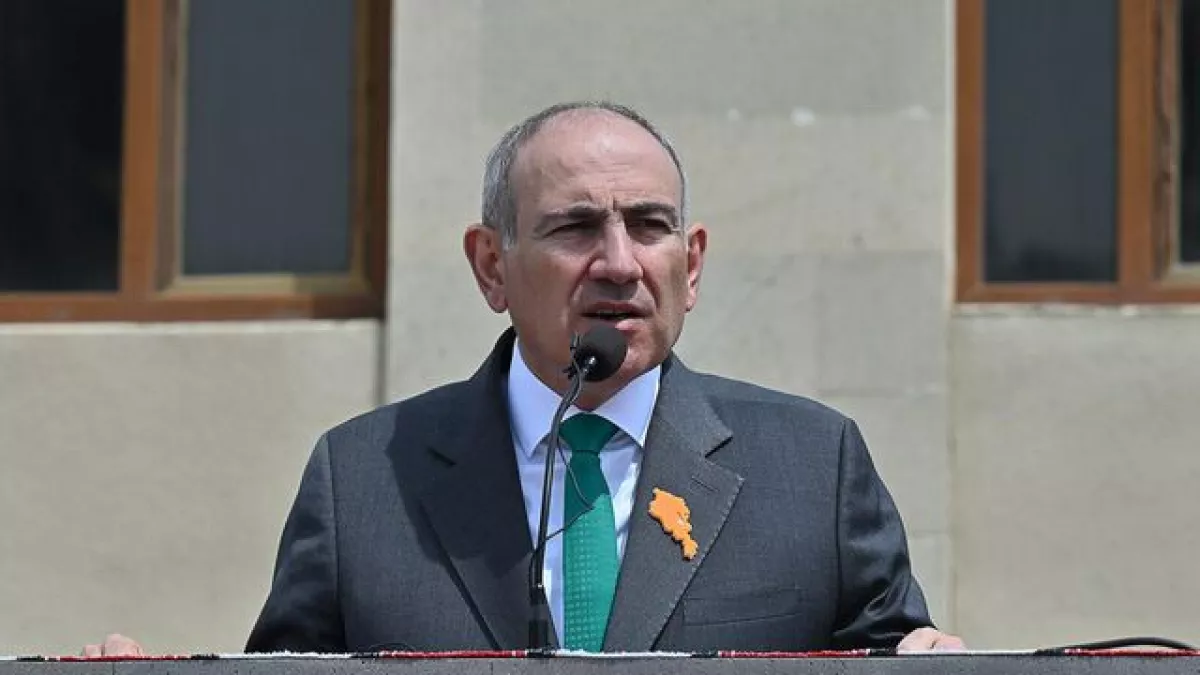
“In the near future, of course, we will continue and in a reasonable timeframe complete the delimitation of the border between the Republic of Armenia and Azerbaijan. Of course, the issue of completing the delimitation of our border with Georgia is also on our agenda, and we have already reached an agreement with our Georgian partners on this matter. This, essentially, will finalize the delimitation and demarcation of the borders of the Republic of Armenia, and our state will gain the opportunity to more confidently focus on the development of its internationally recognized territory,” said Nikol Pashinyan.
Nikol Pashinyan’s statement clearly does not suit certain forces within Armenia. First and foremost, it is opposed by revanchist groups that have not abandoned claims to both Azerbaijani and Turkish, as well as Georgian territories. Opposing the delimitation and demarcation of the border with Azerbaijan effectively means seeking to reignite war, the outcome of which for Armenia is already evident. Even today, this is understood by the most “militant” supporters of revanchist positions. However, discrediting the very process of border delimitation and demarcation remains, for them, a necessary objective.
It appears that the process has been decided to begin with the Armenian–Georgian border, especially since real issues do exist there. These problems emerged due to nationalists who were in power in Yerevan and sought to incorporate lands beyond the borders of the Armenian SSR into Armenia, as well as due to the Karabakh clan, which, under revanchist slogans and with the support of the Kremlin, has been trying to return to power.
Information that the Armenian side was “shifting” the border of the Armenian SSR, appropriating both Georgian lands and architectural monuments located there, appeared even before the collapse of the Soviet Union.
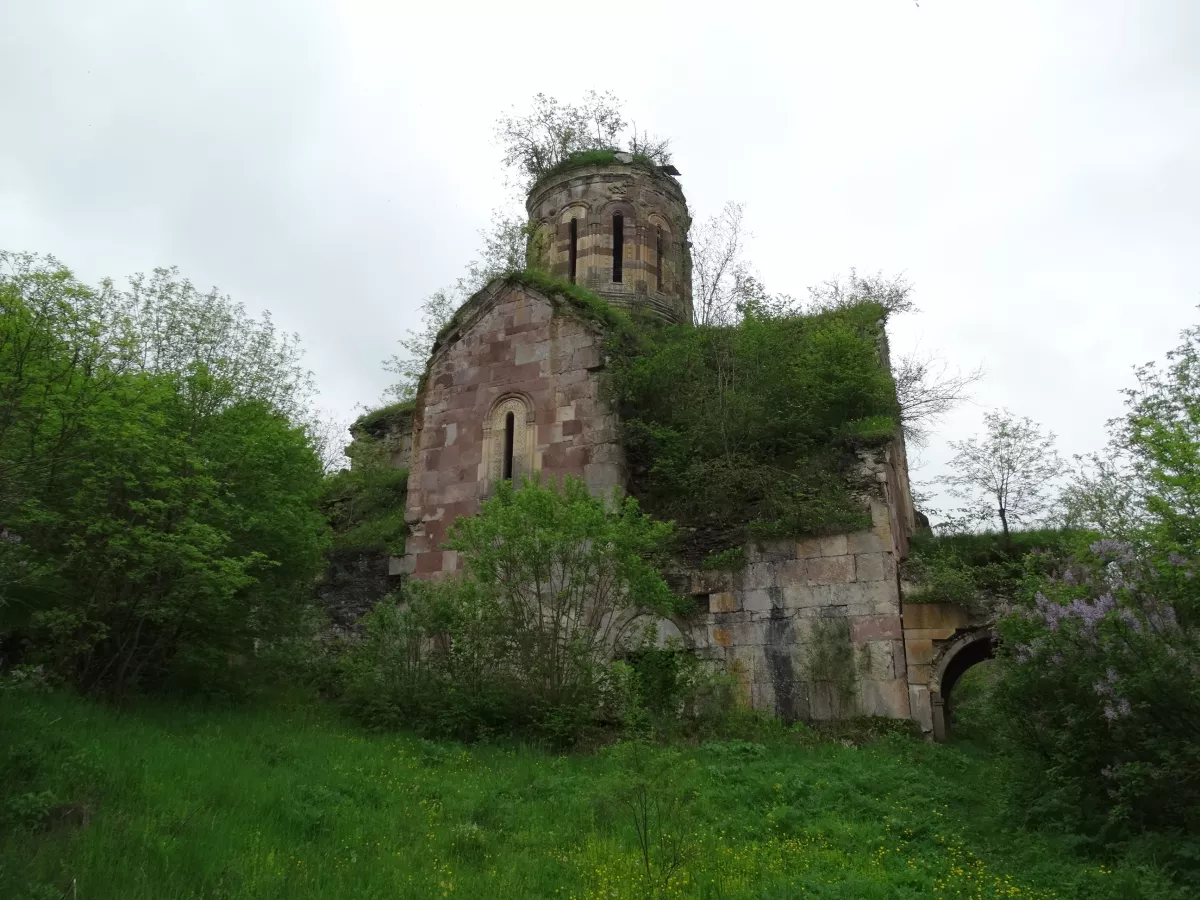
On October 15, 1988, the newspaper “Akhalgazrda Komunisti” published an article by Kharadze titled “The True Heir of the Monument,” which reported: “In order to appropriate the 13th-century Georgian architectural monument — the Khujabi Church — the Armenian side advanced the border by 400 meters, and the monument ended up on the territory of Armenia.”
At the same time, the Georgian Soviet Encyclopedia (Vol. 11, p. 521, Tbilisi, 1987) states that as of 1987, the Khujabi Monastery was located on the territory of the Georgian SSR. Taking into account that 1988 became a period of peak “Miatsum” nationalist sentiment in Armenia, accompanied by territorial claims against Azerbaijan, the “shifting of the border” toward Georgia fits into the policy of the authorities in Yerevan at that time.
After the collapse of the USSR, the process of “gradual shifting” of the Armenian–Georgian border became particularly intense. During the rule of representatives of the Karabakh clan — Robert Kocharyan and Serzh Sargsyan — taking advantage of the fact that Georgia, having lost control over Abkhazia and the Tskhinvali region, was in a critical situation, the Armenian authorities unilaterally “moved” the border. Armenian border guards arbitrarily installed border markers and fences, effectively seizing nearby forests, pastures, and agricultural lands belonging to Georgian citizens. This process was especially noticeable in the vicinity of villages in the Marneuli, Bolnisi, and Dmanisi districts, which are populated by ethnic Azerbaijanis and border Armenia.
Attempts by Georgian citizens to approach religious sites located on the border (whose territorial affiliation has still not been determined) were prevented by Armenian border guards. In 2005, an incident occurred on the Georgian–Armenian border in the area of the Khujabi Monastery. At that time, Armenian border guards opened fire on journalists from the Georgian television company “Mze,” who were attempting to reach the monastery. Warning shots were fired until the journalists completed filming and left the area. A report on the incident was published under the title “Where is the border between Georgia and Armenia?”
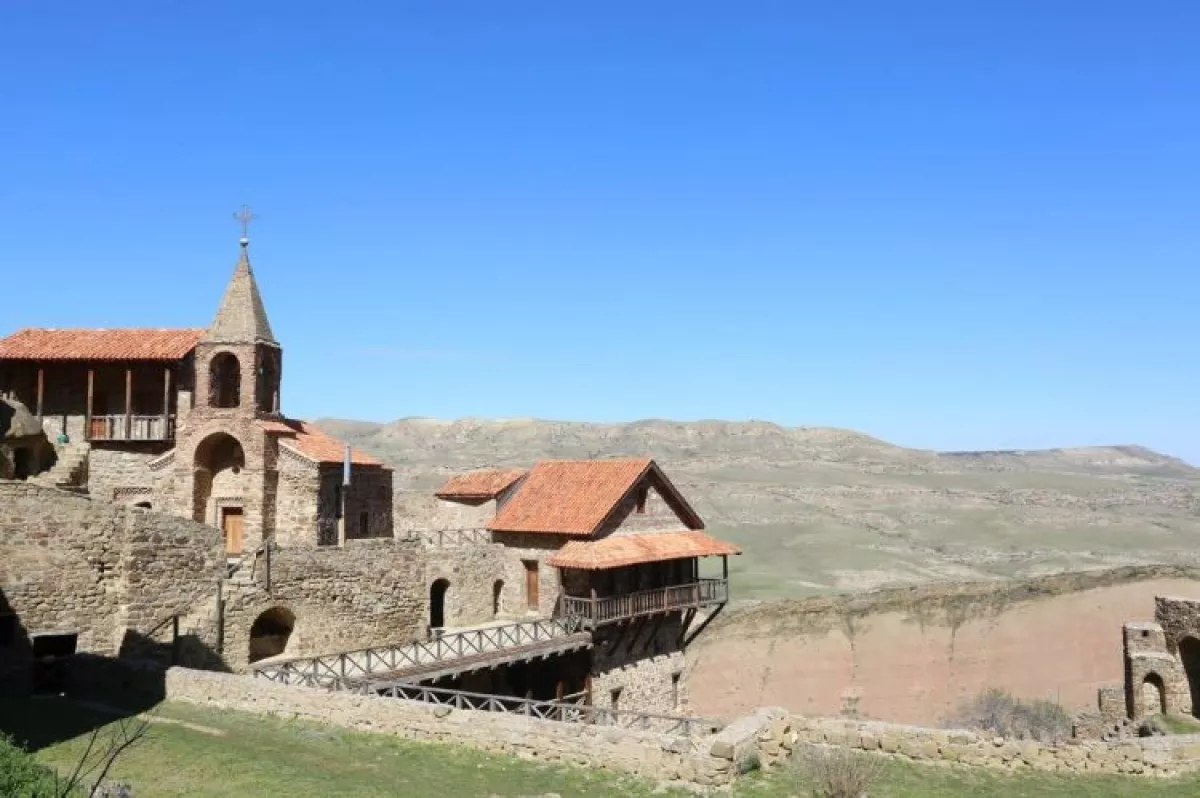
In September 2019, information circulated on Facebook claiming that the delimitation of the border with Armenia had allegedly been “completed” and that the Khujabi Monastery had been “transferred to the Armenian side.” The Georgian Ministry of Foreign Affairs was forced to officially state that, until the completion of the delimitation of the state border, the legal status of the monastery’s location remained undefined.
“Between Georgia and the Republic of Armenia, the process of delimiting the state border has not been completed. At the level of the governmental commission, the parties have agreed on 160 kilometres of the state border (approximately 71 per cent). Work continues on the remaining nearly 65 kilometres. The date of completion of delimitation depends on reaching an agreement along the entire length of the border. As for the Khujabi Monastery, its location cannot be legally determined until the delimitation of the state border is completed,” the Georgian Ministry of Foreign Affairs stated on September 18, 2019.
The lack of delimitation of the Armenian–Georgian border has led to violations of human rights: Armenian border guards arbitrarily “shifted” the border and detained local residents of Azerbaijani ethnicity on charges of “border violation,” effectively holding them as hostages. At the same time, citizens of Armenian nationality crossed the border freely.
Since 2007, in order to halt the process of “gradual border shifting,” the Georgian side began deploying its own checkpoints along the border of the Marneuli district with Armenia and prohibited crossing outside official border crossing points (BCPs). From that time, residents of the village of Jiliza, who had previously crossed the border freely, faced serious difficulties.
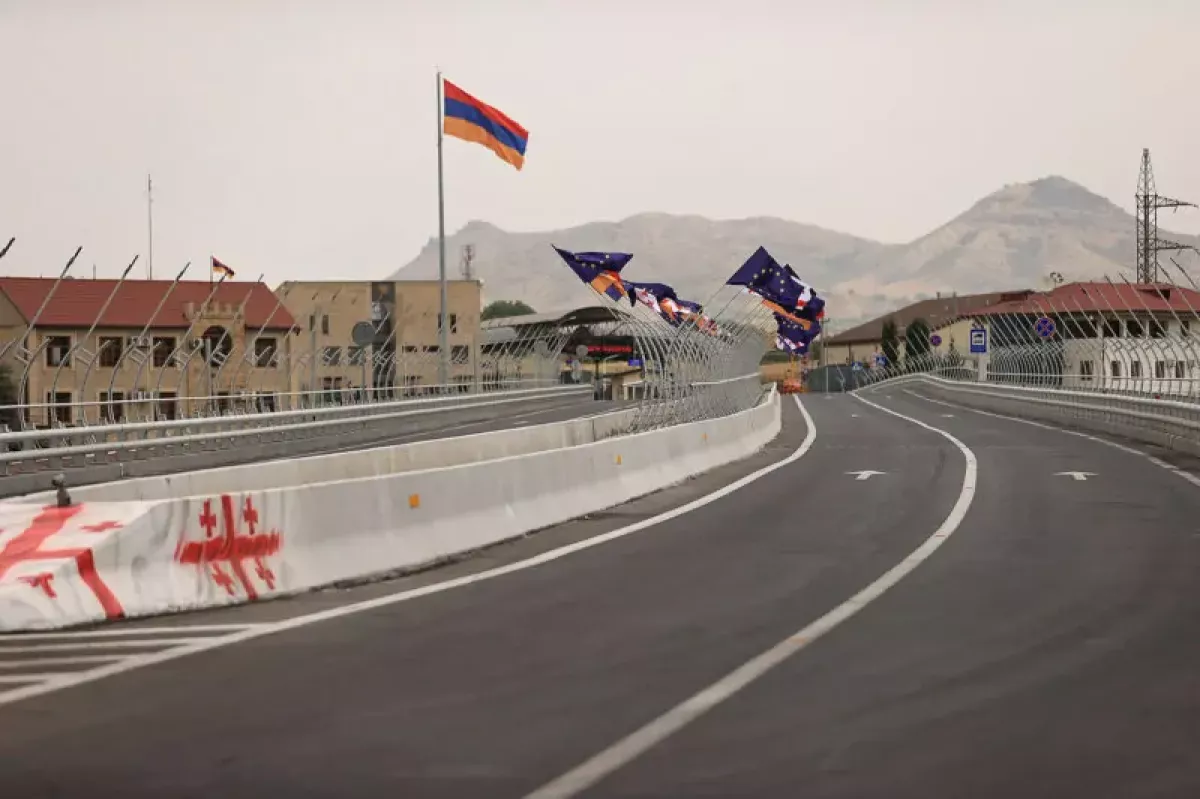
In order to reach relatives in nearby villages on Georgian territory, they were forced to use the Bagratashen–Sadakhlo checkpoint and make a detour of almost 100 kilometres. At the same time, Armenian media published materials accusing the Georgian side of “biased treatment,” and proposals were made to establish a checkpoint in the village of Jiliza to improve access to the “outside world.”
The reason is that from the village of Jiliza, located on the northern slopes of Mount Lalvar, it was previously much easier to reach Marneuli than Alaverdi, the road to which passes through mountainous forest terrain and becomes almost impassable in winter and bad weather. The villagers began to envy their compatriots living in nearby Georgian villages. It is likely that this is where the thesis about the “possible transfer” of Jiliza from Armenia to Georgia originates. However, this is unlikely, since during the Soviet period the village belonged to the Tumanyan district of the Armenian SSR (district centre — the town of Alaverdi).
Nevertheless, part of the territory unlawfully acquired through “gradual border shifting” will, during the official delimitation and demarcation process, likely have to be returned to Georgia. What is important is how this process will be presented to the public in both countries.
In Georgia, the restoration of justice on the border will undoubtedly contribute to the growing popularity of the Georgian Dream party. Even if the village of Jiliza remains with Armenia, but during delimitation the Georgian ownership of border forests, pastures, and especially the Khujabi Monastery is confirmed, this will be perceived as the peaceful return of Georgian lands.
In Armenia, the return of even small territories may be portrayed by revanchist groups as “Pashinyan’s betrayal.” It is no coincidence that the fake news about the “transfer of the village of Jiliza” is being spread by his opponents, including forces supported by the Kremlin.
The Telegram channel bagramyan26 claims that the same forces are behind this, conducting a hybrid war against Armenia. This refers to the candidate for prime minister from the Strong Armenia party, Samvel Karapetyan, who—together with the Karabakh clan—relies on revanchist sentiments and opposes the final delimitation of Armenia’s borders.
By Vladimir Tskhvediani, Georgia, exclusively for Caliber.Az







 editor@caliber.az
 +994 55 444-88-98
 Азербайджан, Баку, ул. Низами, 203, Af Business House, 5-й этаж