










Bowing to the dead “miatsum” Swiss MPs in the service of revanchists
The Swiss Confederation, and particularly its legislative branch, has often featured in publications by Caliber.Az. Unfortunately, the reason for this is usually unflattering. The Swiss Parliament has consistently taken positions that demonstrate a lack of respect for Azerbaijan’s sovereignty and constitute interference in the country’s internal affairs. In particular, following the voluntary relocation of Armenians from the Karabakh region of Azerbaijan to Armenia in September 2023, Swiss lawmakers have taken on the role of a battering ram, pushing forward false narratives about the “forcible expulsion” of Armenians and their alleged right of return.
The peak of their destructive activity came on March 18, 2025, when the Council of States—the upper house of the Federal Assembly of Switzerland—approved the “Peace Forum for Nagorno-Karabakh: Enabling the Return of Armenians” initiative. The project calls on Swiss authorities to establish a separate platform for dialogue between representatives of “Nagorno-Karabakh” and Azerbaijan.
On May 26, 2025, a cross-party commission comprising 19 members of parliament began its work to facilitate the implementation of this initiative. One of the two co-chairs of the commission is Stefan Müller-Altermatt, widely regarded as a key lobbyist for the Armenian diaspora in Switzerland.
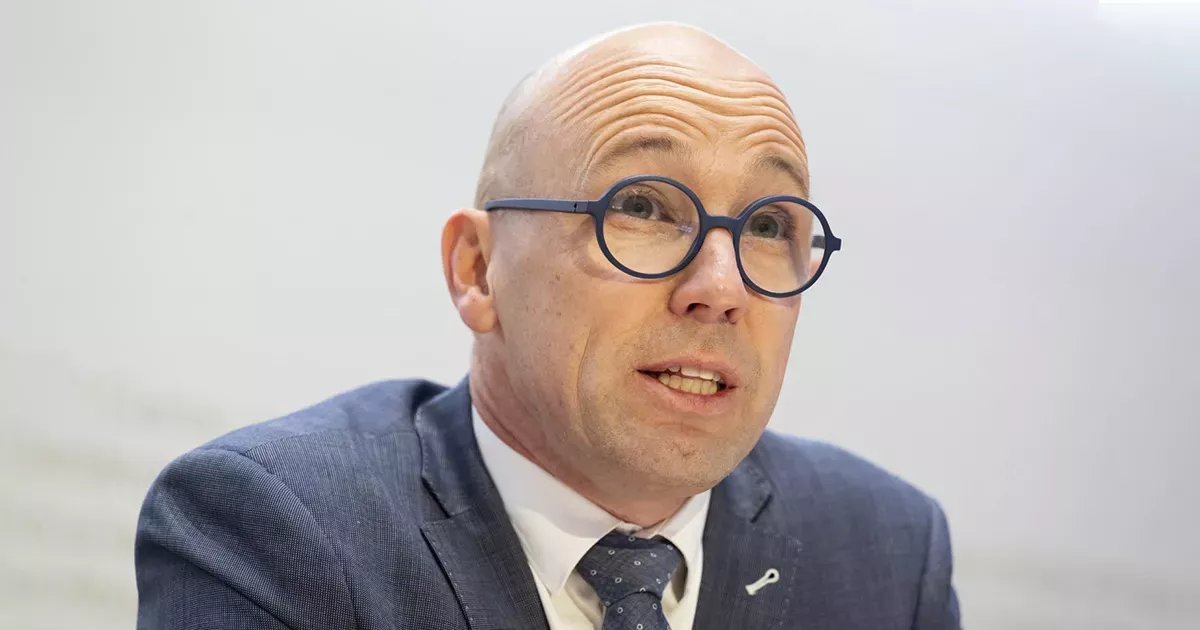
On February 4 this year, members of the Swiss National Council, Erich Vontobel and the aforementioned Müller-Altermatt, as well as John Eibner, president of the human rights organisation Christian Solidarity International (CSI), visited Yerevan and the so-called “permanent representation of Artsakh in the Republic of Armenia”. The delegation was accompanied by CSI representatives Joel Veldkamp and Peter Fuchs. The guests were received by a certain Ashot Danielyan, who presents himself as the “acting president of Artsakh” and simultaneously as the “speaker of the National Assembly” of the same phantom structure.
And finally, just recently, another event in the same vein took place. According to Swiss media reports, Danielyan met with Swiss parliamentarians at the Federal Palace in Bern, expressing “gratitude for the sympathy and support that Karabakh Armenians receive”. Of particular importance for Danielyan is Switzerland’s “readiness to create a platform to discuss the problems of Karabakh Armenians”.
It is clear that these steps are aimed at denying the new realities established after the 44-day war and the 2023 counter-terrorism operation, as well as at creating obstacles on the path to a peace agreement. A legitimate question arises: why does a significant part of the Swiss political establishment seek to hinder the very peace that the Armenian government itself claims to pursue?
Also noteworthy is the synchronisation of the Swiss parliament’s actions with recent anti-Azerbaijani initiatives in the legislative bodies of Belgium and the Netherlands, as well as a European Parliament resolution, after which the Azerbaijani Milli Majlis (parliament) suspended all relations with that institution.
It is possible to speak at length and with justification—especially in light of Ocampo’s recent self-exposure, in which he described his business relations with parts of the European political establishment—about the corrupt nature of politicians such as Müller-Altermatt. However, at the same time, it must be understood that at the deepest level this position is driven by pseudo-Christian solidarity interpreted through an Islamophobic lens, as well as by a reluctance to see the strengthening of Turkic states and their cooperation with Türkiye.
The cynicism of this stance is evident, at the very least, in the fact that for nearly thirty years of occupation of Azerbaijan’s territories, Swiss parliamentarians never once raised their voices in defence not only of Azerbaijani refugees from Armenia, but also of the internally displaced persons from the occupied Karabakh region.
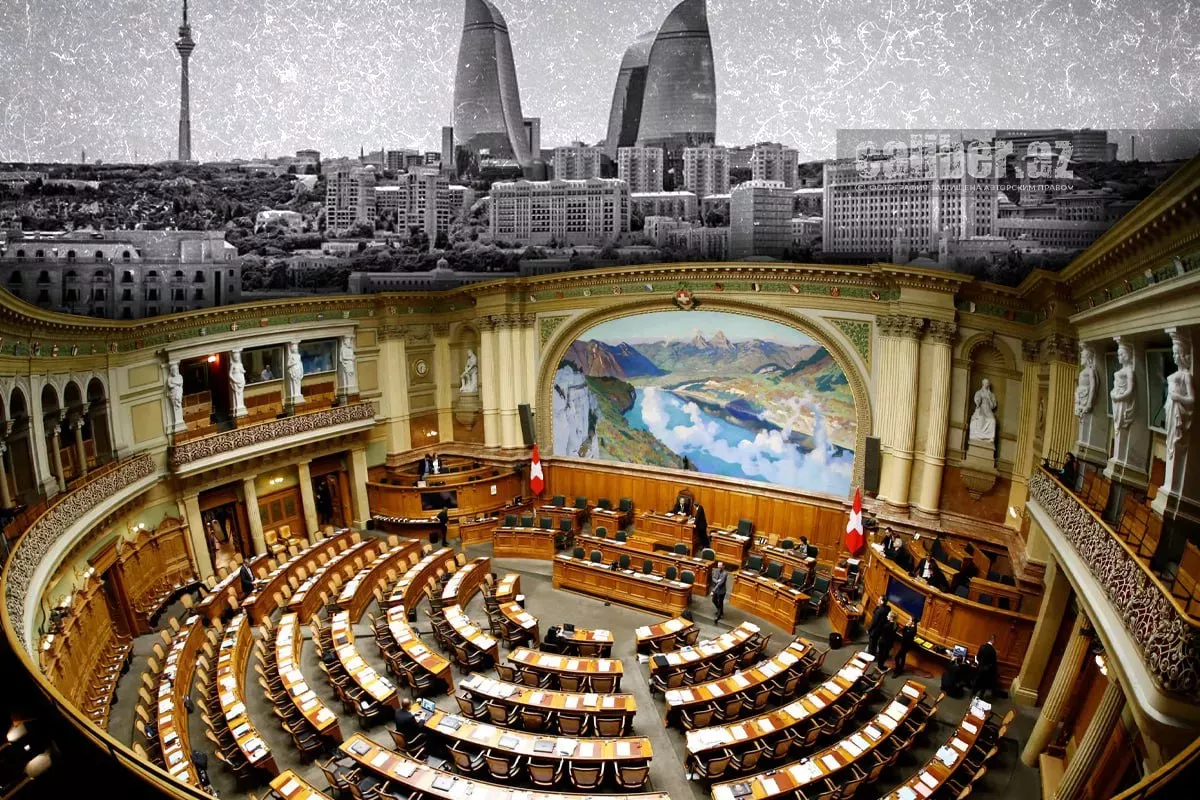
At the same time, it should be noted that the Swiss government is, in general, attempting to distance itself somewhat from the more openly controversial actions of parliament, although it is doing so rather hesitantly and only partially. In the same Swiss media report on the visit of the so-called “Artsakh” delegation, the position of the country’s Foreign Ministry is outlined as follows:
“The Swiss Foreign Ministry acknowledges the humanitarian aspect of the issue and supports the right of refugees to return. However, it emphasises that Nagorno-Karabakh belongs to Azerbaijan under international law. Therefore, Danielyan was not received by representatives of the Swiss Foreign Ministry.”
Yes, the position is clear and might even seem to warrant a certain degree of acknowledgement for the fact that representatives of the Swiss government did not welcome the remnants of separatist structures with open arms. Nevertheless, one may still ask why the Swiss Foreign Ministry, while now recognising the “humanitarian aspect of the issue” and supporting the right of Armenians to return, does not extend the same recognition to the Azerbaijani refugees who were displaced from Armenia.
There are many questions for Switzerland, and especially for its elected representatives. However, it is even more important to remind them that the train has already left the station. On August 8, 2025, in Washington, Baku and Yerevan initialled the text of a peace agreement and signed a Joint Declaration reflecting their commitment to lasting peace.
The Armenian government is not putting forward, nor is it in a position to put forward, any conditions to Baku regarding the return of Armenians to the Karabakh region of Azerbaijan. However, Baku does have a precondition for the signing of the peace agreement—the removal from the Armenian Constitution of provisions containing territorial claims against Azerbaijan.
All countries seeking cooperation with a peaceful South Caucasus should help Armenian society recognise the need to amend the relevant part of its Basic Law. And all those attempting to engage in partnership with the new South Caucasus are advised to urgently rid themselves of the stale odour of the corpse of “miatsum” lying on the roadside of history.







 editor@caliber.az
 +994 55 444-88-98
 Азербайджан, Баку, ул. Низами, 203, Af Business House, 5-й этаж