










UAE’s strategic realignment Defence, energy, and new regional corridors
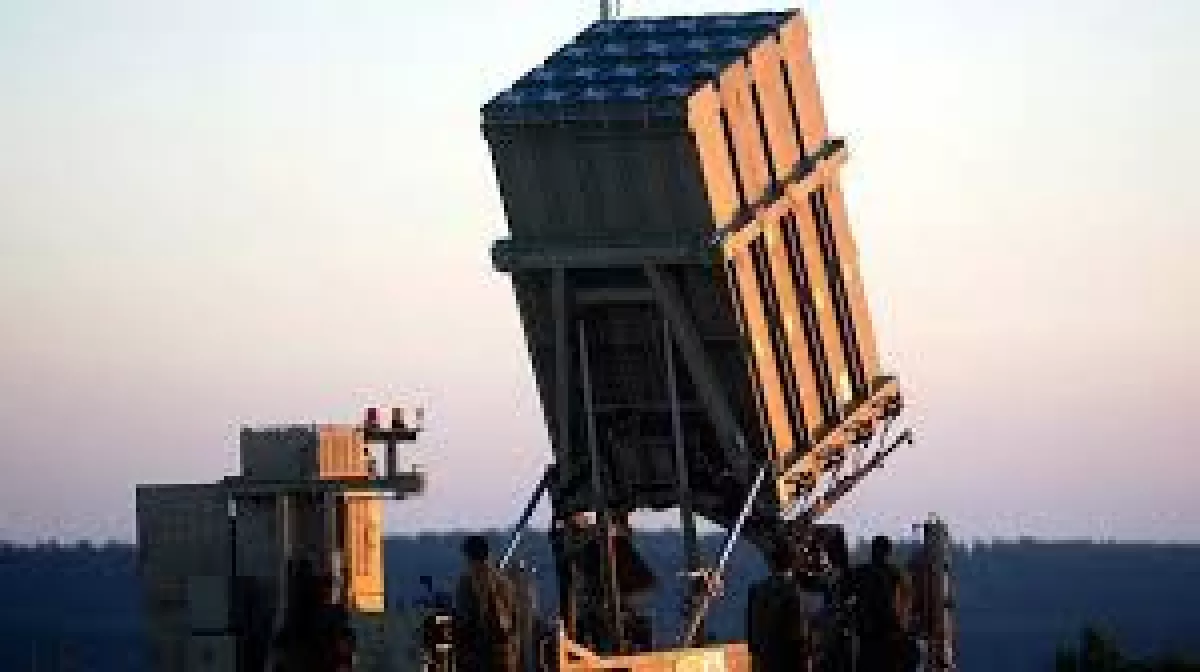
Israel has supplied the UAE with advanced air defence systems, including laser weapons capable of destroying short-range missiles and drones.
According to reports from several sources, Israel has also deployed elements of the Iron Dome air defence system in the UAE, sending specialists to support its operation and maintenance.
This development comes amid widespread reports of the UAE’s withdrawal from both the Organisation of the Petroleum Exporting Countries (OPEC) and the broader OPEC+ alliance. A number of analysts interpret these moves as part of a broader strategic shift aimed at reshaping not only the region’s political and economic landscape, but also that of a wider geopolitical space. Importantly, this is not merely about weakening Saudi Arabia—which is effectively losing a key partner within OPEC—nor solely about raising questions regarding the future viability of the organization itself. Rather, it may signal a deeper transformation of the overall geopolitical balance in the Middle East, alongside the more explicit formation of new alliances.
What is unfolding in the region does not appear spontaneous, but rather the result of a carefully thought-out strategy. This is underscored by a statement made in March by Anwar Gargash, diplomatic adviser to the UAE president. He pointed: “we’ve all had a very difficult relationship with Iran over fifty years. Iran has been a bullying neighbor,” emphasising that during the height of the conflict, “we’ve been targeted by more missiles and drones than Israel, actually.”
As he further noted, “we’re seeing 2,000 Iranian missiles and drone targeting us.”
Gargash says: “within the circle of the Levant Israel has been seen as the main threat, I think in the circle in the Gulf Iran is being seen as the main threat.” In this regard, he noted that “Iran’s full-throttle attack on the Gulf states will actually strengthen the Israeli role in the Gulf, will not diminish it.”
Consequently, “for countries that have relations with Israel, [...] this relationship, in my opinion, will be even more strengthened. For countries that don’t have, I expect that [...] more channels will be open.” In particular, “I think for countries that are seeking to buttress also their defense, their technology. I think it will be more linked.” Thus, “this is also the folly of this Iranian strategy, an Iranian strategy that will actually make the Gulf—make Israel less of a threat and Iran more of a threat.”
Thus, the military dimension of relations between the UAE and Israel was largely expected. Moreover, during the height of the war involving Israel, the United States, and Iran, a number of media outlets reported that Israel had provided the UAE with intelligence on impending missile launches from Iran. According to these reports, more than 500 ballistic missiles and around 2,000 drones were launched at the UAE during that period, though most of them were successfully intercepted by Abu Dhabi.
Today, Abu Dhabi positions itself as one of the region’s leaders not only in terms of defence capabilities.
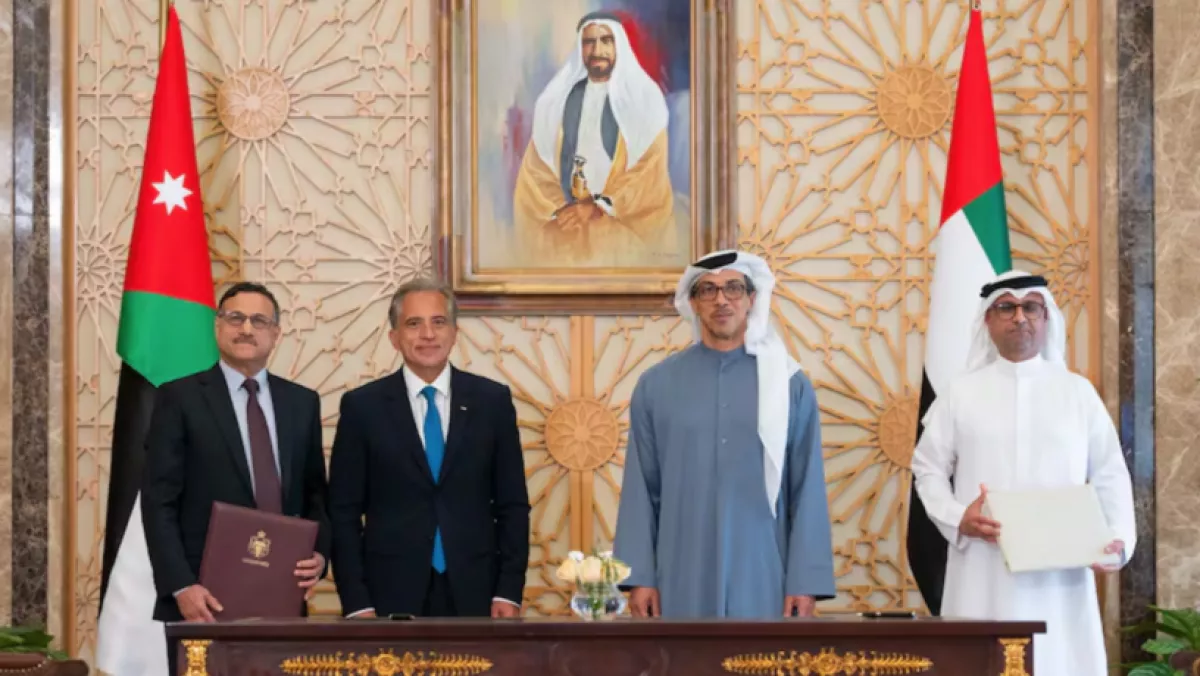
Experts also highlight an agreement signed in April 2026 between the UAE and Jordan for the construction of a railway to the port of Aqaba, valued at $2.3 billion. The project is intended to expand influence over Jordan’s mining sector, a key pillar of its export economy, including the transportation of phosphates and potash.
In other words, this railway line is set to play a significant role both within Jordan’s national infrastructure and in a broader international context—providing access to Syria, the Mediterranean Sea, and Türkiye, while also offering potential connectivity with Saudi Arabia and other Persian Gulf states.
At the same time, analysts point to a deeper strategic backdrop, linking these developments to the India–Middle East–Europe Economic Corridor (IMEC), promoted by the United States since 2023 within the framework of the G20 Summit. The project envisions the creation of a transport, energy, and digital corridor connecting India, the Persian Gulf region, and Europe. Specifically, the route envisions cargo flows originating in India, moving to the UAE, then continuing by rail through Saudi Arabia and Jordan to Haifa, before being transported by sea to Europe.
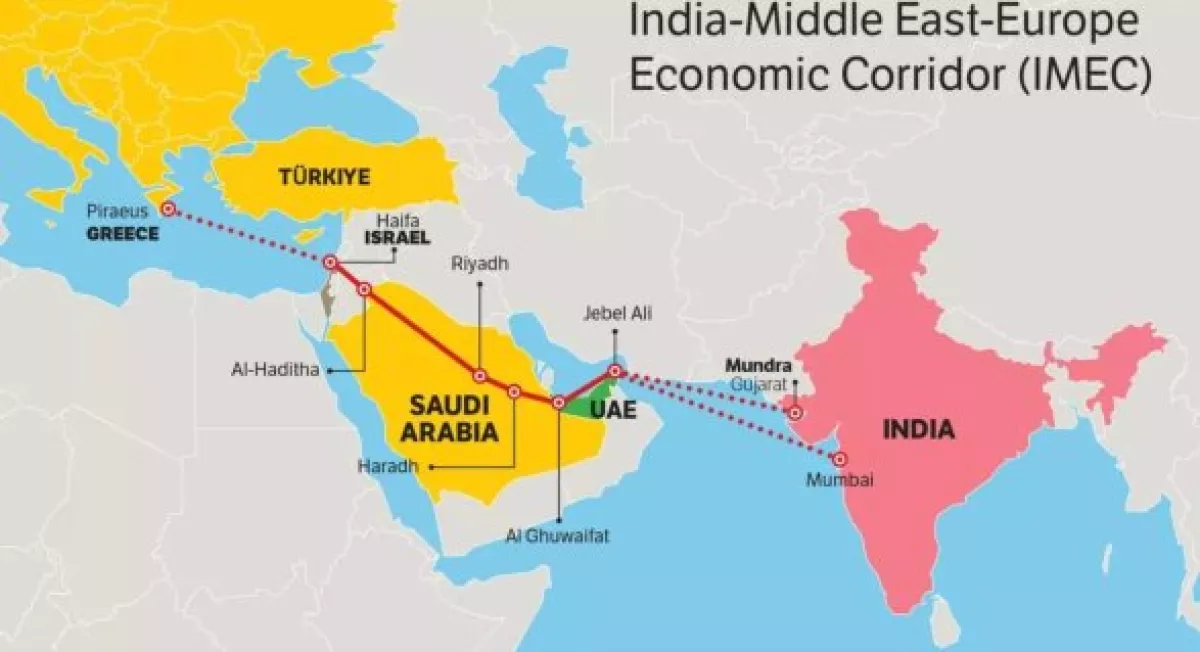
Although supporters of the project emphasise that it is not directed against the Suez Canal and should be viewed merely as a tool for diversification, experts see it as a potential alternative to the Suez route. If implemented, it could lead to the formation of a new geopolitical configuration.
Moreover, it is an important nuance that the India–Middle East–Europe Economic Corridor (IMEC) does not fully account for Türkiye’s strategic interests. Ankara has already begun formulating responses by exploring alternative transit routes via Syria and Jordan that would bypass Israel. At the same time, it is increasingly evident that IMEC also runs counter to the geopolitical and economic interests of China, Iran, and Russia.
The recent steps taken by the UAE demonstrate that the United Arab Emirates is pursuing an active geopolitical strategy aimed at transforming the entire region. Furthermore, the United States has already described the UAE’s exit from OPEC as a positive development, suggesting it could contribute to lower fuel prices through increased oil production.
Thus, amid ongoing exchanges of signals between the United States and Iran, as well as various maritime constraints, the UAE and Israel are taking steps aimed at shaping a new geopolitical landscape in the Middle East.







 editor@caliber.az
 +994 55 444-88-98
 Азербайджан, Баку, ул. Низами, 203, Af Business House, 5-й этаж