










Azerbaijan’s agro-industrial complex: cutting costs through technological innovation Analysis by Khazar Akhundov
Adverse climate change, inflationary pressures, and disruptions to global supply chains are placing significant strain on agricultural markets worldwide—and Azerbaijan is no exception. Against this backdrop, ensuring food security has become a strategic priority, requiring the country to accelerate reforms across its agro-industrial sector.
A key objective is to boost agricultural output by expanding farmers’ access to advanced digital and environmentally sustainable (“green”) technologies. At the same time, enhancing the competitiveness of locally processed agricultural products remains critical, particularly in terms of strengthening their presence in international markets.
The progress achieved by Azerbaijan’s agro-industrial sector, alongside emerging global trends, is currently on display at Caspian Agro Week, held at the Baku Expo Center. The exhibition has also been attended by the President of Azerbaijan, Ilham Aliyev, underscoring the strategic importance of the sector for the country’s economic development.
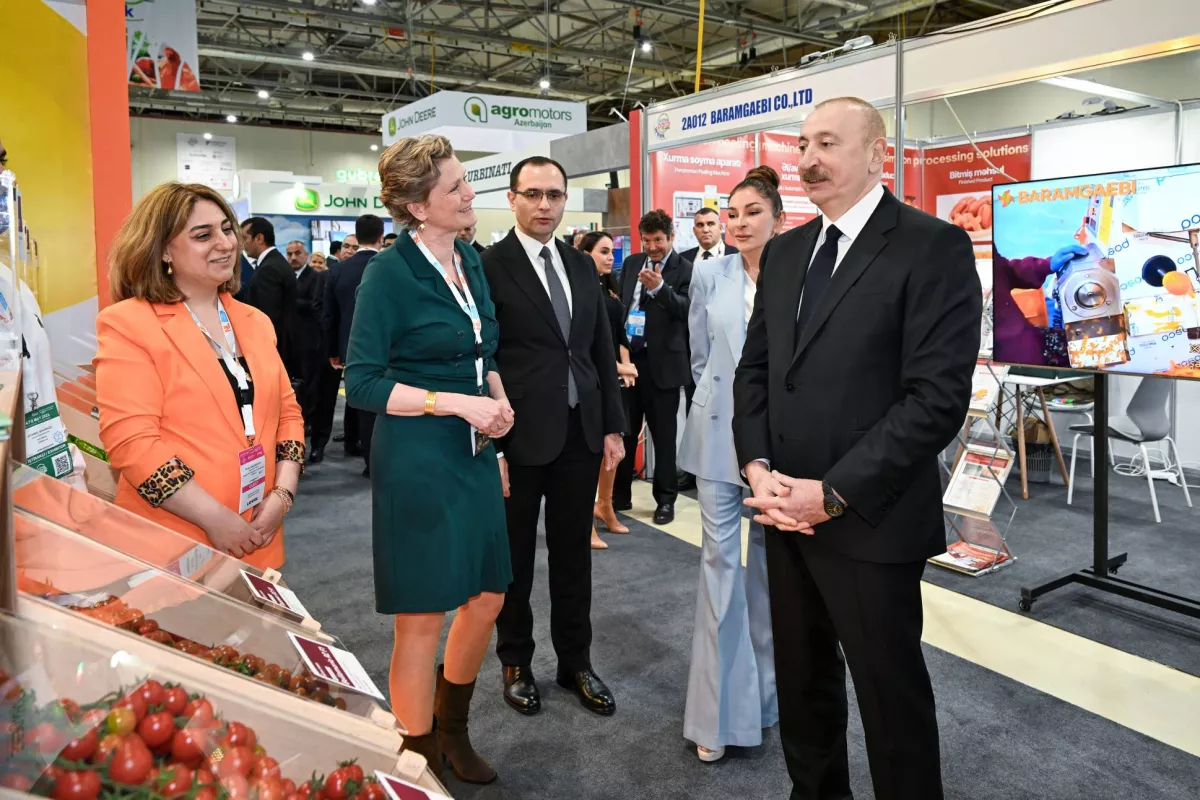
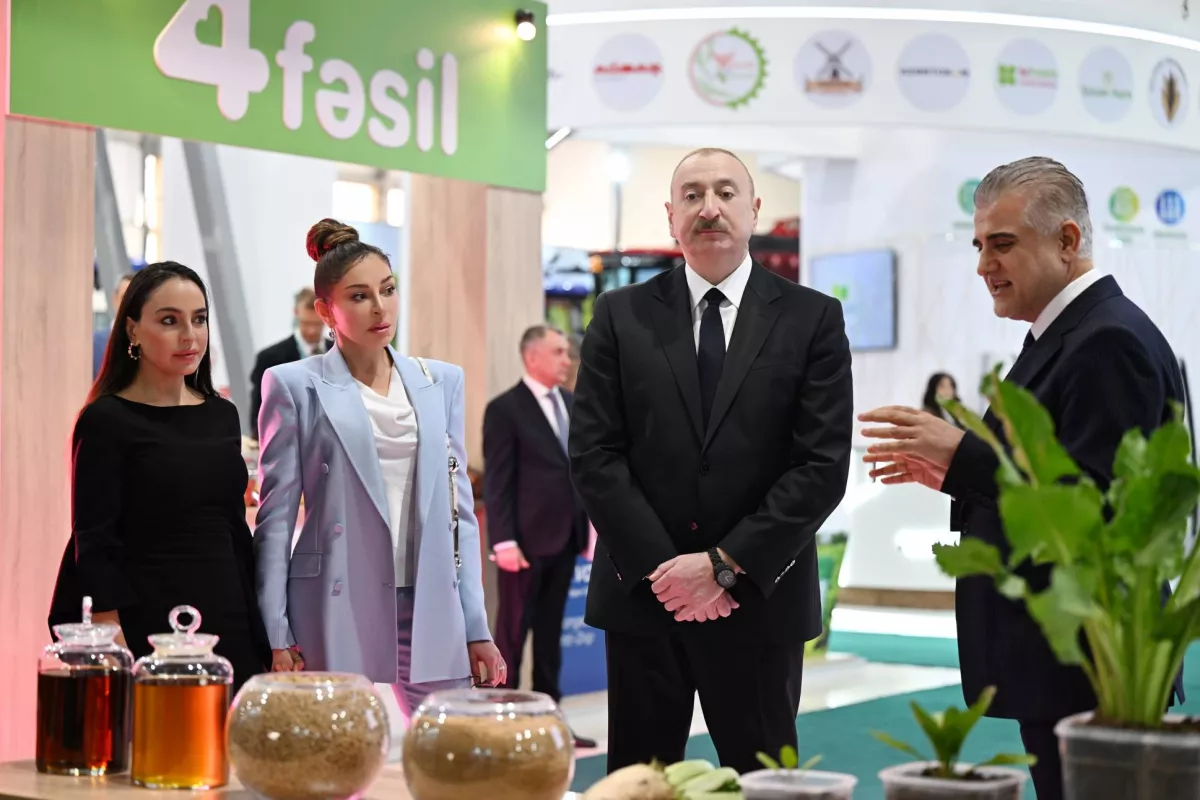
“The International Exhibition and Forum Caspian Agro, which has strengthened its position as one of the leading agricultural platforms in the region, has been organised this year in a new conceptual format — Caspian Agro Week,” Azerbaijan’s Minister of Agriculture, Majnun Mammadov, said at the opening ceremony of the forum.
“Within this format, the exhibition is not limited only to showcasing products and technologies, but also brings together forums covering various sectoral directions, as well as visits to large specialised innovative farms operating in the country,” he added.
According to the minister, holding the event this year in the Caspian Agro Week format creates an opportunity for a broader discussion of pressing issues in the agricultural sector through forums, panel discussions, and business meetings.
“This platform serves to strengthen effective cooperation between representatives of the public and private sectors, science, and innovation, as well as to expand international exchange of experience. I would especially like to note the participation this year, within the framework of the exhibition week, of agriculture ministers and official delegations from a number of countries, which once again proves the importance of the event as an international-level platform,” Mammadov emphasised.
The 19th Azerbaijan International Agriculture Exhibition and Forum “Caspian Agro”, the 31st International Food Industry Exhibition “InterFood Azerbaijan”, and the 14th Caspian International Exhibition “Everything for Hotels, Restaurants and Supermarkets” (Horeca Caspian), which opened in Baku on May 5 as part of Caspian Agro Week, are rightly recognised as the largest events in the region in the fields of agriculture and the food industry. This key annual event brings together major players from the relevant sectors.
Over the past two decades, several thousand companies have participated in the annual Caspian Agro and InterFood Azerbaijan exhibitions, with more than 150,000 visitors from dozens of countries attending. These agricultural forums have become an important platform through which international companies showcase innovative solutions and new technologies, and establish cooperation with Azerbaijani enterprises in the agricultural and food industries.
This year, this potential is expected to be realised on an even greater scale thanks to the intensive business programme of Caspian Agro Week. Over the course of four days, dozens of international forums, panel discussions, sectoral presentations and masterclasses will take place, along with traditional B2B and B2G meetings.
Notably, 447 companies from 45 countries around the world are participating in this year’s exhibition. Among them, individual national pavilions are represented by Germany, Belarus, Brazil, Georgia, Indonesia, Italy, the Netherlands, and the Republic of Korea, which will showcase products in the fields of agriculture and the food industry.
A separate stand is dedicated to the AFAZ (Africa-Azerbaijan Cooperation) organisation, featuring companies from 11 African countries. It should be noted that both the AFAZ group of countries and Brazil are participating in the exhibitions in Baku for the first time.
In addition to traditional food products, agricultural machinery and equipment, irrigation systems, packaging solutions, and innovative agricultural technologies, the forum will also feature a Smart Agro section. This area presents solutions in artificial intelligence, smart villages, startups, IT services, robotics, unmanned aerial vehicles, and green agriculture technologies.
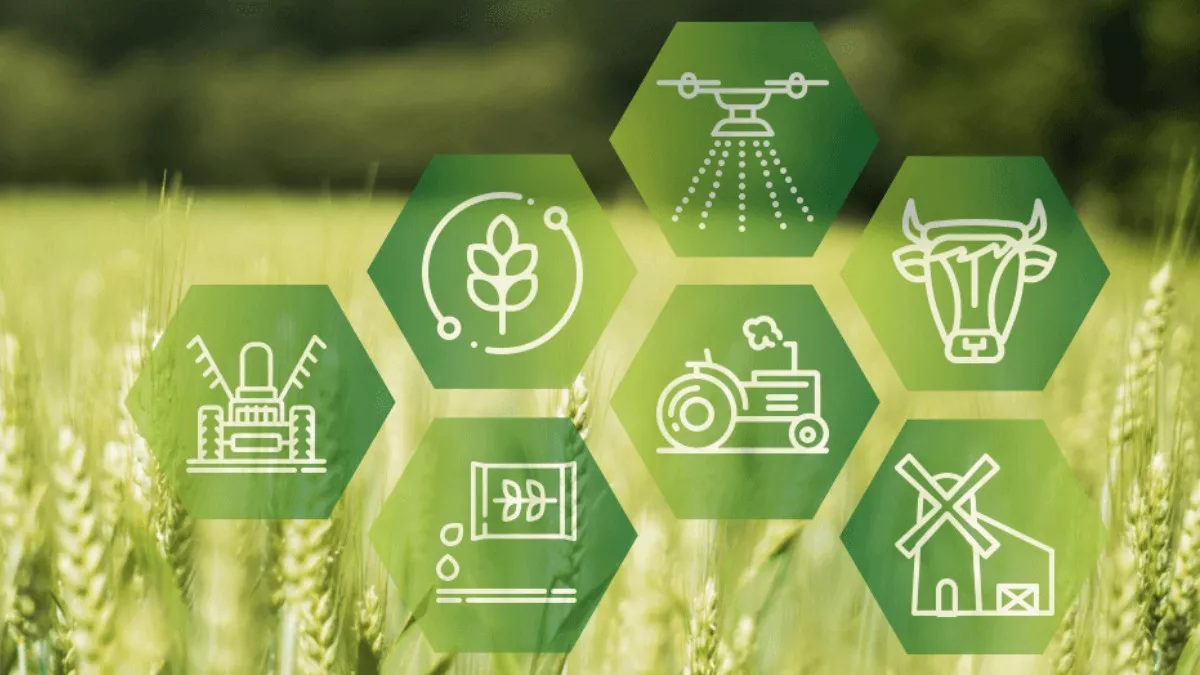
The technological innovations presented at Caspian Agro Week represent an extremely important trend, as the reforms implemented in recent years in the domestic agricultural sector are aimed at increasing productivity through the application of advanced agrotechnologies, the introduction of efficient irrigation systems, and the full digitalisation of sector management systems.
An equally important task is to reduce costs in the processing and food industries through the introduction of modern technologies, the localisation of production in agro-parks and large-scale farming enterprises, and the expansion of exports of processed products.
Many of these measures are being successfully implemented; however, in recent years the agricultural sector has demonstrated rather weak growth dynamics. According to the State Statistics Committee, agricultural production in the country increased by only 1.5% in 2024, slowing further to 0.9% last year. In the first quarter of 2026, the growth rate of agriculture, forestry, and fisheries slightly improved, reaching 1.2%; nevertheless, this can hardly be described as a significant achievement.
This is linked to the fact that small-scale, land-poor farming households, the number of which is still estimated at around 150,000–200,000, remain insufficiently equipped and face difficulties in accessing preferential financing.
As a result, due to the lack of modern agrotechnical methods, a relatively low level of chemical inputs, inefficient irrigation practices, and limited access to modern agricultural machinery, small farms are unable to increase yields.
The Ministry of Agriculture also believes that local producers face difficulties in meeting high demand for food due to limited agricultural resources — including restricted areas of arable land, shortages of irrigation water, and low productivity in small farms caused by the slow transition to intensive production methods.
On the other hand, Azerbaijan’s processing and food industry still remains significantly dependent on imports of raw materials, components, packaging and containers, pesticides, as well as food additives, vitamins, and other substances used in the production of feed for livestock and poultry farming. This dependence becomes particularly critical during periods of global inflationary pressure.
“One of the main problems of Azerbaijan’s agricultural sector is related to climate-related challenges: the industry is facing serious difficulties due to the reduction of water resources and the deterioration of soil conditions as a result of climate change,” said Muhammad Nassar Hayat, Resident Representative of the Food and Agriculture Organization of the United Nations (FAO) in Azerbaijan and a participant of Caspian Agro Week.
“In Azerbaijan, the use of innovative technologies to mitigate the impact of climate change in agriculture has become a key priority. In this regard, we are working with the Ministry of Agriculture of the Republic of Azerbaijan, as well as with communities and the scientific community, to find solutions for the sustainable development of agriculture in the country,” he noted.
The FAO representative also added that by 2050, a significant increase in the global population is expected, and in order to ensure food supply, all countries will need to learn to produce more agricultural output using fewer resources.
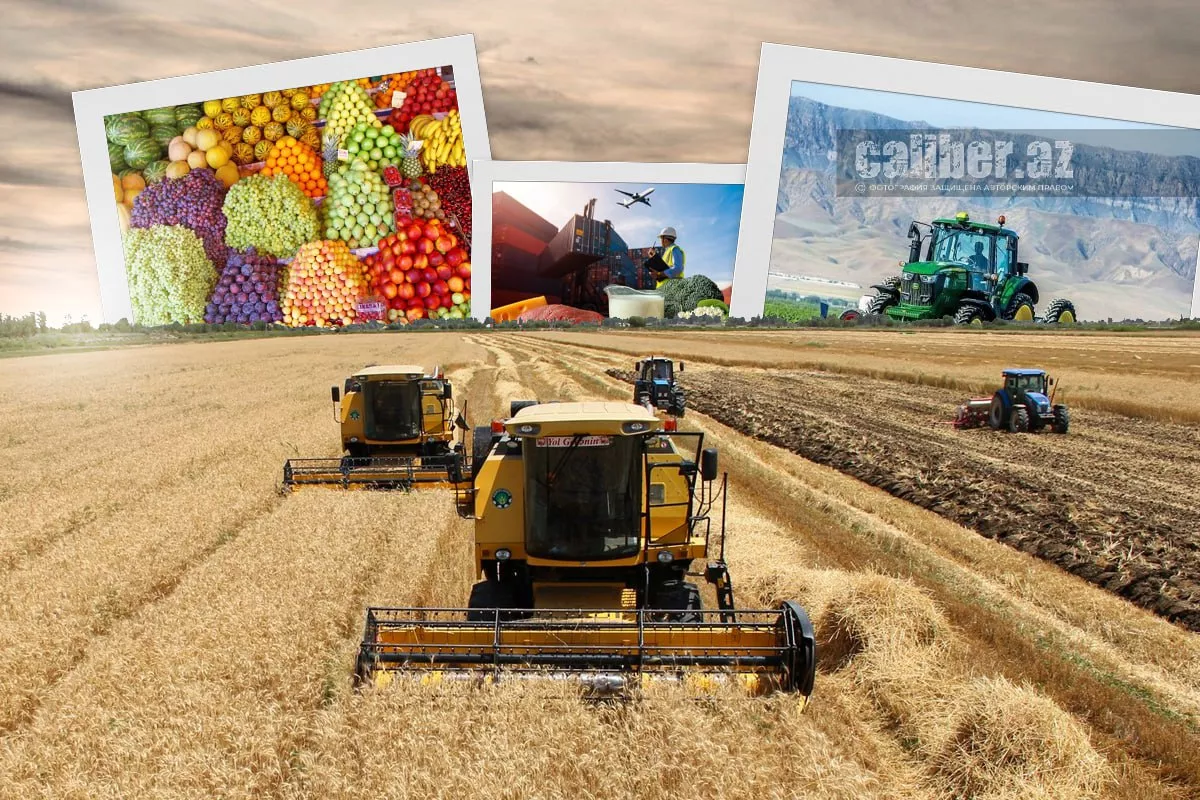
It is precisely this formula — reducing costs through technological innovation — that should become the main objective in the process of transitioning the domestic agricultural sector from extensive to intensive production methods.
To achieve these goals, Azerbaijan and the FAO are strengthening their cooperation. Joint efforts are being made to introduce more efficient irrigation systems, strengthen cooperatives, support sustainable land and water resource management, and provide farmers with training in advanced technologies through the use of digital tools.
Another important vector for increasing agricultural production based on new technologies is seen in the involvement in agricultural circulation of fertile lands in the Karabakh region that are being cleared of landmines.
“The liberated territories of Azerbaijan possess enormous potential for the development of the agricultural sector and the food industry: fertile soils, a favourable climate, and a broad resource base are key factors in the investment attractiveness of these areas,” said Orkhan Mammadov, Chairman of the Board of the Small and Medium Business Development Agency (KOBIA), at the opening ceremony of the exhibition.
According to him, the realisation of this potential within the framework of public-private partnership will have a positive impact on the agricultural sector, the food industry, and food security in the coming years, and will ultimately contribute to the overall economic development of the country.







 editor@caliber.az
 +994 55 444-88-98
 Азербайджан, Баку, ул. Низами, 203, Af Business House, 5-й этаж