










Sailing through crisis One year of Merz’s chancellorship
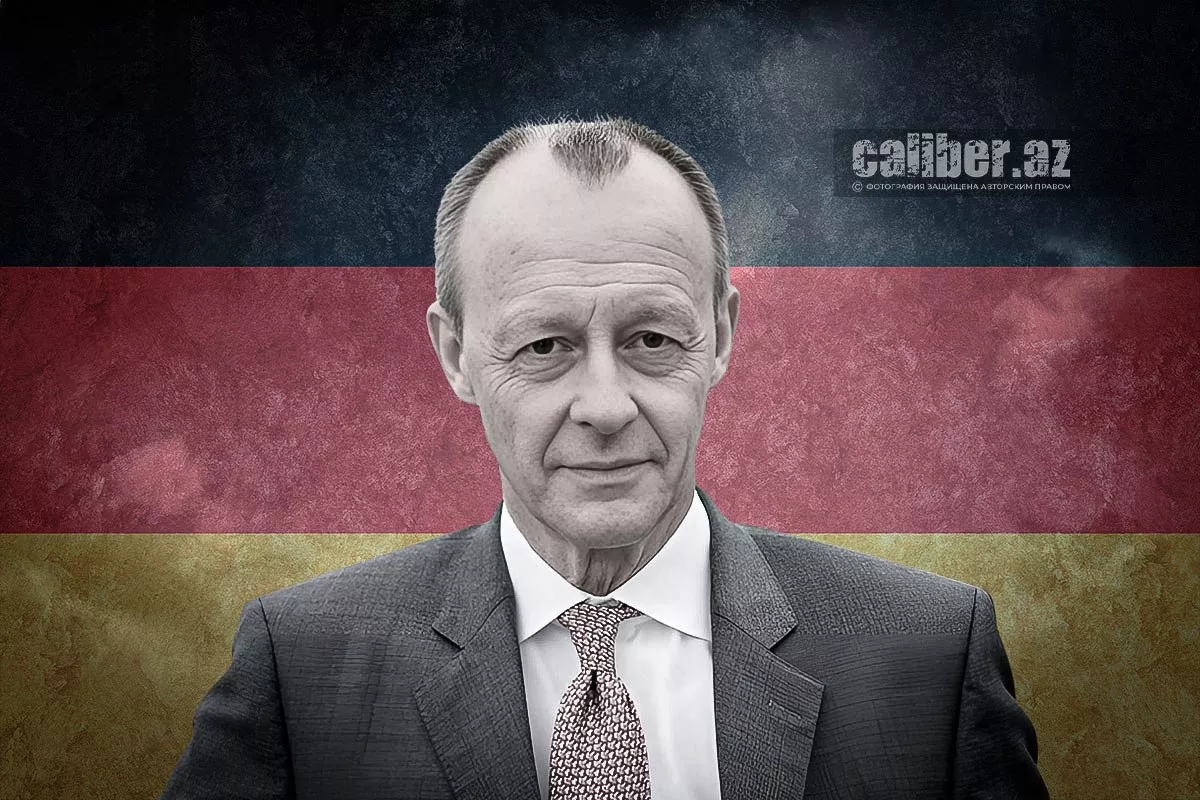
Exactly one year ago, on May 6, 2025, Friedrich Merz became the Chancellor of Germany. After a period of unclear governance under Olaf Scholz and the collapse of his coalition, society expected clearer leadership, faster reforms, and a return of economic momentum. Merz himself seemed to have every qualification for this: many years of political experience, a successful career in business, and a reputation as a supporter of strict, pragmatic decisions. However, the first year has already shown that the transition from opposition rhetoric to governing the country turned out to be significantly more difficult for him than expected.
Shortly after taking office as chancellor, Merz abandoned one of his key campaign promises — not to increase public debt. As a result, a large-scale borrowing fund worth hundreds of billions of euros was created, officially intended for infrastructure, defence, and climate projects. However, a significant portion of these funds was used to cover current budget deficits, reinforcing a sense of inconsistency between words and actions. Against this backdrop, the federal government quickly faced declining popularity, which is especially noticeable amid rising support for the far-right Alternative for Germany (AfD).
The situation is further complicated by internal power dynamics. The coalition between the CDU/CSU and the SPD was initially a compromise and largely a necessity. The conservatives promised a change of course, while the Social Democrats sought to preserve key elements of previous policies. This clash of objectives is evident in almost every major decision: reforms are either postponed or implemented in a significantly watered-down form. As a result, the government, which was supposed to be more effective than its predecessor, increasingly appears divided and conflict-ridden. Even at the level of personal relations, tensions have become obvious — one only needs to recall reports of heated disputes between Merz and Vice Chancellor Lars Klingbeil.
The most painful aspect, meanwhile, has been the gap between expectations and actual economic results. Merz largely built his campaign on the promise of restoring Germany’s economic growth after a period of stagnation, inflation, and declining living standards. He was seen as a politician capable of speaking the language of business. However, already within the first year it became clear that there would be no quick solutions.
The economy is under pressure from several factors at once: high energy prices, intensifying competition from China, structural problems in industry, and foreign policy risks. An additional blow came from trade measures initiated by Donald Trump in the United States, which hit Germany’s export-oriented economy particularly hard. As a result, the promised growth has not materialised, and businesses increasingly speak of a lack of a clear strategy.
Foreign policy, which was initially seen as one of the chancellor’s strengths, has also gradually turned into a source of contradictions. His attempt to simultaneously maintain the partnership with the United States and demonstrate greater independence led to tensions with Washington. This became especially visible after criticism of U.S. Middle East policy, which triggered a sharp reaction from Trump and coincided with the decision to reduce the American military presence in Germany.
Another issue is the chancellor’s personal style. His directness and tendency toward sharp statements, which previously helped him stand out in opposition, have often become problematic in government. Remarks on migration, social policy, or international conflicts regularly cause public backlash and require subsequent clarifications. As a result, instead of the image of a confident leader, there is an impression of a politician reacting to events rather than setting the agenda.
Against this backdrop, discussions about political instability are intensifying. Within the coalition itself, risks of collapse are being debated more and more often, although early elections remain an extremely undesirable scenario for both sides — primarily due to the rising popularity of the AfD. The opposition, in turn, is already openly calling for the government’s resignation, using as arguments the growth of public debt, weak economic performance, and social discontent.
Nevertheless, it is too early to draw final conclusions. In German politics, it has often happened that chancellors achieved key results not in their first year, but later on. Merz himself continues to speak about a long-term transformation of the country — the digitalisation of the state, reforms of public administration, and the restoration of economic resilience by the middle of the next decade. The only question is whether he will have enough political capital and time to turn these plans into reality.







 editor@caliber.az
 +994 55 444-88-98
 Азербайджан, Баку, ул. Низами, 203, Af Business House, 5-й этаж