










From Hormuz to Malacca: a new global geopolitical flashpoint Review by Teymur Atayev
The situation around the Strait of Hormuz, against the backdrop of developments involving the Panama Canal and the Venezuelan precedent, has once again brought into focus the “Malacca dilemma” — China’s vulnerability to a potential maritime blockade that could seriously impact its crude oil imports from the Middle East.
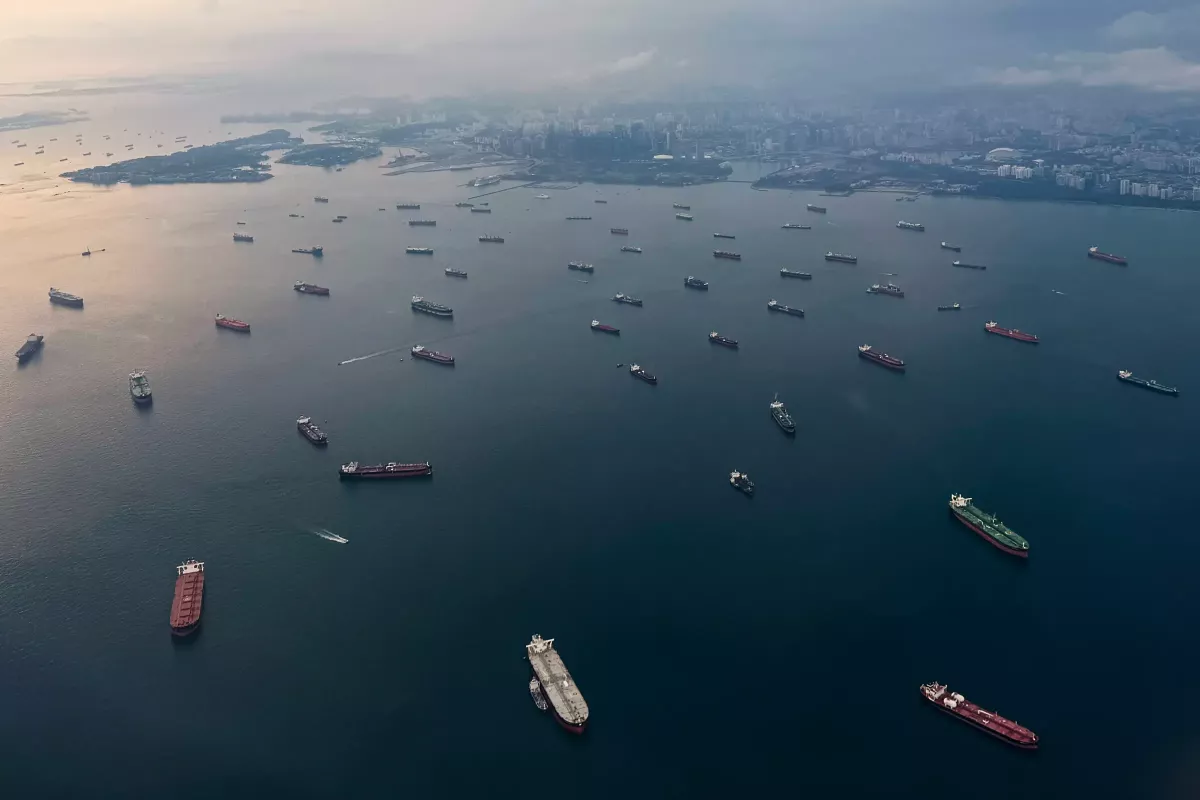
The 900-kilometre Strait of Malacca—stretching between Indonesia to the west and Singapore and Malaysia to the east (and also bordering Thailand)—narrows to just 2.8 kilometres at its tightest point. It is one of the world’s most vital maritime arteries, carrying roughly 40 per cent of global trade, as it links the Indian and Pacific Oceans and provides the shortest sea route between them.
Its strategic weight is widely acknowledged. Some experts rank it alongside the Strait of Hormuz, the Suez Canal, and the Panama Canal, while others—pointing to its status as one of the busiest shipping lanes on the planet—argue that Malacca is even more critical to global shipping than the gateway to the Persian Gulf. Hundreds of vessels transit the strait each day, and in 2025, annual traffic exceeded 100,000 passages for the first time.
Approximately 24 per cent of global seaborne trade passes through the strait, including around 45 per cent of the world’s maritime oil shipments, more than 25 per cent of all automobiles sold on international markets, and roughly 23 per cent of dry bulk cargo—among them key agricultural commodities such as grain and soybeans. A significant share of Europe’s imports of electronics, industrial equipment, and consumer goods is also transported through the Strait in maritime containers.
Against this backdrop, some sources emphasise that both the United States and China are “steadily expanding their military presence around the strait.” Washington primarily advances this strategy through access to regional bases and the deployment of naval forces, while Beijing does so by developing its network of port infrastructure and strengthening its navy. In addition, the Andaman and Nicobar Islands—situated near the strait’s western approaches—provide India with a critical strategic foothold in the region.
In this context, a number of experts are questioning whether the prospect of a blockade of the Strait of Malacca remains purely hypothetical—especially in light of reports in the final days of April that Indonesia was exploring the possibility of introducing a levy on vessels transiting the waterway.

At the time, Finance Minister Purbaya Yudhi Sadewa noted that although Indonesia lies along one of the world’s most critical trade and energy routes, no fees are currently imposed on ships passing through the Strait of Malacca. According to him, the proposal aligns with Jakarta’s broader ambition to position itself as a central player in global trade. At the same time, stressing that “we should not think defensively. We need to start thinking more offensively, but in a measured way,” Purbaya acknowledged that the conditions for implementing such a policy are not yet in place, given the difficulty of reaching agreement among littoral states and global shipping companies.
Indeed, Singapore’s foreign ministry reaffirmed its commitment to guaranteeing freedom of transit for all vessels, emphasising that the country would not support any efforts to close the strait or impose fees in the region.
Malaysia’s foreign affairs ministry expressed a similar position.
The issue of a potential blockade of the Strait of Malacca has once again returned to the forefront. In this context, analysts emphasise that it is precisely to mitigate such risks that Beijing has been developing the China–Pakistan Economic Corridor, including the construction of highways, railways, and pipeline networks designed to transport oil from the Middle East via the port of Gwadar in southern Pakistan to western China—bypassing the Strait of Malacca. At the same time, this infrastructure is not yet capable of operating at the scale required to meet China’s current needs.

In this context, a number of analysts have also pointed to the signing of a defence partnership agreement between Washington and Jakarta in April, which includes provisions allowing U.S. Air Force overflights through Indonesian airspace. This has led some Chinese researchers to suggest that Washington may be seeking to intensify its focus on “global maritime chokepoints” as a means of exerting pressure on China’s shipping routes and constraining the country’s development.
Thus, the Strait of Malacca is once again emerging as a key geopolitical factor. In this regard, observers speculate that this maritime corridor—alongside the Strait of Hormuz—could become one of the more discreet “assets” for U.S. President Donald Trump in potential future negotiations with Chinese President Xi Jinping.







 editor@caliber.az
 +994 55 444-88-98
 Азербайджан, Баку, ул. Низами, 203, Af Business House, 5-й этаж