










India’s hunt for Sikhs Exporting terror and repression
Some states suppress dissent within their own borders, while others export repression abroad. Under Narendra Modi, India is confidently doing both.
In March 2026, the Baku Initiative Group (BIG) and the Sikh Federation presented a 58-page report titled “Indian Transnational Repression” at the Geneva Press Club. The report provides a detailed, fact-based reconstruction of how the Modi government systematically persecutes, intimidates, and physically targets members of the Sikh diaspora abroad. The presentation took place in the presence of the Director-General of the Geneva Press Club, international human rights defenders, international law experts, and journalists from leading global media, including the BBC and AFP. Notably, the live broadcast of the event was repeatedly interrupted by cyberattacks: at one point, the Internet in the venue was completely cut off. This fact alone speaks louder than any expert opinion—someone clearly did not want the report to be heard.
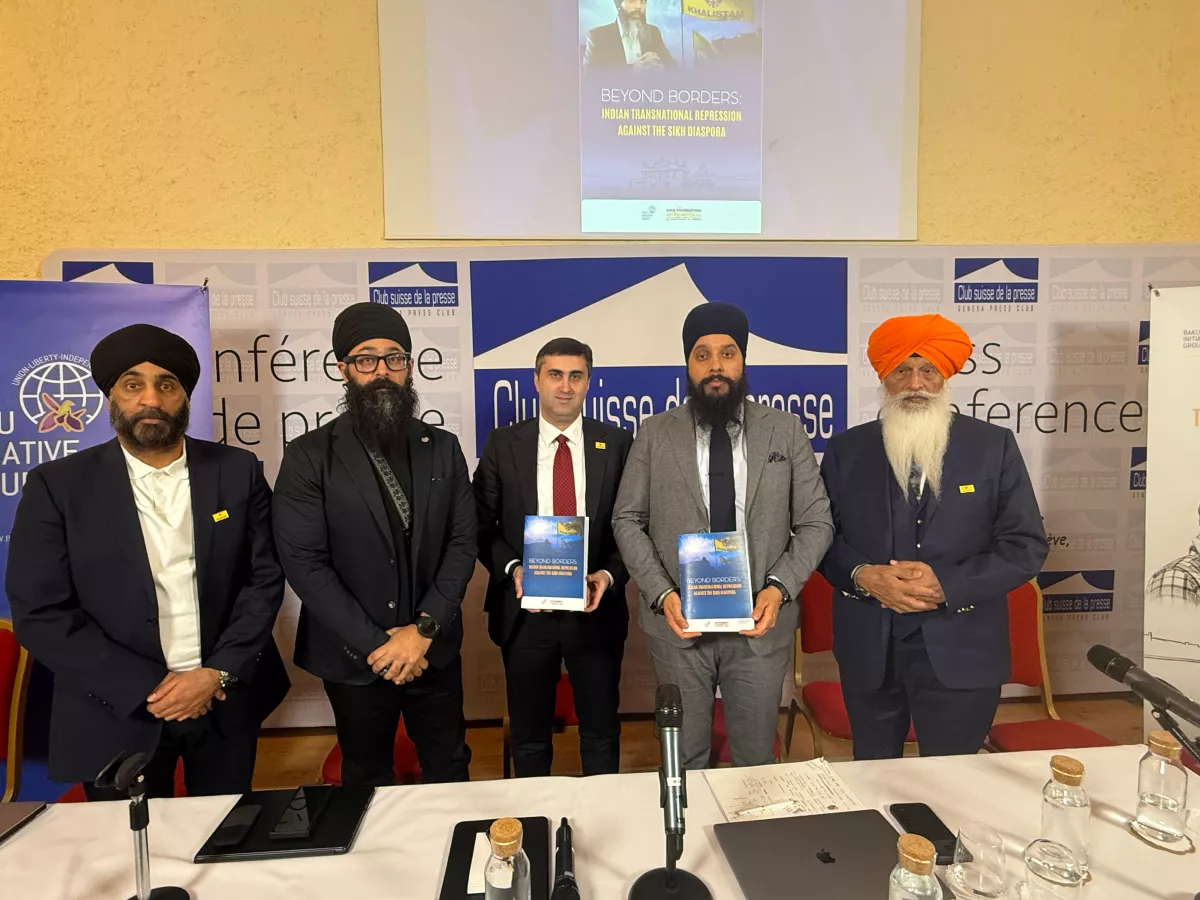
To understand the scale of what the report describes, it is necessary to return to the origins of the conflict.
The Sikh community—around 25 million people in India itself and millions more in the diaspora—has for decades maintained a complex and often tragic relationship with the Indian state. Although Sikhs make up only about two per cent of the country’s population, they account for nearly six per cent of the personnel in the armed forces, while their native Punjab remains one of India’s key agricultural regions, feeding much of the country.
Yet economic contribution and military valour did not shield the community from repression when a segment of the Sikh population began demanding political autonomy and the creation of an independent state of Khalistan. The Khalistan movement gained momentum in the 1970s and 1980s, leading to one of the darkest chapters in India’s history.
In June 1984, the Indian army stormed the Golden Temple in Amritsar—the holiest shrine of Sikhism—killing the Sikhs inside, including the preacher Jarnail Singh Bhindranwale, as well as hundreds of civilian pilgrims, and inflicting extensive damage on the temple complex. Operation Blue Star became a trauma from which the collective memory of the Sikh community has yet to recover.
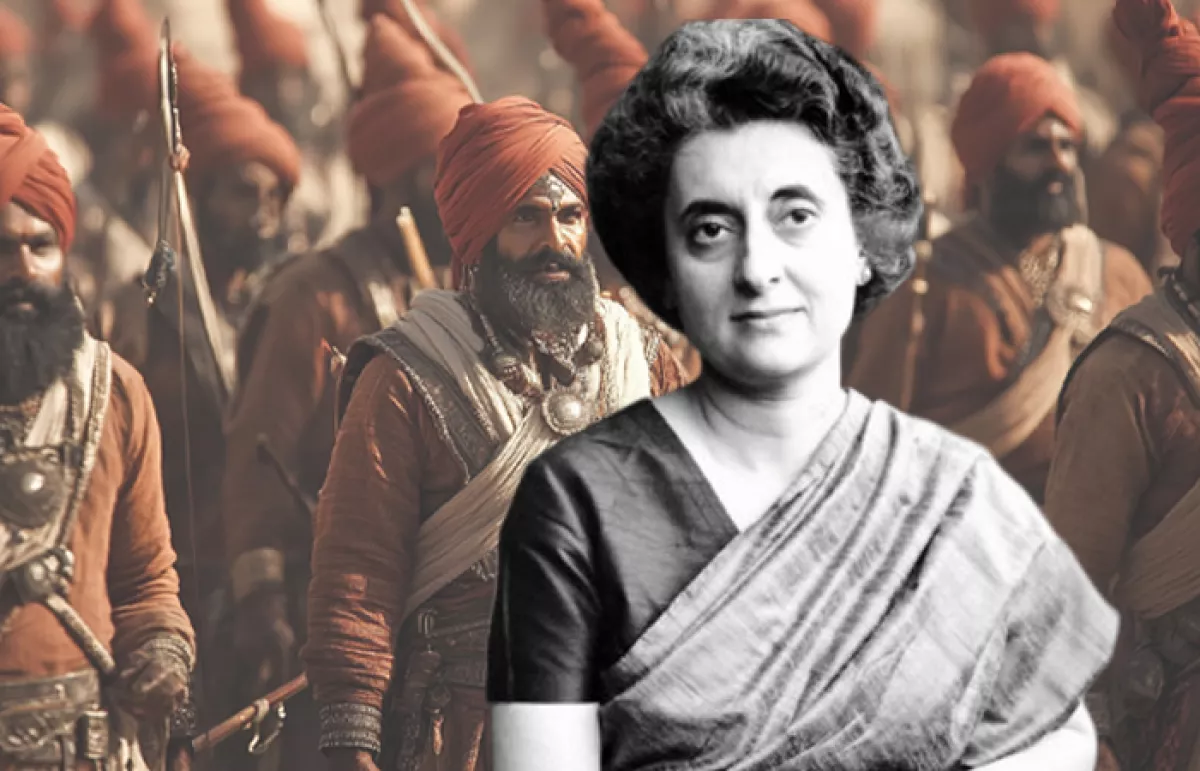
The reaction came swiftly. On October 31 of the same year, two Sikh bodyguards shot and killed Prime Minister Indira Gandhi, triggering what international human rights organisations later described as an anti-Sikh pogrom.
Across northern India—particularly in Delhi—Hindu mobs, acting with the tacit consent of the police and with organisational support from functionaries of the ruling Indian National Congress, stormed Sikh homes, killed men, raped women, and set their property on fire. According to various estimates, between three and ten thousand people were killed within just a few days.
Justice for these crimes has never been delivered in any meaningful sense. Numerous commissions of inquiry—Misra, Nanavati, and Kapur-Mittal—documented systemic failures in the investigations and the involvement of state structures in the violence. Yet their recommendations were repeatedly blocked, and those responsible largely remained unpunished.
It is precisely this impunity—not an abstract historical grievance, but a concrete and well-documented institutional failure to deliver justice—that has become the foundation upon which the Khalistan movement continues to reproduce itself from one generation to the next.
For decades after 1984, the armed phase of the insurgency in Punjab was suppressed at the cost of, according to various estimates, thousands of extrajudicial killings. The Khalistan movement gradually shifted largely into the diaspora—primarily in Canada, the United Kingdom, Australia, and the United States.
The Indian state responded with diplomatic pressure, demanding that Western governments designate Sikh activists as extremists and extradite them. However, a significant shift occurred after Narendra Modi came to power in 2014. Transnational pressure evolved from a diplomatic tool into an operational practice of the intelligence services. India’s external intelligence agency—the Research and Analysis Wing (RAW)—began conducting operations abroad that only a few years earlier would have seemed unthinkable for a country that claims the status of the world’s largest democracy.
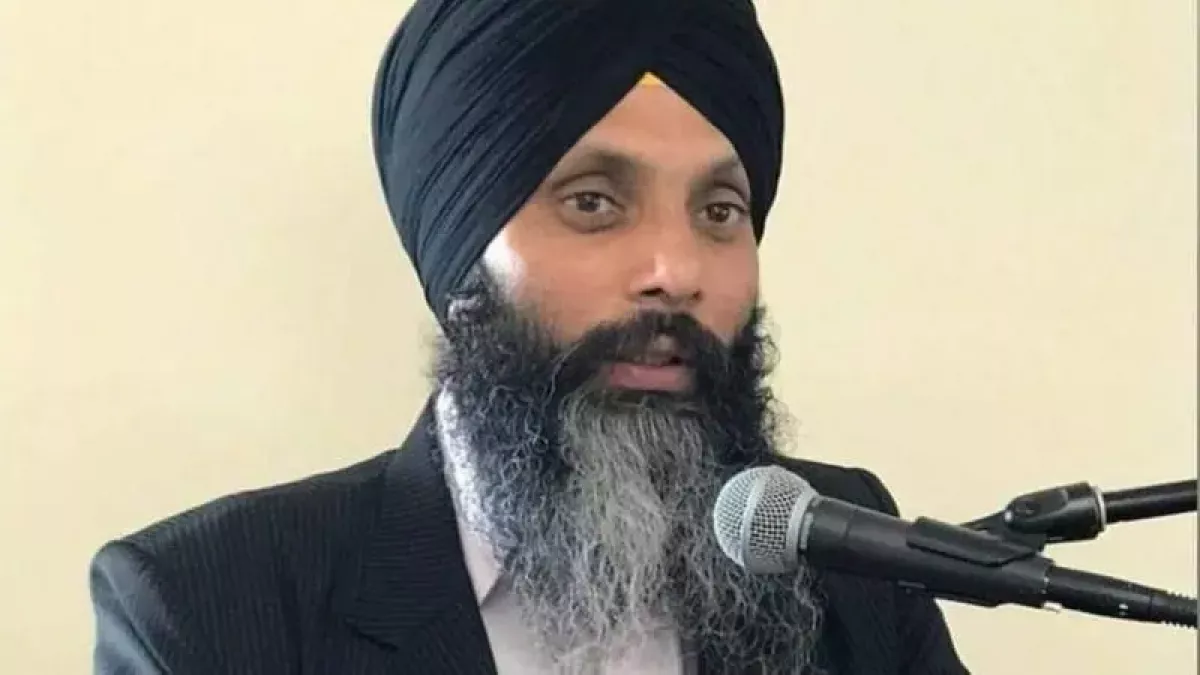
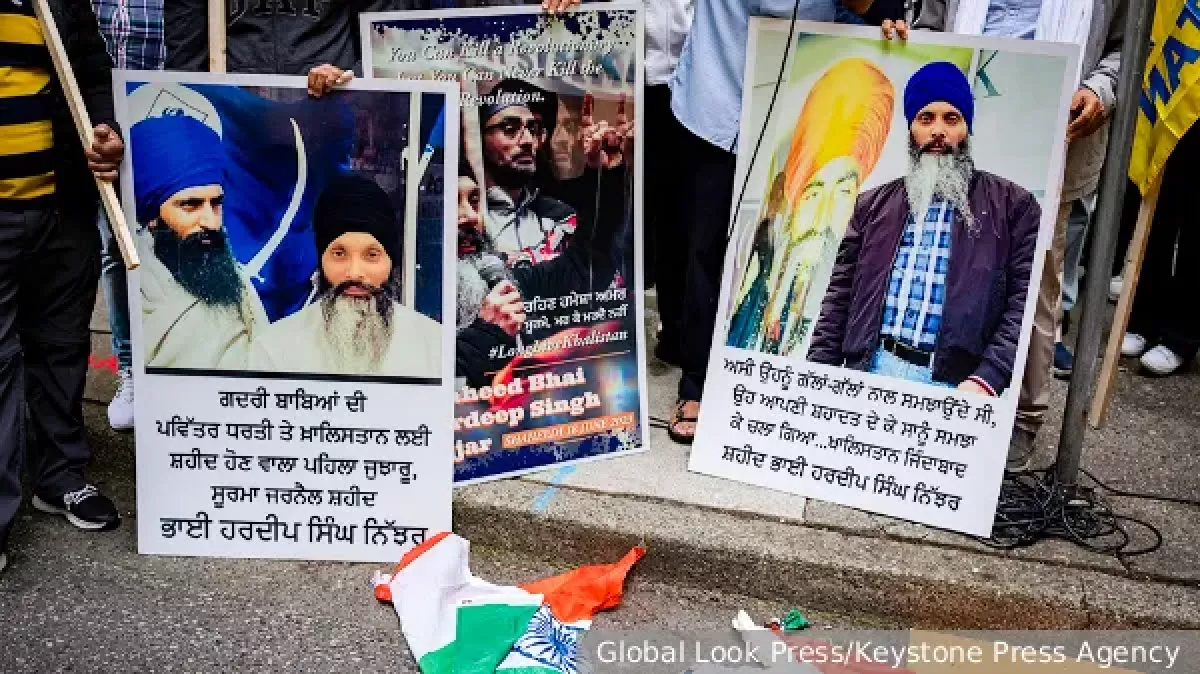
The most high-profile—and arguably turning point—episode was the killing of Hardeep Singh Nijjar on June 18, 2023, in the parking lot of a Sikh temple in Surrey, a suburb of Vancouver. Nijjar, a Canadian citizen, former head of a local gurdwara, and an active supporter of the Khalistan movement who organised an unofficial referendum on independence among the Sikh diaspora, was shot dead in what appeared to be a carefully planned operation. Canada’s intelligence service, the Canadian Security Intelligence Service (CSIS), had previously warned him of a credible threat to his life.

Subsequently, Canadian police arrested four Indian nationals who had arrived in the country shortly before the killing. In September 2023, Prime Minister Justin Trudeau told Parliament that Canadian intelligence possessed credible evidence linking the Government of India to Nijjar’s assassination.
The statement triggered a major diplomatic crisis, including the mutual expulsion of diplomats and the suspension of visa services. The investigation, as confirmed in early 2026 by Canada’s Deputy Minister of Foreign Affairs David Morrison, found that the campaign of violence and intelligence-gathering against Sikh activists in Canada had been overseen personally by India’s Minister of Home Affairs, Amit Shah.
At the same time, another case was unfolding that elevated the issue to the level of relations between Washington and New Delhi. In November 2023, the U.S. Department of Justice unsealed an indictment in a plot to assassinate Gurpatwant Singh Pannun — an American-Canadian citizen and the general secretary of the organisation Sikhs for Justice, whom India has designated a terrorist.
According to the case materials, the plot was coordinated by RAW officer Vikash Yadav, who used businessman and alleged arms dealer Nikhil Gupta as an intermediary. Unaware that the “hitman” he had hired was in fact a confidential source for the Drug Enforcement Administration (DEA), Gupta transferred an advance payment of fifteen thousand dollars for the assassination.
In February 2026, after his extradition from the Czech Republic and eighteen months in custody, Gupta pleaded guilty to all three charges — organising a contract killing, conspiracy to commit murder-for-hire, and conspiracy to commit money laundering. He faces up to forty years in prison, with sentencing scheduled for May 2026.
In an official statement, the FBI emphasised that Pannun had become the target of transnational repression solely for exercising his constitutional right to freedom of speech. The second defendant — Yadav himself, a former RAW operative — is currently wanted internationally through Interpol. Following Gupta’s guilty plea, the existence of the conspiracy has been legally established.
India, of course, denies any involvement. New Delhi has attempted to portray Yadav as a “rogue individual” acting contrary to state policy. However, this version appears increasingly unconvincing in light of the accumulating evidence.
According to Canadian police, Indian diplomats working at the consulate in Vancouver directly supplied intelligence that was later used to organise Nijjar’s killing. In the United States, court materials indicate that Yadav operated from within the Cabinet Secretariat — a structure that reports directly to the prime minister. The indictment in the Gupta case also contains wording that leaves little room for ambiguity: the conspiracy was carried out “at the direction and under the coordination of an employee of the Government of India.”
Moreover, according to several Western media outlets, U.S. intelligence agencies shared information with Canada that helped Ottawa conclude that the Indian government was involved in the Nijjar case. Thus, what we are dealing with is not an isolated excess but a documented architecture of transnational coercion — one that includes intelligence support, the recruitment of operatives, the financing of operations, and the use of criminal networks as instruments of state policy.
The United Kingdom has become another arena where pressure on the Sikh diaspora is taking increasingly aggressive forms. The Geneva report describes in detail a mechanism that could be called “repression through family”: following protest actions outside the Indian High Commission in London, India’s National Investigation Agency conducted raids on the homes of dozens of relatives of Sikh activists living in the UK.
Leaders of Sikh Federation UK — its chairman, Amrik Singh and vice-chair Kuldeep Singh Chaheru, who have not set foot in India for more than thirty-five and forty years respectively — discovered that their families in the country were being deliberately targeted. British police have warned Sikh activists about threats to their lives linked to the activities of Hindu nationalist groups.
The mysterious death of Sikh activist Avtar Singh Khanda in the United Kingdom in 2023 — which his relatives and colleagues believe was the result of poisoning — has added yet another dark element to the overall picture. At the same time, as noted in a report by Sikh Federation submitted to a parliamentary committee in the UK, London — despite being fully aware of the scale of the threat thanks to its own intelligence services and information shared by partners in the Five Eyes alliance (the intelligence-sharing partnership between Australia, Canada, New Zealand, the United Kingdom, and the United States) — has shown what the report describes as a “colossal reluctance” to publicly call out India for its actions, unlike Canada and the United States.
The National Security Act 2023 has so far been applied only against agents linked to Russia and China, but not against India.
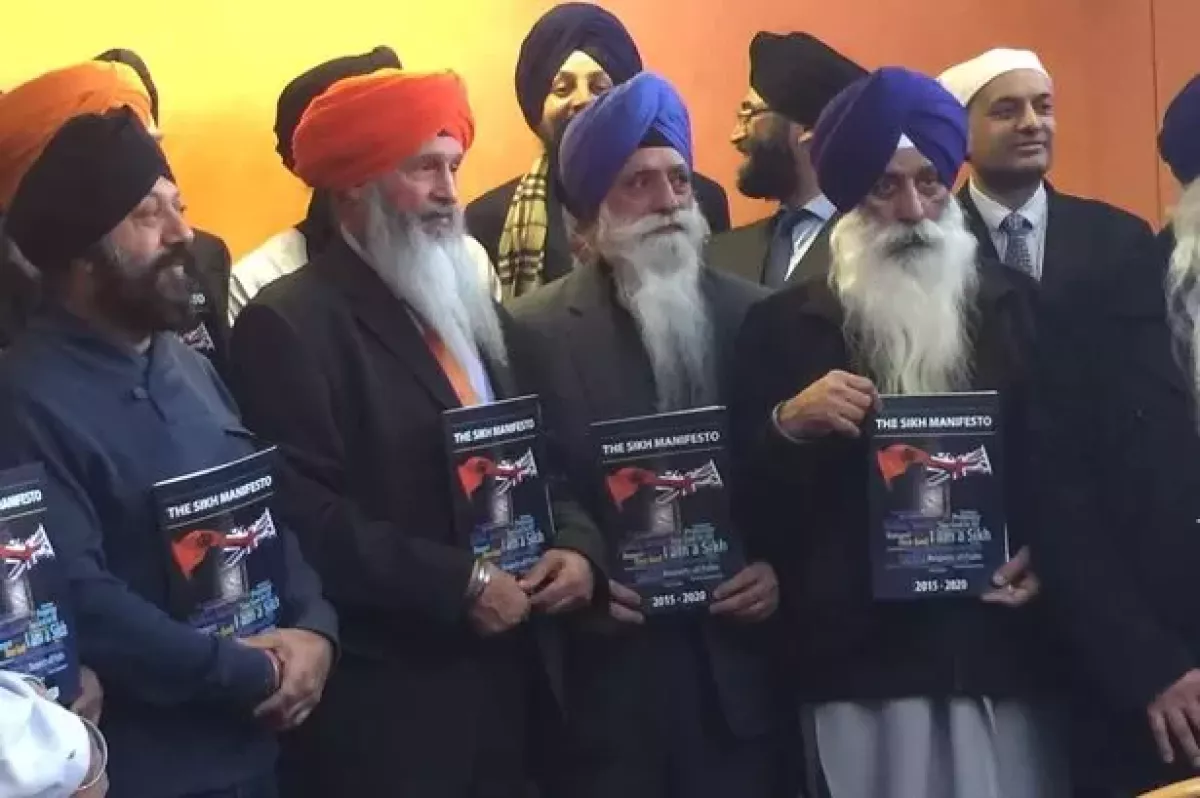
Against this backdrop, the activities of the Baku Initiative Group—an organisation that in recent years has emerged as one of the leading international platforms for countering neo-colonial practices—take on particular significance.
As early as January 2026, the Baku Initiative Group held an international conference in Baku titled “Racism and Violence Against Sikhs and Other National Minorities in India: Current Realities,” bringing together representatives of the Sikh diaspora from Canada, the United Kingdom, Australia, and the United States. The conference attracted the attention of dozens of Azerbaijani media outlets. Among the speakers was Punjab (Pakistan)’s Minister for Human Rights and Minority Affairs, Ramesh Singh Arora, while the Executive Director of the Baku Initiative Group, Abbas Abbasov, opened the event with a minute of silence for the victims of Indian state violence, specifically mentioning the killing of Nijjar.
The outcome of the Baku conference was a joint statement by the Baku Initiative Group and Sikh Federation International calling on the international community “to take decisive measures against India for violence and discrimination against Sikhs.” However, New Delhi’s reaction to the conference was not diplomatic but characteristically repressive: the chairman of Sikh Federation Canada, Bual Moninder Singh, and members of his family received death threats. These threats were later confirmed by Canadian police in February 2026 as “credible,” with officers personally informing Moninder Singh that his wife and children were also at risk.
He became one of more than ten Sikh activists in Canada who received official police notifications of a real threat to their lives—the so-called “duty to warn.”
The presentation of the report in Geneva in March 2026 was a logical continuation of the Baku conference—and a qualitative step forward. If Baku served as a platform for mobilisation and documentation, Geneva represents an attempt to elevate the issue to the highest international level, placing it directly within the orbit of the UN Human Rights Council.
Representatives of the Sikh community who spoke at the Geneva event—many of whom had personally faced persecution—described a system of pressure in which any form of dissent is treated as hostility. The report is structured around concrete cases—the killing of Nijjar, the plot against Pannun, raids on the homes of activists’ relatives, and the intimidation of the diaspora—and provides a detailed account of the institutional mechanisms through which the Indian state projects repression beyond its borders.
Participants in the event also emphasised the key role played by the Baku Initiative Group in bringing this issue onto the international stage and in helping to build a broad coalition of support for the Sikh community.
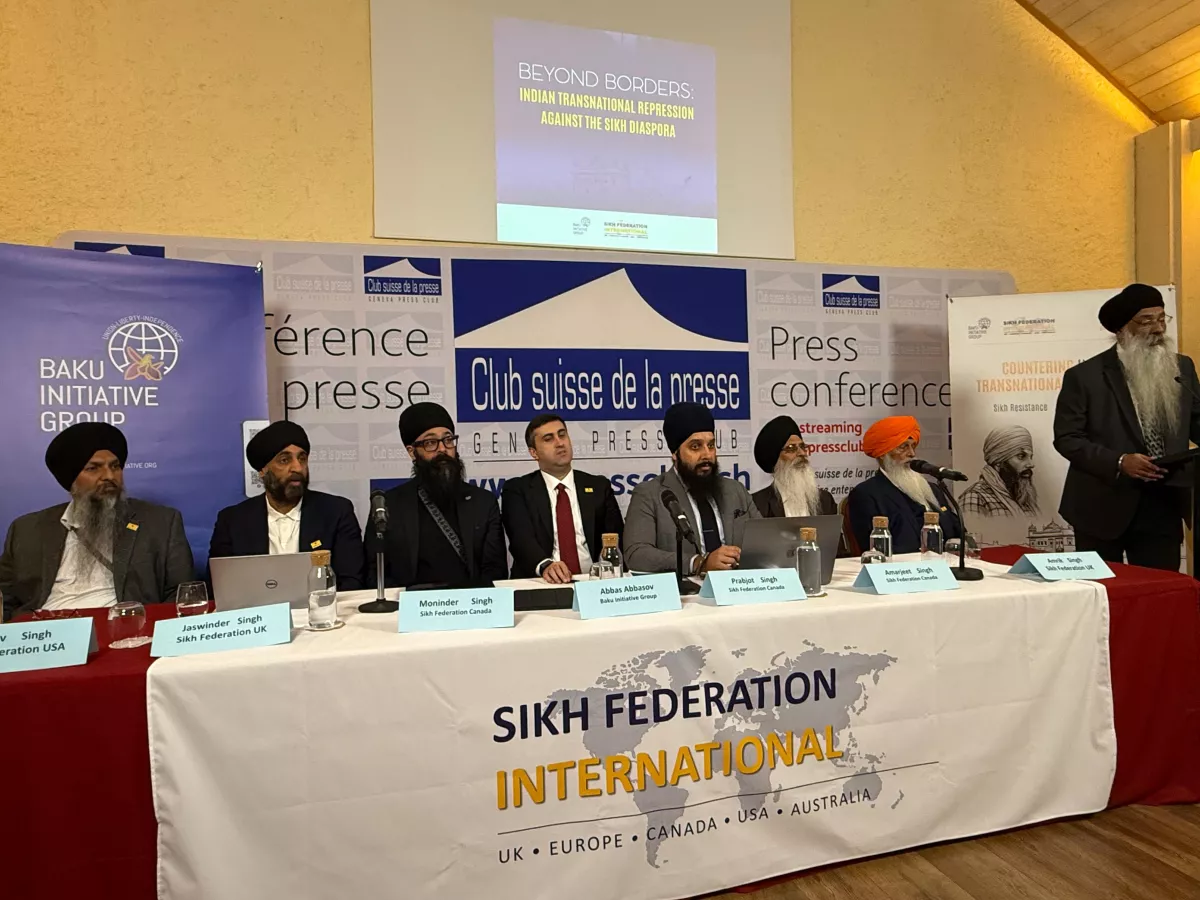
The cyberattack on the Geneva livestream deserves special attention. In the era of information warfare, the attempt to disrupt the presentation at the Geneva Press Club—a long-established institution accredited by leading global news agencies—cannot be dismissed as mere hooliganism; it appears to be part of a systematic strategy of suppression.
New Delhi has repeatedly employed digital means to target critics: from using spyware against journalists and activists, as documented by both Citizen Lab and independent international investigations, to large-scale campaigns aimed at blocking the social media accounts of Sikh public figures. The interruption of the live broadcast and the Internet shutdown during the Geneva event fit squarely within this pattern.
For several years, the U.S. Commission on International Religious Freedom (USCIRF) has consistently recommended that the State Department designate India as a “country of particular concern” due to systematic violations of religious freedom. In early 2025, UN special rapporteurs, in a sixteen-page communiqué, accused New Delhi of violating the right to life, encroaching on the sovereignty of other states, and attempting to suppress Sikh political activism.
The Council on Foreign Relations (CFR), in a detailed analysis, highlighted a fundamental contradiction: a state that for years has complained about foreign interference in its internal affairs has itself orchestrated the assassination of a citizen of another democracy on its own soil. And despite New Delhi’s strategic significance to the West in the context of countering China, CFR noted that this fact “will not be easily forgotten by India’s partners.”
Meanwhile, the issue is not limited to Sikhs, although the Sikh community has become the most visible victim of transnational repression. Under Modi, Muslims, Christians, Kashmiris, and Dalits have also faced persecution—and the pressure extends beyond domestic discrimination to targeting those who criticise Indian policy from abroad.
Anti-conversion laws, the Unlawful Activities (Prevention) Act (UAPA), and the systematic use of surveillance and spyware are all components of a single repressive ecosystem, which under Modi has taken on a global character. A telling statement in the Sikh Coalition’s submission to the Tom Lantos Human Rights Commission in the U.S. Congress notes that Indian authorities persecute people for their faith and for documenting violations of religious freedom. This is no longer only about Khalistan—it is about the very nature of the Indian state in its current form.
The visit of Canadian Prime Minister Mark Carney to India in early March 2026—against the backdrop of fresh death threats against Moninder Singh and his family—exposed a painful dilemma facing the West. Carney, seeking to diversify Canada’s trade relations amid Trump’s tariff war, met with Modi and, according to a senior government official, received assurances that India had “ceased” its transnational repression activities in Canada.
Sikh organisations greeted the visit with outrage: Moninder Singh called it “a slap in the face to the Sikh community,” while the World Sikh Organisation of Canada noted that threats against activists had not only persisted but had intensified.
This episode highlights a fundamental contradiction: India’s economic significance—its enormous market and role as a geopolitical counterweight to China—leads Western leaders to turn a blind eye to practices that, by any standard of international law, are unacceptable. Trade takes precedence over justice, strategy over principle—a formula that, despite its short-term appeal, undermines the very “rules-based order” the West invokes in its disputes with Russia and China.
The Baku Initiative Group, consistently bringing this issue to the international stage—from the Baku conference to the Geneva report presentation—occupies a role that neither Western governments (constrained by geopolitical calculations) nor UN bureaucracy (chronically slow and cautious) can fulfil. BIG functions as an independent institutional voice, capable of bringing together human rights defenders, international law experts, and the victims of repression themselves.
The Geneva report is a document grounded in concrete facts, prepared for a specific audience: delegates and experts operating within the UN system. The fact that its presentation was targeted by a cyberattack only underscores that it hit its mark.
Sixty years ago, the UN General Assembly adopted the Declaration on the Granting of Independence to Colonial Countries and Peoples. The Sikhs—a people with their own religion, language, culture, and historical territory—have endured pogroms, extrajudicial killings, attacks on their sacred sites, and now state-orchestrated assassinations on foreign soil.
The Geneva report by the Baku Initiative Group and Sikh Federation is an act of political documentation, transforming disparate episodes into a coherent picture of systematic violence—one that cannot be dismissed as mere “local excesses” or the actions of “rogue individuals.”
The international community now faces a choice: either acknowledge that India’s transnational repression is a problem requiring an institutional response, or continue pretending that the “world’s largest democracy” cannot be guilty of the very acts it accuses Iran, Russia, and China of committing. Geneva has shown that the time for comfortable silence is running out.







 editor@caliber.az
 +994 55 444-88-98
 Азербайджан, Баку, ул. Низами, 203, Af Business House, 5-й этаж