










EU foreign policy at a point of no return Adapting to a new world
The EU’s foreign policy is on the verge of major changes. The president of the European Commission openly calls for new approaches, not because she is a committed advocate of realism in international relations, but because the old approaches are no longer compatible with the realities of the world.
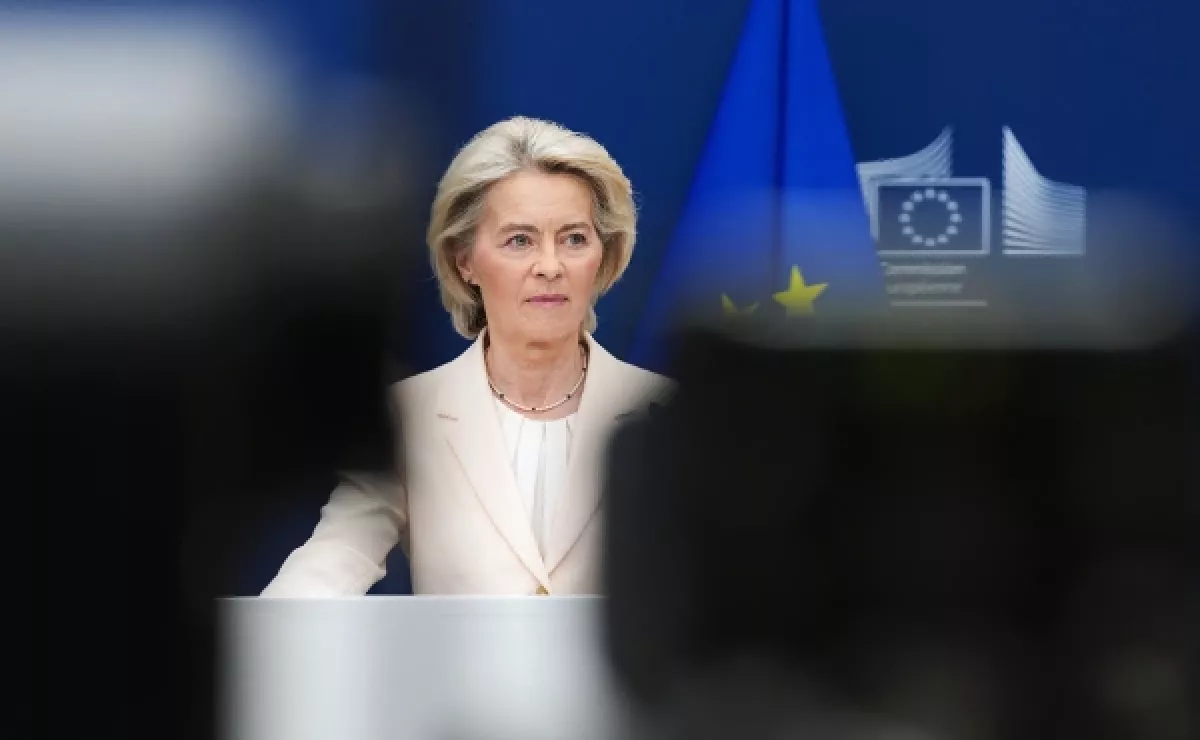
The conference of ambassadors and heads of EU diplomatic missions, held in Brussels from March 9–13, left an informational ripple that will continue to stir attention both within Europe and beyond for quite some time. What began as a routine annual meeting truly turned into a landmark, and perhaps even a turning-point, event. The reason is not merely that it took place against the backdrop of a new war in the Middle East, whose echoes immediately resonated across the European continent. More importantly, some of the statements made by senior EU officials were, without exaggeration, revolutionary.
Such statements had been whispered in Brussels’ corridors before, but they had never been voiced officially and from such a high platform. The revolutionary aspect of this moment lies in the fact that it has launched a discussion touching the very foundations of the EU’s common foreign and security policy. Regardless of how this discussion unfolds, the European Union is embarking on a path toward long-overdue institutional and conceptual changes in its foreign policy activities.
European Commission president under criticism
All top EU officials addressed the diplomats gathered in Brussels: the Presidents of the European Parliament, the European Commission, the European Council, as well as the EU High Representative for Foreign Affairs and Security Policy. They all agreed on the assessment of the current state of the world and the scale of the international challenges the EU is facing.
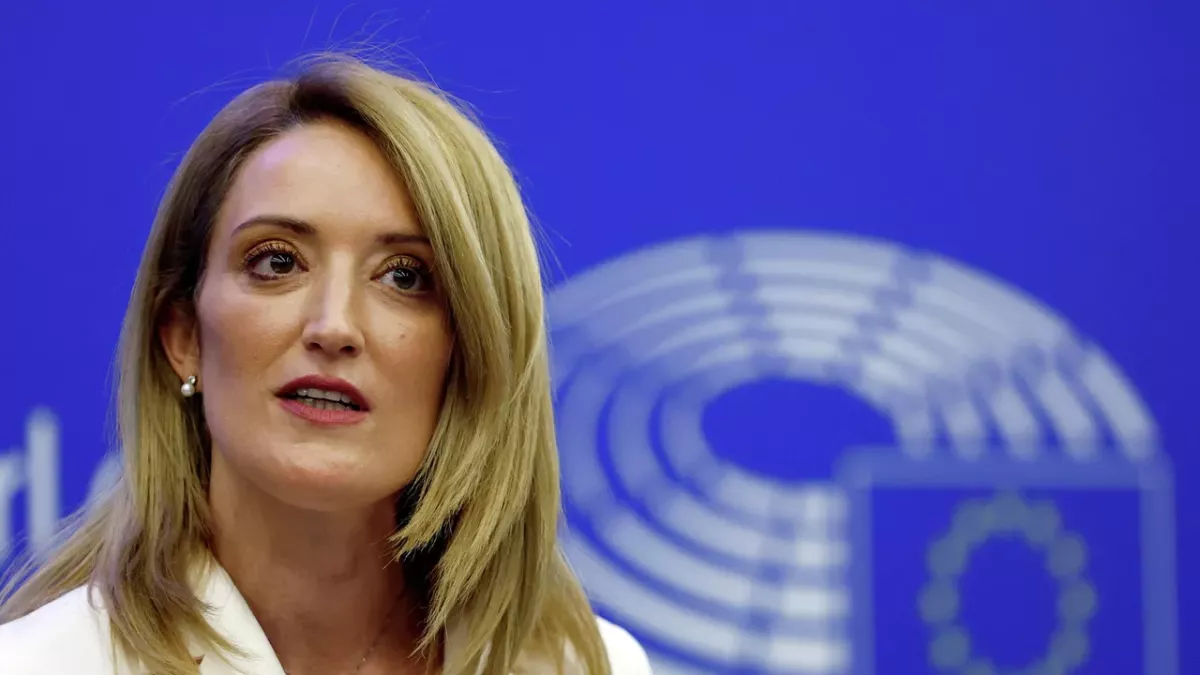
As the President of the European Parliament, Roberta Metsola, put it: “We are in a new world, a more unpredictable world, a more dangerous world. And for a union that operates very well on predictability and on certainty, the last months have been difficult to put it mildly."
As for proposals regarding the exact policies the EU should pursue under current global conditions, there was no consensus among the speakers. More precisely, only the President of the European Commission, Ursula von der Leyen, put forward ideas that implied some level of specificity (albeit veiled by her own comments after the conference) and therefore appeared programmatic. The other top speakers limited themselves to noting the difficult status quo but were too vague in formulating responses to its challenges. However, the reaction to von der Leyen’s proposals in the corridors of Brussels institutions and in the European media points to serious disagreements that will inevitably frame the ongoing discussion.
Several theses put forward by the head of the EU executive branch provoked literally a storm of criticism. Chief among these was her bold statement that the European Union “can no longer be a custodian for the old-world order.”
The head of the European Commission clarified this point with the following words: “We will always defend and uphold the rules-based system that we helped to build with our allies, but we can no longer rely on it as the only way to defend our interests or assume its rules will shelter us from the complex threats that we face.” She also emphasized that at this moment of “radical change,” the EU faces a dilemma: “either cling to what used to make us strong and defend habits and certainties that history has already moved beyond, or we can choose a different destiny for Europe.” Von der Leyen called for the adoption of a foreign policy that “makes us stronger at home, more influential globally and a better partner to countries around the world.” In her view, this should be done “Not with nostalgia, or by mourning the old world, but by shaping the new one.”
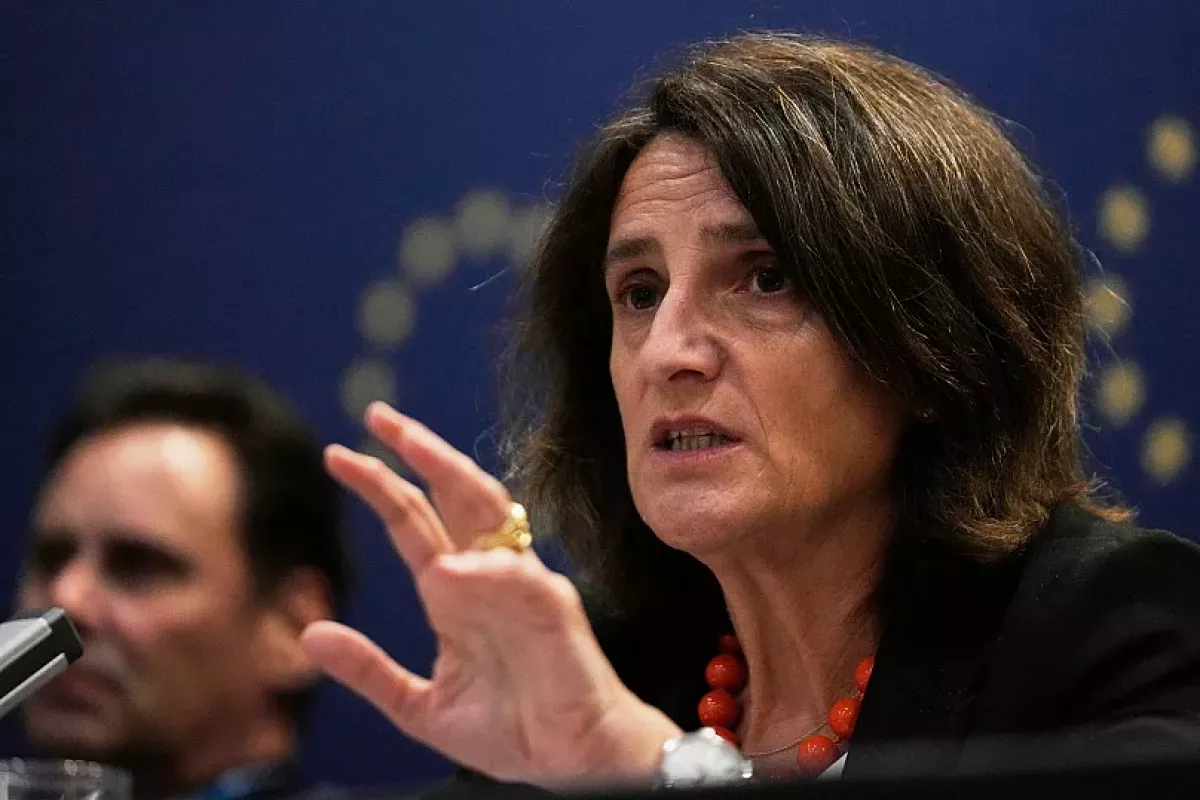
These revelations from the top official in the EU’s executive hierarchy were so direct and bold that even her deputy, European Commission Vice-President Teresa Ribera, did not hold back much in criticizing her superior. Ribera’s words clearly illustrate the seriousness of the disagreements in Brussels: “I think that it is fair to say that maybe it was not the most adequate manner to express herself.” Members of the European Parliament reacted even more sharply to von der Leyen’s proposals.
Questions about the EU’s founding treaty
In addition to conceptual disagreements with the thesis of the President of the European Commission, criticism also focused on the very fact that she made programmatic statements on foreign policy. Defense, security, and foreign policy areas in the EU are indeed intergovernmental and therefore fall outside the competence of the European Commission.
In other words, the supranational executive body does not have a mandate to speak on these topics on behalf of the entire Union—especially if the member states have not adopted corresponding decisions at the intergovernmental level within the European Council. Even in cases where intergovernmental decisions have been made, it is the EU High Representative for Foreign Affairs and Security Policy or the President of the European Council who should represent them to the outside world.
At the same time, the European Commission and its president do hold certain foreign-affairs-related powers, which is what von der Leyen’s team cites in justification. However, governments of many member states are increasingly expressing irritation at her heightened activity on the international track, which contradicts the EU’s founding Treaty on the Functioning of the Union. These sentiments in European capitals intensified initially after von der Leyen’s diplomatic actions regarding the new war in the Middle East, which were not coordinated with them—and now again after her high-profile statements at the ambassadors’ conference.
These growing tensions between the EU’s various institutions are particularly sensitive because, under the current Lisbon Treaty, intergovernmental decisions on foreign and security policy require a unanimous vote of all 27 member states. In other words, forging a unified EU foreign-policy stance requires full consensus, and even a single national “no” is enough to block it. Naturally, in such a context, unilateral statements and actions by the President of the European Commission appear confusing both to the member states themselves and even more so to the outside world.
However, Ursula von der Leyen, like many other representatives of Brussels institutions, sees the very principle of intergovernmental consensus as one of the EU’s main problems. She did not hide this in her speech at the ambassadors’ conference. She invited reflection on whether “ the system that we built – with all of its well-intentioned attempts at consensus and compromise – is more a help or a hindrance to our credibility as a geopolitical actor.”
Criticise or don’t criticise…
The nature of such harsh and open criticism directed at the president of the European Commission is multifaceted, but overall understandable.
Some critics are fundamentally opposed to the idea that the EU should move away from its accustomed self-perception and positioning in the world as a “normative superpower.” In other words, an actor whose foreign policy is based on values rather than pragmatic calculation. Many within the EU institutions and member states have, from an early age, absorbed the belief that Realpolitik-style approaches are an absolute evil, and that only a policy grounded in the EU’s declared values can guarantee peace and security.
Some are not fundamentally opposed to a turn toward pragmatism but are not ready to embrace it so quickly, and therefore are alarmed by the prospect of the “new normal” proposed by von der Leyen. From a psychological standpoint, such a reaction appears natural. Others, simply trying to gauge the political currents, do not want to expose themselves to criticism prematurely; the logic of self-preservation in moments of extreme uncertainty usually suggests that it is safer to “stick with the status quo.”
However, the key nuance of the entire situation is that the status quo no longer exists—and cannot exist. The president of the European Commission began openly calling for new approaches in foreign policy not because she is a committed advocate of realism in international relations, but because the old approaches are no longer compatible with the realities of the world. They are incompatible to such an extent that continuing in the same foreign-policy spirit will not only further erode the EU’s relevance and, consequently, its capabilities in the world, but will soon raise questions about the very survival of the European integration project itself.
All the more so because the incompatibility of the EU’s usual foreign-policy approaches and procedures with global realities manifests itself in too many ways.
First, despite the nobility of the values-based policies the European Union proclaims, one would have to be blind not to see the enormous gap between the stated ideals and the results actually achieved. Examples are endless and ubiquitous.
From the sanctions policy, which has long become a sort of instinctive tool in the EU’s arsenal. It almost never achieves the objectives declared by Brussels, yet systematically produces painful humanitarian consequences for the societies under pressure and simultaneously undermines the EU’s own interests and influence. To the extreme, there are blatant cases of double standards in the application of these noble norms—so glaring that even rhetorically sophisticated European politicians struggle not to appear ridiculous when justifying them. This is particularly evident now in the context of the war in the Middle East.
Second, the European Union truly “can no longer be a custodian for the old-world order” because that order no longer exists. And no matter how much many European politicians, officials, and diplomats may wish otherwise, that is the harsh truth. The EU has no choice but to accept this reality and adapt to it—and the sooner, the better for the Union itself. Today, it is simply not in the geopolitical or geoeconomic position to impose any alternative vision, even on its own neighbors.
Third, the foreign-policy mechanism based on unanimous agreement among all member states is indeed a serious problem for the EU. Here, it is hard not to agree with both von der Leyen and Roberta Metsola, who also noted that “in this new world, we no longer have the luxury of time to take decisions in the way we have always taken them.” The bigger question is whether European capitals are willing to give up intergovernmental consensus in foreign and security policy and transfer even part of the powers to the supranational level. The answer is probably more no than yes. Consequently, the EU will have to either invent a new “wheel” or move toward fragmenting the European integration project through the introduction of a “multi-speed integration” principle.
Thus, changes in the EU’s foreign policy are inevitable. They have long been overdue, and in fact, overdue for some time. It is difficult to say exactly what form these changes will take or how quickly they will be implemented. But they will almost certainly move in the directions outlined by the president of the European Commission at the ambassadors’ conference—directions that triggered such intense political and media reactions.







 editor@caliber.az
 +994 55 444-88-98
 Азербайджан, Баку, ул. Низами, 203, Af Business House, 5-й этаж