










Lunch on schedule? Trump delays China visit
The planned late-March trip of U.S. President Donald Trump to China has, quite predictably, been postponed. The visit, which was expected to mark an important step toward stabilising relations between the world’s two largest economies, has fallen victim to escalating tensions in the Middle East. According to the American leader, the meeting with Chinese President Xi Jinping may now take place in about a month.
Trump made it clear that, amid ongoing military developments, he considers it necessary to remain in the United States. Earlier, he had linked the trip to expectations from Beijing — in particular, potential Chinese involvement in ensuring the security of shipping in the Strait of Hormuz, a key artery of global energy supply. This narrow but critically important passage carries a significant share of the world’s oil and gas, as well as substantial volumes of other goods. Any instability there is immediately reflected in global markets.
Against this backdrop, Washington has attempted to enlist allies and partners to help secure the route. However, the idea of a broad naval coalition has met with a restrained, and at times openly negative, response. European countries, as well as U.S. allies in Asia, are reluctant to get drawn into a potentially dangerous operation, fearing further escalation.
China is taking a measured and calibrated stance in this situation. On the one hand, Beijing is interested in ensuring stable energy supplies and reducing price risks. On the other, it shows no willingness to become directly involved in the conflict — especially not on the side of the United States. Moreover, according to expert assessments, the country possesses substantial strategic oil reserves, allowing it to withstand short-term disruptions.
Furthermore, Beijing and Tehran are bound by a strategic partnership: Iran represents an important node in the Global South’s resistance, led by China, to U.S. hegemony. And although Beijing does not openly assist Tehran, it is widely understood that China is making every effort to ensure that Iran’s ruling regime weathers the confrontation with the United States and Israel.
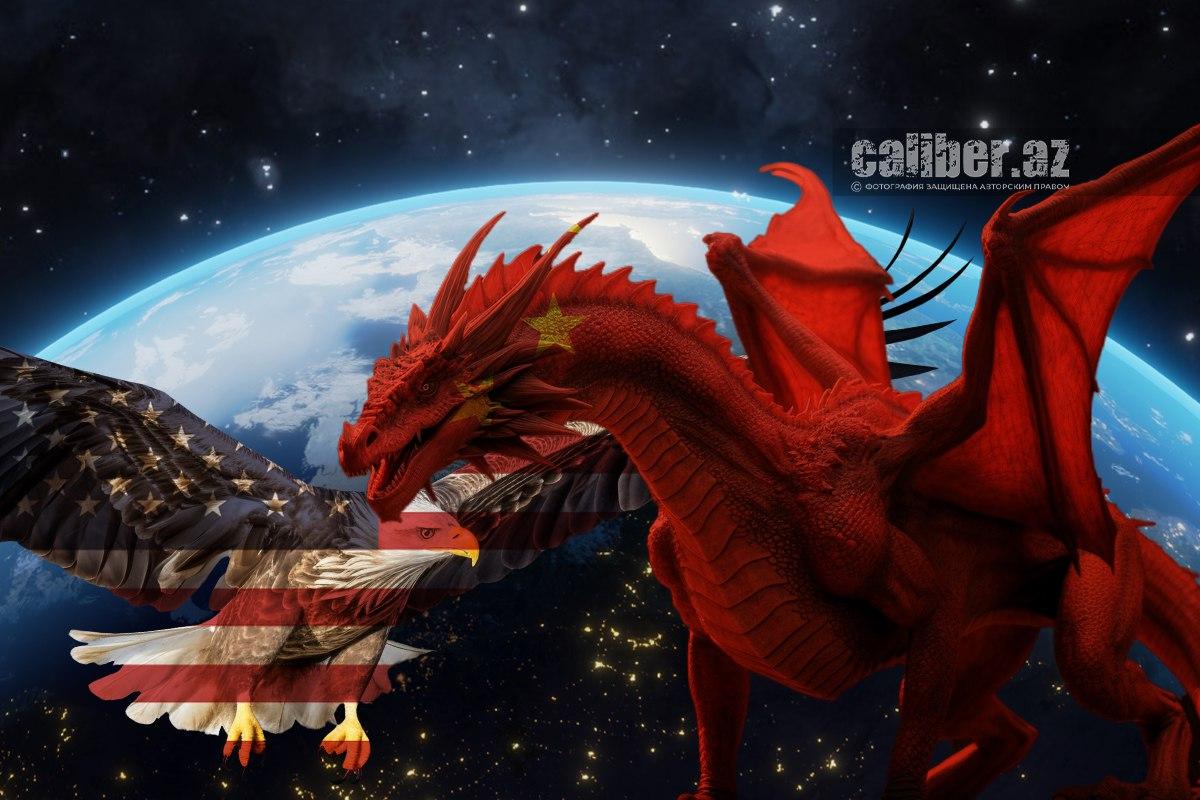
Thus, given that meetings between the Chinese and American leaders have recently come to reflect each side’s efforts to consolidate its position in the global competition between the two powers, it is only natural that Trump wants to arrive in Beijing from a position of strength rather than weakness. In this context, any scenario in which the theocratic regime in Iran remains in power is perceived as a weak position. For Trump, in order to push through U.S. interests in Beijing, an unequivocal victory over Iran would serve as a demonstration of American power — one that others would be wise not to challenge.
Yet, as the saying goes, “war or no war, lunch is still on schedule.” The United States and China are too deeply economically intertwined to simply abandon the cooperation built up over time. This is also evidenced by the fact that, amid the U.S. military operation in Iran and the anticipated postponement of the Beijing summit, trade and economic talks between American and Chinese delegations in Paris were not called off. Following the consultations, both sides spoke positively about the outcome.
“During these consultations, both sides reached a preliminary consensus on certain issues, and the next step will be to continue the consultative process,” said China’s Vice Minister of Commerce Li Chenggang. U.S. Treasury Secretary Scott Bessent was even more explicit: “We will be issuing a statement in the next few days reaffirming the stability in the relationship between the first and second largest economies in the world.”
Thus, Beijing and Washington were quick to reassure the world that a major conflict between them is not part of their immediate plans. And that is, perhaps, one of the few pieces of genuinely good global news at the present time.







 editor@caliber.az
 +994 55 444-88-98
 Азербайджан, Баку, ул. Низами, 203, Af Business House, 5-й этаж