










US-Israel vs Iran: conflict scenarios Analysis by Mikhail Shereshevskiy
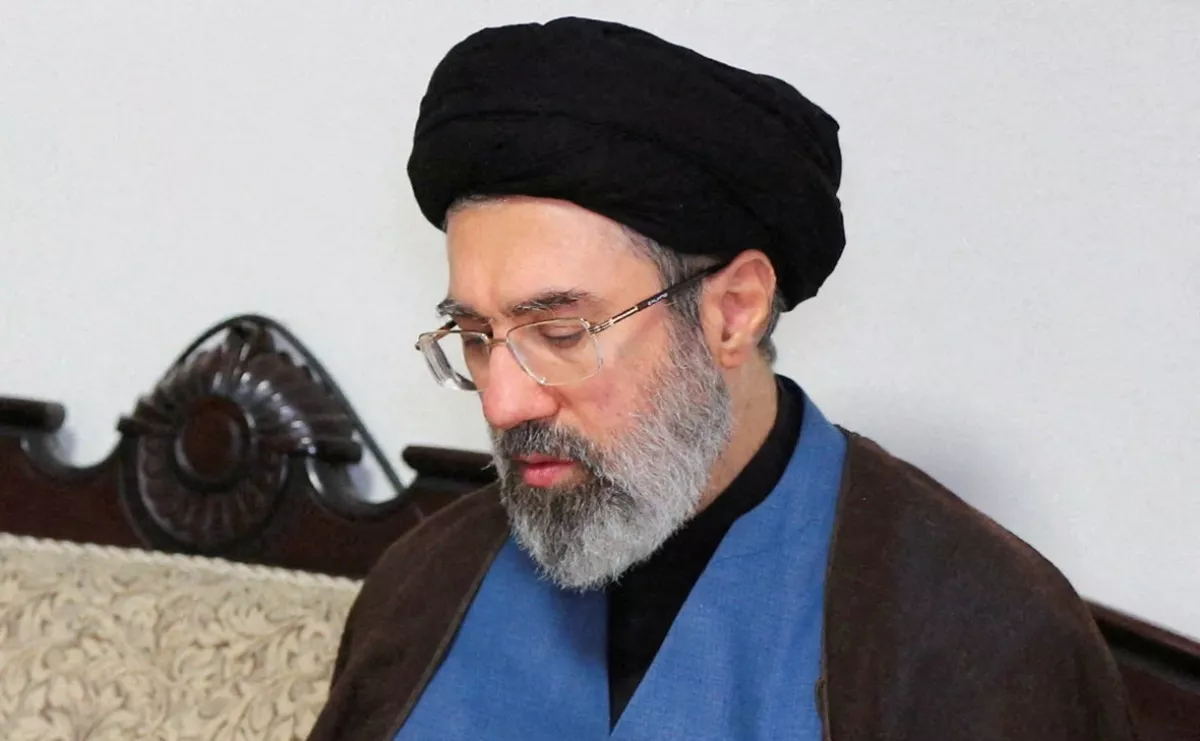
Iran’s Supreme Leader Mojtaba Khamenei made his first statement, which was read on television by a news anchor, against the backdrop of an old photograph of the new ruler. The day before, Iran’s Foreign Ministry reported that Mojtaba Khamenei had been wounded, while, according to The New York Times, citing unnamed Iranian officials, Khamenei is in hiding due to fears for his life and is receiving treatment for his injuries.
The main points of Mojtaba Khamenei’s statement are as follows. First, any American bases in the Middle East must be immediately closed, or they will be attacked.
Second, such leverage as blocking the Strait of Hormuz will continue to be used.
Third, measures will be taken by Iran to open other fronts wherever the opponent is vulnerable.
Finally, Iran will seek revenge for the dead and demand compensation.
Tehran continues to attack ships attempting to use the Strait of Hormuz and strikes various infrastructure targets in the Gulf states, hitting their energy facilities and other critical assets.
Iran’s strategy to counter the strikes of the US-Israel coalition has proven quite effective. Following the surge in oil prices to nearly $120 per barrel, it has become clear that the global economy faces the risk of a recession. Some 15–16 million barrels per day, previously passing through the Strait of Hormuz (out of the 105 million barrels consumed daily by the global economy), have been effectively removed from supply. Global oil reserves stand at about 8 billion barrels, so the problem is not yet catastrophic. Some countries have already announced the sale of reserves or an increase in production. However, if the situation is not resolved in the coming weeks, oil prices could rise sharply, along with the risk of bankruptcies and the onset of a global economic downturn. In that case, a recession would hit the world economy.
This scenario, as well as the rise in fuel prices—which Americans are highly sensitive to—is negative for Donald Trump and his Republican Party. And it is not only about the upcoming elections, which already do not promise good outcomes for the Republicans. Trump is surrounded by lobbyists from major companies and the very representatives of these companies—the 52 billionaires who financed his election campaign. Many of them are worried about a market crash looming due to the Strait of Hormuz situation. Undoubtedly, they—or at least some of them—are exerting pressure on the US president to end the war. The same is true for the lobbyists of the Gulf monarchies, particularly Saudi Arabia and Qatar, who maintain ties with the Washington administration and promise to invest trillions of dollars in the United States.
On the other hand, the US military-industrial complex cannot be upset that it is literally being showered with a golden rain of government spending and orders—the war costs more than a billion dollars a day, and it is expected that very soon Trump will appeal to Congress to allocate an additional $50 billion for it, and the figure could be even higher. For defence corporations, it is a bonanza! And that is not even counting the growing arms orders from Israel or European countries. Naturally, the military-industrial complex has a vested interest in the continuation of the war.
The same can be said about the pro-Israel lobby and Israeli Prime Minister Benjamin Netanyahu himself. For “Bibi,” as the Prime Minister is called, the war with Iran—the main geopolitical rival and competitor in the struggle for dominance in the Middle East—is a crucial political decision and, at the same time, a way to silence domestic dissent. Israel is supposedly engaged in an existential struggle. At the same time, the war serves as a reason to stall the trials against Bibi (he is being tried for corruption in three criminal cases). Netanyahu constantly consults with Trump on the progress of the war, tries to influence him, and not without success.
However, it now seems that the scales are tipping in Iran’s favour. Not in the sense that it is winning the war—Iranian air defences appear to have been destroyed, and US-Israel airstrikes daily target Iranian defence facilities, military headquarters, and bunkers where the country’s leaders are sheltering. Many members of Iran’s ruling class are also being killed. Yet Iran is gaining an advantage because time now seems to be on its side. The US-Israel coalition has only a few weeks, or at most a few months, to complete its attacks on Iran; otherwise, the global economic crisis could become an irreversible reality.
Trump said this, suddenly claiming that the objectives of the operation have been almost achieved. Israeli analysts immediately began to speculate that he could stop the war at any moment, and that Israel and the US might be shifting from a maximalist programme (the Venezuelan scenario: replacing Iran’s leadership with a pro-American one through intimidation, abductions, or, in this case, killings and threats against Iran’s top officials) to a minimalist programme. The minimalist programme aims to inflict severe damage on Iran so that it turns inward and ceases projecting its influence outward, no longer interfering with US-Israel plans in the Middle East.
It is possible that the war could end in a few weeks. The likelihood of this is high. But there is another scenario. What if Trump does not stop? And what if Trump and Israel cease their attacks, but Iran does not?
The new Iranian leadership, represented by the IRGC elite backing Mojtaba Khamenei, is demanding guarantees. They say they will not lift the blockade. Their reasoning is as follows. Suppose they lift the Strait of Hormuz blockade immediately after the airstrikes end. But the Israelis and Americans had already bombed them during the 12-day war in June 2025, killing almost the entire military leadership, and then launched an even larger series of attacks on February 28 of this year. This makes a third or fourth wave of strikes likely within six months—or on any given day. Especially since Israel has applied a similar tactic against its opponents in Lebanon, Gaza, and, to some extent, Syria for years, calling it “lawn mowing.”
In that case, there is a high probability that Iran’s new military leaders and politicians would also be killed, just like the old ones. Iran’s ruling circles want guarantees that this will not happen.
The problem is that no such guarantees exist. No one can provide them… except, perhaps, Trump himself. What if the US and Israel stop the airstrikes, but Iran maintains the Strait of Hormuz blockade? What if the Iranians choose to keep the blockade in place for some time—say, several weeks or months—to pressure their opponents and force Trump to realise that dealing with Tehran is dangerous? It is risky, but possible.
In that case, the US-Israel coalition could target not only oil storage facilities (as has already happened in Tehran and other regions) but all 30 Iranian refineries. This would trigger a collapse in Iran—transport would halt in part, and food shortages would emerge. If that were still insufficient, the coalition could destroy the entire energy infrastructure, including power plants. This would lead to total collapse and mass migration toward regions where survival is possible. If even that proves inadequate, a ground invasion could become possible—a move Trump has hinted at, though it would be extremely unpopular in the US (even today, without a ground operation, more than half of Americans oppose a war with Iran, and only 44 per cent support it).
Most likely, Iranian leaders understand this as well. If the US and Israel halt their attacks, the Islamic Republic’s leadership might also lift the Strait of Hormuz blockade. The difficulty is that such a decision would resemble a “death deferred by six months.” Their only guaranteed way to survive would be to accept American conditions: become a second Venezuela, adopt Washington-oriented policies, hand over enriched uranium reserves to the US, and abandon any uranium enrichment programme. But currently, Tehran refuses to take such steps. Could this push the situation into the fatal deadlock we mentioned earlier?
In any case, US-Israel airstrikes on Iran will have long-term consequences and structural effects. Regardless of how events unfold, these developments will lead to a profound structural transformation of global politics and the world economy.







 editor@caliber.az
 +994 55 444-88-98
 Азербайджан, Баку, ул. Низами, 203, Af Business House, 5-й этаж