










Caught between two fires Merz faces a wave of challenges
German Chancellor Friedrich Merz is increasingly expressing dissatisfaction with the European Union’s functioning and is more often advocating for a more independent policy without coordination with Brussels, according to Bloomberg. Merz criticises the EU bureaucracy, arguing that it hinders the development of the German economy. The chancellor also acknowledges the potential need to act on certain issues without a Europe-wide consensus.
These reports were indirectly confirmed by Merz himself, who, speaking in the Bundestag, stated that Europe must act with greater confidence in an era when global players are shaping the world according to their own rules.
“We no longer want to sell ourselves short. We Europeans, we must unitedly and with determination take our security and the defence of our freedom into our own hands,” said the German Chancellor.
Thus, Merz’s actions and statements in recent weeks form a fairly coherent, yet tense, line: he simultaneously advocates for a strong Europe while openly criticising the European Union itself.
A shift is noticeable in his rhetoric, moving away from the classic German pro-European consensus toward a more pragmatic and even tough approach. On one hand, Merz explicitly states that a “united Europe” remains Germany’s main guarantee for the future, especially in the face of global upheavals. On the other hand, he points out the EU’s weaknesses: sluggishness, overregulation, excessive bureaucracy, and an inability to respond quickly to crises. There is an important nuance here: he does not reject the European project, but he effectively questions its current form.
This dual attitude reflects a broader strategy. Merz sees the world as more dangerous and competitive, where major players act harshly and according to their own interests. In this context, Europe, in his view, must “reassess itself” — becoming less procedural and more political.
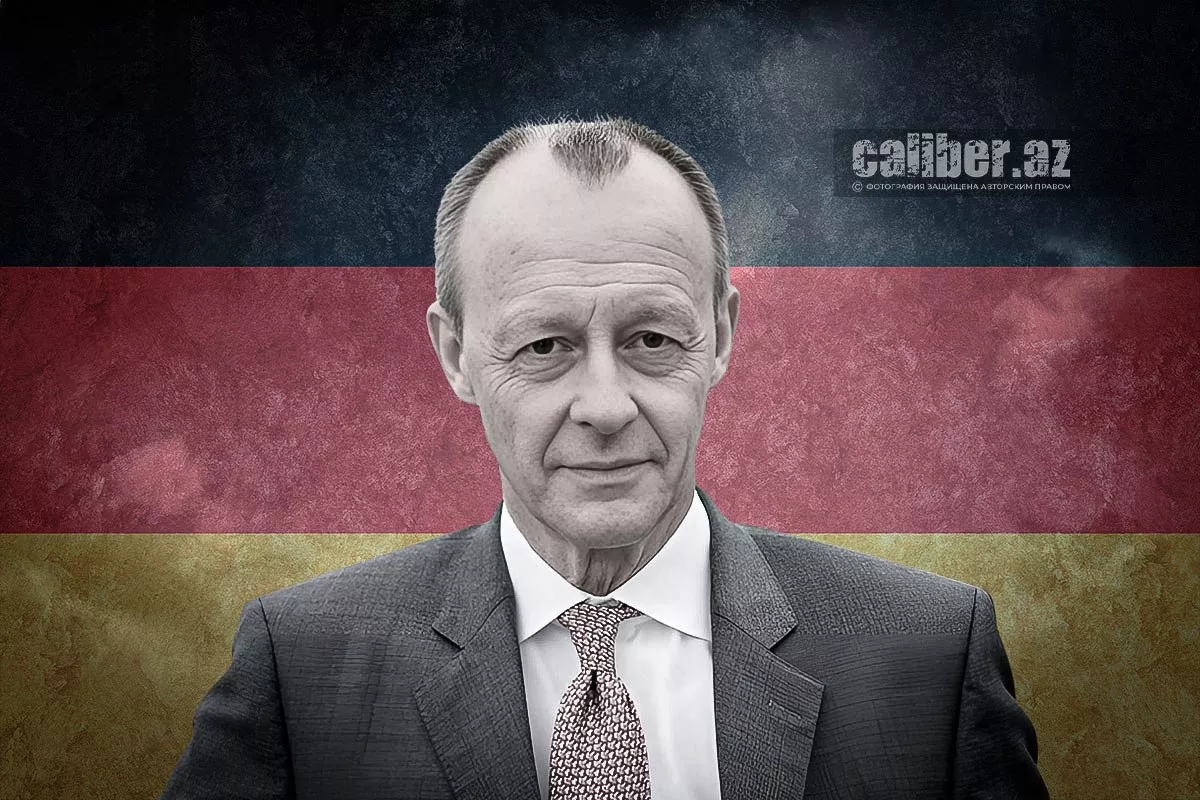
Interestingly, this approach shows a partial overlap with Donald Trump’s arguments in his criticism of the Old Continent. However, Merz does not follow this line completely. While Trump emphasises the need to align European interests with the national interests of the United States, Merz seeks to strengthen Europe itself — but through transformation rather than maintaining the status quo.
This logic becomes even clearer in foreign policy. On the issue of the conflict around Iran, Merz demonstrates cautious realism: he emphasises that NATO should not automatically be drawn into the conflict, and Germany will not participate in a war. At the same time, he effectively distances himself from U.S. pressure, highlighting the need for mutual respect within the alliance and expressing doubt about the effectiveness of forceful approaches. This is an important signal: Berlin aims to preserve allied relations but is not willing to follow Washington unconditionally.
At the same time, the domestic factor cannot be ignored. Pressure from the opposition and declining popularity are pushing Merz toward a tougher and sometimes demonstrative rhetoric, especially toward Brussels. In this sense, criticism of the EU serves a dual purpose: on one hand, it is an attempt to genuinely change the rules of the game; on the other, it sends a signal to voters that he is ready to defend national interests — particularly against the backdrop of the rising popularity of the far-right Alternative for Germany.
Ultimately, Merz’s politics today appear as an attempt to balance between two levels — national and European — amid growing instability. He is not dismantling the European project, but clearly seeks to reshape it to fit a new reality, where speed, strength, and autonomy take precedence over consensus and procedures.







 editor@caliber.az
 +994 55 444-88-98
 Азербайджан, Баку, ул. Низами, 203, Af Business House, 5-й этаж