










Azerbaijan’s banking sector: between growth and risks Analysis by Khazar Akhundov
Rising geopolitical risks continue to affect the global economy, increasing the likelihood of a slide into recession. High volatility in energy markets, weakening monetary and macroeconomic indicators, tariff barriers, and trade wars are also negatively impacting the financial sector. Against this backdrop, Azerbaijan’s banking sector, which has significantly improved its performance in recent periods, has managed to maintain stability this year. This is evidenced, in particular, by recent reports from international rating agencies Moody’s and S&P Global Ratings on the domestic banking sector. Nevertheless, the country’s banking sector faces notable growth in non-performing assets and an excessive concentration in the consumer lending segment.
As inflation expectations in Azerbaijan—and in many countries worldwide—have declined, priorities have shifted toward boosting GDP growth and increasing business financing. To support this, the central bank lowered the policy rate and implemented some liberalisation of monetary regulation. These and other measures taken by the regulator in 2024–2025 contributed to stronger bank lending, increased profitability, and growth in the assets of Azerbaijan’s banking sector.
According to data from the Central Bank of Azerbaijan (CBA), as of February 1 this year, the assets of the banking sector nearly reached 56.936 billion manats (≈ $33.5 billion), up 7.2% year-on-year. Net loans issued to bank clients amounted to almost 28.202 billion manats (≈ $16.6 billion) of total banking assets. Over the period, the banking sector’s loan portfolio grew by 8.8%, and the share of loans in total assets increased from 48.8% to 49.5%.
The total deposit portfolio (individuals and legal entities) exceeded 36.805 billion manats (≈ $21.6 billion), with over 16.305 billion manats (≈ $9.6 billion) in individual deposits. During the reporting period, household deposits in banks increased by 13.3%. At the same time, the level of deposit dollarisation fell to 37%, compared with 48% at the end of 2022 and over 70% in 2016.
Net profit in the banking sector rose by 11.2%, exceeding 1.161 billion manats (≈ $0.68 billion), while total equity increased by 10.7%, reaching 7.407 billion manats (≈ $4.36 billion).

These indicators point to positive trends in the sector, its capacity for reform, and the regulator’s effective oversight of compliance with prudential standards. This progress has not gone unnoticed by international rating agencies. In February last year, S&P Global Ratings upgraded Azerbaijan’s country and industry risk assessment for the banking sector (BICRA) from “stable” to “positive.”
A year later, the agency continues to view the outlook for Azerbaijan’s banking sector positively. In the BICRA report published this March, S&P experts improved the rating for the sectoral risk component of the banking sector, lowering it from level 8 to 7. “A positive trend on the economic risk of 8 reflects our expectation that stronger regulatory oversight will restrain banks' risk appetite and reduce credit risk in the banking system. The improvement in our industry risk assessment captures initiatives undertaken over the past three years to modernise the regulation and supervision of financial institutions in Azerbaijan.
Under the Financial Sector Development Strategy for 2024-2026, regulators enacted a corporate governance standard for banks,” S&P noted.
Specifically, these initiatives include measures taken over the past three years to manage liquidity risk in line with Basel III requirements, transition to a risk-based supervisory model for banks, strengthening corporate governance standards, and implementing international financial reporting standards.
According to S&P Global Ratings’ forecasts, Azerbaijan’s banking sector is expected to maintain resilience and stable credit growth. Loan issuance is projected to grow at an annual rate of 10–12% in 2026–2027.
A positive assessment of the country’s banking sector development was also highlighted by experts from the international rating agency Moody’s in its recently published report, “Outlook for Azerbaijan’s Banking System.” According to the agency, the government has sufficient resources to support the banking sector, which is characterised by a high level of dollarisation but remains relatively small in size, with total assets standing at about 44% of GDP.
This is also supported by substantial strategic foreign exchange reserves, which as of December 2025 exceeded 108% of the country’s GDP, allowing financial institutions to maintain strong asset quality and profitability over the next 12–18 months, Moody’s emphasised.
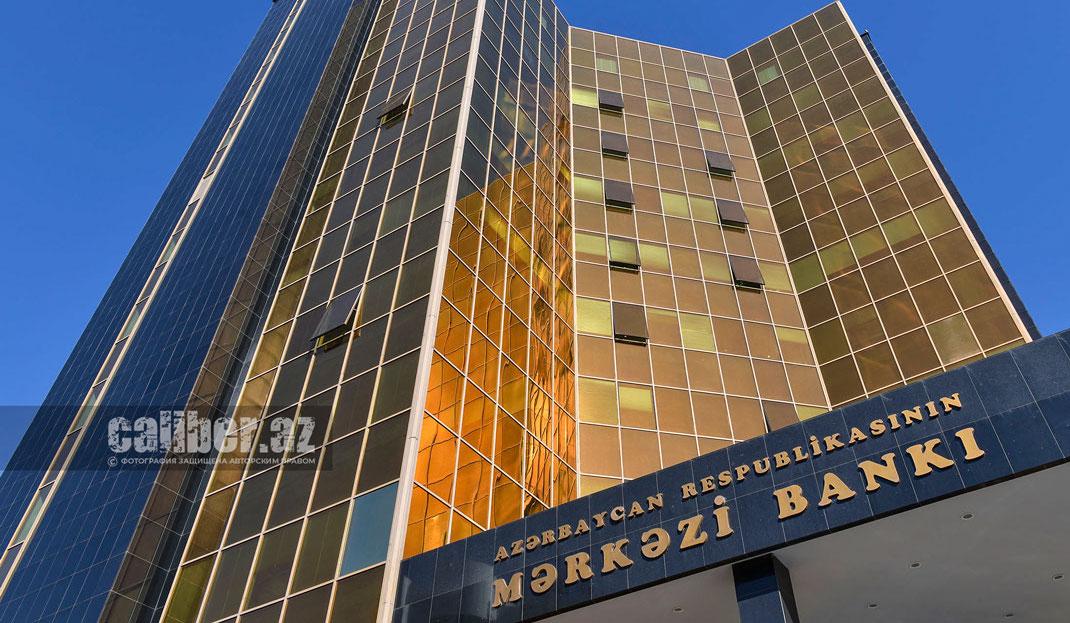
Analysts at Moody’s, who believe that tighter supervisory standards will strengthen capital adequacy and improve liquidity management, have maintained a “positive” outlook for the country’s banking sector. Asset quality is expected to benefit from rising domestic incomes (with the sovereign rating at “Baa3” with a positive outlook) and the development of the non-oil sector of the economy, where most banking activity is concentrated.
In turn, the stability of the Azerbaijani manat exchange rate has a positive impact on the servicing of foreign-currency loans. Overall, the monetary stability maintained for nine consecutive years remains an important factor supporting the stable functioning of the banking sector. This year, the sector’s capitalisation level is expected to remain high, and according to Moody’s estimates, Azerbaijani banks with higher ratings possess substantial capital buffers.
Overall, reports by S&P Global Ratings and Moody’s indicate the effectiveness of reforms carried out by the regulator in recent years, which have significantly strengthened the resilience of the country’s banks. Nevertheless, even in this otherwise favourable picture, a notable challenge remains.
During the first ten months of last year, the volume of non-performing loans in the country’s banking sector increased by nearly 14%, while consumer lending expanded sharply, with its share in banks’ loan portfolios approaching 60%. By comparison, in the first ten months of 2023, consumer loans accounted for no more than 30% of the total credit portfolio.
All these negative trends have persisted—and even intensified—this year. According to data from the Central Bank of Azerbaijan (CBA), as of February 1, the total volume of overdue loans reached 557.5 million manats (≈ $328 million). In February alone, compared with figures as of January 1, the volume of toxic assets increased by 6.3%.
The statistics for the past twelve months are only slightly more encouraging: the amount of problem debt in the country has grown by 17.35%. By the end of January, the share of overdue loans in the total credit portfolio stood at 1.7%, compared with 1.6% at the end of last year.
According to Vugar Bayramov, a member of the economic policy, industry and entrepreneurship committee of the Milli Majlis (parliament), the growth in problem loans is a highly undesirable trend that requires an immediate response.
“Banks need to revise their lending policies, paying closer attention to credit scoring and client selection. The scale of household indebtedness is striking: at present, more than 3 million citizens have active consumer loans,” Bayramov noted. “According to the latest data, the country’s consumer lending portfolio has reached a staggering 9.354 billion manats [≈ $5.5 billion], and this figure continues to grow, inevitably leading to an increase in the share of problem loans.”
What are the risks associated with the rapid growth of consumer lending? In Azerbaijan, the events of a decade ago are still well remembered. The collapse of global oil prices in 2014–2015 led to the devaluation of the manat and triggered a crisis of bank non-payments. As a result, attempts to stabilise the situation cost the Central Bank of Azerbaijan nearly $9 billion in reserves. Over the following years, the number of banks operating in the country also declined significantly—from 45 to 22 today.
On the eve of that crisis, the country had also experienced an unprecedented boom in consumer lending. For this reason, the priority steps taken by the regulator after the large-scale banking crisis focused on tightening monetary and credit policies. In particular, special measures were introduced to reduce dollarisation in the lending and deposit segments to the maximum possible extent, as well as to strengthen regulations and oversight of consumer lending.

Unfortunately, last year’s statistics indicate that the banking sector has not fully learned the bitter lessons of the past. Excessively high liquidity remains a long-standing problem of the domestic lending sector, as the idle funds accumulated by banks generate little or no income.
The reason is that, unlike sectors with rapid capital turnover—such as trade and services—the collateral and insurance requirements imposed by commercial banks, combined with relatively high interest rates and commissions, often prove too burdensome for entrepreneurs in the manufacturing sector.
For comparison, during the first ten months of last year, loans to agriculture, forestry and fisheries, as well as to industry and the manufacturing sector, together accounted for only 7.2% of the total banking loan portfolio. This is catastrophically low for a country that has declared the development of the non-oil sector and a new wave of industrialisation as its key economic priority.
The situation is further aggravated by relatively high interest rates on deposits and other attracted funding lines, as well as the absence of large domestic sources of “cheap” money—such as mutual investment funds or pension funds. As a result, local banks simply lack sufficient room to reduce lending margins. Under these circumstances, the household segment remains the main outlet for commercial banks facing excessive liquidity, inevitably driving further growth in consumer lending.
According to Vugar Bayramov, one of the root causes of payment arrears and the increase in toxic loans is excessively high interest rates. In this situation, commercial banks must thoroughly assess borrowers’ solvency, screen out high-risk clients in the consumer segment, and lower the maximum ceiling for unsecured loans. Equally important are joint efforts by banks and the regulator to improve financial literacy among the population.
A similar path has been followed by the central banks of Uzbekistan and Kazakhstan, which over the past two years have revised their regulatory frameworks and introduced stricter supervisory measures. These steps have helped curb the rapid—and potentially dangerous—growth of retail lending.







 editor@caliber.az
 +994 55 444-88-98
 Азербайджан, Баку, ул. Низами, 203, Af Business House, 5-й этаж