










Armenia’s path toward peace or the abyss of a new war? On the scales of history
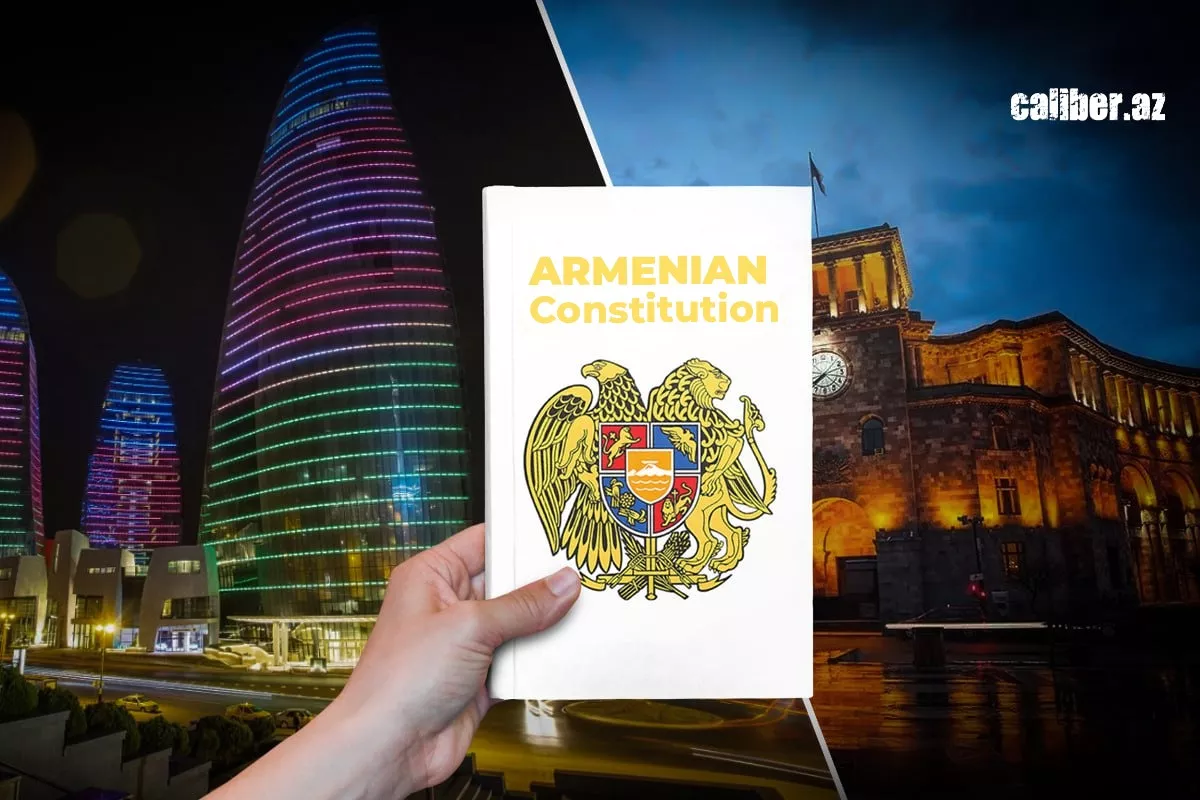
“We have come too far to stop now.” This statement reflects the position of Armenia’s Minister of Justice, Srbuhi Galyan, on the country’s new draft Constitution.

“[...] the text is ready, as I promised. But I have no update yet regarding its publication, because it was decided to discuss the text within the Civil Contract party’s board and parliamentary faction,” Galyan stated at the first session of the Public Council under the Minister of Justice, emphasising that “the Constitutional Reform Council is working very actively.”
Thus, as indicated by the Armenian minister, the process of constitutional reform in Armenia is approaching its final stage. This raises a logical question: “How realistic is it that the new Constitution will exclude territorial claims against Azerbaijan, which is a key requirement for Baku to sign a final peace agreement between the two states?” To answer this question, it is necessary to examine in detail the domestic political landscape of the neighbouring country.
Notably, the Pashinyan government has shown an intention to remove from the text of Armenia’s new Constitution any reference to the Declaration of Independence, which mentions “reunification of the Armenian SSR and the Mountainous Region of Karabakh,” as Prime Minister Nikol Pashinyan has stated on multiple occasions.
Specifically, at a recent meeting with members of the Civil Contract party and residents of Kapan, the Armenian leader noted that “our Declaration of Independence is actually not a declaration of independence at all”: “It is a declaration of conflict, because if you declare a state while saying, ‘I have this problem with you, this problem with you, and that problem with you,’ then that is not independence.”
Thus, the prime minister made it clear that building a secure and sovereign state requires a new Constitution that is not based on a logic of conflict, which implies the removal of claims on Azerbaijani territories. In other words, Pashinyan intends through this process to close the issue of territorial claims and put a definitive end to the so-called “Karabakh movement,” as he has stated repeatedly, emphasising that “if we continue it, that means a new war.”
At the same time—which is important—Pashinyan has repeatedly noted that the adoption of the new Constitution will be decided by the citizens of Armenia through a referendum. This indicates that the Armenian authorities are seeking to present the constitutional reform as an internal modernisation of the state, rather than as compliance with Baku’s demands.

This approach appears quite reasonable against the backdrop of the increased activity of the so-called “party of war,” consisting of opposition members and representatives of the Armenian Church, ahead of the parliamentary elections scheduled for this summer. At the same time, opposition forces do not hesitate to use any means to discredit the authorities, including distorting the Washington Agreements of August 8, 2025, which paved the way for the peace process, as well as any other government actions aimed at promoting peace.
In this context, the upcoming constitutional referendum could become one of the most challenging political tests for Pashinyan’s team, alongside the parliamentary elections, especially given that Armenian society is deeply polarised: one segment supports peace with Azerbaijan, while another believes that the authorities abandoned previous policies too quickly.
It is therefore possible that staunch revanchists, such as Robert Kocharyan, nominated as a candidate for prime minister by the Armenia bloc, may attempt to turn the constitutional referendum into a political vote of confidence in the government, potentially triggering a national crisis.
Accordingly, the prime minister’s central task is to persuade Armenian society that the republic’s future—toward a peaceful path or the abyss of a new war—depends on their decision.
Whether Pashinyan and his team will succeed remains to be seen, but Armenian citizens are already faced with the urgent need to determine the “climate” in their shared home, the nation of Armenia.







 editor@caliber.az
 +994 55 444-88-98
 Азербайджан, Баку, ул. Низами, 203, Af Business House, 5-й этаж