










Point of no return Moldova leaves the CIS
Recently, the Moldovan government took a concrete step confirming the country’s clear choice of its future foreign policy course by approving a resolution to denounce the fundamental documents of the Commonwealth of Independent States (CIS) — the agreement on the establishment of the Commonwealth, its charter, and the Alma-Ata Declaration.
Now the decision rests with the parliament of this country. If the legislative body approves it, then Moldova — after resolving all technical issues, which may take until 2027 — will become the third post-Soviet state after Georgia and Ukraine to leave the CIS.
Chișinău launched the process of withdrawing from the CIS immediately after applying for membership in the European Union, effectively freezing its participation in the work of the Commonwealth. In 2023, the authorities initiated the procedure for leaving the CIS Interparliamentary Assembly, and by early 2024, announced plans to withdraw from 119 out of 282 active agreements within the framework of the Commonwealth. On January 19, 2025, Moldova’s Ministry of Foreign Affairs began the process of denouncing the three aforementioned fundamental CIS agreements.
So, what advantages and disadvantages could the withdrawal from the CIS bring to this small country in economic and political terms?
To begin with, the economy of Moldova has long been reoriented toward the European Union. According to 2025 data, the EU accounts for more than 67 per cent of Moldova’s total exports, whereas in 2013 this figure was only 46.8 per cent. At the same time, the share of exports to the countries of the CIS has declined from 38 to 6.8 per cent, indicating a reduced economic dependence on the Commonwealth. In addition, according to economists, terminating membership will allow Moldova to stop paying annual contributions to the CIS institutions.
At the same time, the Deputy Prime Minister and Minister of Foreign Affairs, Mihai Popșoi, stated as early as January 2026 that Chișinău would retain those agreements that provide practical benefits to citizens and do not conflict with European integration, while relations with individual CIS countries are planned to be developed on a bilateral basis. Progress is already being observed in this direction: during his recent official visit to Azerbaijan, Popșoi told the Report agency that “We intend to transform these strong bilateral political relations into more active economic cooperation, as economic ties between our countries still have significant potential for further development.”
Thus, it can be argued that the Moldovan authorities have created a pragmatic “safety cushion” in the context of leaving the CIS and losing, as a result, access to certain markets. This is the economic aspect.
As for the political dimension, one cannot ignore Moscow’s reaction to Chișinău’s intention to leave the Commonwealth, which is motivated in part by a desire to reduce dependence on Russia, with which relations have severely deteriorated due to the war in Ukraine. Incidentally, this point is highlighted in the statement by the Moldovan Cabinet of Ministers regarding the country’s withdrawal from the fundamental agreements of the CIS.
“The decision comes in the context of the Russian Federation’s failure to respect the Community’s fundamental values and principles, under which the states mutually recognise and respect territorial integrity and the inviolability of borders,” the publication states.
The Russian side reacted fairly calmly to this step by the Moldovan authorities, calling it expected. “Moldova de facto did not take part in the work and, of course, it was clear that sooner or later this frozen state would be formalised,” Dmitry Peskov told journalists in January. Meanwhile, back in 2023, Russian President Vladimir Putin noted that the country’s withdrawal would not affect integration processes in the post-Soviet space, as its presence in the CIS “holds no great value for us.”
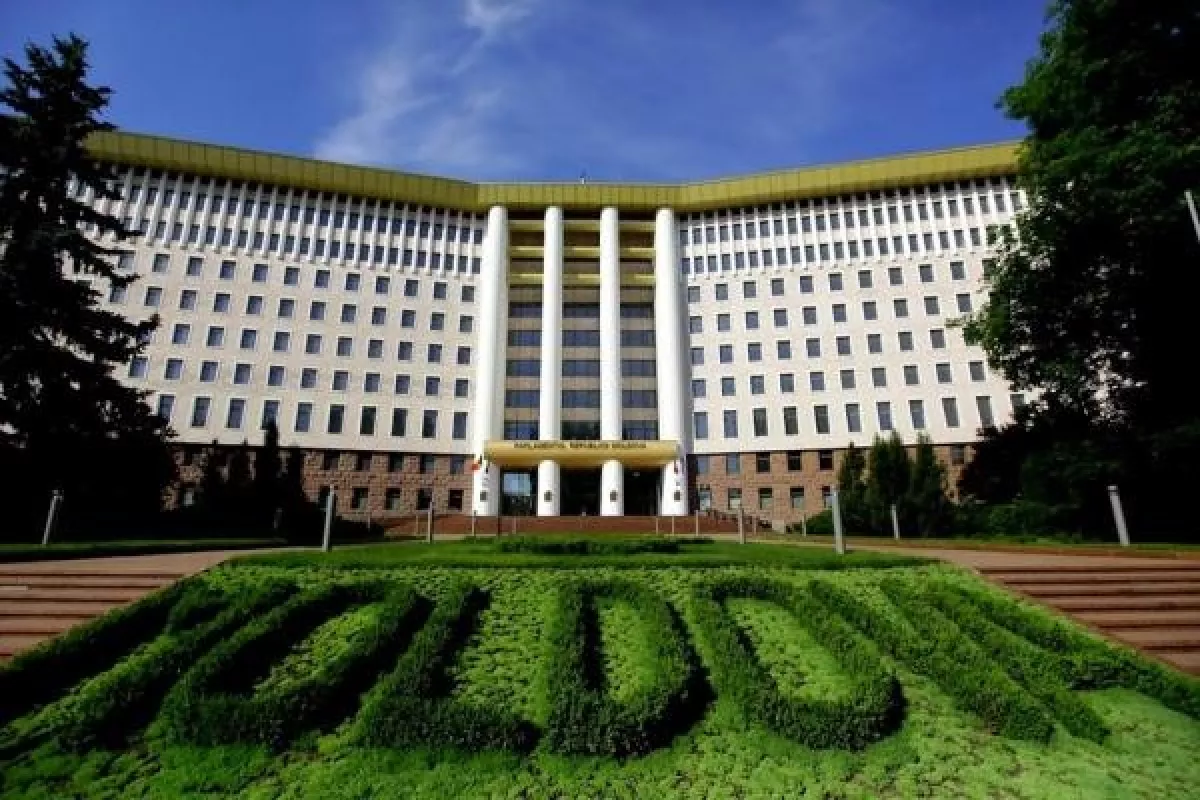
On the other hand, by denouncing the fundamental CIS documents, Chișinău has reaffirmed that the country’s primary national objective remains European integration. In this context, an important question arises: “How quickly is the European Union prepared to admit a country with a small economy and a ticking time bomb on its territory in the form of separatist Transnistria, where Russian troops are stationed, and a pro-Russian administration operates?”
Moldova officially received candidate status for European Union membership on June 23, 2022. The decision was unanimously approved by the European Council at a summit in Brussels, shortly after the country submitted its application in March 2022. This step marked the beginning of a new phase in relations between Moldova and the EU.
Ultimately, the smoothness of Moldova’s exit from the CIS and the geopolitical consequences that follow will largely depend on Brussels and its capacity to accelerate the country’s European integration.







 editor@caliber.az
 +994 55 444-88-98
 Азербайджан, Баку, ул. Низами, 203, Af Business House, 5-й этаж