










Road to Berlin Syrian leader strengthens international ties
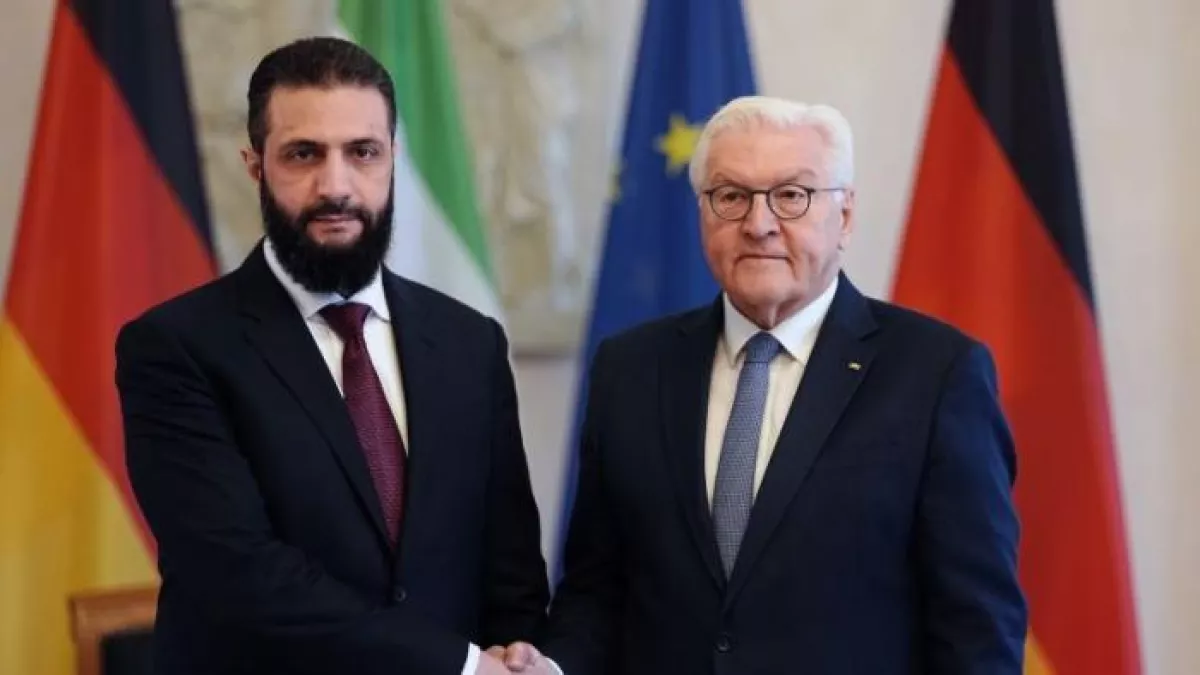
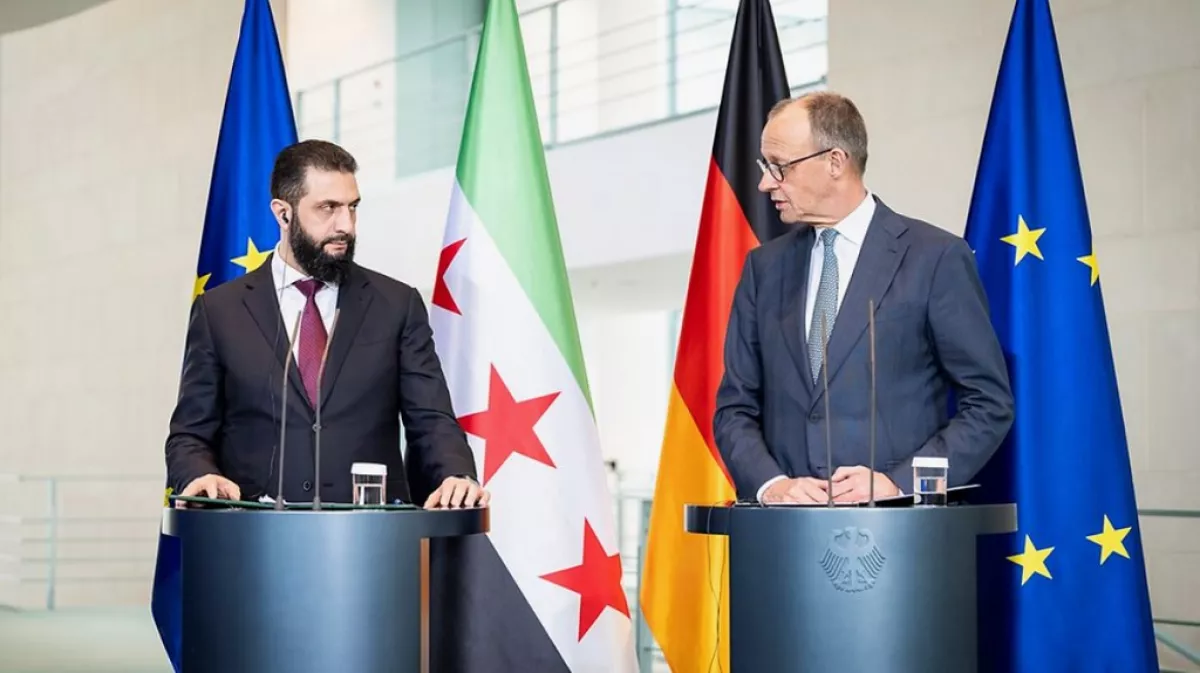
Syrian leader Ahmed al-Sharaa made a state visit to Germany. At the Bellevue Palace, he was received by President Frank-Walter Steinmeier, followed by talks with Chancellor Friedrich Merz. The discussions focused on the main topic — the relations between Berlin and Damascus in Syria’s new post-war reality.
Germany made it clear: it is interested in a stable Syria and is ready to participate in its reconstruction. This concerns not only political support but also specific economic projects aimed at helping the country get back on its feet after years of conflict. Berlin expects that an improved situation will create conditions for the return of millions of people who left the country during the civil war.
The issue of refugees also became a central topic. According to Merz, within the next three years, a significant portion of Syrians living in Germany could return home — figures of up to 80 per cent are being discussed. The approach will be selective: those who have integrated and wish to stay will be able to do so, while people without legal status or who have committed offences are considered priority candidates for return.
This visit is part of a broader strategy by the Syrian leader, who is actively trying to pull the country out of the international isolation into which the Assad regime has driven it. After trips to Moscow and Washington, he embarked on a European tour, with Germany becoming the first key stop in the European Union.
At the same time, the visit was accompanied by noticeable tension. In Berlin, security measures were heightened, roads were closed, and public gatherings in the city centre were temporarily banned. Demonstrations also took place — both in support of and against the Syrian leader. His past, associated with armed groups, continues to provoke debate and criticism, including from parts of the Syrian diaspora and human rights activists.
Despite this, German authorities are focusing on pragmatism. Berlin is already discussing the creation of joint working structures, the launch of business cooperation, and the possible involvement of German companies in rebuilding Syria’s infrastructure and economy. At the same time, steps are being considered at the EU level — from easing trade to the return of European financial institutions to the country.
For Syria itself, this is an opportunity not only to secure resources but also to consolidate its new position on the international stage. For Germany, it is a chance to simultaneously reduce the migration burden and open up a promising market for reconstruction business.
Today, Ash-Sharaa travelled to London, where he met with Prime Minister Keir Starmer to discuss prospects for strengthening bilateral relations. Both sides emphasised the importance of expanding cooperation in development and investment. In addition, current regional and international issues were addressed.
The Syrian leader’s visits to Europe’s industrial hub and one of the world’s leading financial centres (alongside previous two trips to Moscow, one to Washington, and close ties with Ankara) demonstrate Damascus’s pragmatic and flexible policy, aimed at minimising geopolitical risks and strengthening statehood.







 editor@caliber.az
 +994 55 444-88-98
 Азербайджан, Баку, ул. Низами, 203, Af Business House, 5-й этаж