










Will Poland break from the EU? “Polexit” panic
Recently, Polish Prime Minister Donald Tusk stated that Poland is being prepared for a withdrawal from the European Union. “Polexit today represents a real threat! Both the Confederation and the majority of members of the Law and Justice party want it. Nawrocki is their patron. Russia, the American MAGA movement, and European right-wing forces led by Viktor Orbán want to destroy the EU. For Poland, this would be a catastrophe. I will do everything to stop them,” Donald Tusk wrote on his page on the social network X.
Indeed, the victory of conservatives in the United States, led by Donald Trump, has significantly inspired political forces of a similar spectrum in Poland itself. However, recently, neither in the Polish Sejm nor in the European Parliament has anyone raised the issue that Warsaw should part ways with Brussels. So why is the liberal Prime Minister Donald Tusk, so “in love” with Europe, sounding the alarm? Such a strong reaction was triggered by the decision of Polish President Karol Nawrocki to veto the EU’s SAFE military loan program. Not long ago, this project—promising to bring 44 billion zlotys ($11 billion) to Poland’s defence industry—had been widely welcomed.
Previously, opinion polls showed that 52 per cent of Poles supported this loan program, while only 35 per cent opposed it. But after the presidential veto, a CBOS poll indicated a shift: only 43 per cent are now in favour, while 39 per cent oppose SAFE.
Following this, in an interview with TVP Info, Prime Minister Tusk supported those who believe that the president’s veto on SAFE is a prelude to “Polexit.” According to him, it signals the end of Poland’s “major deal” with NATO and the European Union.
Karol Nawrocki, however, simply decided that Poland’s defence capability should rely on its own resources. “Brussels can arbitrarily suspend funding, while the state will still be obliged to repay the debt,” Nawrocki said in his televised address. “Poles will have to repay an amount twice the size of the loan, while Western banks and financial institutions will profit from it. This will become a burden for our children and grandchildren for many years to come.”
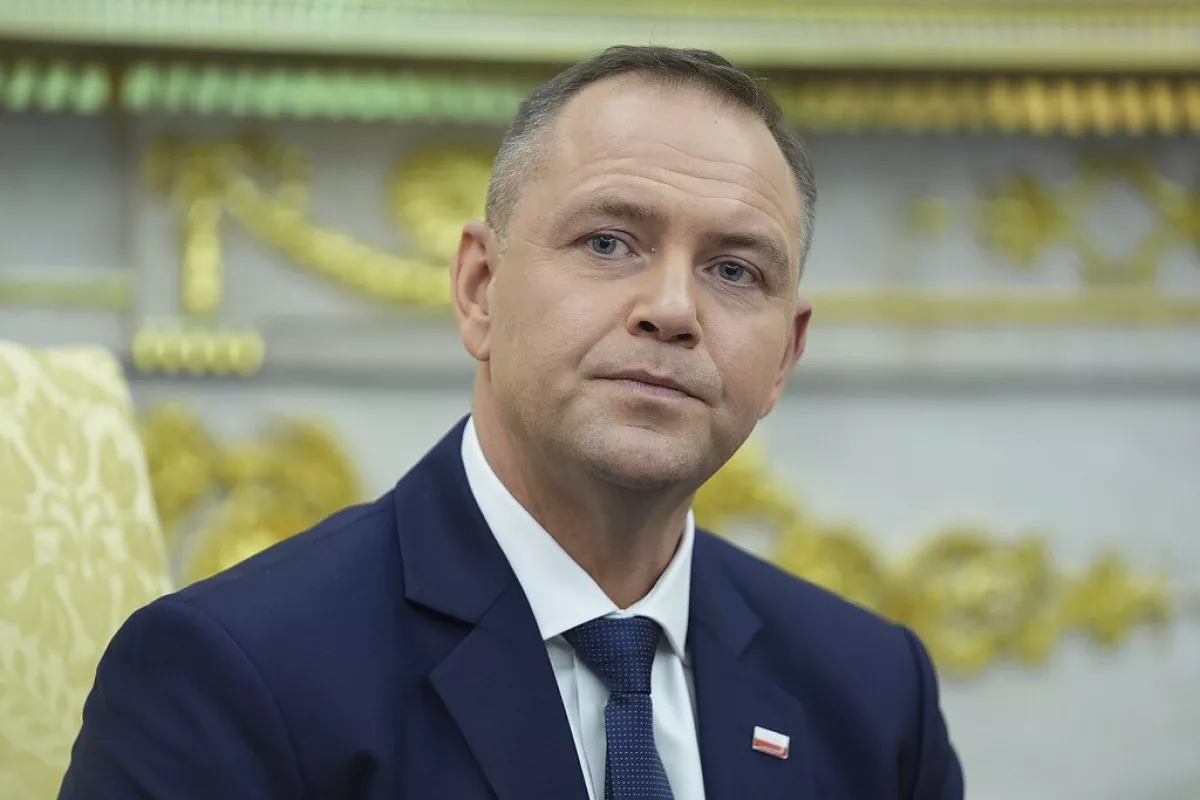
At the same time, Nawrocki proposed an alternative — a “Polish SAFE 0%” program from the Polish Defence Investment Fund. A corresponding bill has already been submitted to the Sejm. Nawrocki and the fund promise that the local version of SAFE will be under the control of the Polish parliament, with full transparency in the use of funds. Poland would independently decide from which companies to purchase weapons and equipment, and how to develop its own industry.
In reality, despite the alarm raised by Donald Tusk, the president’s veto on a large EU military loan does not directly threaten Poland’s membership in the European Union. However, it does affect the interests of those segments of the Polish elite that are closely financially tied to Brussels. It is likely that the prime minister voiced their dissatisfaction in his statement. Overall, the issue of EU membership reflects a complex knot of contradictions within Polish society.
The EU is more than just a union for Poland
The fact is that for a long time, entry into the “European home” was a central myth of liberal propaganda both in Poland and across Eastern Europe as a whole. The European Union was portrayed as a kind of “promised land” and the only possible path of development. However, Poland has been part of this “united European family” since 2004, and it soon became clear that European integration could not solve all problems. Moreover, Brussels can also create new ones.
The debate over Poland’s participation in the European Union has long become one of the central issues of domestic political discussion. The dispute is between the liberal ruling coalition and the right-wing and far-right opposition. The opposition tends to blame the European Union and its lobby in Poland for many of the country’s problems—whether in the economy, the social sphere, declining public morals, or the influx of refugees—linking all of these to Brussels’ policies.
In reality, the situation is far more complex. However, the neoliberal approaches and strict technical regulations promoted by Brussels do indeed place significant pressure on certain sectors of the Polish economy. For example, they threaten the viability of many Polish farmers and complicate construction processes.
At the same time, part of the conservative electorate is alienated by what they see as the promotion of LGBTQ-related policies, many of which have already been enshrined in legislation by the ruling coalition.
Overall, the debate over European integration is, in its own way, beneficial to both camps—the right-wing opposition and the left-liberal ruling coalition. Most importantly, however, it does not touch upon the deeper essence of the existing social order.
It is quite possible that Donald Tusk is deliberately challenging his opponents by reigniting old disputes around the European Union. This helps shift public attention away from accumulated domestic problems, including social spending cuts in favour of militarisation, as well as the escalating global conflicts.
It appears that Tusk and his liberal Civic Platform party, together with their allies, are hoping to use this issue as a central theme in the upcoming Sejm elections, which are scheduled to take place in 2027.
For Poland, “this would be a catastrophe,” Tusk wrote on his Twitter account about the possibility of the country leaving the EU.
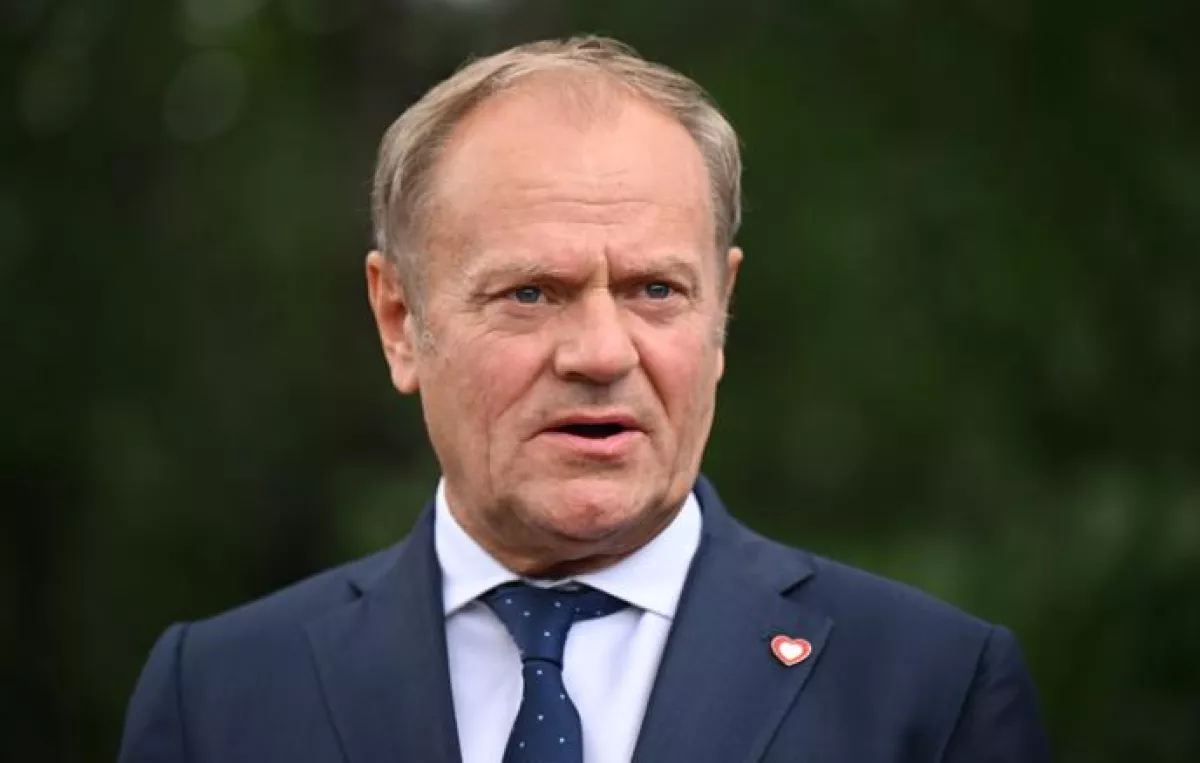
Clearly, much of the liberals’ upcoming electoral campaign will be built on warning voters about the destructive consequences of “Polexit.” However, the example of Brexit suggests otherwise: the promises of both sides ultimately did not materialise. The UK’s departure from the EU led neither to catastrophe nor to a significant economic surge.
Incidentally, Tusk himself misjudged the situation back in 2016, when he predicted that Brexit could “be the beginning of the destruction” for the European Union.
Now, the prime minister’s opponents have immediately taken up the challenge. A Member of the European Parliament from the far-right Confederation of the Polish Crown, Anna Bryłka, said on Polsat News the same day in response to Tusk’s post: “This is pure demagoguery… Poles have the right to criticise the European Union.”
Meanwhile, Tomasz Sommer, a right-libertarian and editor-in-chief of Najwyższy Czas!, was even harsher. He was particularly angered by Donald Tusk’s promise to “take measures” and “do everything possible” to protect Poland’s EU membership. Sommer compared this to a threat of a coup d’état: “Everything? Let me remind you, Mr. Tusk… Anyone who acts with the aim of depriving the Republic of Poland of its independence is subject to punishment of 10 to 25 years in prison or life imprisonment. Therefore, in your place, I would be careful with such statements.” According to Sommer, the EU is merely an international agreement, and depending on changing circumstances, it can—and even should—be reconsidered.
Why did the Polish prime minister discredit the EU?
In reality, the deepening crisis of the neoliberal economic model within the European Union is one of the main reasons behind the rise of Euroscepticism in Poland and many other countries. Each state increasingly tries to prioritise its own interests.
For example, amid growing problems with rising fuel costs, the strict environmental standards imposed by the European Commission are becoming more and more burdensome for Poland. On the eve of the EU summit on emissions trading quotas and the introduction of a new, stricter energy pricing system (ETS2), Karol Nawrocki sent a letter to Donald Tusk.
In it, Nawrocki suggested that Poland should consider withdrawing from emissions agreements and mechanisms that increase energy prices. He also called for protecting Polish citizens and the national economy from what he described as the damaging climate policies of the EU.
At the same time, calls to withdraw from certain European agreements that are seen as unfavourable to Poland are increasingly being voiced by members of the country’s largest opposition party, Law and Justice.
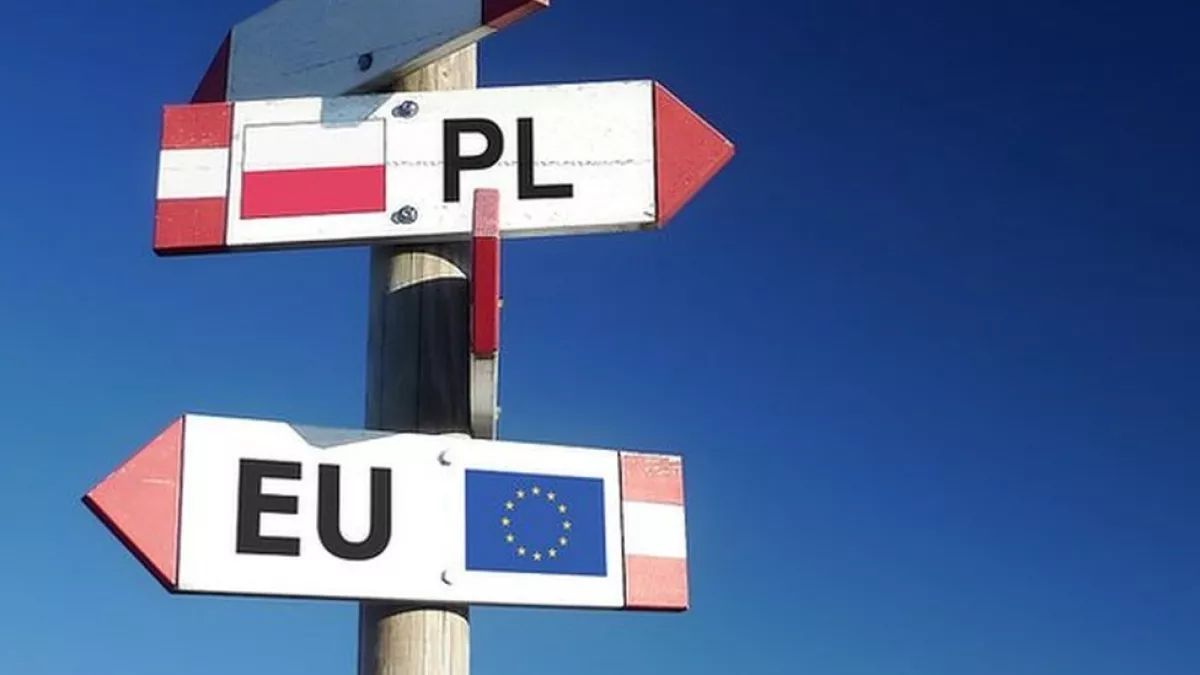
However, while the Confederation had already developed a plan back in 2019 for Poland’s withdrawal from the European Union—including via a referendum—the ruling Law and Justice party, until recently, had not genuinely pursued such a scenario. Instead, it has used its “Eurocriticism” more as a tool to maintain political popularity.
For example, Patryk Jaki, a Member of the European Parliament from Law and Justice, also responded to Donald Tusk’s statement. He cited Atlas Intel polling data showing that 46 per cent of Poles view the EU negatively, while 26 per cent support leaving it. However, he placed the blame on the European Commission—criticising its climate policies, the planned ban on sales of internal combustion engine cars, the migration pact, and policies allowing same-sex families to have children.
At the same time, Jaki himself supports remaining in the EU. In his view, the real problem lies with “Tusk and his team in Brussels, who have turned a good project into a caricature.” According to the conservative politician, Poland benefits economically from EU membership, whereas leaving the bloc would lead to a decline in GDP and lower wages.
In short, the divide within Polish society over the EU is deepening. While European integration aligns with the interests of globally oriented business circles and the liberal political elite, national capital and corresponding political forces are increasingly opposed.
Nevertheless, in the near future, a “Polexit” is unlikely as long as pro-Brussels parties dominate. This is also reflected in the results of the Sejm vote: on March 19, the bill proposed by Karol Nawrocki on the “Polish SAFE” program with 0 per cent interest was rejected by a majority of votes.







 editor@caliber.az
 +994 55 444-88-98
 Азербайджан, Баку, ул. Низами, 203, Af Business House, 5-й этаж