










Pakistan–Afghanistan: Fragile peace amid a hidden war Review by Teymur Atayev
Pakistan and Afghanistan agreed to suspend hostilities during Ramadan Bayram (Eid al-Fitr), from the night of March 19 through March 24. As of now, the ceasefire remains in effect. This raises an important question: how durable is this pause, and to what extent can we expect the fighting to remain contained—particularly given that the underlying drivers of conflict between the two countries remain unresolved?
Notably, a February 2026 report by the expert body of the UN Security Council—the Analytical Support and Sanctions Monitoring Team—on the structures of ISIS and al-Qaeda highlighted concerns over “the number of terrorist groups in Afghanistan and its spillover effects, including cross-border attacks.”
As the document emphasises, although the Afghan authorities claim that no terrorist groups are present on the country’s territory, in practice, favourable conditions continue to exist for the activities of a number of such organisations, in particular Tehrik-i-Taliban Pakistan (TTP).
As a result, “Tehrik-e Taliban Pakistan (TTP), however, was accorded greater liberty and support from the de facto authorities, and consequently TTP attacks against Pakistan increased, amplifying regional tensions.” In support of this, the report cites data showing that since the autumn of 2025, attacks on Pakistani security forces and state institutions have intensified, becoming more sophisticated and involving a growing number of militants, which, in turn, has “led to military confrontation.”
In this context, particular attention should also be paid to the statement by Pakistan’s Ministry of Foreign Affairs, which asserted that terrorist groups operating from Afghan territory have long received support from India. This emphasis came in response to criticism from India’s foreign ministry over Pakistan’s airstrikes in Afghanistan during the period of hostilities.
“India's active support and sponsorship of terrorist groups operating from Afghan soil, including Fitna-al-Khawarij and Fitna-al-Hindustan, are well known,” Pakistan’s Ministry of Foreign Affairs emphasised, adding that New Delhi’s reaction reflects its “frustration at the destruction of its terrorist franchise in Afghanistan.”
Asserting India’s destabilising role not only in Afghanistan but across the wider region, official Islamabad stated that “with such shameful credentials, India is in no position to make such statements and must instead focus on refraining from stoking terrorism inside Pakistan from Afghan soil.”
At the same time, a number of analysts point to the external origins of anti-Pakistan actions—whether periodic moves by Afghanistan or policies pursued by India. In this regard, they highlight the possible interest of external actors in weakening Pakistan–China cooperation, particularly in the context of the China–Pakistan Economic Corridor (CPEC), a key component of Beijing’s Belt and Road Initiative.
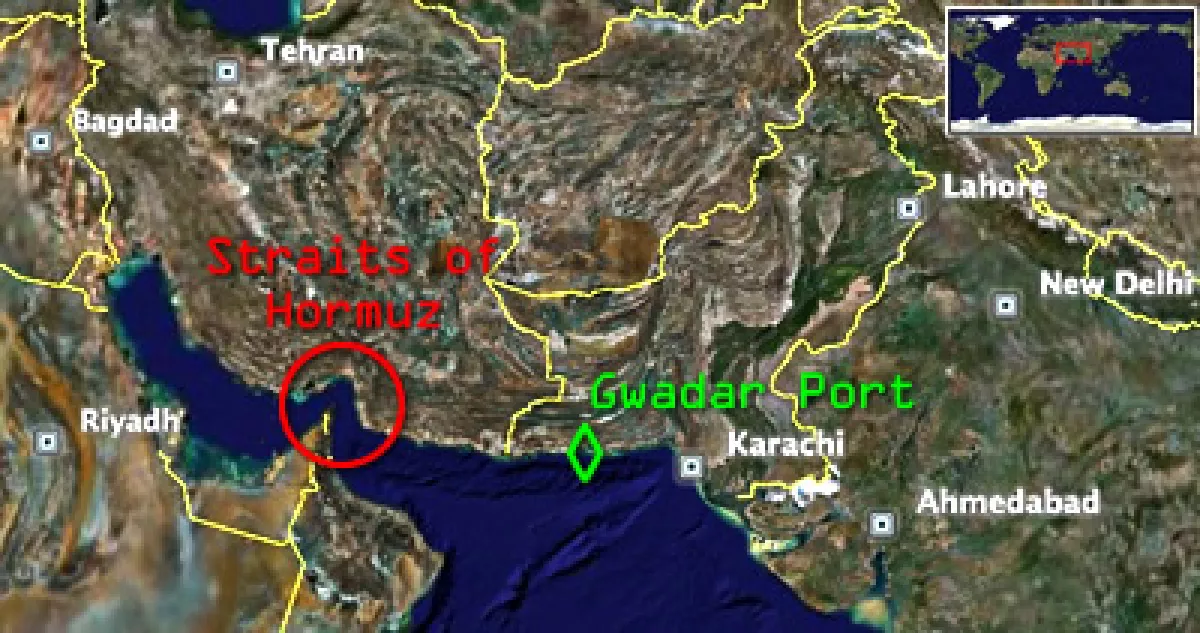
Along this route, a special role is played by Pakistan’s Gwadar Port, which provides China with an alternative overland access to the Indian Ocean (Arabian Sea), bypassing the Strait of Malacca. This allows for shorter delivery times of oil from the Persian Gulf and reduces Beijing’s dependence on maritime routes, many of which are effectively controlled by the United States.
For this reason, Beijing is making substantial investments in Pakistan’s infrastructure, primarily in the development of Gwadar Port. As a result, China is strengthening its position not only in South Asia but also in Central Asia—an expansion that, in turn, raises concerns in New Delhi.
At the same time, according to Iranian sources, the CPEC project opens up unprecedented opportunities for Tehran: the country could become a “golden link” in this route, strengthening its role in trade between Eurasia and South Asia. This, in turn, could elevate Iran to the status of a “third strategic partner” within the emerging transit framework of Asia. Moreover, Tehran, “possessing a unique geopolitical position at the crossroads of the East–West and North–South corridors,” is capable of opening new routes for the transportation of goods to China, as well as to the countries of Central and South Asia.
It is evident that the factors outlined above shed light, to a certain extent, on the underlying causes of the persistent tensions both within Pakistan and in its surrounding environment.

In support of this, one can refer to the statement by U.S. Director of National Intelligence Tulsi Gabbard, who, a few days ago in the Senate, presented the annual 2026 Threat Assessment. She noted that Pakistan—alongside Russia, China, North Korea, and Iran— "have been researching and developing an array of novel, advanced, or traditional missile delivery systems with nuclear and conventional payloads, that put our Homeland within range.” According to her, Pakistan’s development of long-range ballistic missiles “potentially could include ICBMs with the range capable of striking the Homeland.”
Pakistan’s Ministry of Foreign Affairs quickly and categorically rejected this claim, emphasising that Islamabad’s strategic posture is “exclusively defensive in nature.” The ministry stated that the country’s missile program "remains well below intercontinental range” and is “firmly rooted in the doctrine of credible minimum deterrence vis-à-vis India.” In this context, it was highlighted that “Pakistan’s strategic capabilities are exclusively defensive in nature, aimed at safeguarding national sovereignty and maintaining peace and stability in South Asia.”
Urging the White House to adopt “a more measured and considered approach that aligns with South Asia’s strategic imperatives,” Pakistan’s Foreign Ministry noted that exaggerating threats could distort regional security. At the same time, Islamabad, as emphasised, “remains committed to constructive engagement with the United States, anchored in mutual respect, non-discrimination, and factual accuracy.”
Thus, the situation along the Pakistan front remains volatile. It is no coincidence that, through its Ministry of Foreign Affairs, Islamabad stresses that it “remains determined to take all necessary measures for self-defence and the protection of its citizens in accordance with international law, including the UN Charter.”
P.S. Against this backdrop, in his congratulatory message to Pakistan’s Prime Minister Muhammad Shehbaz Sharif and the brotherly people of Pakistan on the occasion of Pakistan Day, Azerbaijani President Ilham Aliyev expressed confidence that the Azerbaijan–Pakistan strategic partnership, fully reflecting the interests of both peoples, will continue to be strengthened and deepened through their joint efforts.







 editor@caliber.az
 +994 55 444-88-98
 Азербайджан, Баку, ул. Низами, 203, Af Business House, 5-й этаж