










US — Belarus: From confrontation to a “big deal” Analysis by Limansky
Recently, another round of Belarusian-American talks took place in Minsk, which yielded perhaps the most significant results since their inception. The Belarusian president also pardoned 250 prisoners who are considered “political” by the West.
Belarus won’t resist
On March 19, a meeting took place between Alexander Lukashenko and an American delegation led by the U.S. President’s special envoy, John Coale. “I would strongly urge you that we discuss regional problems. Not only the issues surrounding Ukraine, but also global ones. And not only the war in the Middle East. Yes, I would very much like you to convey my perspective to Donald Trump. Although I believe the United States has made certain mistakes, I remain a supporter of your president,” Alexander Lukashenko said at the start of the meeting.
Following the meeting, Alexander Lukashenko officially stated that Belarus is preparing for a larger agreement with the United States.
“Yes, indeed. In the course of negotiations – it was the third round or the fourth one – on behalf of Trump Americans suggested making a big deal that would reflect a number of matters on the agenda of our negotiations. Who am I to reject that? It is important for Belarus, including for myself. This is why I said I am okay with it and to tell Donald that I agree to getting this big deal worked out,’’ said Lukashenko.
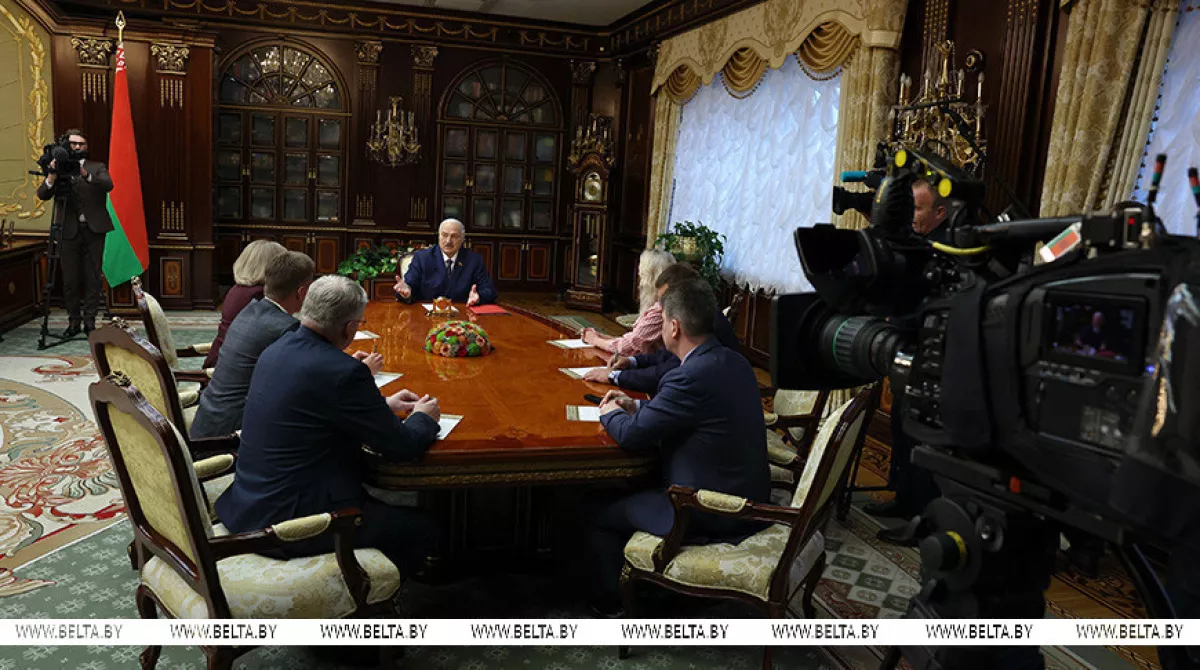
The president stated that Belarusian interests have been communicated to the American side, along with corresponding proposals. According to information from the Americans, these are currently under consideration. “The big deal is more than ‘political prisoners’, as they say. Although I keep correcting them that we don’t have political prisoners because we have no political articles [in the Criminal Code]. I have never asked them for anything in return. Even with regards to sanctions. Never.”
The topic of nuclear materials in Belarus, which was discussed during these negotiations, also came up. “As you know, we have quite a lot of these nuclear materials. Under control as we once agreed. The IAEA sees where we keep these nuclear materials. It is also interesting for them from the point of view of the non-proliferation of weapons,” said the President of Belarus.
Back in the 1990s, Belarus removed Soviet nuclear weapons from its territory. But in 2020, the country became nuclear again with the construction of the Belarusian Nuclear Power Plant in Ostrovets, Grodno Region. This facility has exclusively peaceful, economic purposes. However, the nuclear fuel and its waste could also have been a topic of discussion during the talks.
International terrorism is becoming increasingly sophisticated, and Belarus’s mission to ensure the secure protection of the NPP also serves as a preventive measure against nuclear terrorism. Topics related to combating drug trafficking and customs issues were also raised.
At the same time, according to Alexander Lukashenko, the authorities of Lithuania, Latvia, Poland, and the EU leadership are also trying to influence these negotiations. They reportedly suggested to John Coale that issues such as cigarette smuggling for Lithuanian traffickers, Lithuanian trucks stuck in Belarus, and similar matters be included on the agenda. However, the Belarusian leader praised the measured approach of Trump’s special envoy on these issues.
The final discussion of the “big deal” with the United States is expected to take place during a personal meeting between Alexander Lukashenko and Donald Trump, to which the American president has invited his Belarusian counterpart. This meeting could even take place at Trump’s residence in Florida. Lukashenko also promised to attend the next session of the Board of Peace in the U.S., explaining that he could not attend its founding session because he was conducting an unexpected comprehensive inspection of the Belarusian army at that time. It was also known that the Europeans were preparing potential provocations in connection with this possible trip, but the route to the U.S. could be planned outside of Europe.
Telling journalists about his relationship with Trump, the Belarusian leader emphasized that it’s not about "some greatness of Lukashenko himself.” He simply supported Trump from his first presidential term: “Trump, his people noticed that.” The Belarusian president also appreciates the democratic approach of the American president. “And I agree with him that America needs to be saved when it comes to election, so that ballots aren’t lying around under fences or in trash bins. And shooting a President in the head is completely unacceptable,” Lukashenko noted.
At the same time, the Belarusian leader was principled: “But when Americans made mistakes like the bombing of Iran, I spoke about it openly.” He also views the capture of Venezuelan President Maduro negatively, seeing it as a concession to the military, which exerts a strong influence on Trump.
“Our people are on both sides”
The topic of the war in Iran could not fail to be discussed at that meeting. In fact, the meeting began with it.
“John, it’s as if there’s no war,” Lukashenko said while greeting Coale. “These wars and global problems don’t seem to affect you at all.”
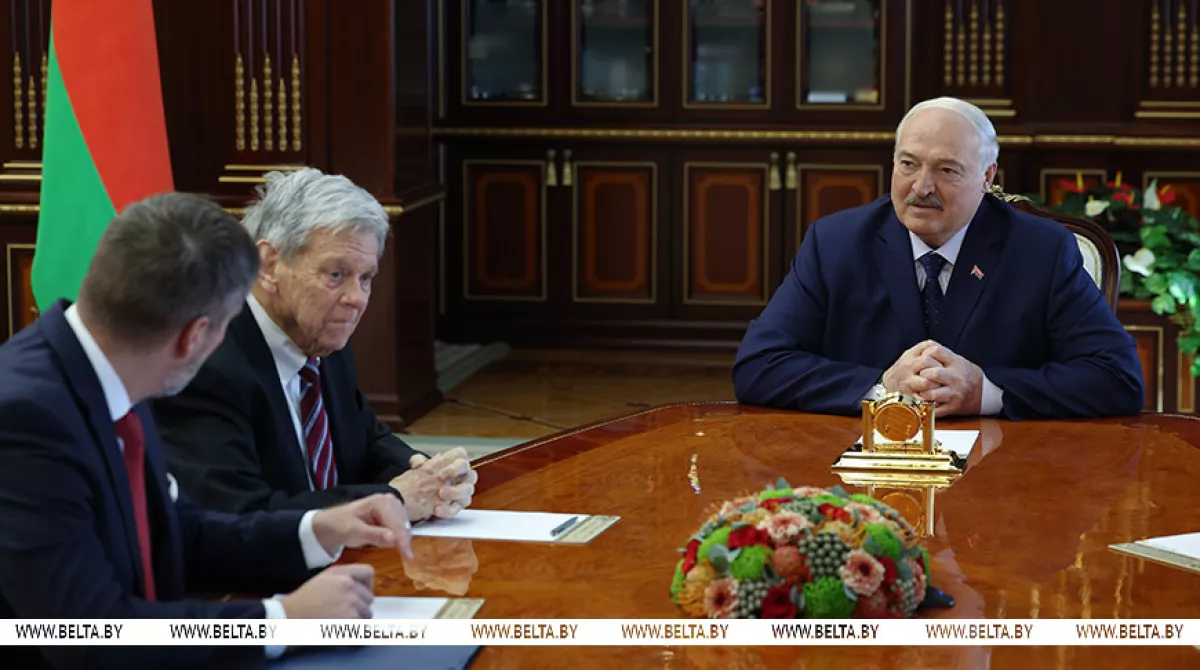
Alexander Lukashenko then offered the American negotiators his vision for ending the war in Iran.
“The way I see it. I do not want to speak about it publicly. I offered them another option,” the Belarusian president said, though he did not disclose the details at this time.
The current conflict in the Middle East places Belarus in a difficult position in many ways, including diplomatically. However, the president of Belarus denied claims from the American side that he allegedly did not answer calls from Iran: “On the one hand, there is Iran, they seem to be our allies. They didn’t listen to me when I warned them ahead of the war, long before it started. The Americans know that. Then there are the UAE, Qatar, and especially Oman – we are focusing on them now. They are all caught up in this. We are currently in talks with Saudi Arabians. So, it seems we have our people on one side and our people on the other. And now, God willing, it will come to an end. We have only one principle: this all needs to end. Because our people are on both sides. Everyone is suffering.”
The Belarusian leader also shared some details about the military-political cooperation between Belarus and Iran: “They never asked us for missiles. Even if they had, we could not have supplied them with those missiles. Because that would mean war with the Americans. We do not want that war. They should have talked about missiles before the war. We discussed many things in the defense industry with the Iranians. But it never came to missiles. When two sides are at war and you start delivering weapons there, it means you become, if not an accomplice, then a supporter of that war and you side with one of the parties. Is that what we need? It is not. Besides, the Iranians never asked us for that. That was an episode when we discussed certain issues. I have always spoken about this very openly and frankly.”
According to Lukashenko, during this round of negotiations, the American delegation was interested in his position on all international matters, including relations with Russia and China. He warned them that both Russia and China are not just allies, but “close states,” and the Americans take this into account. In Russia, there are concerns that Belarus might be pulled away from it. But Alexander Lukashenko emphasised that the Americans do not have that goal. At one point, the American side proposed selling LNG to Belarus for “Grodno Azot.” The Belarusian president did not refuse, but only on the condition that American gas could compete with Russian gas in price. The talks also revisited the issue of resuming operations of the U.S. embassy in Minsk.
Economic reset
A very important part of the “big deal” is the economic component. During the current negotiations, the Americans agreed to lift sanctions on Belarusian Belinvestbank, the Development Bank, and the Ministry of Finance, while Belaruskali and the Belarusian Potash Company were completely removed from the sanctions lists. Lifting sanctions on the Ministry of Finance could allow the unfreezing of part of Belarus’s gold and foreign currency reserves. It is also reported that U.S. business circles may acquire a Belarusian mining operation—for $3 billion or even more. For now, the Americans are considering it, and the price remains a key issue.
“They’re wealthy, but they don’t want to pay large or reasonable amounts. Everyone wants it for free,” Lukashenko said.
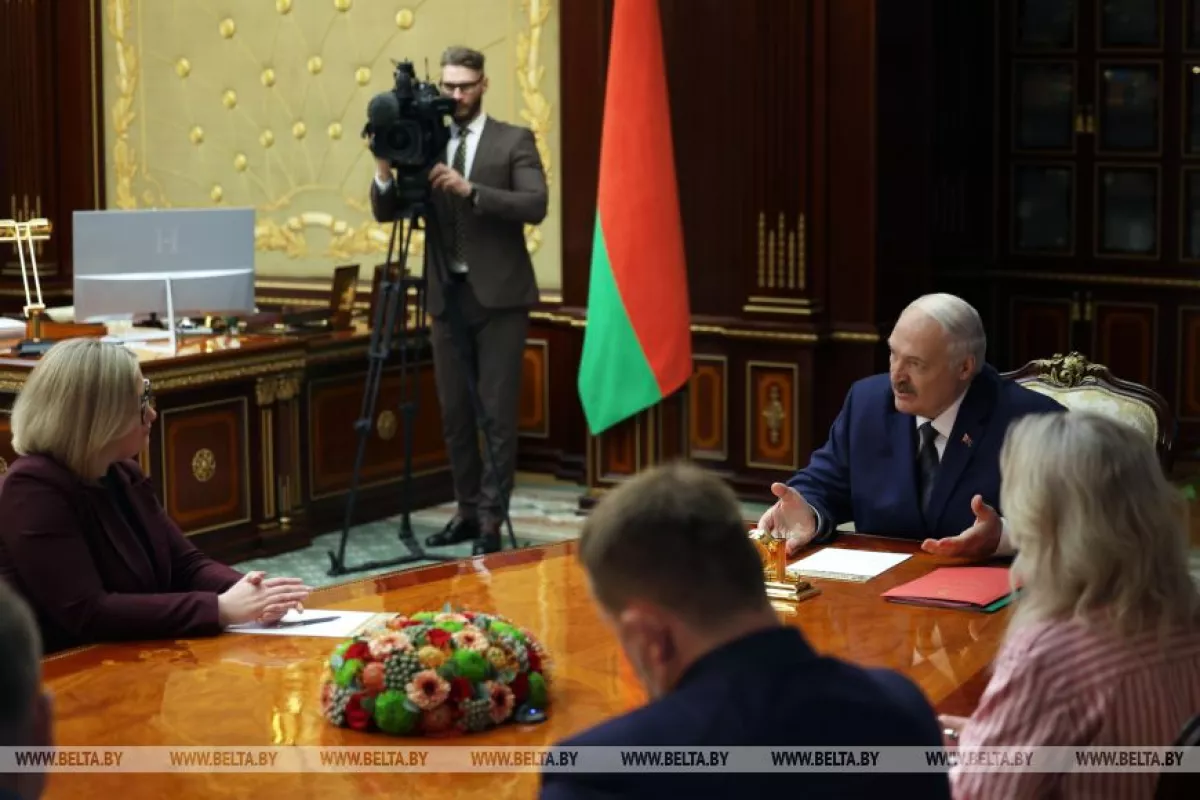
Officially, it has not yet been specified which asset is being offered for sale, but it is likely the Nezhinsky Mining and Processing Plant. Mining there began in spring 2025, with a target of 1 million tons per year. According to projected estimates, the deposits should last 50–60 years. Belarus is one of the world leaders in potassium chloride production, and the U.S. had already lifted sanctions on Belarusian potash during the first rounds of negotiations. American agriculture is highly interested in receiving Belarusian potash fertilisers.
On the eve of his visit to Minsk, John Coale met in Vilnius both with Lithuanian Prime Minister Inga Ruginienė, who maintains a hardline stance toward Belarus, and with a group of Lithuanian Seimas deputies advocating a more pragmatic approach. It is assumed that the topic of the latter meeting could have been the unblocking of Lithuanian ports for Belarusian potash fertilisers.
Belarusian political analyst Petr Petrovsky generally believes that the current negotiations primarily reflect Belarus’s economic interests. According to him, Belarusian exports to Russia may decline this year due to falling demand. Meanwhile, military actions have led to a blockade of the “North–South” corridor, through which Belarusian products were shipped to Persian Gulf ports. This explains the growing interest of the Belarusian side in gaining access to the port of Klaipėda in Lithuania.
Additionally, Belarusian potash now faces competition in the Chinese market from fertilisers from Laos; in 2024–2025, Laos and Belarus were roughly equal in potash exports to China.
According to the analyst, if the Nezhinsky Mining and Processing Plant is acquired by Americans, sanctions on Belinvestbank and the Development Bank would also be lifted. Belarus’s participation in the Board of Peace could theoretically facilitate future access to Ukrainian Black Sea ports.
Also, following these negotiations, Alexander Lukashenko pardoned 250 people convicted in connection with the events of 2020. Of these, 235—an unprecedented number—were allowed to remain in Belarus. In this context, some state journalists asked Lukashenko during a meeting whether this posed a security risk. The Belarusian leader responded by repeating words he had spoken during the meeting with the American delegation: “Back in 2020, guys, in Belarus there won’t be…”
Meanwhile, John Coale reported after the meeting: “We discussed a great deal of things concerning mutual relations between Belarus and the USA. We also discussed what people in Belarus think about the war in Iran, what people in the USA think about the war in Iran, and how this situation is developing. We’ve also discussed the situation, what is going on in Venezuela... Because in the western hemisphere the situation is very dynamic and is developing rapidly now. There is a great deal of changes.” Later, on the evening of March 19, while at the Lithuanian–Belarusian border, Coale posted on X: “Today’s release of 250 individuals is a significant humanitarian milestone and a testament to the President’s commitment to direct, hard-nosed diplomacy.”
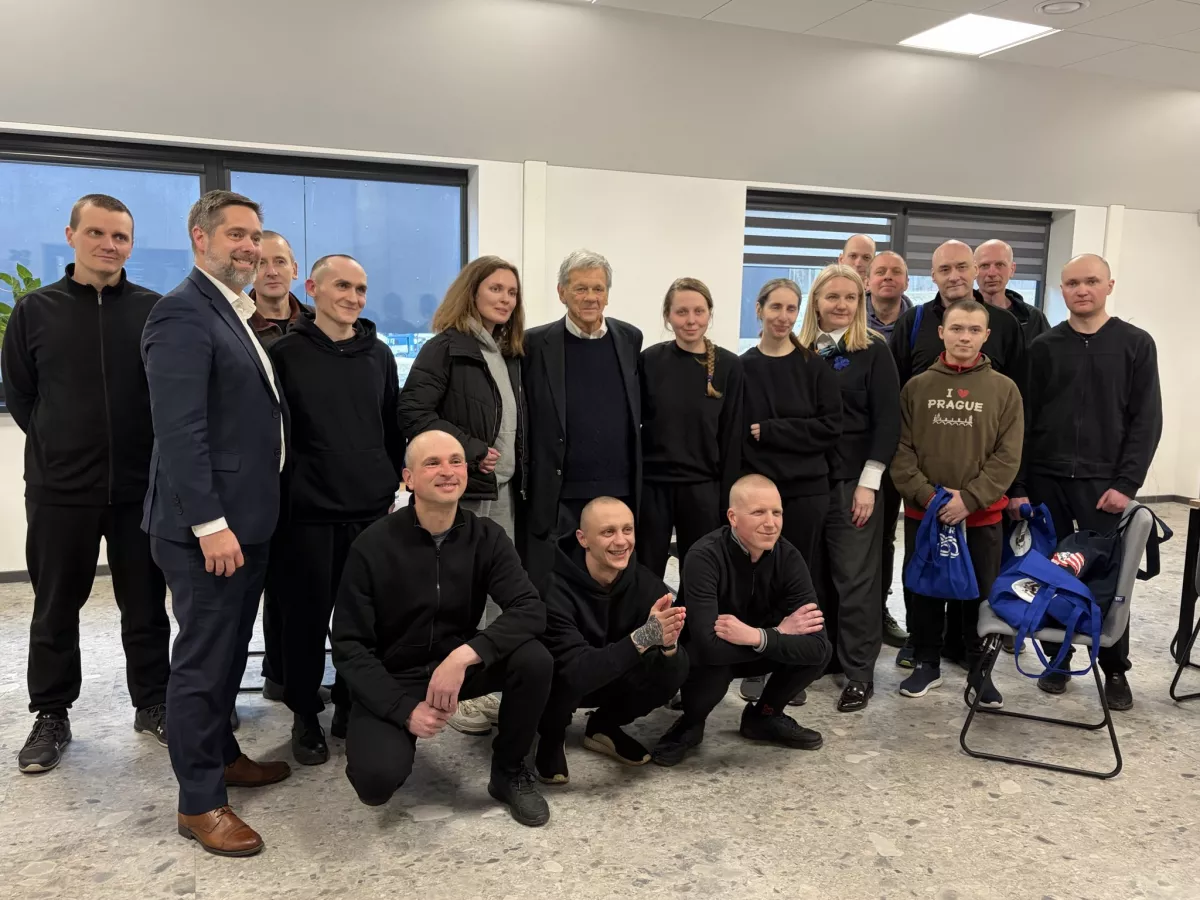
Trump’s special envoy also stated that by the end of the year, all “political prisoners” in Belarus would be released. Experts, however, note that after this meeting, the U.S. has largely exhausted its ability to lift sanctions, and the main focus may now shift to personal diplomacy, including a meeting with Trump and other channels. Many anti-Belarusian sanctions imposed by the EU, however, remain in place.
Amid these negotiations and the warming of Belarus–U.S. relations, Ukrainian President Volodymyr Zelenskyy has recently made a series of sharp statements against the Belarusian authorities and personally against Alexander Lukashenko. The pretext for a potential forceful scenario was said to be the deployment of the Oreshnik missile system in Belarus. “To prevent the use of the Oreshnik missile system, please do not interfere with us - whether from Ukraine, Poland, Lithuania, or Latvia,” Lukashenko responded.
On March 18, just before Trump’s special envoy visited Minsk, Ukrainian Presidential Office adviser Mykhailo Podolyak told the opposition outlet Zerkalo that when asked whether Zelenskyy’s harsh words might lead to military action: “I generally do not comment on potential or ongoing military events. During a war, one should avoid such topics; everything should come as a surprise… A political warning has been issued.”
What is the purpose of such bellicose rhetoric? Is it a means of applying additional pressure by the collective West on Belarus? An attempt by Ukraine to become a real player in Belarus–U.S. negotiations and use it to its advantage? Or a tool for the “hawks” in the EU to sabotage any normalisation in the region? The future will show…







 editor@caliber.az
 +994 55 444-88-98
 Азербайджан, Баку, ул. Низами, 203, Af Business House, 5-й этаж