










Paper tiger or protector? US distances itself from NATO
Until recently, it seemed that disagreements within NATO were more of a usual background than a real threat. But the situation surrounding the U.S. and Israel’s war against Iran has sharply changed the tone of the conversation: the alliance, which for decades was considered the foundation of Western security, suddenly found itself at the centre of an open conflict between Washington and European capitals.
It all started with fairly specific decisions. One after another, European countries refused to support the U.S.-Israeli operation: Italy did not allow the use of its bases, Spain imposed restrictions, and France closed its airspace to American planes carrying weapons. Behind these steps was not only a reluctance to participate in yet another Middle Eastern campaign but also growing irritation at the way the U.S. makes decisions—without consultations and with the expectation of automatic support.
Washington’s reaction was sharp. Donald Trump effectively questioned the very purpose of the Alliance, calling NATO a “paper tiger” and openly speaking about the possibility of the U.S. leaving it. In his logic, allies should help not only in the defence of Europe but also in operations that Washington considers important—including those far beyond the region. The refusal to participate in unblocking the Strait of Hormuz became, for him, a kind of test that, in his view, Europe failed.
In other words, the conflict over Iran revealed a deeper contradiction: differing understandings of what NATO actually is. For the U.S., under the current administration, it is a tool of global policy that should operate beyond Europe. For the Europeans themselves, it is primarily a defensive alliance, limited by geography and the logic of collective defence. That is why Washington’s demands to participate in the war against Iran are seen as a violation of unspoken rules.
Even if the U.S. does not formally leave NATO, the consequences are already being felt. As analysts note, Washington still has numerous levers of influence—from arms supplies to intelligence sharing. A scenario in which the Alliance begins to split into “loyal” and “not sufficiently useful” members, with access to key decisions and resources depending on the level of U.S. political support and military spending, looks entirely realistic.
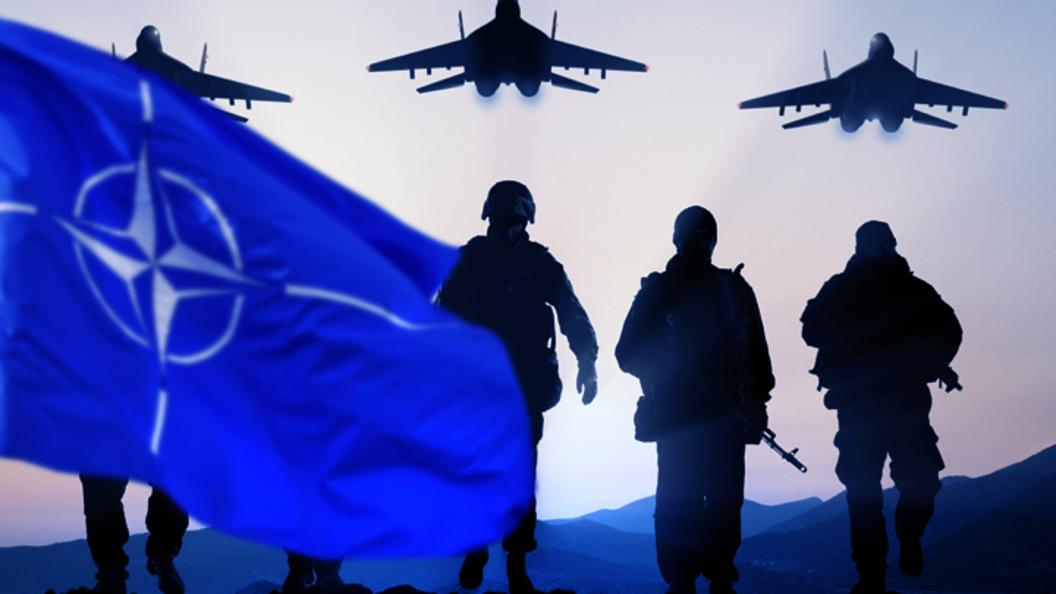
For Europe, this means an urgent need to answer a question that until recently seemed theoretical: can it ensure its security without America? And the answer increasingly sounds affirmative—but with caveats. This will require significant investments, higher military budgets, and likely unpopular measures such as cutting social spending or reintroducing universal conscription.
There is also a separate, strategic risk. Weakening NATO’s unity in itself can send a signal to external actors. Whereas doubts about the Alliance’s readiness to act were previously more hypothetical, they are now fueled by statements from Washington itself. This creates the temptation to “test the system’s strength”—even if only in a limited way. Here is Trump’s full quote about paper tigers: “I was never swayed by NATO. I always knew they were a paper tiger, and Putin knows that too, by the way,”—transparently hinting at the prospects of a military threat to Europe from Russia. And here, it doesn’t really matter whether the Kremlin is actually contemplating military aggression against Europe, or, conversely, frantically trying to figure out how to exit the war in Ukraine while saving face—the key point is the very fact that NATO’s European flank has been exposed to an external threat.
Ultimately, the crisis over Iran became not just an episode of foreign policy, but a moment when the accumulated contradictions within NATO came to the surface. The U.S. is no longer ready to unconditionally play the role of Europe’s security guarantor, and Europe is no longer willing to automatically follow American decisions. And even if the Alliance formally persists, it is already changing: from a unified structure into a more complex and less predictable system.







 editor@caliber.az
 +994 55 444-88-98
 Азербайджан, Баку, ул. Низами, 203, Af Business House, 5-й этаж