










War with Iran and the new world order Overview by Teymur Atayev
Amid ongoing military operations, experts note that some of US President Donald Trump’s decisions are being made in response to a rapidly changing situation. Some analysts even draw parallels with specific episodes in the histories of both the Russian Empire and Lenin’s Russia.
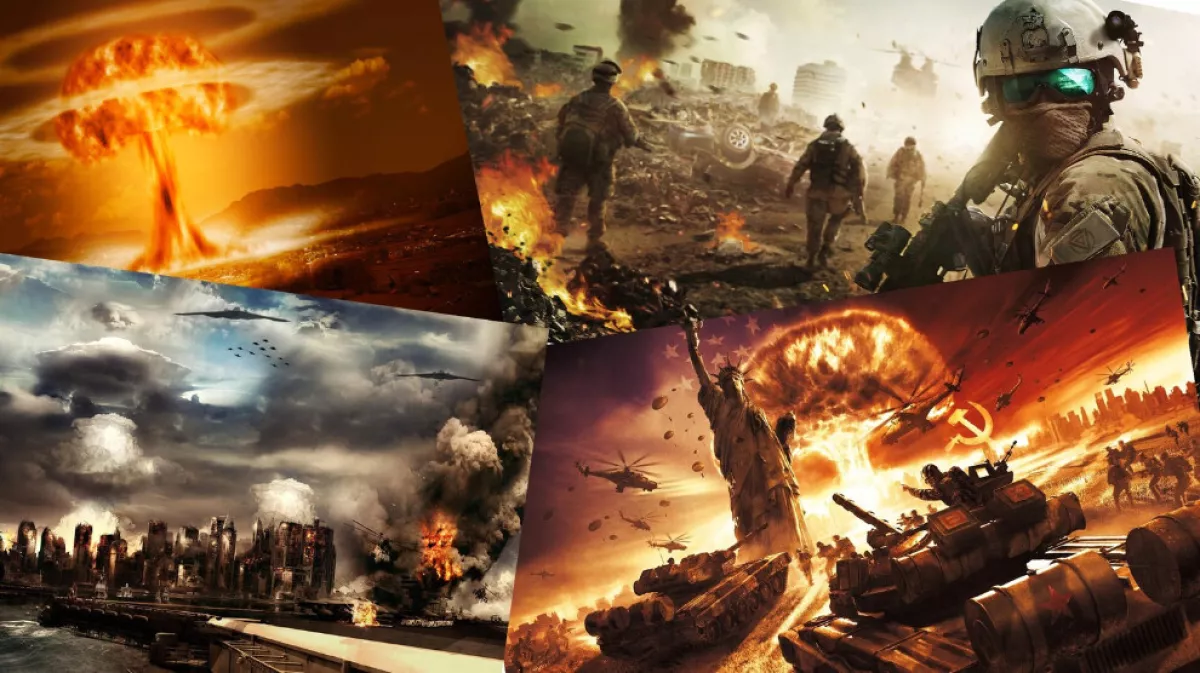
For example, regarding current events in the Middle East, references are often made to the phrase about a “small victorious war” used to prevent revolution in Russia, allegedly spoken by the Minister of Internal Affairs of the Empire, Vyacheslav Plehve, on the eve of the Russo-Japanese War of 1904–1905 — a war that ended in defeat for St. Petersburg.
At the same time, comparisons are made with the steps taken by Lenin after coming to power in Russia. In particular, some experts recall 1921, when the Bolshevik government adopted the so-called New Economic Policy (NEP), which allowed socialist Russia to receive assistance from “advanced large-scale capitalism,” primarily from the United Kingdom.
This historical episode is cited in the context of Lenin’s subsequent instruction to remind ambassadors of their duty to “ensure that nothing is done against England,” while simultaneously conveying to them the idea that “we will deceive” the British. Observers associate this moment with the possibility that the diplomatic negotiations between Washington and Tehran, preceding the war, may have been aimed at more carefully preparing for the conflict — a kind of “deception.”
Furthermore, in the context of Lenin’s stance, analysts draw attention to his free translation of the famous Napoleon saying, “On s’engage et puis… on voit” — “First you engage in serious combat, and then you see.” By quoting it, Lenin acknowledged that the Bolsheviks “first engaged in serious combat in October 1917, and only then did they see” the new “details of development.” He then summarised: “By and large, we were victorious.”
In other words, proponents of these parallels argue that Donald Trump, by involving himself in a military campaign in Iran, initially did not calculate all the pros and cons. However, his recent speech at the investment conference in Saudi Arabia in Florida presents the situation from a somewhat different perspective.
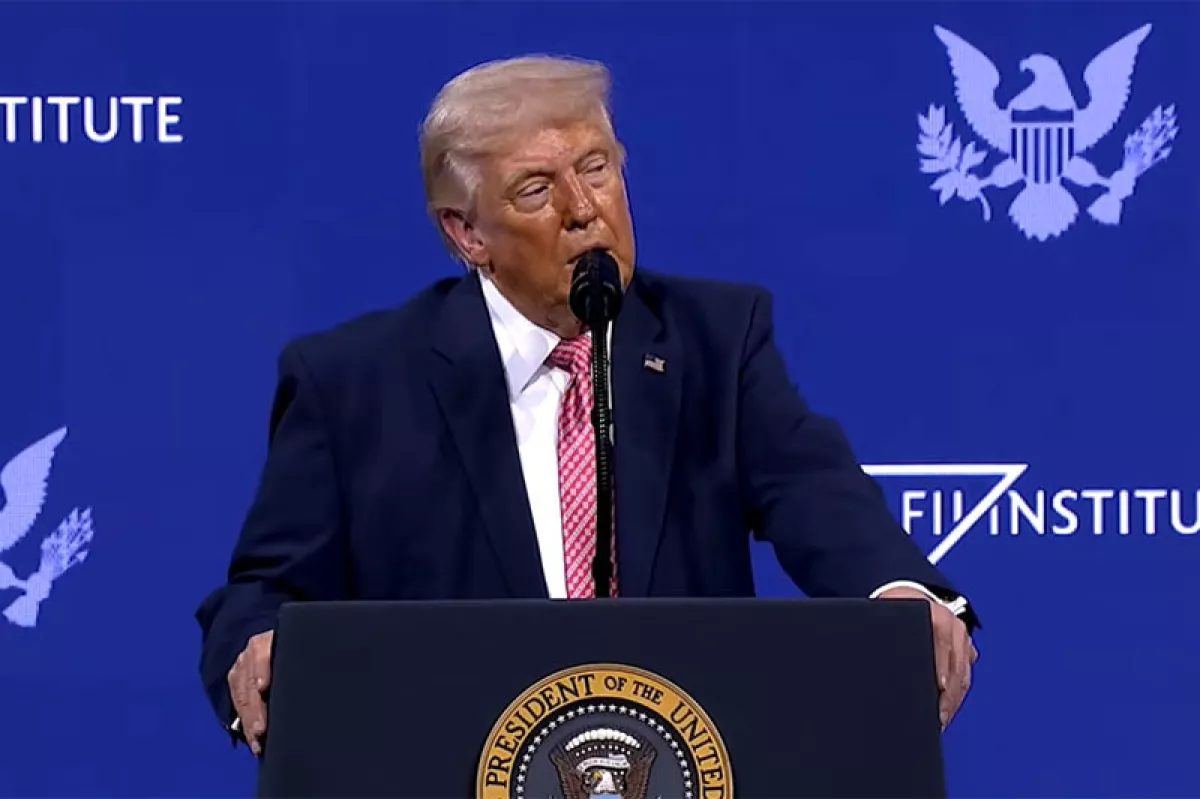
According to Trump, “the Middle East is finally free [...] from Iranian terror, aggression and nuclear blackmail,” and under his leadership, the United States is moving to eliminate this threat. At the same time, he openly admitted that he had no idea about the necessity of invading Iran.
Notably, Trump then expressed disappointment with NATO allies who “did not come to our aid.” However, he refrained from criticising Spain, whose Prime Minister, Pedro Sánchez, from the very start of the Israel–US war against Iran, had spoken out about violations of international law, emphasising that “I do not want to forget Gaza or, of course, the situation in Lebanon.”
It is also telling that, by failing to respond positively to Trump’s call to assist Washington in controlling the situation around the Strait of Hormuz, European leaders generally also did not condemn the anti-Iranian attacks by Israel and the US — with the exceptions of Sánchez and German President Frank-Walter Steinmeier. The latter noted that “Our foreign policy does not become more convincing simply because we refuse to call a violation of international law what it is,” underlining the similarity of the situation to the war in Gaza and the ongoing events surrounding Iran.
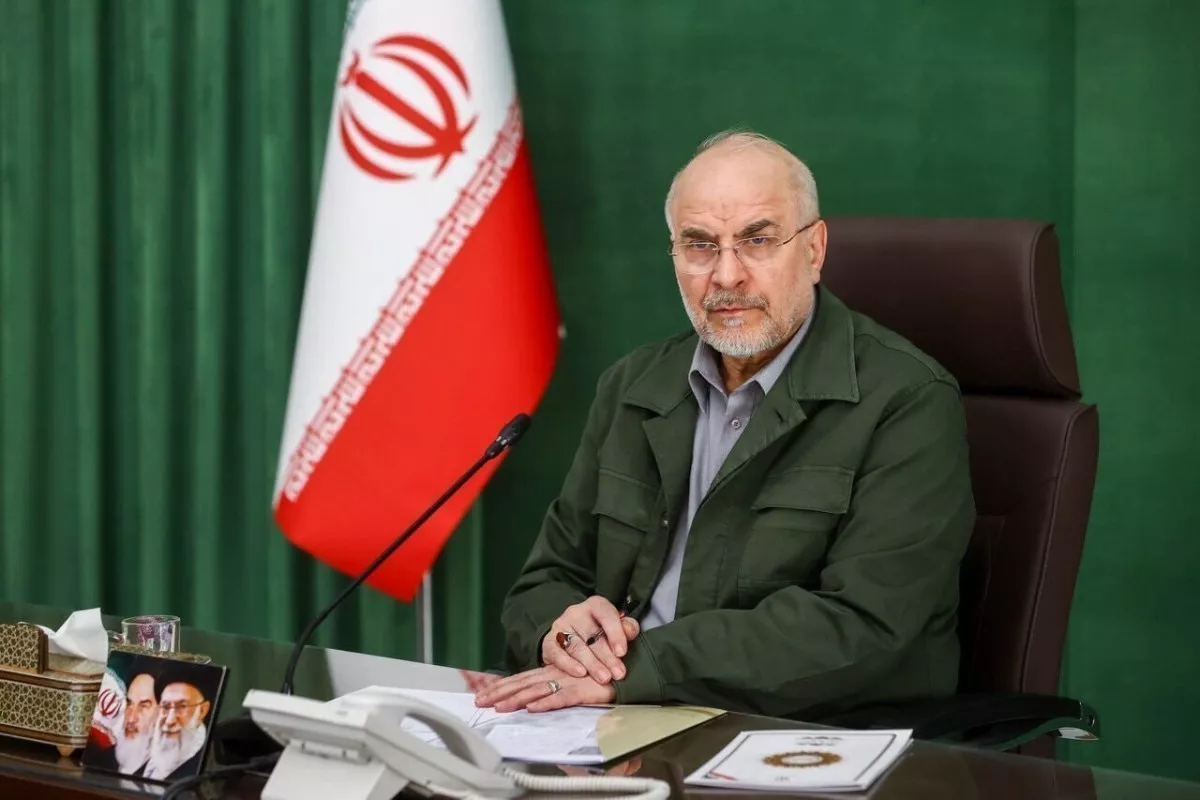
Meanwhile, Iranian Parliament Speaker Mohammad Bagher Ghalibaf accused Washington of “hypocrisy,” stating that the United States “signals negotiation in public, while in secret it plots a ground attack.”
However, this represents only the outer contour of what is happening. Inside Iran, a tragedy of a different magnitude is unfolding. On one hand, the number of civilian casualties has sharply increased as a result of attacks by Israel and the US, accompanied by the destruction of infrastructure and thousands of civilian sites. On the other hand, significant damage is being inflicted on the country’s cultural and historical heritage, including UNESCO World Heritage sites.
Many observers note that such a course of action does not appear to be entirely spontaneous. Donald Trump reportedly mentioned a list of 52 targets of ancient Iranian cultural sites to be struck in case the Iranians “tortured, maimed, or bombed our people” in response to Soleimani’s death.
It is emphasised in this context that the Iranians did not commit such actions. Yet the country’s cultural, material, and spiritual heritage has suffered strikes, despite the fact that attacks on such sites are classified under international law as war crimes.
Trump expressed respect for China and noted the substantial assistance in the war against Iran provided by Saudi Arabia, Qatar, the UAE, Bahrain, and Kuwait — unlike NATO. In this context, he expressed hope for Riyadh’s participation in the Abraham Accords and separately praised the prominence of Türkiye and Indonesia.
It is clear that these statements demonstrate that Trump is shaping his policy in the Middle and Near East based on his own understanding of geopolitical benefits, primarily for the United States. Even so, not all of his closest advisers always agree with him. At the same time, the situation in the region is becoming increasingly volatile, even for states not directly involved in the conflict, including non-regional actors. This is partly due to strikes on industrial facilities, the consequences of which could directly affect tens of thousands of people.
Thus, the Israel–US war against Iran has already significantly transformed perceptions of contemporary global geopolitics. Moreover, this concerns deeper processes: the world is witnessing the formation of new models for conflict resolution, within which questions of morality, law, and ethics increasingly take a back seat.







 editor@caliber.az
 +994 55 444-88-98
 Азербайджан, Баку, ул. Низами, 203, Af Business House, 5-й этаж