










US vs Cuba: what goals is Washington pursuing? International panorama on Caliber.Az
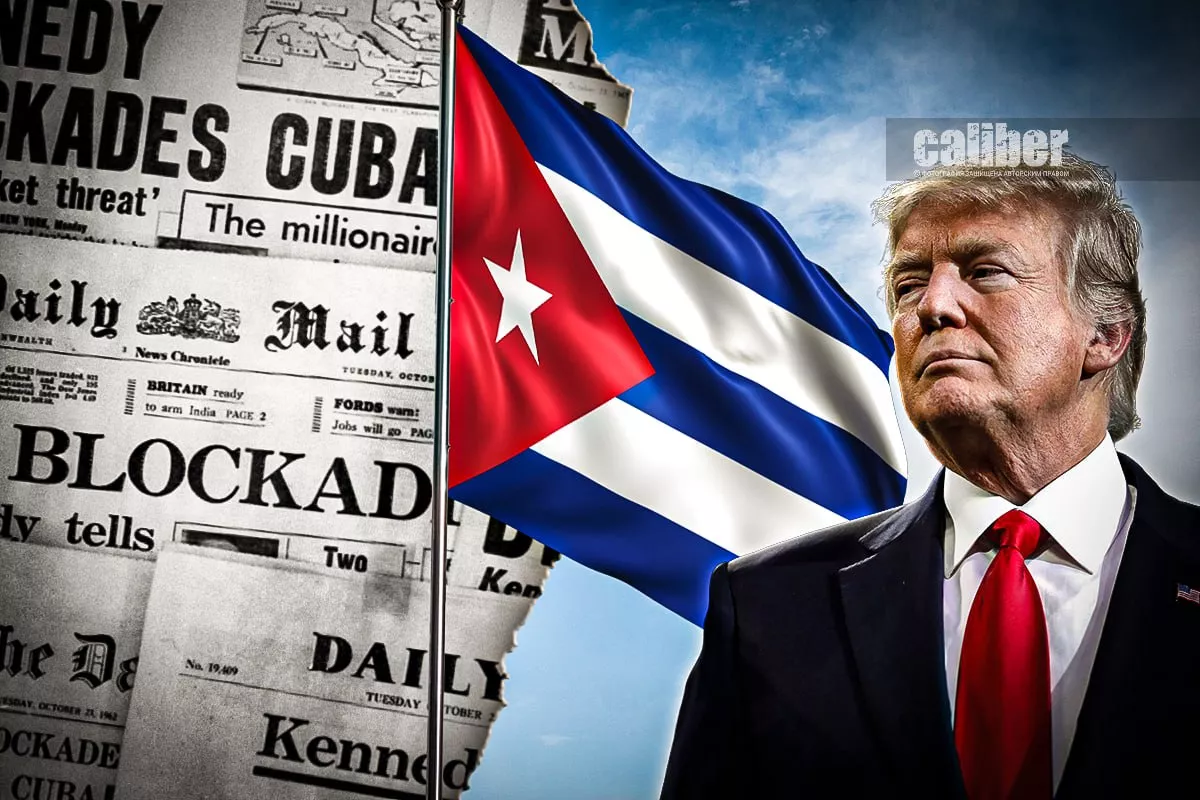
Recently, relations between Havana and Washington have deteriorated to a state that inevitably recalls the Cold War. The United States has intensified economic pressure on Cuba, effectively imposing a fuel blockade by cutting off oil supplies, including from Venezuela. As a result, Cuba has experienced widespread power outages, fuel shortages, and problems with transportation and food. Naturally, all of this has also caused significant dissatisfaction among the residents of the Island of Freedom.
The Cuban authorities have announced preparations for a possible military confrontation with the United States, despite recently announced negotiations. Cuban military forces have been put on high alert, and the rhetoric between the two sides shows no sign of softening. Meanwhile, Washington is discussing options for exerting pressure on Havana, including regime change. However, it is worth examining why the United States is exerting such pressure on Cuba and what interests the administration of Donald Trump is pursuing. To do this, it is necessary to take a brief look at history.
In the 1960s, the USSR built a base in Lourdes, which became one of the largest intelligence bases outside the Soviet Union. Through the Lourdes base, military channels were monitored, communications intercepted, and surveillance was conducted on US military facilities in Florida. In 2002, the Russian Federation closed the base due to the high cost of maintenance and in an effort to improve relations with Washington. However, there are currently some indirect indications that Russia maintains a degree of influence on the island, although there is no confirmed evidence, even though the Cuban regime itself is relatively pro-Russian in orientation.
The situation regarding Beijing’s influence is far more intriguing. According to reputable sources such as the Center for Strategic and International Studies (CSIS), as well as publications by Reuters and assessments from the US intelligence community, it can be stated with confidence that China indeed has access to intelligence infrastructure in Cuba and is gradually developing it. This was officially acknowledged by US authorities as early as 2023, and the reports at the time referred not to hypotheses but to concrete facilities and active Chinese operations.
Analysts highlight several key locations: the areas of Bejucal, Calabazar, Wajay, and El Salao. Satellite imagery shows that these sites contain large antennas and radio-technical complexes. While some of these facilities date back to the Cold War era, China is not building everything from scratch; rather, it is adapting existing infrastructure to meet modern objectives.
Moreover, China employs its traditional soft power in its relations with Cuba: providing economic and energy assistance, investing in the economy, and offering stable political support. Beijing, like Russia, consistently criticises the American blockade of the island. Recently, China has also begun assisting Cuba in transitioning to solar energy.
All of this naturally irritates the US administration, which has based its foreign policy on a strict containment of Russian and Chinese influence in the Western Hemisphere—a strategy evident earlier this year in Venezuela. One should also consider the personal influence of the current US Secretary of State, Marco Rubio, an ethnic Cuban with longstanding opposition to many Latin American regimes. Rubio has recently gained increasing influence over US foreign policy, actively promoting his hardline views on addressing various international issues.
Overall, Washington appears intent on regime change in Cuba due to its proximity as an independent and unfriendly government, which also cooperates with China and Russia—something unacceptable to the United States. Additionally, replacing the Cuban leadership with a more US-friendly regime would open new avenues for American investments and business projects, an outcome that clearly appeals to the Trump administration. Judging by these factors, the next goal of the United States seems likely to be regime change in Cuba.
By Riad Hamidov







 editor@caliber.az
 +994 55 444-88-98
 Азербайджан, Баку, ул. Низами, 203, Af Business House, 5-й этаж