










Pakistan’s emerging regional security architecture Review by Teymur Atayev
How the war waged by Israel and the United States against Iran has changed the geopolitics of the Middle East and the broader region—and indeed the world as a whole. The usual coordinate frameworks, so to speak, are being dismantled, and new countries are beginning to play the role of key “first violins” in the geopolitical orchestra. In this context, Pakistan’s leadership trajectory stands out in particularly vivid colours, a path that was paved exactly a year ago.
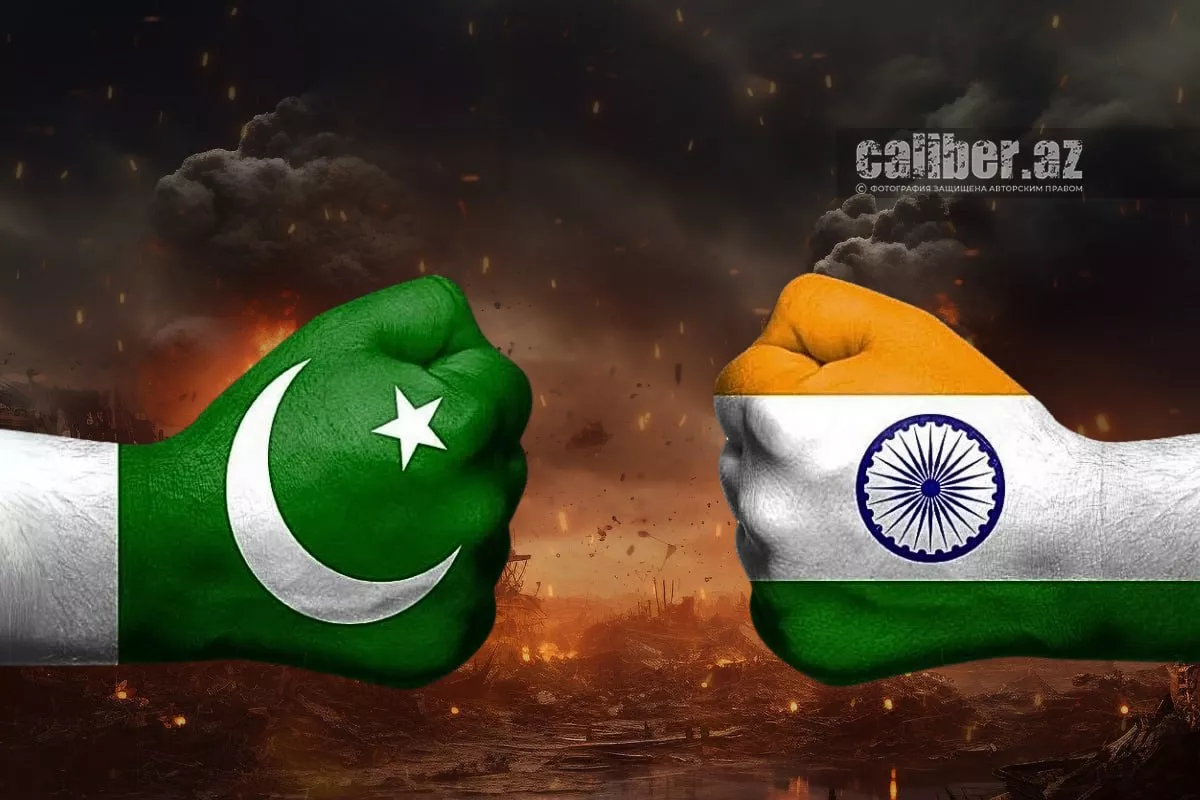
Let us recall that in the immediate aftermath of the terrorist attack carried out in April 2025 in the Pahalgam Valley, located in India-controlled Jammu and Kashmir, which led to the killing of tourists and local civilians, the Indian authorities, without providing any concrete evidence, accused the Pakistani side.
Islamabad, immediately declaring its non-involvement in the bloody incident, proposed that New Delhi conduct an independent investigation by “any mutually agreed neutral forces.” However, India, without supporting the proposal, launched airstrikes in May 2025 on Pakistani territory, where, according to New Delhi, terrorists were allegedly based.
Against this backdrop, Pakistan’s Air Force and air defence systems made a loud statement, reportedly shooting down between five and seven Indian fighter jets, including the much-publicised French-made Rafale aircraft acquired by India. Even US President Donald Trump, who condemned the attack on tourists but did not accuse Islamabad of responsibility, confirmed that up to five fighter jets had been shot down.
As a result of mediation by the White House, on May 10, Islamabad and New Delhi reached a ceasefire agreement, although India has repeatedly attempted to portray the de-escalation of the conflict not as a result of Washington’s mediation.
This success contributed to a significant strengthening of Pakistan’s geopolitical standing, including in the field of arms exports, which in the same 2025 reached a record level. This was acknowledged even by Indian sources, which noted Pakistan’s gradual emergence as a key exporter of military equipment, actively promoting JF-17 Thunder Block III fighter jets, Mushshak training aircraft, and other military hardware across Africa, the Middle East, and Asia.
It was also noted that Pakistan has been expanding its growing portfolio of unmanned aerial vehicles and naval vessels.
In this context, one may also recall Azerbaijan’s historic agreement with Pakistan at the time, worth $4.6 billion, for the purchase of 40 JF-17 Thunder Block III fighter jets.
According to Pakistani sources, as of January 2026, the total value of defence agreements amounted to around $13 billion. It was noted that these orders could lead to an 82% increase in the country’s foreign exchange reserves, alongside support for a target export level of $60 billion under the Uraan Pakistan programme by 2029.
Against this backdrop, Islamabad also began strengthening its position along other vectors. Thus, in autumn 2025, Pakistan signed the “Strategic Mutual Defence Agreement” with Saudi Arabia within the framework of the two countries’ security, as well as regional and global stability (SMDA), under which any attack on one party is considered an attack on both states.
As a result, in March 2026, at the height of military operations conducted by Israel and the United States against Iran, Islamabad declared the unconditional and circumstance-independent nature of Pakistan’s support for the Kingdom. Following this, King Abdulaziz Air Base in Saudi Arabia hosted Pakistani Air Force fighter jets and auxiliary aviation assets.
Simultaneously, in the sphere of confrontation between the United States and Iran, Pakistan’s mediation efforts began to acquire new nuances. This process was initiated as early as a March meeting of the foreign ministers of Pakistan, Türkiye, Egypt, and Saudi Arabia, following which Pakistan’s Foreign Minister Ishaq Dar emphasised that Pakistan “will be honoured to host and facilitate meaningful talks between the two sides in coming days for comprehensive and lasting settlement of the ongoing conflict.”
Alongside the participants of the meeting, confidence in the success of Pakistan’s mediation mission was also expressed by both the United States and Iran. At the same time, Dar, highlighting Islamabad’s active engagement with Washington in the search for a peaceful resolution to the conflict, also drew attention to the full support for the Pakistani initiative from China.
It must be acknowledged that this fact clearly illustrates how implausible various insinuations appear regarding an alleged confrontation between Washington and Islamabad stemming from Pakistan’s special understanding with China.
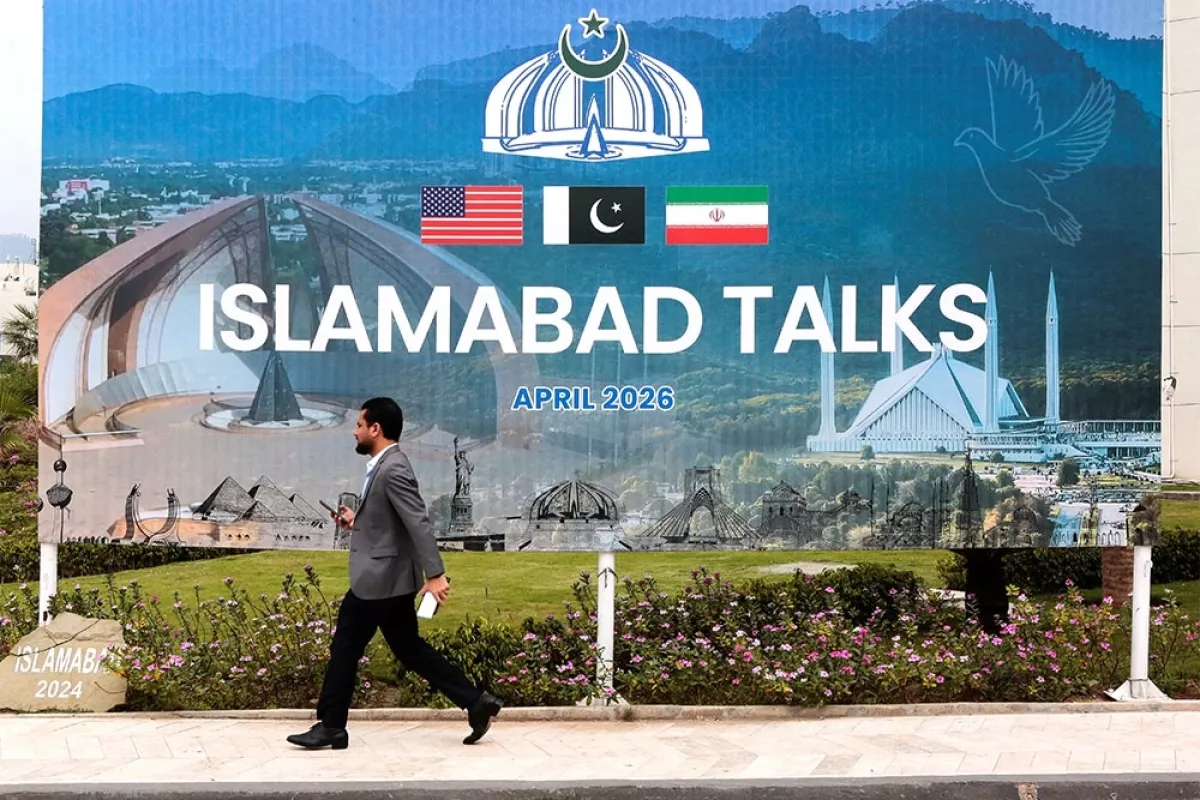
At the same time, it is worth noting that at the end of April, Pakistan opened six overland transit routes to facilitate the delivery of goods destined for Iran that had been stranded in Karachi due to a maritime blockade imposed by the United States on Iranian ports and vessels attempting to pass through the Strait of Hormuz.
Islamabad authorised the transit of third-country goods through Pakistan and their onward delivery to Iran by road transport. The initiative was described by Islamabad as “a significant step towards developing regional trade and strengthening Pakistan’s role as a key trade corridor.”
However, this permission did not extend to goods of Indian origin, as following the success in military operations a year earlier, transit of Indian goods through Pakistan by any mode of transport had been prohibited.
The symbolic nature of this step also became evident in the context of a strategic setback for India, which had attempted through various channels to achieve international isolation of Pakistan. As a result of Islamabad’s calibrated policy moves, it was New Delhi’s geopolitical position that, in turn, appeared to weaken.
The above clearly demonstrates that during a period when certain states rely on an external “security umbrella,” Islamabad confidently builds its domestic and foreign policy based on national interests and its own approach to unfolding developments.
In this way, Pakistan is becoming one of the key geopolitical actors both in the Middle East and in the global arena as a whole, not merely following regional dynamics but actively shaping a new security architecture.
Therefore, forces contemplating anti-Pakistan steps should take into account the lessons of recent years, which have clearly shown how significantly Pakistan has strengthened and developed, including in terms of its defence capabilities and the overall security of the state.







 editor@caliber.az
 +994 55 444-88-98
 Азербайджан, Баку, ул. Низами, 203, Af Business House, 5-й этаж