










The Middle Corridor, Georgia and the “Central Asian Tigers” Article by Vladimir Tskhvediani
In Samarkand, Uzbekistan, the 59th Annual Meeting of the Board of Governors of the Asian Development Bank was held from May 3 to May 6 under the theme “The Crossroads of Progress: Advancing the Region's Connected Future.” The choice of venue is highly symbolic, both in historical terms and in the context of current trends shaping Asia’s economic development.
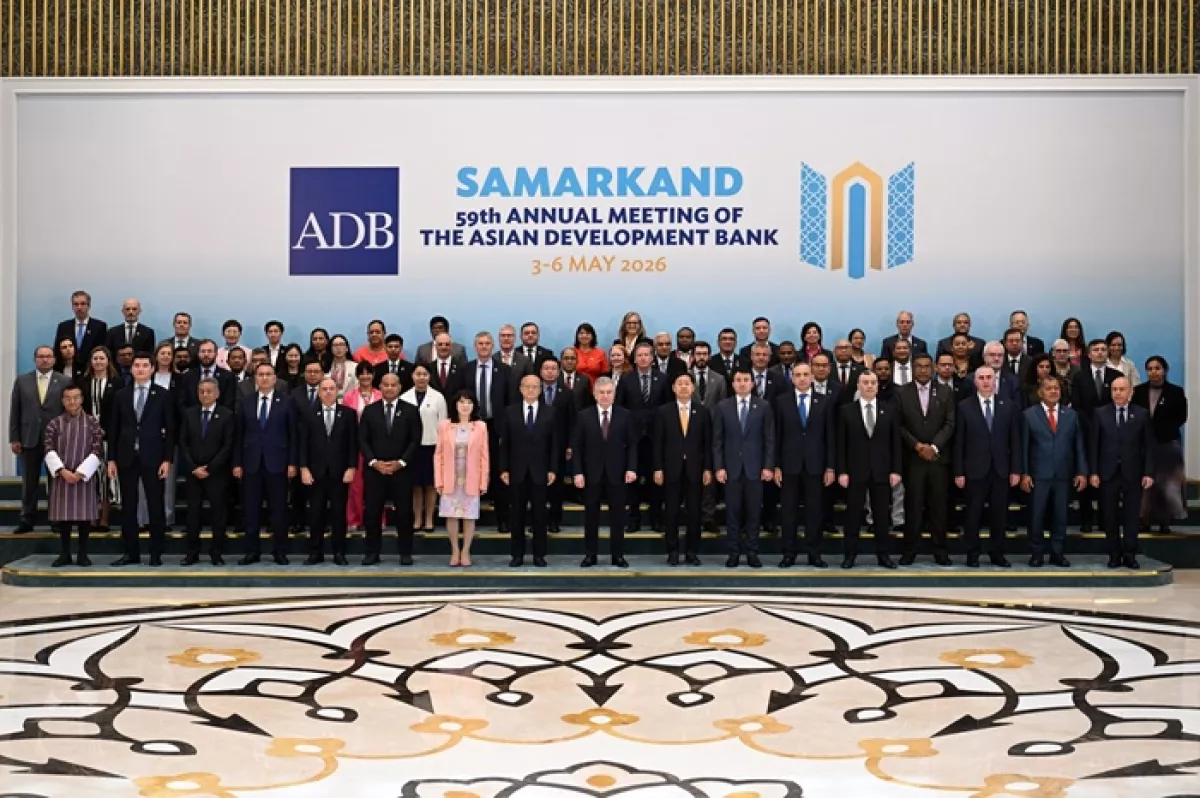
The shift of economic growth centres deeper into the Asian continent is increasingly evident today. Lending by the Asian Development Bank (ADB), established in 1966, both reflects and continues to reinforce this long-term trend in Asia’s economic transformation.
It all began with the “Japanese economic miracle,” which made this island nation, for a time, the world’s second-largest economy. This was followed by the rapid development of the so-called “Asian Tigers,” and then by most other countries in Southeast Asia. In the new millennium, the most populous countries of the continent—China and India—have also begun to develop dynamically.
In recent years, an “economic boom” has also begun in the states of Central Asia, for which there are all the necessary prerequisites—primarily abundant natural resources and rapidly growing demographic potential. It is therefore quite natural that the Asian Development Bank is increasing its investments in the region, as confirmed by recently signed agreements.
Thus, during the current annual meeting of the Board of Governors in Samarkand, the Asian Development Bank and the Government of Uzbekistan signed a partnership program under which the country will receive $12.5 billion in loans by 2030. Previously, the Asian Development Bank and the Government of Kazakhstan signed a memorandum on the implementation of 15 projects worth $5.5 billion in 2026–2029, effectively doubling the Bank’s investments in that country.
ADB investments usually serve as a “signal” for other investors as well. Therefore, there are grounds to expect that the “new Central Asian tigers” may, in the coming years, become new epicentres of economic growth on the Asian continent.
The only problem Central Asian countries face compared to the first waves of the “Asian Tigers” is the lack of access to maritime routes.
The issue of logistics has become even more acute in the context of recent geopolitical events such as the Russia–Ukraine war and the conflict in the Middle East.
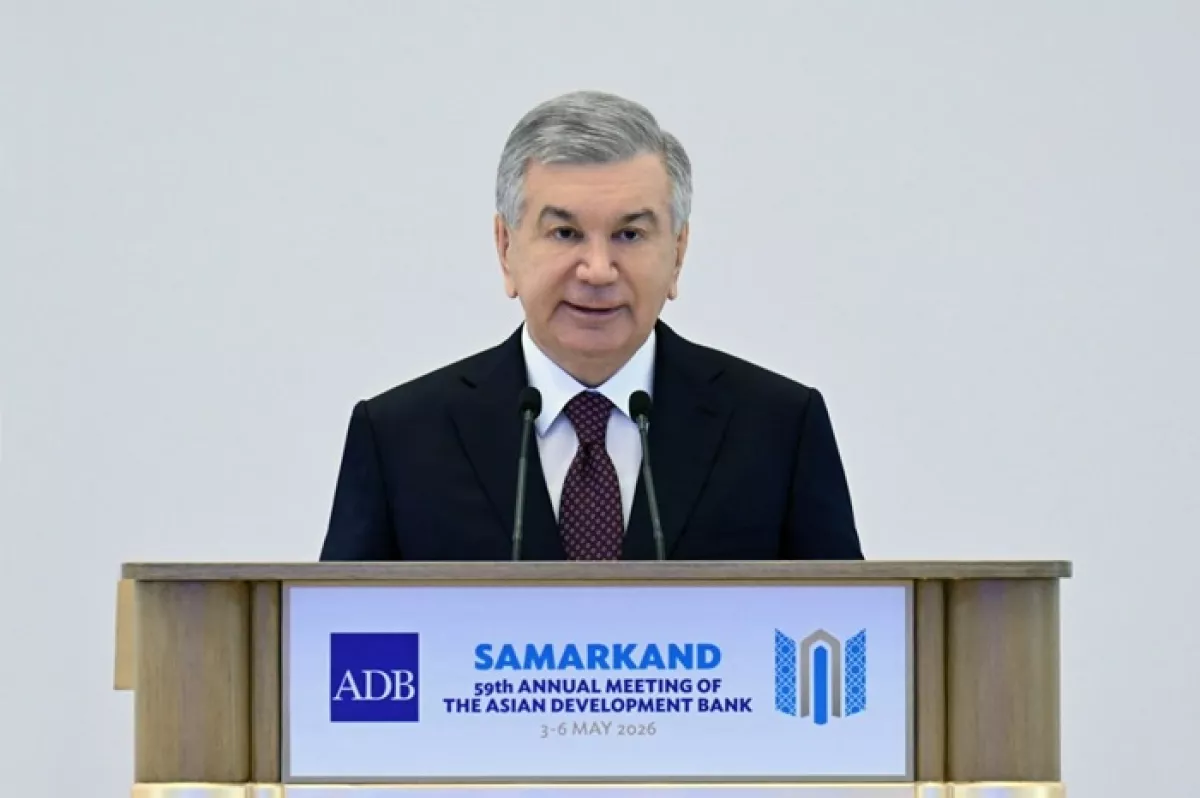
Speaking in Samarkand at the 59th Annual Meeting of the ADB Board of Governors, the President of Uzbekistan, Shavkat Mirziyoyev, noted that due to global conflicts, changes in logistics routes have already led to an increase in transportation costs for Central Asian countries of up to 30 per cent, while delivery times have been extended by several weeks. Therefore, according to the Uzbek leader, the resilience of an interconnected transport system and logistics corridors has become one of the most urgent priorities.
At the same time, the role of the Trans-Caspian International Transport Route—the Middle Corridor—and the countries that provide Central Asian states with the shortest access to the world ocean through it, Azerbaijan and Georgia, is rapidly increasing.
The crisis in the Middle East further increases the importance of the Middle Corridor, and Georgia continues to play a central role in its development, said Masato Kanda, President of the Asian Development Bank. According to him, the shift in transit routes and the rise in geopolitical risks amid the Middle East conflict are additionally stimulating the development of the Middle Corridor. He emphasised that in Georgia—an important link between Asia and Europe—the ADB intends to strengthen its support for the modernisation of key transport corridors.
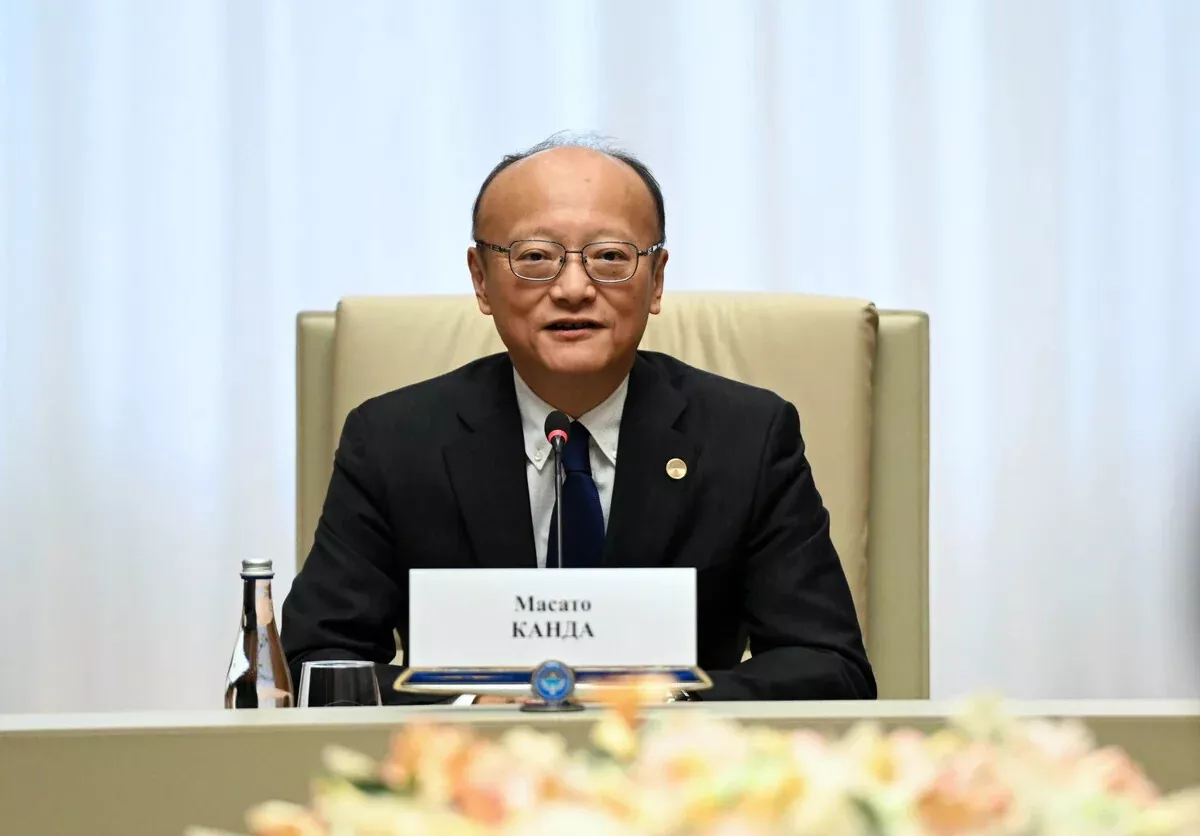
“I believe that Georgia continues to play a central role in the Middle Corridor. As global trade routes change and geopolitical risks increase, the Middle Corridor is becoming increasingly important. The crisis in the Middle East further enhances the importance of the Middle Corridor. Georgia is an important link between Asia and Europe. Therefore, the Asian Development Bank supports the development of the corridor through Georgia through investments in infrastructure projects and reforms. This contributes to improving Georgia’s connectivity, increasing economic activity, and developing tourism,” said Masato Kanda.
Meanwhile, Georgia’s Minister of Finance, Lasha Khutsishvili, who also took part in the 59th Annual Meeting of the ADB Board of Governors, announced that in 2026 the country plans to sign financing agreements worth $1 billion within the framework of the existing cooperation plan with the ADB.

“We are working with the Asian Development Bank, and this year, within the existing action plan, we plan to sign financing agreements for projects worth one billion dollars, which will be fully implemented by the Asian Development Bank and will include both road and railway infrastructure,” Khutsishvili said.
He also noted that the Asian Development Bank is one of the leading financial institutions investing in Georgia, having invested nearly $6 billion in the country, while the value of ongoing ADB projects exceeds $2 billion.
The most important point is that Georgia’s Asian partners, unlike some so-called “European friends,” do not interfere in the country’s internal affairs and signal that they view the current pragmatic, sober, and balanced policy of the Georgian authorities positively. They also note Georgia’s strong economic growth rates.
Lesley Bearman Lahm, Director of the Asian Development Bank’s representative office in Georgia, believes that the Georgian economy has demonstrated resilience to global shocks thanks to sound macroeconomic policies and strong fundamentals. However, she noted that external risks remain high due to the conflicts in Ukraine and the Middle East. According to her, these developments could put pressure on global economic activity and disrupt trade and supply chains, which is particularly sensitive for a small and open economy like Georgia.

“Growth remains robust, reaching 7.5% in 2025 and is expected to moderate to 5.5% in 2026 and 5.2% in 2027, reflecting softer internal and external demand,” said Lesley Bearman Lahm.
Thus, Georgia’s Asian partners are primarily interested in maintaining the country’s economic growth and its continued ability to develop infrastructure projects. It is evident that the ADB is interested in preserving political stability in Georgia and ensuring the country’s non-involvement in military conflicts. Only under these conditions can Georgia continue to fulfil its transit role, together with Azerbaijan, providing the shortest and most secure access to maritime routes for the economically rapidly developing states of Central Asia.
By Vladimir Tskhvediani, Georgia, exclusively for Caliber.Az







 editor@caliber.az
 +994 55 444-88-98
 Азербайджан, Баку, ул. Низами, 203, Af Business House, 5-й этаж