










From lifts to harvesters: Azerbaijan and Belarus expand industrial cooperation Review by Khazar Akhundov
Over the past twenty years, steadily developing Azerbaijani-Belarusian trade and economic relations have acquired a strategic character. Their distinguishing feature is the high level of state support for all implemented initiatives, particularly in the field of joint investment and manufacturing projects. The achievements of bilateral agro-industrial cooperation were showcased during the Caspian Agro Week, which kicked off in Baku a few days ago, while these trends were also discussed on the eve of the event at a seminar organised by the Belarusian Universal Commodity Exchange. Among other things, the two countries are preparing to implement joint projects in the dairy sector and in the production of blended fertilisers.
In recent years, alongside Russia and Kazakhstan, Belarus has consistently ranked among the top three trade and economic partners of Azerbaijan in the post-Soviet space. Although trade between the two countries experienced a period of decline in the post-pandemic years for objective reasons, the results of 2024 pointed to rapid growth. According to Belarusian statistics, Azerbaijani-Belarusian trade turnover increased by 46% the year before last, approaching the symbolic mark of $500 million. This figure declined somewhat last year and, according to the State Customs Committee of the Republic of Azerbaijan, total trade turnover amounted to around $428.169 million. However, in the first quarter of 2026, bilateral trade volumes once again demonstrated dynamic growth, increasing by 11%.
Over the years of cooperation, Baku and Minsk have built an extensive legal and contractual framework, with more than 140 documents signed, including many covering the business sphere. An intergovernmental commission mechanism operates effectively between the two countries, making a significant contribution to the establishment of new joint ventures.
Business circles and state-owned companies have long cooperated successfully in processing industries, agriculture, biotechnology, transport, tourism, pharmaceuticals, and IT, while the expansion and diversification of industrial cooperation remain a key priority in bilateral business ties.
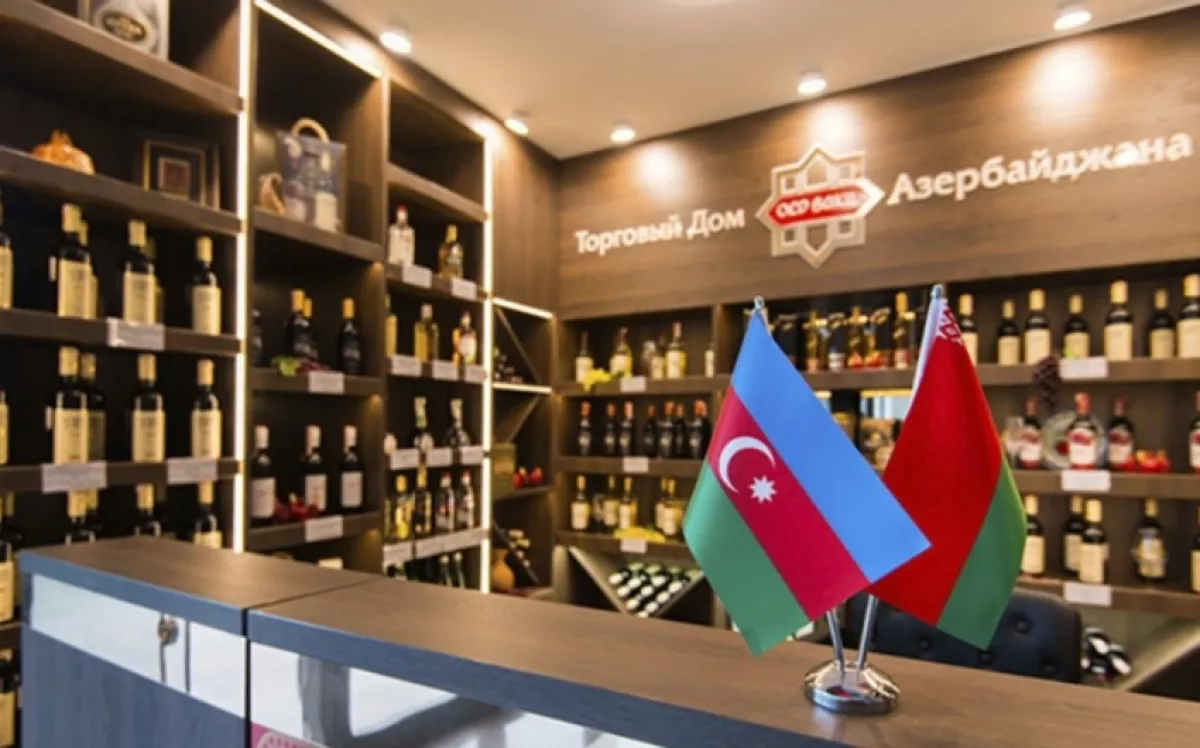
In particular, by the end of last year, 127 Belarusian companies had been registered in Azerbaijan, operating in industry, trade, construction, transport, and services, of which 85 were actively engaged in business activities. For its part, Azerbaijan operates a Trade House in Belarus, which successfully promotes Azerbaijani wine products, food industry goods, seasonal fruits and vegetables, mineral water, and other products.
“Mutual food product supplies between Azerbaijan and Belarus increased by 1.5 times in 2025, and in this regard, the Belarusian Universal Commodity Exchange (BUCE) plays a special role in communication with Azerbaijani partners,” Belarusian Ambassador to Azerbaijan Dmitry Pinevich stated while speaking at the BUCE seminar “Dialogue in Business” in Baku. The ambassador stressed that Belarus is particularly interested in expanding cooperation in the supply and processing of dairy products.
Notably, last year, Azerbaijani companies ranked fourth in terms of transaction volume among all non-resident participants accredited on the BUCE platform. This was facilitated by regular purchases of Belarusian timber, which accounted for 95% of the exchange trade turnover between Belarus and Azerbaijan, while the remaining 5% came from agricultural product supplies. In particular, Azerbaijan imported powdered milk and cream, butter, dry ice cream mix, beef, and meat by-products. By comparison, in 2024, the agro-industrial sector accounted for only around 1% of the exchange trade turnover between the two countries.
“Since last year, the number of Azerbaijani companies registered on the BUCE platform has increased, and imports into our country are growing. However, the dynamics of Azerbaijani exports to Belarus remain modest so far, and in this regard, I call on our companies to step up efforts in the field of product supplies as well,” said Tural Hajili, Deputy Executive Director of the Azerbaijan Export and Investment Promotion Agency (AZPROMO), speaking at the seminar.
In this regard, it is extremely important not only to increase Azerbaijan’s agricultural exports to Belarus, but also to expand cooperation in agricultural production. Along this track, Baku and Minsk are preparing new joint manufacturing projects. Thus, in April this year, an agreement was signed between Belarus’ Republican Unitary Enterprise Belstroycentre and Azerbaijan’s IMA-ENERGY LLC for the construction of an agro-town in the village of Gizil Kangarli in the Aghdam district. With the support of Belarusian specialists ready to provide technology and know-how, a modern agricultural complex will be built in the agro-town, including a poultry enterprise as well as dairy and meat processing facilities.
And this is far from the only example of successful progress in the manufacturing sector. “The Azerbaijani-Belarusian project for the production of blended fertilisers is at its final stage, and the launch of this joint enterprise will take place in Sumgayit in the near future. This initiative will have a significant impact on bilateral trade turnover and will also be aimed at exporting products to third countries,” Tural Hajili stated.
Other successfully developing Azerbaijani-Belarusian industrial projects were also highlighted during the seminar. In particular, over nearly twenty years more than 14,000 Belarus tractors have been assembled at the production lines of the Ganja Automobile Plant. Since 2007, six models of trucks, dump trucks, and municipal and construction special-purpose vehicles have also been assembled there using components supplied by the Minsk Automobile Plant (MAZ). In total, around 4,000 MAZ trucks and special-purpose vehicles produced by the Minsk Automobile Plant, including MZKT and AMKODOR machinery, have been assembled in Ganja.
Among other developments, at the end of 2024, the Ganja Automobile Plant signed a trilateral agreement with MAZ and the Belarusian company Pozhsnab for the assembly in Azerbaijan of various types of emergency rescue and firefighting vehicles. Furthermore, under an agreement concluded in April 2026, MAZ will supply Azerbaijan with 100 special-purpose vehicle kits for the needs of the Ministry of Ecology and Natural Resources of the Republic of Azerbaijan.

The partners’ long-term plans also include launching joint production of grain harvesters and passenger transport vehicles. In May last year, a contract was signed between the Ganja Automobile Plant and the Minsk Automobile Plant for the supply of kits for multi-purpose passenger and cargo vehicles. There are also plans to establish joint production of spare parts and create a service centre in the East Zangezur and Karabakh economic regions to service Belarusian machinery and equipment.
“Parallel to this, joint projects for the assembly of lifts and household appliances are also being implemented. We have a very broad joint agenda, and together with companies, the private sector, and government structures, we are working on the implementation of these initiatives,” Tural Hajili emphasised.
In particular, at the facilities of an Azerbaijani joint venture, alongside the supply of Belarusian components from Mogilevliftmash, it is planned to organise the production of certain parts and assemblies. In October 2024, an agreement was signed on the joint production and sale of lifts in Azerbaijan, and last year, the assembly of 200 lifts was launched.
In short, Baku and Minsk are aiming to develop joint industrial enterprises, with cooperation within assembly sites also focused on bringing products to international markets under the “Made in Azerbaijan” brand. These steps create a foundation for long-term cooperation and strengthen the industrial potential of both countries.







 editor@caliber.az
 +994 55 444-88-98
 Азербайджан, Баку, ул. Низами, 203, Af Business House, 5-й этаж