










On-theme pavilions to see at Venice Biennale 2026
The Venice Biennale, contemporary art’s most closely watched international showcase, has opened its 61st edition, with nearly 100 countries presenting national pavilions across the Italian city.
“In Minor Keys,” the theme conceived by the late curator Koyo Kouoh, resonates throughout Venice as artists and curators encourage visitors to slow down, observe their surroundings and engage more deeply with the art on display.
Although controversy marked the lead-up to this year’s opening, that spirit of reflection and attentiveness remains central across many of the national exhibitions.
Here are several pavilions from the 2026 edition to look out for:
Azerbaijan
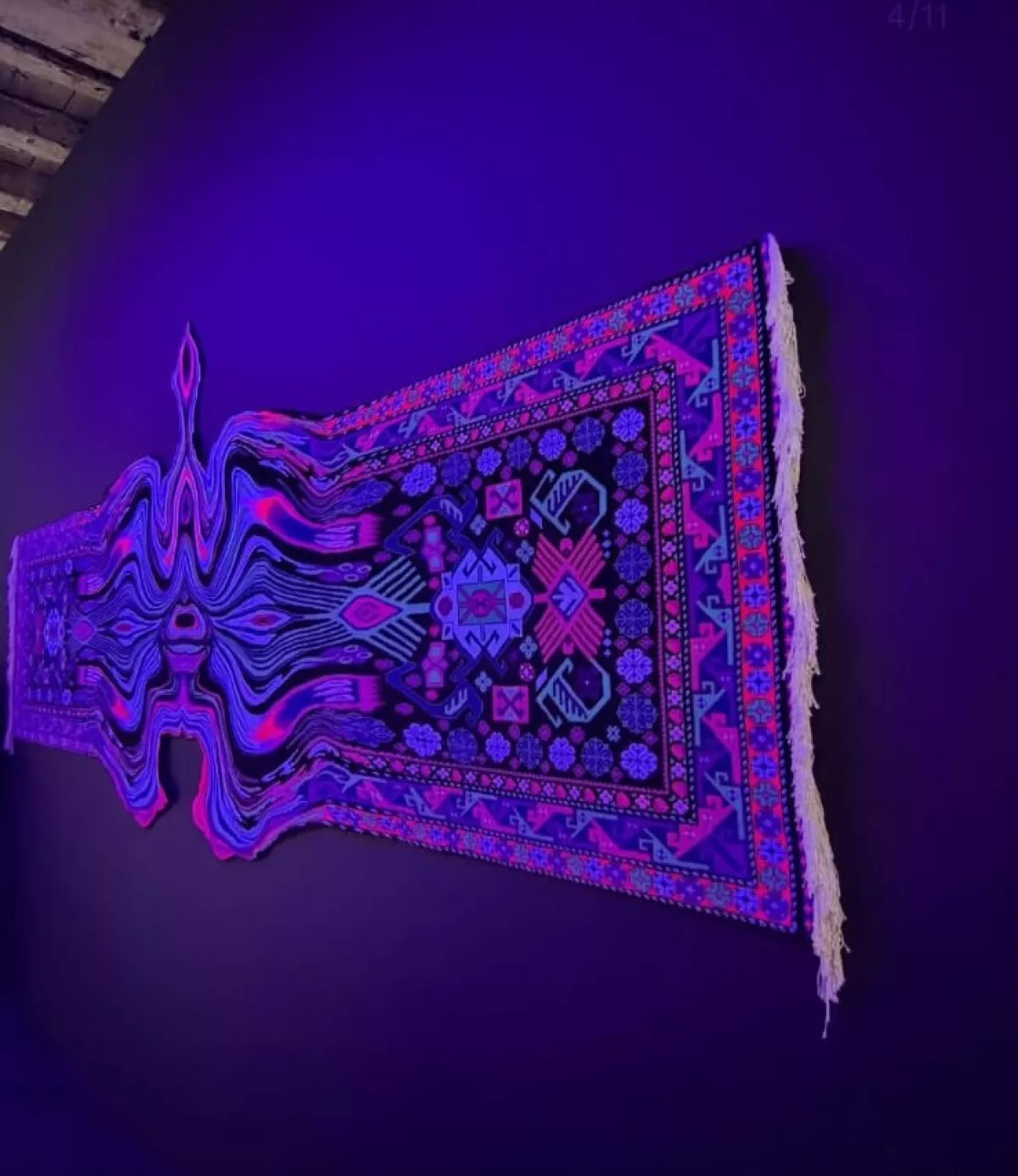
Located in the historic 16th-century venue Campo della Tana, Azerbaijan’s pavilion presents “The Attention” by critically acclaimed visual artist Faig Ahmed.
Ahmed’s work centers on the traditional Azerbaijani carpet — a recurring motif throughout his artistic practice — reimagined not as decoration, but as a metaphor for collective memory, time and human consciousness.
Drawing conceptually from the legacy of Azerbaijani poet Imadaddin Nasimi and the Hurufi philosophical tradition, the exhibition invites visitors on an introspective journey through letters, symbols and coded meanings.
One of the exhibition’s defining features is its fusion of traditional artistic forms with advanced technologies, including quantum systems, neuro-reactive elements and data-driven processes. The project draws parallels between Hurufi philosophy and modern quantum physics, suggesting that reality itself is shaped through attention, interaction and interpretation.
Set against an age of information overload and fragmentation, the exhibition ultimately calls for renewed inner harmony and spiritual connection.
Azerbaijan has participated in the Venice Biennale since 2007 and made its debut at the Venice Architecture Biennale in 2025.
Argentina
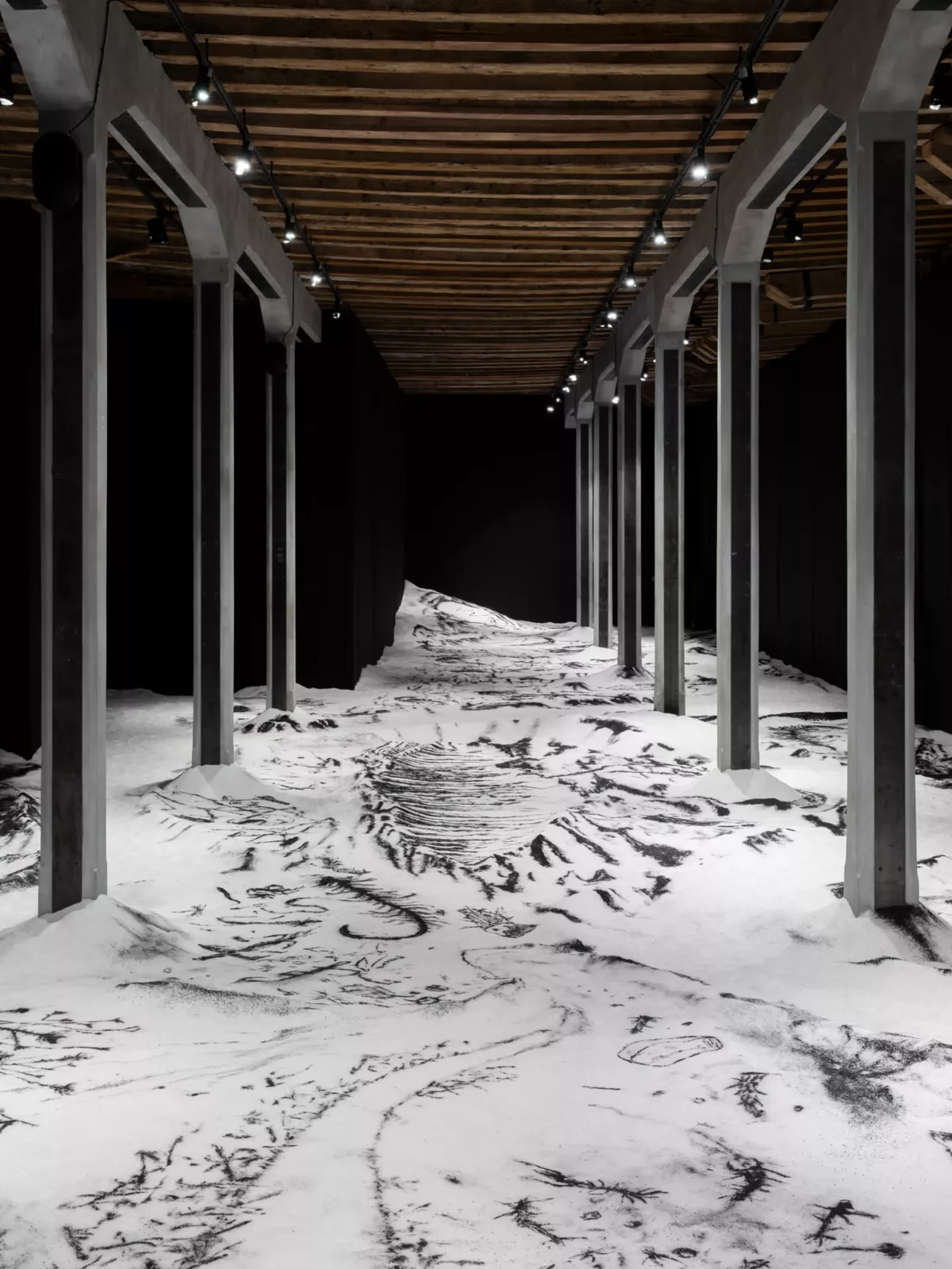
Visitors entering the Argentine pavilion are instructed to remain on narrow white pathways — guidance that quickly becomes necessary once inside the dark, cinematic space.
The exhibition centers on Monitor Yin Yang (2026), a site-specific installation by Buenos Aires–based artist Matías Duville, curated by Josefina Barcia. The floor is covered in snow-white salt shaped into an undulating landscape marked by black charcoal drawings.
The work evokes both abstract composition and fragmented topography, with hints of vegetation and terrain emerging from the stark environment. A sound installation created using environmental data collected in Venice deepens the sense of spatial disorientation.
The Holy See
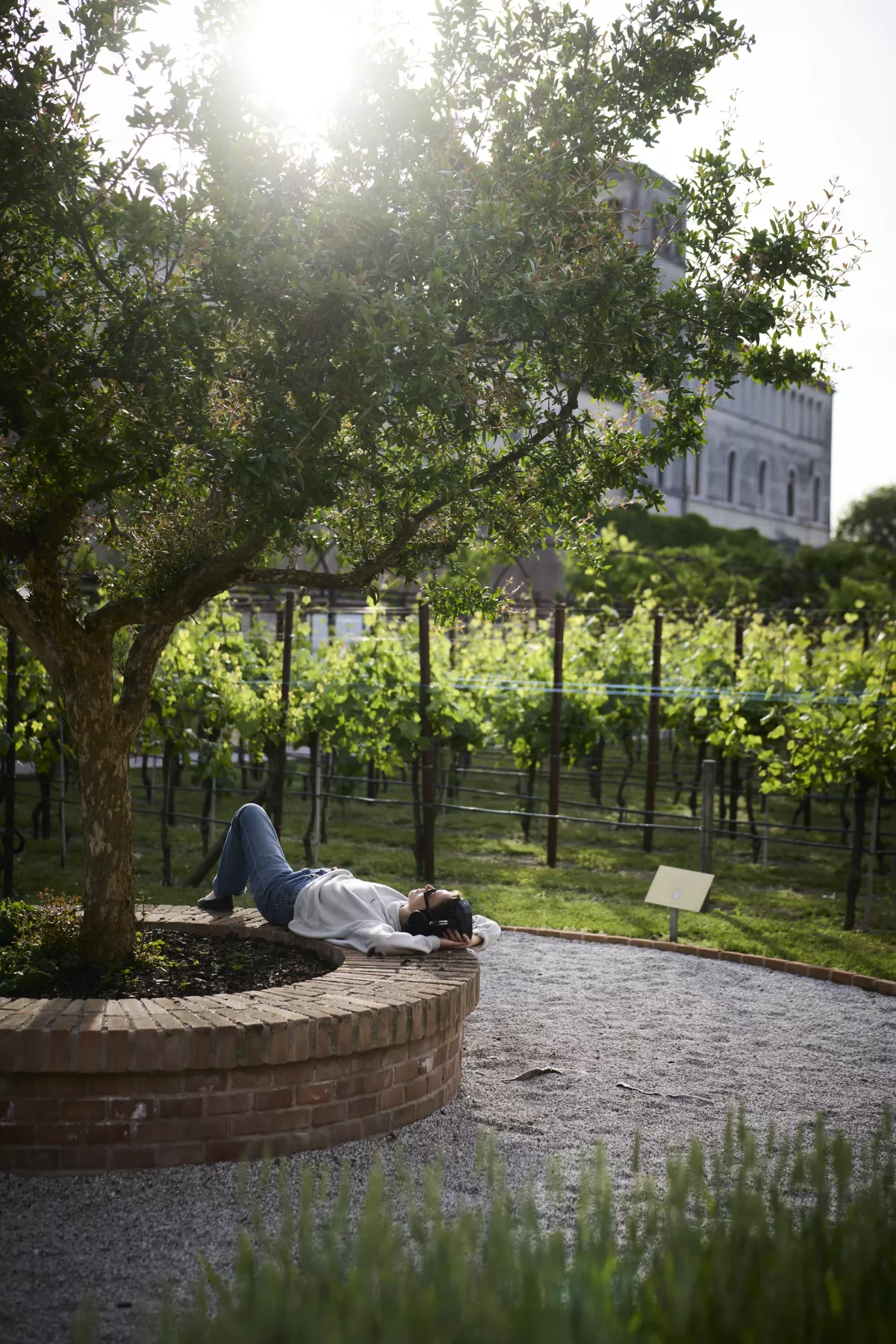
At the Mystical Garden of the Discalced Carmelites, visitors to the Holy See pavilion are handed headphones before beginning a path through dense, carefully tended greenery. Almost immediately, a layer of celestial sound unfolds, with the opening work by Holly Herndon and Mat Dryhurst creating an enveloping, almost physical listening experience that sets the tone for a pavilion designed less for viewing than for full sensory immersion.
Curated by Hans Ulrich Obrist and Ben Vickers, the presentation revolves around Hildegard of Bingen, the 12th-century abbess and mystic whose work made major contributions to early musical composition. “Fundamental to her theology was the union of heaven and earth through song,” Vickers told Artsy. Hildegard understood “sound and song and music” as “the truest act of prayer.”
That concept is carried through the garden as visitors encounter newly commissioned works by artists including Brian Eno, FKA twigs, Meredith Monk, and Patti Smith.
India
Curated by Amin Jaffer, “Geographies of Distance: remembering home” marks India’s first Venice pavilion in seven years.
The exhibition brings together five artists representing the country’s geographic and cultural diversity, with works built around materials rooted in traditional Indian craftsmanship, including clay, bamboo, thread and papier-mâché.
Despite stylistic differences between the installations, the pavilion maintains a cohesive atmosphere shaped by material precision and monumental scale.
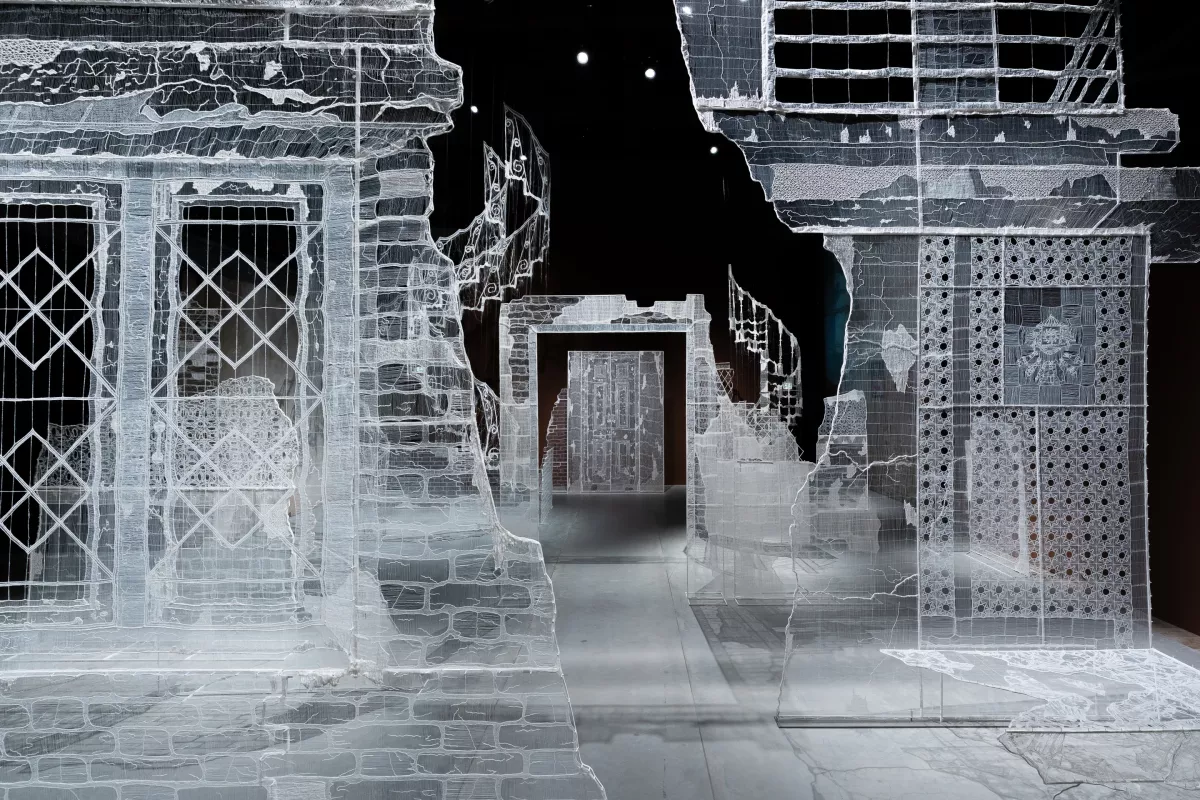
Among the highlights is Sumakshi Singh’s suspended reconstruction of her demolished family home in New Delhi, created entirely from embroidered thread. Singh recently received a Special Mention at the 2025 Loewe Foundation Craft Prize for Monument, a thread-based recreation of a historic column from Delhi’s Qutb Minar complex.
Japan
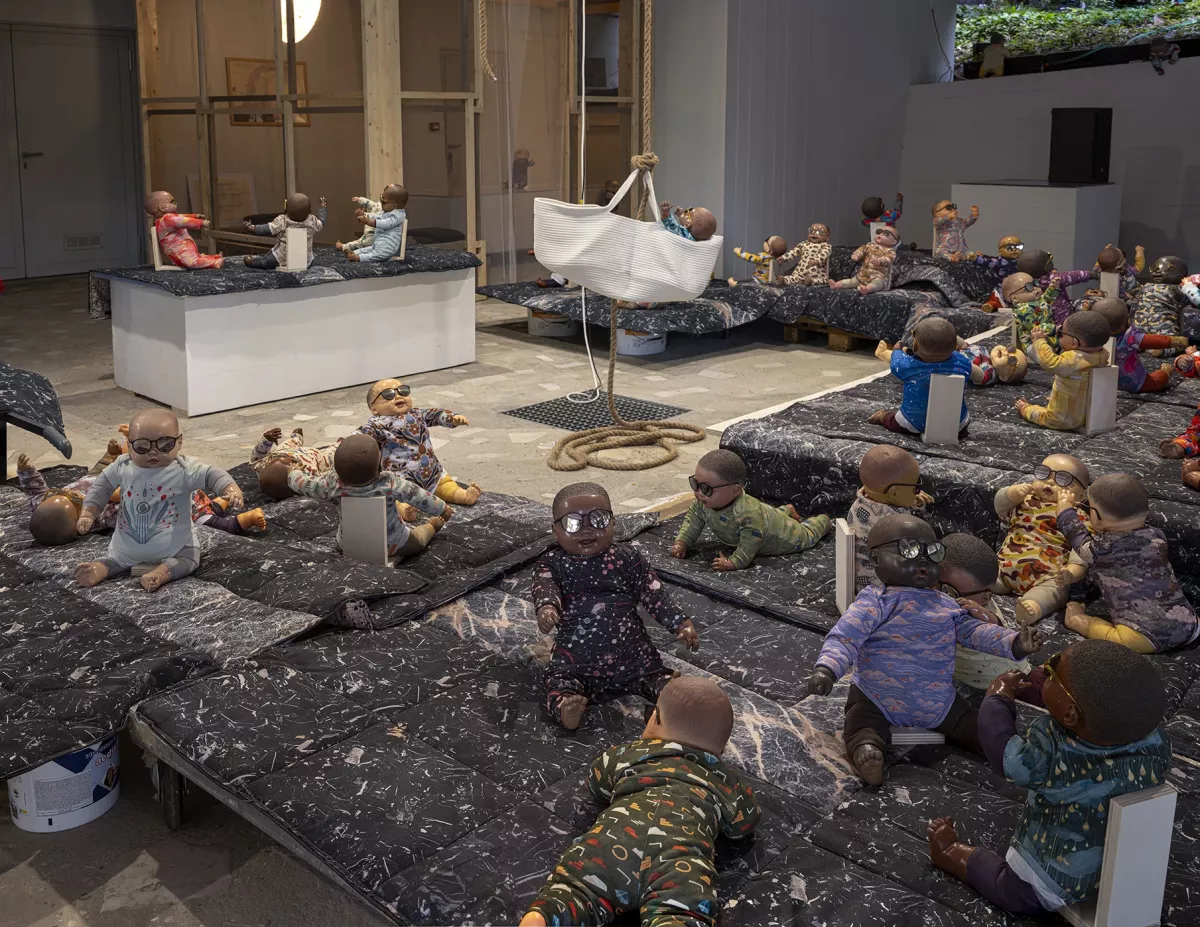
The Japanese pavilion offers visitors an unusual interactive experience: temporarily adopting a baby doll.
Grass Babies, Moon Babies (2026), created by Japanese American performance artist Ei Arakawa-Nash, was partly inspired by the artist’s recent experience becoming a parent to twins.
Each of the 208 dolls wears tiny sunglasses and weighs roughly the same as a four-month-old infant. Some sit on tables awaiting visitors, while others are scattered throughout the pavilion’s greenery, suspended from structures or facing a film installation.
Visitors are encouraged to carry the dolls through the exhibition before eventually changing their diapers and scanning a QR code that generates a short poem linked to each doll’s assigned birthday.
Syria
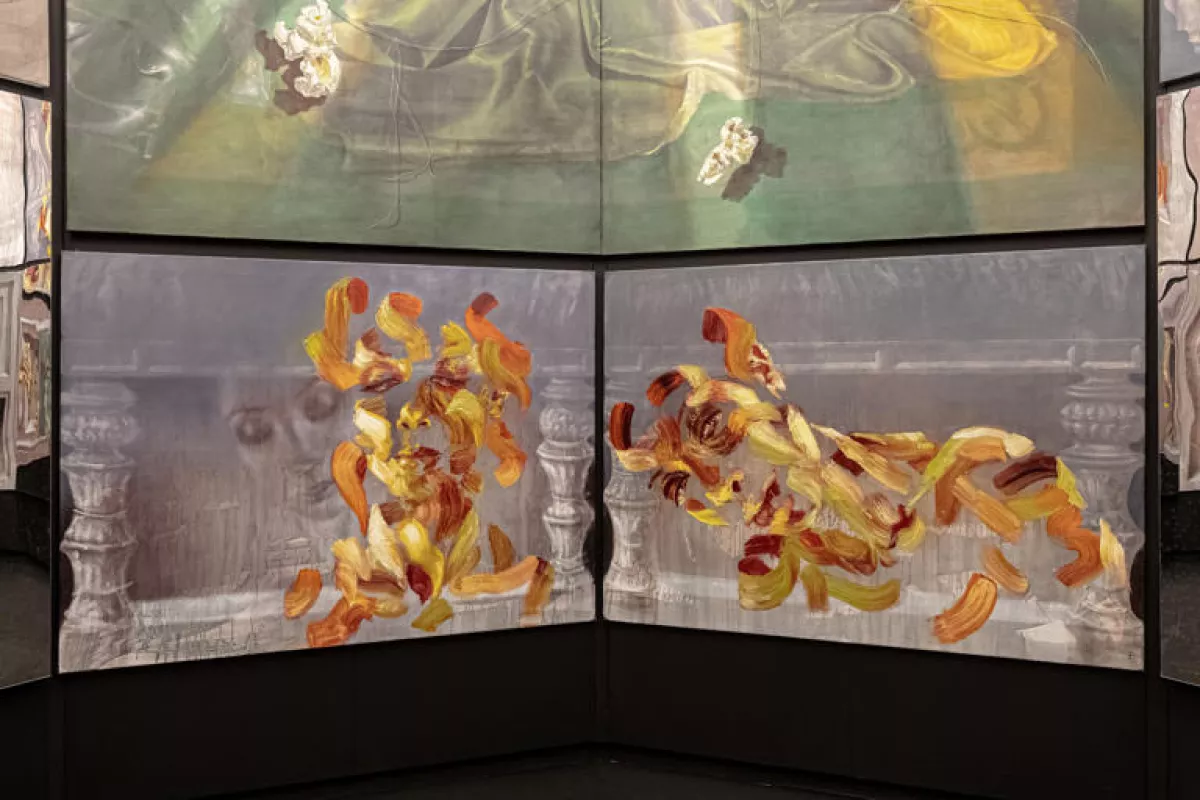
Syria’s representative at the Venice Biennale, Sara Shamma, has recreated the iconic tower tombs of the ancient city of Palmyra in Venice’s Dorsoduro district.
Originally constructed between the 1st and 3rd centuries, the tombs were destroyed in 2015. Shamma’s tribute transforms the space into an intimate yet reflective exhibition combining paintings with an immersive soundscape and fragrances created by historic perfume makers from Damascus.
“We are witnessing the establishment of this new Syria,” Shamma explained. “And Syrians themselves now can participate in building this country. The pavilion is not just about what’s been lost, it’s really about a new beginning and a hopeful future.”
Türkiye
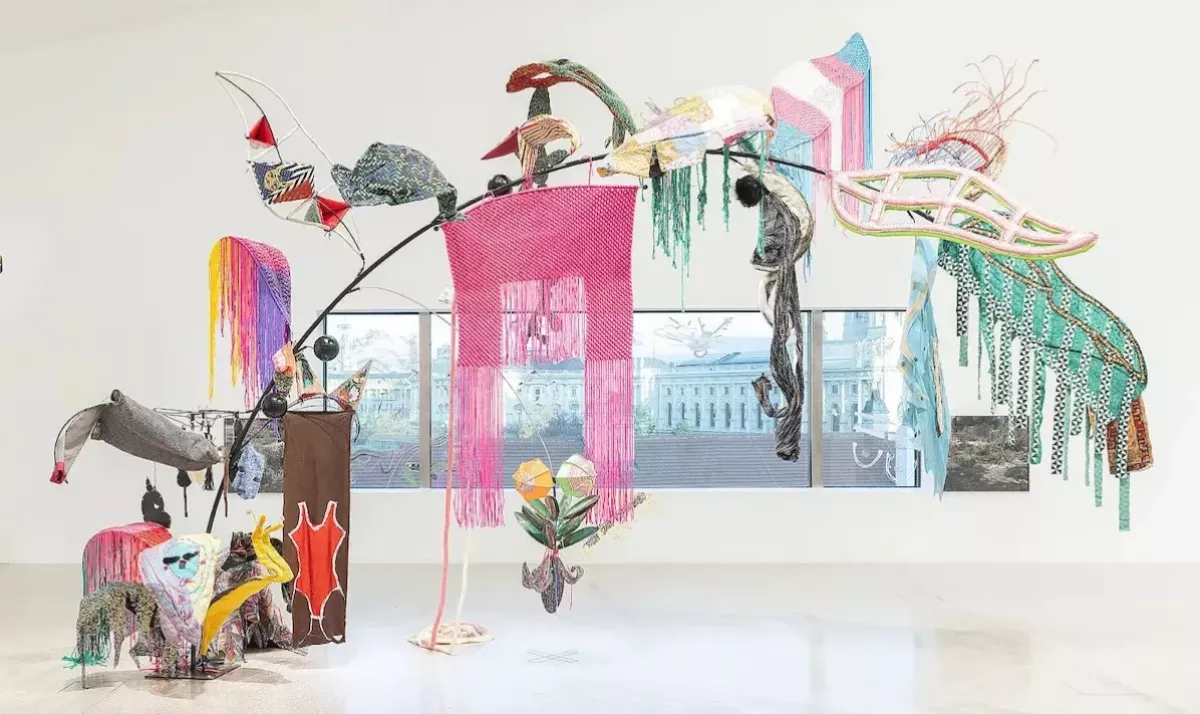
Türkiye’s pavilion features “A Kiss on the Eyes” by renowned artist Nilbar Güreş, whose work is known for its poetic and often witty engagement with identity, inequality and cultural symbolism.
The title references the Turkish phrase Gözlerinizden öperim, commonly used to close a letter. The expression conveys warmth and closeness “without claiming it,” and the exhibition extends that gesture toward the viewer.
Curated by Başak Doğa Temür, the exhibition presents large-scale sculptures and installations that remain low to the ground, lean against surfaces or hover within the space. Rather than directing movement, the layout encourages visitors to become conscious of their own physical presence in relation to the works and those around them.
The exhibition combines newly commissioned works with earlier pieces from Güreş’s practice, treating materials not simply as formal elements but as carriers of memory and labour.
The 61st International Art Exhibition will run from May 9 through November 22.
By Nazrin Sadigova







 editor@caliber.az
 +994 55 444-88-98
 Азербайджан, Баку, ул. Низами, 203, Af Business House, 5-й этаж