










From Macron’s “La Bohème” to Aliyev’s Realpolitik Reconstruction in Zangilan and showmanship in Yerevan
Just days after Yerevan hosted the 8th summit of the European Political Community and the first EU–Armenia summit — attended by Macron, Starmer, Ursula von der Leyen and others — and after the spectacle of French President Macron performing Aznavour’s La Bohème alongside Pashinyan’s accompaniment, Azerbaijani President Ilham Aliyev visited the liberated territories. The lands that were reclaimed in 2020 and are now being rebuilt from the ground up.
On May 9, he visited Shukurbeyli in the Jabrayil district; on May 10, he travelled to Zangilan, where he inaugurated the “Shafag” substation in the village of Soltanly, laid the foundation stone for a hotel, handed over keys to residents of the first residential complex in Zangilan, and reviewed the construction progress of the 150-bed Jabrayil District Central Hospital.
During his meeting with residents of the first residential complex in Zangilan, President Aliyev, through his remarks, effectively articulated a doctrine of sovereignty and put everyone in their proper place.
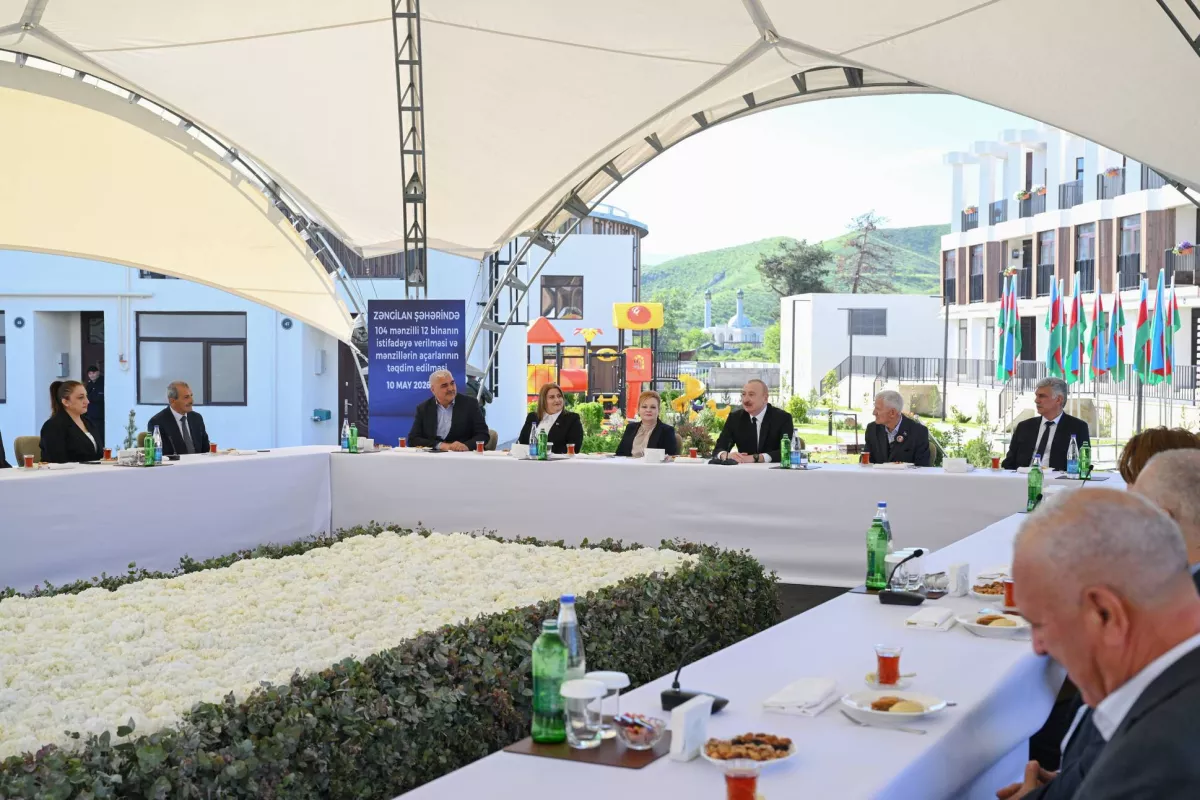
The first message was addressed simultaneously to Moscow, Washington, and Paris. Aliyev made it unequivocally clear that Azerbaijan had faced enormous pressure during the Second Karabakh War. Yet that pressure yielded no results.
“During the Second Garabagh War, despite all the pressure exerted on us, none of it yielded results, even though the number of those wanting to stop us was quite high. First of all, there were the co-chairs of the OSCE Minsk Group. Each of those countries wanted to stop us for its own reasons. Throughout the 44 days, pressure was repeatedly placed on us. Those countries are not ordinary states—they are nuclear powers and permanent members of the UN Security Council. Look at who we were facing. Each of them was doing its utmost to make this occupation permanent, to use it as a tool, and ultimately to deny the Azerbaijani people the opportunity to breathe freely. Not only them, but other countries as well did not want our victory,” the President said.
This assessment is reinforced by a simple arithmetic of facts. From 1992 to 2020, the Minsk Group did not remove a single Armenian soldier from Azerbaijani territory. Yet the moment Azerbaijan began liberating its internationally recognised lands, external pressure immediately intensified. The purpose of that pressure was clear — to force Baku into restraint precisely where restraint was perceived as concession.
Aliyev’s speech in Zangilan added a political definition to the legal dissolution of the OSCE Minsk Group: that era is over, and it was an era marked by a collective unwillingness to achieve peace.
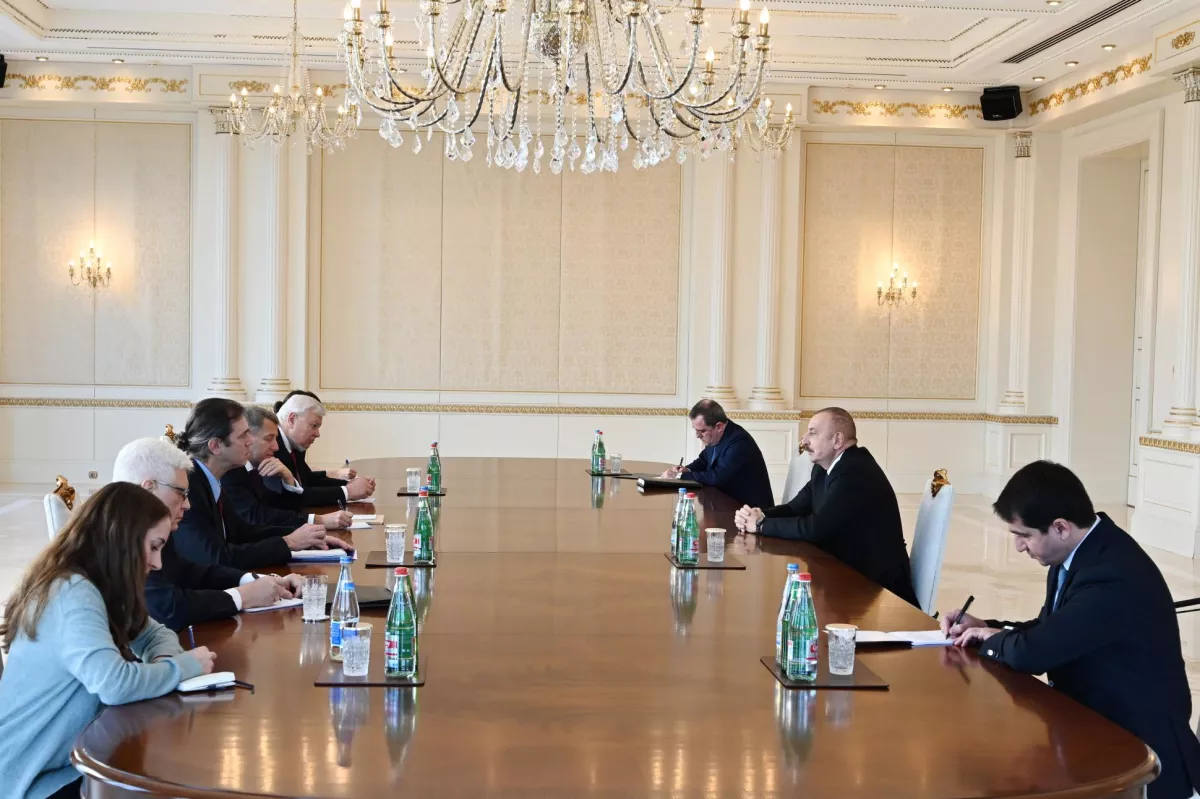
The second message was directed at Paris. Macron — who appeared in Yerevan this week promising support for the peace process while performing La Bohème — remains, from the Azerbaijani perspective, exactly where he stood in 2020. In Zangilan, Aliyev stressed that some foreign leaders who today travel to Armenia and portray themselves as heroic defenders were the very same leaders in power during the 2020 war — and, if they had truly wished, they could have come to Armenia’s aid back then as well.
“If we had wished, we could have conducted military operations anywhere. The Armenian leadership knows this, and those standing behind them know it as well. No matter how much support they provide Armenia, they know they stand no chance against our strength; they are helpless. If they truly had the power, they would have helped Armenia back in 2020. Certain foreign leaders who now visit Armenia and portray themselves as false heroes were the very same leaders in power in their own countries in 2020—they should have come then and stood up for Armenia. There is nothing but empty talk. That is all they do, which is why their support ratings in their own countries remain at 10–15 percent. Now they allegedly claim to have rescued Armenia from our hands. We had no intention of destroying Armenia or depriving it of its independence,” Ilham Aliyev said.
Today’s external support for Armenia follows the very same model. Aliyev specifically referred to the EU mission on the Armenian-Azerbaijani border — the same European observers with binoculars and monthly reports to Brussels that we have written about many times before. The President stated bluntly: “I said it then as well: if we fired a single shot, they would flee immediately, and not even a trace of them would remain there. Yet they portray themselves as if they are protecting Armenia from us.”

This encapsulates the entire Franco-European strategy of the past five years: a mission as stage decoration, support as political posturing, and an invented sense of protection for an entity that faces no actual threat. French patronage has become theatre rather than policy, and attempts to cast it in heroic tones merely expose the absence of genuine leverage.
The third message was directed at Yerevan itself. Less than a month remains before Armenia’s June parliamentary elections, and the campaign is effectively unfolding between former President Robert Kocharyan, who promises a return to an “era of strength”, and incumbent Prime Minister Nikol Pashinyan, who is defending the course of peace with Azerbaijan and Türkiye. The dispute revolves entirely around the peace agenda.
Kocharyan accuses Pashinyan of excessive closeness to Baku and Ankara. Pashinyan, for his part, argues that peace is the only alternative to another war. In Zangilan, President Aliyev made Azerbaijan’s position unmistakably clear: today the region lives in conditions of peace, and Azerbaijan is the author of that peace. Had Baku not wanted peace, there would be no peace. And if it wished, Azerbaijan could conduct a military operation anywhere it chose.
“However, we know that within Armenia’s political sphere there are still circles driven by hatred toward the Azerbaijani people and state, and if they come to power, it is the Armenian people who will suffer,” the Azerbaijani leader stated unequivocally.
Indeed, the future of both Pashinyan and Armenia as a whole now depends on the Azerbaijani factor. This is not self-glorification — it is a statement of political reality. A small country that lost the war, lacks strategic resources, and has forfeited its own agency in the South Caucasus has found itself in a position where the central question of its domestic politics is effectively formulated in a neighbouring capital. And no EU summits or Macron visits can alter that structure.
And here lies the most important point. Aliyev stressed that Azerbaijan has no military plans against Armenia. Yet at the same time, he underscored: “The reasons behind such hatred toward us should perhaps be studied by psychiatrists, psychologists, and doctors. As long as political forces in Armenian society continue to live with hatred toward Azerbaijan, we must remain vigilant.”
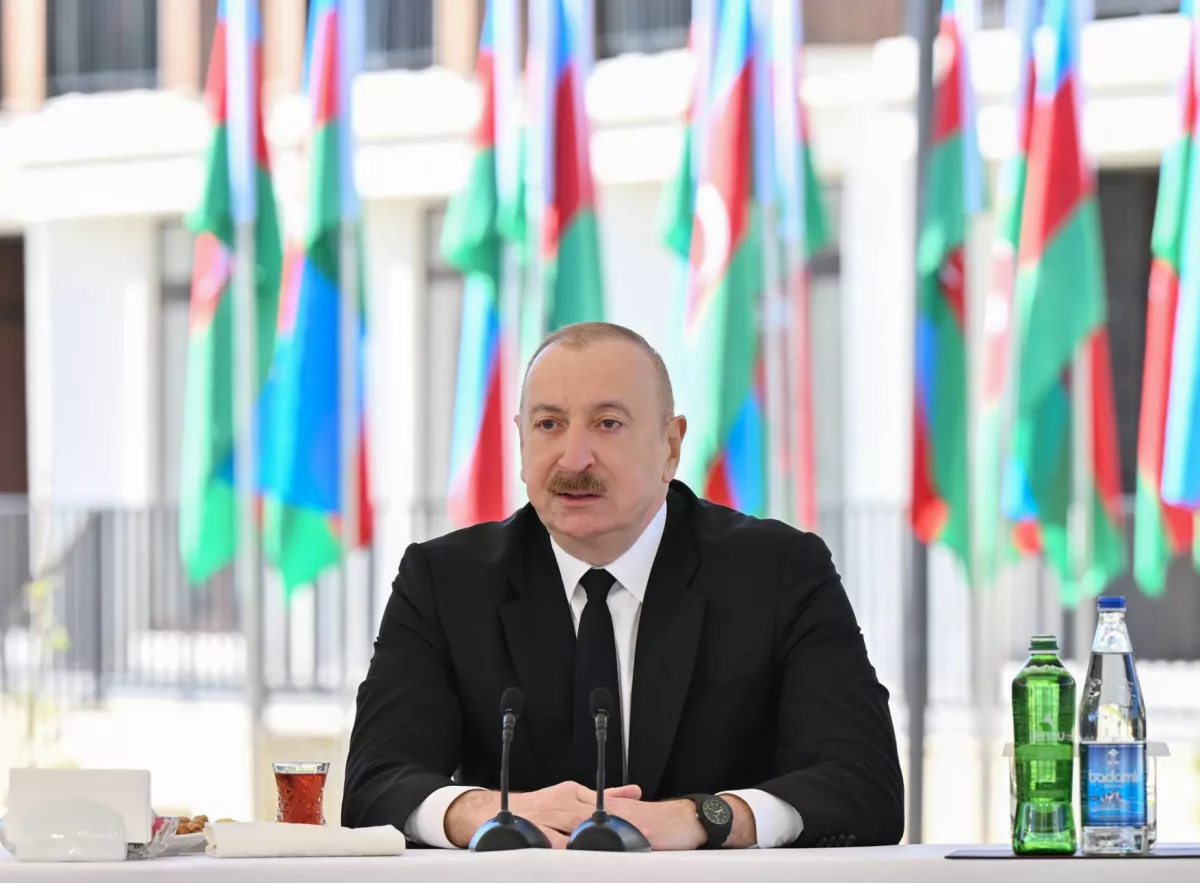
This was not a threat. It was a calibration of expectations. And it was a message directed at the Armenian electorate over the heads of all political candidates: peace exists, but it is conditional, and that condition is singular — the absence of revanchism at the helm of Armenian power. Kocharyan, who has built his campaign around nostalgia for an “era of victories”, received a public signal that that era is over, and any attempt to restore it would bring new disaster — above all for Armenia itself.
What unites these three layers of messaging — to Moscow, Washington, and Paris as the former co-chairs of the OSCE Minsk Group; to Paris separately as the producer of political theatre; and to Yerevan as the object of the message — is the formula Aliyev articulated on the liberated territories: Azerbaijan is the author of today’s peace. Without Azerbaijan’s will, peace would be impossible.
This is the exclusive authorship of the current South Caucasus architecture: peace in the region has been shaped in the form that Baku established through a comprehensive political and military process. One may travel to Yerevan with promises, sing Aznavour songs there, or organise summits attended by world leaders. But real politics in the region is built on the ground. And it is Azerbaijan that is shaping that reality.
Aliyev’s speech was particularly striking because of its geographical backdrop. He was clearly alluding to Macron — with his 10–15 per cent approval ratings in French society — while standing in a city that had lain in ruins for thirty years and is now being rebuilt by the Azerbaijani state. He spoke about Pashinyan and Kocharyan while holding the keys to apartments for people who had spent decades living as internally displaced persons.
The summits in Yerevan remained a procession of promises, performances, and photo opportunities. President Aliyev’s speech in Zangilan, by contrast, served as a demonstration that, in Azerbaijan’s reading of regional politics, peace is made where there is an ability to build — and it is from there that the decisive voice is spoken.
Everything else is merely accompaniment.







 editor@caliber.az
 +994 55 444-88-98
 Азербайджан, Баку, ул. Низами, 203, Af Business House, 5-й этаж