










Energy system of the future: smart grids and BESS transforming Azerbaijan Review by Khazar Akhundov
While continuing to develop its oil and gas sector, the Azerbaijani government is making significant efforts to expand power generation in the renewable energy sector. As part of this strategy, the modernisation of substations has begun, with the introduction of battery energy storage systems (BESS), primarily aimed at storing “green” energy.
Within this framework, cooperation is underway with the Saudi company ACWA Power, Chinese partners, the World Bank, and the Asian Development Bank (ADB) to develop BESS installations at energy facilities across the country.
Recently, the President of Azerbaijan, Ilham Aliyev, took part in the inauguration of the Absheron Battery Energy Storage Centre. This large-scale facility is the first of its kind in Azerbaijan and has no equivalent across the Commonwealth of Independent States (CIS).
The development of “green” energy in Azerbaijan is becoming a key instrument for attracting foreign direct investment (FDI). To this end, the country has established a modern legislative framework, introduced fiscal and other incentives for investors, and built cooperation with leading international companies.
In recent years, Azerbaijan has formed partnerships with a wide range of specialized companies from the Gulf states, Europe, China, and Türkiye, which are investing in the expansion of renewable energy generation capacity. At the same time, the country is participating in international initiatives to develop infrastructure—power transmission lines, substations, and subsea electricity cables in the Black Sea and the Caspian Sea—for electricity exports.
According to estimates by the Ministry of Energy, by 2027 total investment in the construction of 10 solar and wind power plants will exceed $2.7 billion. Under current plans, 6,000 MW of solar, wind, and hydropower capacity will be integrated into the national energy system by 2030, rising to 8,000 MW by 2032.
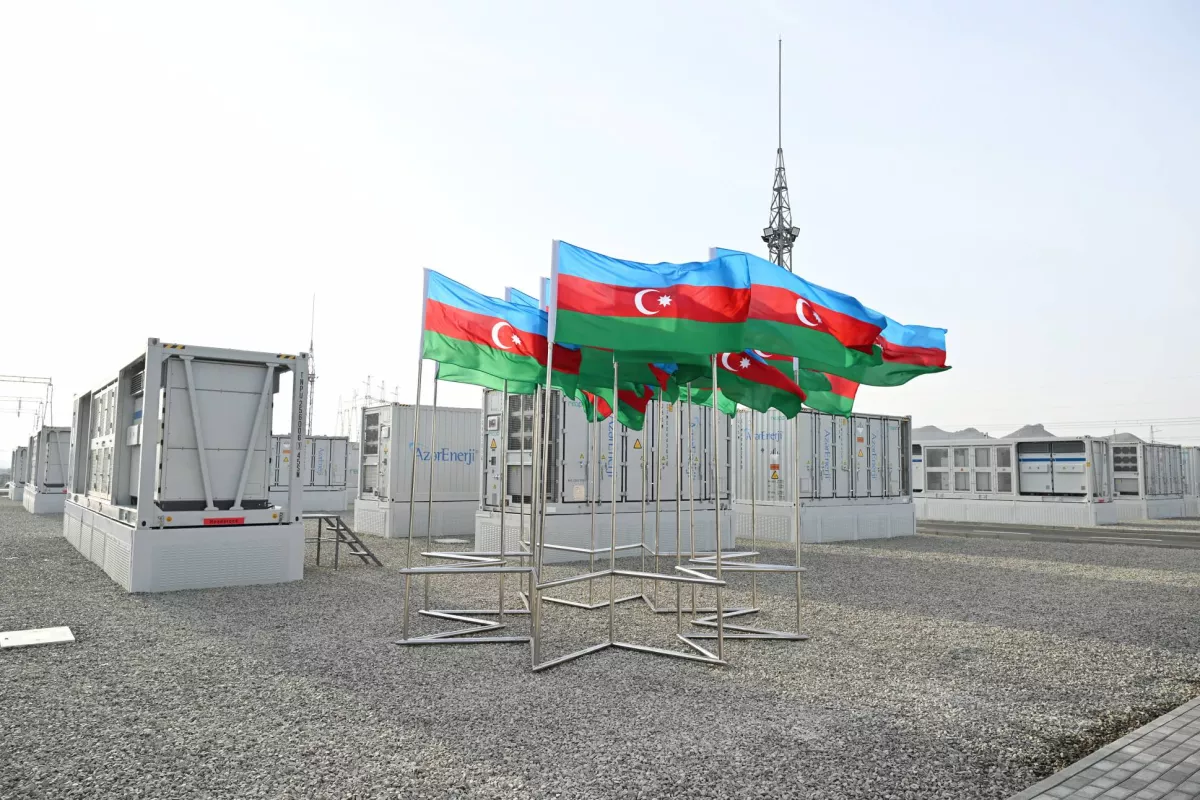
However, increasing the share of power generation from wind and solar plants requires addressing a number of complex challenges related to the safe integration of renewable energy systems (RES) with their variable energy flows—caused by changing wind speeds, the intermittent pattern of cloudy and sunny days, and the time of day—into the unified Azerenerji power system.
The domestic energy regulator’s system is primarily based on large gas-fired power plants, whose capacity characteristics are not dependent on weather conditions or a changing climate. In turn, integrating RES facilities into the unified energy system necessitates the modernisation of substations and the installation of new equipment capable of automatically synchronising and adjusting to the external grid voltage in terms of level, frequency, and phase.
International experience shows that the effective operation of “green” generation facilities, with their variable energy flows, is impossible without establishing a so-called battery energy storage system (BESS) in the country. This technology is designed to store electricity using battery systems, thereby ensuring a continuous power supply during drops in generation capacity, grid outages, or periods of peak demand.
According to forecasts by the International Energy Agency (IEA), the global BESS market is expected to reach $25 billion by 2030. These systems not only provide reliable backup power but also enhance grid stability and make renewable energy more viable. At the same time, today small- and micro-scale BESS are being installed in businesses and residential buildings, which, in addition to stabilising energy supply, can reduce electricity bills by up to 30%.
In Azerbaijan, alongside the construction of renewable energy capacities, steps are also planned to implement a modern Energy Grid mechanism—a centralized system of transmission lines, substations, and transformers that delivers electricity from generation sites (both thermal and “green” power plants) to consumers, ensuring reliable and efficient distribution.
This includes the development of smart grids, which use digital technologies to collect real-time data and offer greater efficiency, reliability, and cost-effectiveness when integrated with renewable energy sources.
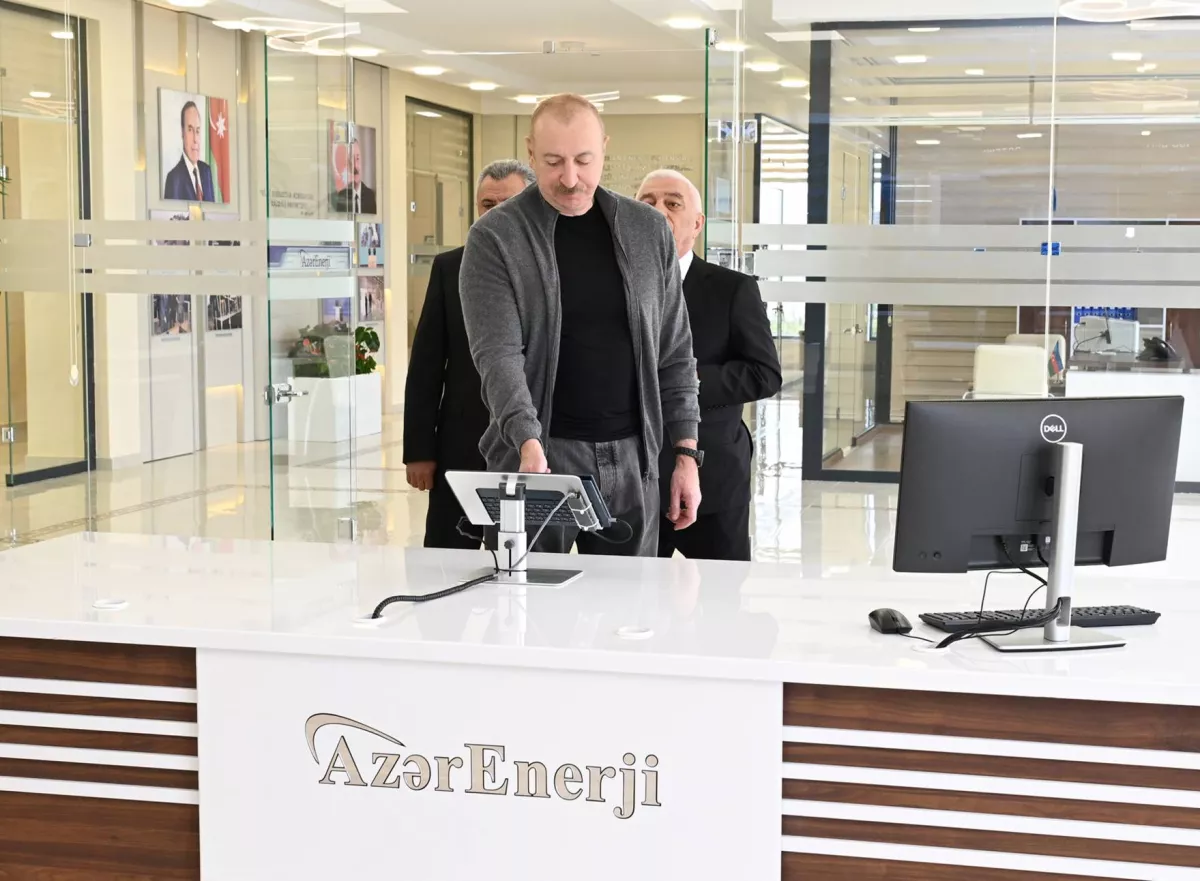
A major milestone in this direction has been the launch of the country’s first large-scale Absheron Battery Energy Storage Centre, commissioned by Azerenerji JSC, with President Ilham Aliyev attending the opening ceremony.
According to information provided to the head of state by Azerenerji’s Chairman, Baba Rzayev, the company, using its own funds, has established large energy storage centres at two main substations—the 500 kV Absheron substation and the 220 kV Aghdash substation—with a total capacity of 250 MW and an energy storage capacity of 500 MWh.
As part of the project, 50 battery units and 13 container inverters have been installed on the site of the Absheron Centre. The modern equipment was custom-built at the Great Power factory in China. A state-of-the-art control building has been constructed on the premises, alongside extensive landscaping and greening works.
During the commissioning ceremony, it was also highlighted that a BESS centre of this scale has been created in Azerbaijan for the first time and has no equivalents in the CIS region.
What benefits will the Absheron Centre bring to the country’s energy system? According to information provided during the commissioning of the facility, studies conducted by international consulting firms—the U.S.-based TETRA Tech and Türkiye’s EPRA—confirmed the need for such battery systems in Azerbaijan to safely integrate nearly 1,850 MW of renewable energy capacity into the national grid.
The Absheron Centre’s infrastructure is designed for high-speed operation, with batteries capable of fully charging in just two hours. Energy—including that generated during sunny hours—is stored and automatically supplied to the grid during peak demand periods.
Using the SCADA system, real-time monitoring of the energy system is ensured: grid stability is maintained, and frequency and voltage are automatically regulated during drops in renewable generation, reducing the risk of outages. Additionally, peak-hour electricity demand is met more efficiently, the impact of intermittent solar and wind generation is mitigated, and the system can be restored from scratch, smoothing load fluctuations during sunset hours.
In this way, the creation of a large-scale BESS facility makes Azerbaijan’s energy system more modern, flexible, and resilient.
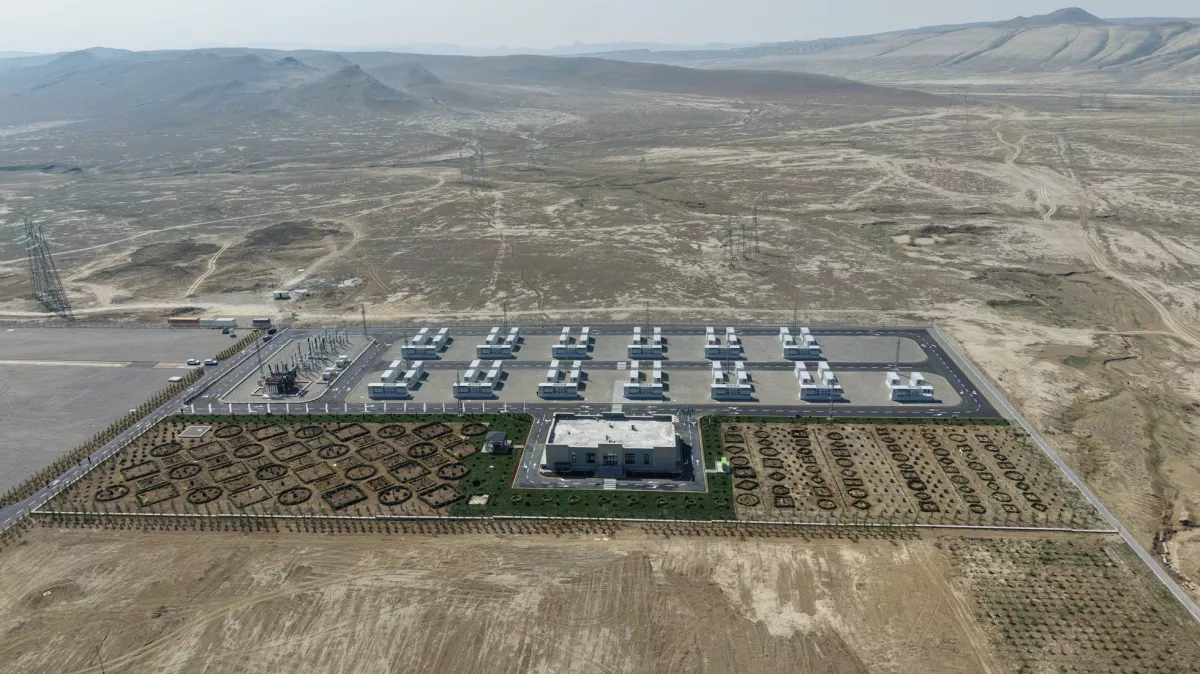
According to Azerenerji, large volumes of renewable energy are expected to be integrated into the national grid in the near future, with over 2,100 MW of “green” energy projected to be online by 2028.
In this context, work is underway in Azerbaijan to gradually expand BESS systems. In particular, in May 2024, the Saudi company ACWA Power and the Ministry of Energy of Azerbaijan signed an executive agreement for a 200 MW BESS project. Later that year, in November, during the UN Climate Conference COP29 held in Baku, the Baku International Sea Trade Port and the Malaysian company Tiza Green Energy (a subsidiary of Citaglobal) launched a 5.4 MW solar photovoltaic project integrated with a BESS system.
Chinese companies, such as China Southern Power Grid International (Hong Kong) Co., Ltd and Powerchina Huadong Engineering Corporation Limited, are also potential partners for implementing battery energy storage systems in Azerbaijan. This trend is part of the AZURE project, a collaboration between the World Bank and the Azerbaijani Ministry of Energy, aimed at integrating up to 2 GW of renewable energy facilities into the national transmission network.
Additionally, under the new Country Partnership Strategy (CPS) 2025–2029 with Azerbaijan, the Asian Development Bank (ADB) is prepared to provide technical assistance and financing for the modernisation and energy efficiency improvements of the Baku Metro, including the introduction of renewable energy elements, such as solar power, and BESS systems.







 editor@caliber.az
 +994 55 444-88-98
 Азербайджан, Баку, ул. Низами, 203, Af Business House, 5-й этаж