










“The law of the jungle”: Pope Leo XIV calls for peace amid global violence Reflections by Teymur Atayev
The planet-shaking global collapse, leading to mass deaths of innocent victims, including a vast number of children, confidently confirms the thesis of a significant decline in moral and ethical values within the world community. Meanwhile, the deaths of peaceful civilians, as well as the repeated forced migrations of millions of people from their historical lands in the Middle East, have become no more than a mere backdrop to our lives. With very rare exceptions, no political assessments are made of the ongoing lawlessness.
Against this backdrop, the position of Pope Leo XIV stands out in a particularly distinct manner, tirelessly calling for an end to the slaughter of innocents, regardless of their ethnic or religious affiliation. In this context, it seemed timely to present selected statements by the head of the Roman Catholic Church, made in the current days of March.
On March 15, Pope Leo XIV, expressing sorrow over the “horrific violence of war,” whose victims included thousands of innocent people, reminded of attacks on schools, hospitals, and residential areas, and expressed his prayerful solidarity with all those affected and with refugees. Saying that “violence can never lead to [...] justice, stability and peace,” he called for the pursuit of long-term solutions for the common good of all, including the people of Lebanon.
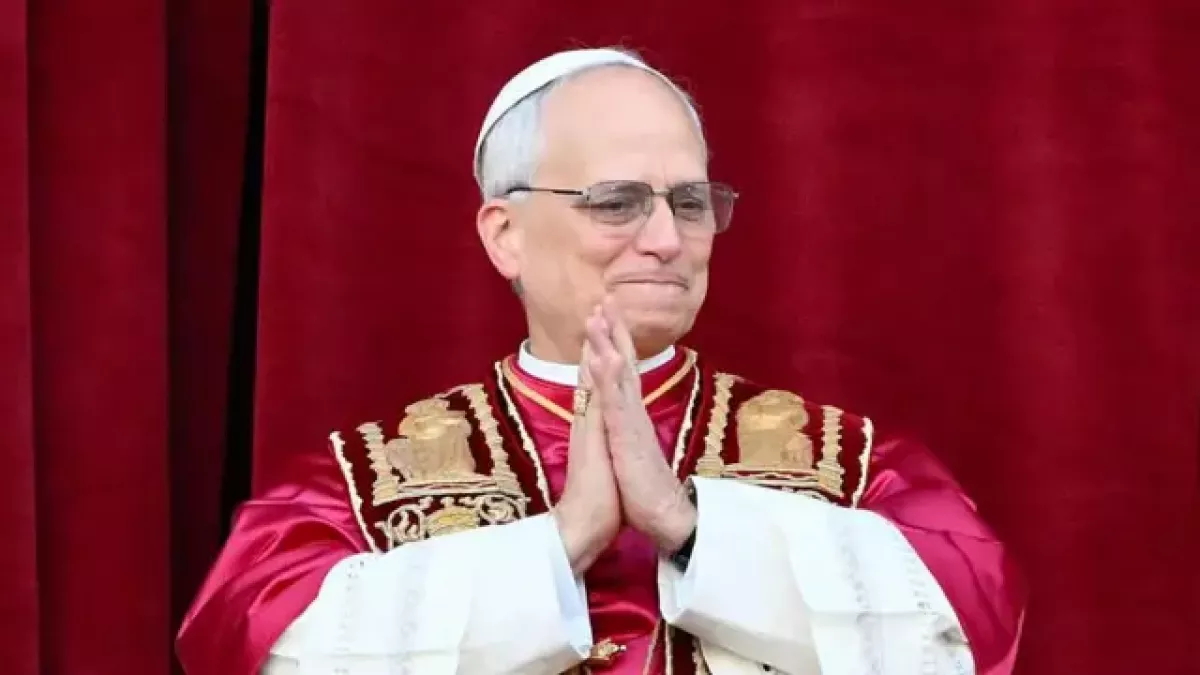
The following day, speaking about the shift from analogue to digital systems and the impossibility of replacing creativity, critical thinking, and freedom of thought with any technological innovation, the head of the world’s Catholics emphasised the need to regulate communications according to a human, rather than technological, paradigm. In his view, this should lead to the ability to distinguish means from ends, within which the work of journalists takes on considerable importance: they must convey the suffering that wars invariably bring to peoples. It is vital to reveal the true face of these events through the eyes of the victims so that “it does not turn into a video game.”
It can be agreed that the Pope’s emphasis on video games is far from spontaneous, since popular digital games for children from an early age teach them to disregard laws and go against the rules of coexistence developed by humanity, primarily by conditioning them to believe that might makes right.
On March 18, Leo XIV quoted Jesus (the prophet Isa): “Love the Lord your God with all your heart, with all your soul, with all your strength, and with all your mind,” and “love your neighbor as yourself” (Luke 10:27). According to the Pope, this call can be seen as an answer to Cain, who killed his brother Abel. When God asked, “Where is Abel your brother?” Cain replied, “I do not know; am I my brother’s keeper?” (Genesis 4:9). As the head of the Roman Catholic Church clarified, every person is “called to fix their gaze on those who suffer: on the pain of the lonely, on those who for various reasons are marginalized and considered ‘outcasts.’ For without them, we cannot build just societies founded on the human person. It is illusory to think that it would be easier to attain a state of happiness by ignoring these brothers and sisters. Only together can we build communities of solidarity capable of caring for everyone, in which wellbeing and peace can flourish for the benefit of all.”
Here, an association naturally arises with the Quranic call to compete “in good deeds” and Allah’s assertion that “if anyone killed a person not in retaliation of murder, or (and) to spread mischief in the land – it would be as if he killed all mankind, and if anyone saved a life, it would be as if he saved the life of all mankind” (Quran 5:32, 48).
It is particularly noteworthy that among the main ways to achieve such outcomes, on March 19, Pope Leo XIV outlined “the need for contemporary pastoral methods that help parents educate children and find depth of spirituality in their family life.” This corresponds directly to what President Ilham Aliyev stated in 2024 when he emphasised two sources of education—family and teacher. Noting that in some Western countries, family values have “completely deformed,” he highlighted as a fortunate factor that in Azerbaijan, family norms prevail: “This stems from our traditions.”
On March 22, the portal Vaticannews.va, from which we cited Pope Leo XIV’s statements above, in its editorial recalled a February 1944 address in the British House of Lords by Bishop George Bell. Bell delivered this speech in connection with the bombing of German cities by the British Air Force, which led to mass civilian deaths. In this context, we considered it important to present selected statements by the bishop.
First of all, to avoid any misunderstandings, Bell—having first described Hitler as a barbarian—emphasised that he did not forget the colossal bombings of European cities by the Luftwaffe (the German Air Force). He then acknowledged the “unutterable” destruction of German cities carried out by the Allied air forces. Reiterating his position, in the sense that he did not dispute the assertion that large-scale bombings by the Nazis had begun, George Bell highlighted his own concern over the government’s lack of understanding—not only of the irreparable material damage caused by the widespread bombing of Germany, but also of the consequences these actions would have for future relations among the peoples of Europe, as well as the moral implications involved.
While recognising the legitimacy of attacks on industrial and military targets, airfields, and air bases, Bell expressed an awareness that, under such circumstances, “injuries to civilians are inevitable.” Nevertheless, he insisted that, in his view, “there must be a fair balance between the means employed and the purpose achieved.”
In the bishop’s exposition, “to obliterate a whole town because certain portions contain military and industrial establishments is to reject the balance,” since, for example, in Hamburg, along with the death of very many people, nearly all cultural, residential, and religious buildings were destroyed, including the renowned university library.
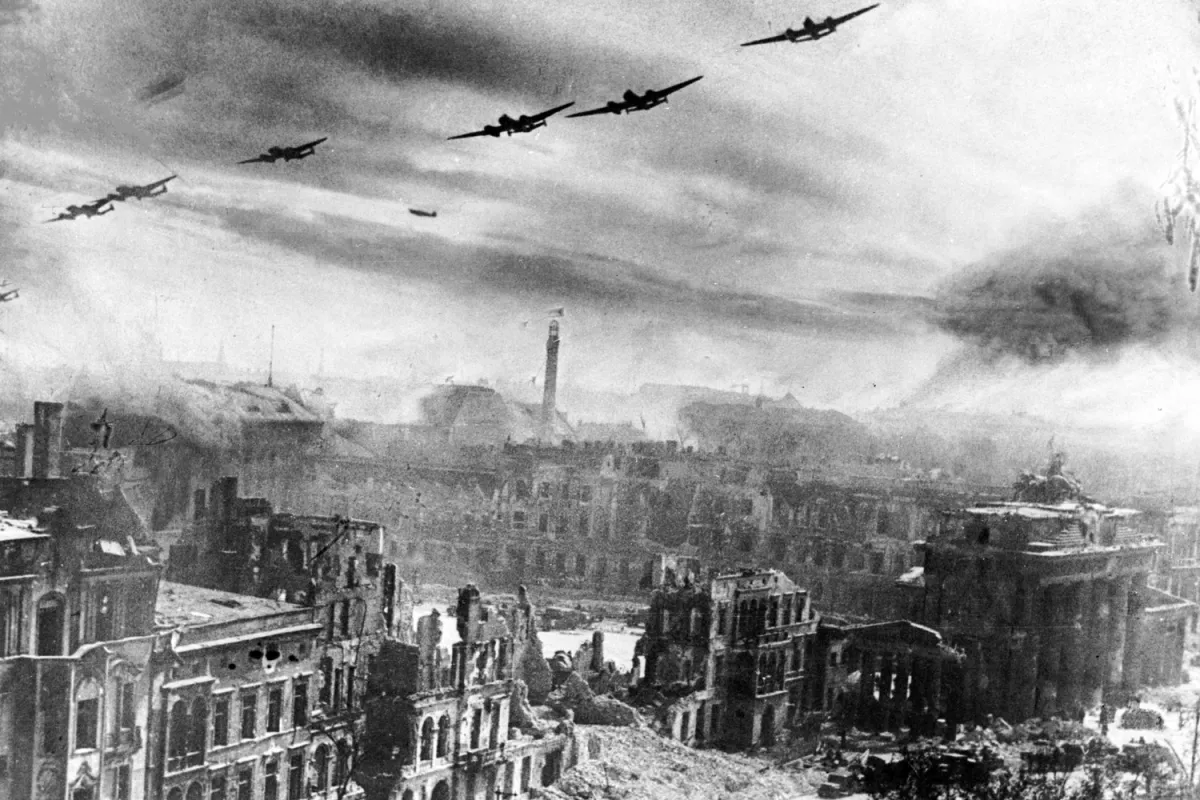
Addressing the bombings of Berlin, which at the time resulted in the deaths of nearly 75,000 people and left 3 million homeless, Bell noted that openly endorsing a policy of destruction in this regard is not a “justifiable act of war,” especially given that Berlin was one of the largest centres of art collections in the world. He then forcefully declared that “to justify methods inhumane in themselves by arguments of expediency smacks of the Nazi philosophy,” which proclaims “Might is Right.” Therefore, the destruction of cities, threatening the very roots of civilisation, is not a means of restraining military aggression or ending the war. Moreover, the real suffering of Europeans caused by “the demoniac cruelty of Hitler and his Nazis, and hardly imaginable to those in this country who for the last five years have not been out of this island or had intimate association with Hitler's victims, are not to be healed by the use of power only, power exclusive and unlimited.” For this reason, "it is of supreme importance that we who, with our Allies, are the liberators of Europe should so use power that it is always under the control of law.”
It is astonishing, if not lamentable, that after Bishop George Bell’s brilliant address eighty years ago on the relationship between “right, power, and law,” nothing has changed at the current historical stage. Just as during the years of the Second World War, civilians—including children—are dying, while the cultural and spiritual heritage of humanity in the Middle East is simultaneously being destroyed (whether intentionally or not). Unfortunately, this occurs under the silent observation of virtually the entire world community.
For the people of Azerbaijan, however, this is far from surprising, as they have long faced global indifference to the genocide, cultural destruction, urban devastation, and ecological devastation perpetrated against them over more than 30 years—and continue to face it today.
All that remains is to express the hope that the relentless calls for peace by Pope Leo XIV will, sooner or later, touch the hearts of those seeking to impose yet another stage of the “law of the jungle” in the world, disregarding humanity.







 editor@caliber.az
 +994 55 444-88-98
 Азербайджан, Баку, ул. Низами, 203, Af Business House, 5-й этаж