










April rehearsal for Victory From the 2016 battles to the 44-day war in 2020
Exactly ten years ago, on the night of April 1–2, 2016, Armenian armed formations carried out an intense artillery bombardment of Azerbaijani Armed Forces positions and civilian settlements along the entire line of contact. Schools, hospitals, and places of worship were also under fire. As a result of Armenia’s attacks, six Azerbaijani civilians, including children, were killed, and 33 people were seriously injured. Yerevan expected to play its usual card: to shell, provoke, and then present itself to the international community as the “victim.” But on April 2, 2016, this well-worn Armenian scheme failed.
The Azerbaijani army command made the decision to launch a counteroffensive without delay. The fiercest fighting on the front took place in the Agdhara–Tartar–Aghdam and Fuzuli directions. What happened over the next four days completely overturned all notions of the balance of forces in the conflict zone. Part of the mythical “Ohanyan defence line,” which Armenian propaganda had for years presented as an impregnable stronghold, was destroyed in twenty minutes.
During the four days of combat, heights in the area of the Talish village were liberated, from which Armenian positions posed a direct threat to the Goranboy district. However, the key achievement was the capture of the strategic height of Lalatapa in the Fuzuli direction — a commanding position that allowed control over a vast territory from which the enemy had for years targeted the village of Jojug Marjanli in the Jabrayil district. In addition, the Azerbaijani army secured control over the roads in the Agdhara–Madagiz direction (now Sugovushan — ed.) — an artery of critical importance.
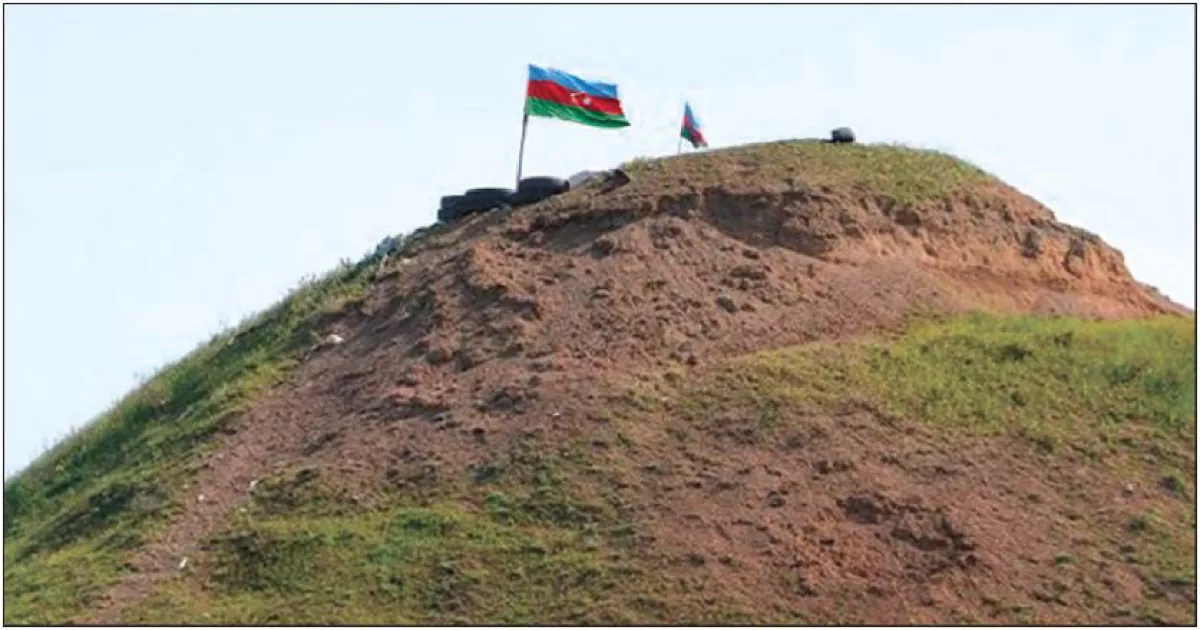
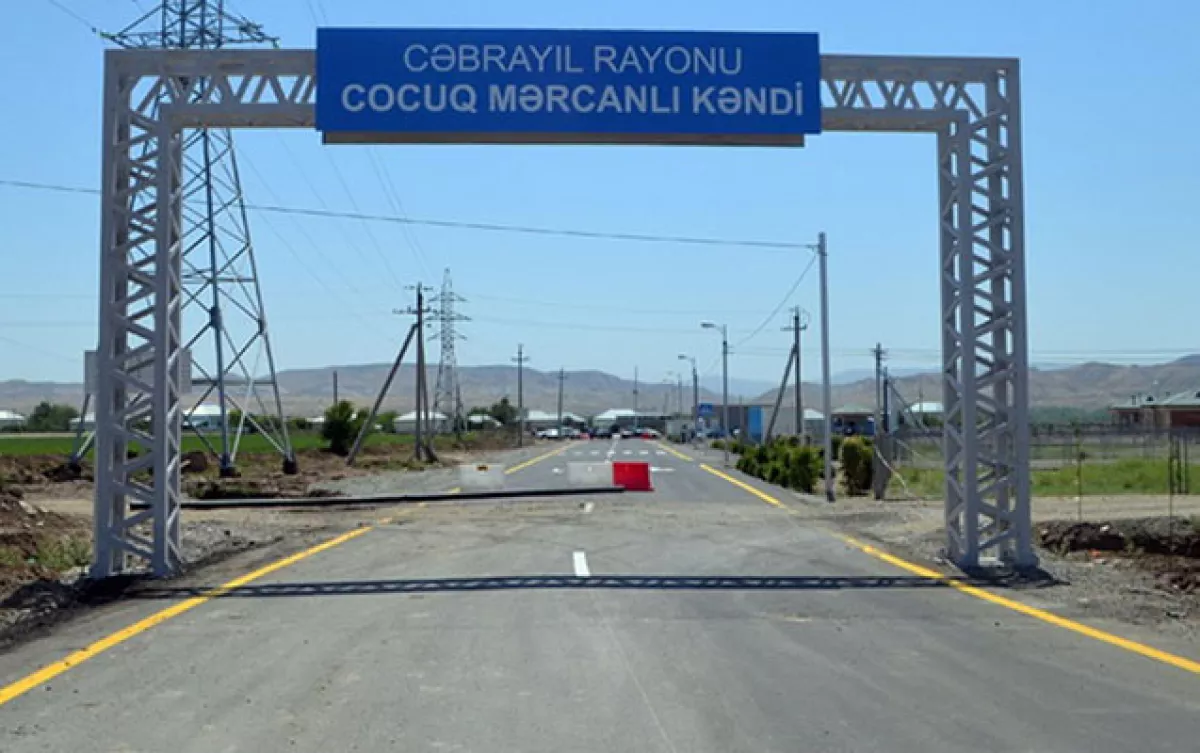
The liberation of the Lalatapa height had another, particularly human, dimension. The village of Jojug Marjanli, occupied by Armenians in 1993 and liberated during the Horadiz operation in January 1994, had remained uninhabitable for more than two decades: the nearby Lalatapa height was in enemy hands, and any attempt to return people to their homes would have been tantamount to a death sentence. After April 2016, this threat disappeared. In January 2017, President Ilham Aliyev signed a decree for the restoration of Jojug Marjanli, and the village became the first herald of the grand “Great Return” program that unfolded after the victory in the 44-day Patriotic War. Homes were rebuilt, schools opened, and infrastructure restored. People returned — and would never leave their land again.
In April 2016, the enemy suffered catastrophic losses: over 30 Armenian tanks, 25 artillery systems, and a significant amount of other military equipment were destroyed by the Azerbaijani army. According to available data, between three hundred and five hundred Armenian servicemen were killed, and more than a thousand were wounded — exact figures that Yerevan still conceals. As a result of the battles, more than 2,000 hectares of territory in the Fuzuli, Jabrayil, and Aghdara districts were liberated, and an even larger area came under full Azerbaijani operational control.
During the April Battles, Azerbaijan used UAVs on a large scale for the first time, which came as a shock to the Armenians. Kamikaze drones Harop, flamethrower systems TOS-1A — all of these struck Armenian positions with a power and precision for which the enemy was completely unprepared. Azerbaijani officers and soldiers demonstrated the highest level of coordination and the ability to conduct modern combat using high-tech means of strike and control.
The fighting ceased on April 5 through Moscow’s mediation — at Yerevan’s request, because each passing hour threatened Armenia with the loss of yet more positions. Russian expert Alexander Perendzhiev later rightly noted that if the military actions had not been stopped, Azerbaijan would have reclaimed a significantly larger portion of its lands.
The significance of the April Battles went far beyond tactical gains on the battlefield. Above all, they shattered the main Armenian myths — about insurmountable defensive lines, an “invincible army,” and the notion that the status quo in the conflict zone could persist indefinitely. Before April 2016, many in Yerevan and in the capitals of mediator countries sincerely believed that Azerbaijan “would not dare” and “could not.” Yet Baku proved that the determination to restore territorial integrity is a program of action backed by a strong, modernised, and motivated army.
The political consequences for Armenia proved devastating. Armenian society experienced a profound shock, which two years later culminated in the “Velvet Revolution.” Serzh Sargsyan, under whose leadership Armenia suffered defeat in 2016, was forced to resign. However, the rise to power of Nikol Pashinyan, despite all his novelty, changed nothing in the military-strategic balance — the Armenian army remained the same demoralised institution it had revealed itself to be in April 2016. Moreover, the political instability triggered by the defeat only exacerbated its decline.
The April Battles became for Azerbaijan what turning-point battles become in the history of nations: a moment after which the course of events becomes irreversible. The army gained confidence, society — cohesion, and the international community — an understanding that the frozen conflict was no longer frozen and that Baku was capable of changing reality on the ground. The OSCE Minsk Group, which by that time had fully demonstrated its ineffectiveness, failed to learn any lessons from what had happened — but that was already its problem.
In a meeting with a group of servicemen, Aliyev gave an exceptionally precise assessment of those events: “The April battles are our glorious military victory, a victory that demonstrates the might of our state, people and army.” The Commander-in-Chief also warned: “If the Armenian armed forces do not draw the right conclusions from the April battles, there will be many more successful operations similar to Lalatapa in the future.” Yerevan did not draw those conclusions — and the operations followed.
The experience gained in April 2016 was carefully analysed, absorbed, and developed. Every tactical manoeuvre, every technological innovation, every element of coordination between branches of the armed forces, honed during the four days of combat, became the foundation of the overwhelming military machine that, in the fall of 2020, liberated Karabakh in 44 days. April 2016 was the full dress rehearsal; autumn 2020 was the premiere.
Today, ten years later, the April Battles remain part of the national memory. Three servicemen who distinguished themselves in those battles were awarded the title of “National Hero of Azerbaijan,” and dozens received state honours. But the greatest reward was the one received by the entire nation: proof that justice can be restored by force when diplomacy is powerless and mediators are inactive. The path from the four days of the April Battles to the full restoration of Azerbaijan’s territorial integrity and sovereignty was long, but its direction was set precisely then — on the night of April 2, when Azerbaijan responded to a provocation as a state ready to fight for every inch of its land.







 editor@caliber.az
 +994 55 444-88-98
 Азербайджан, Баку, ул. Низами, 203, Af Business House, 5-й этаж