










Azerbaijan’s economy amid the Hormuz crisis IMF perspectives
The ongoing war in the Persian Gulf, now lasting over a month, has not only deepened the fractures in the global political architecture but also accelerated the processes of disintegration in the world economy. Experts from the International Monetary Fund (IMF), in their report “How the War in the Middle East Is Affecting Energy, Trade, and Finance”, note that the blockade of the Strait of Hormuz and the resulting energy shortages are driving up prices for fuel, chemical products, and food, while generally intensifying inflation and slowing production on a global scale. To some extent, these global inflationary trends could affect Azerbaijan as well. However, as a beneficiary of rising oil prices, our country is in a more favourable position than many other developing states.
The intensifying geopolitical confrontations and military conflicts in various regions over recent years have exacerbated many long-standing economic problems. The global economy, already under pressure from trade and tariff wars, is moving towards clusterisation and regionalisation, with production chains being disrupted and the inflationary spiral gaining momentum — all of which negatively impact commodity markets, affecting nearly all developing countries.
The catalyst that has worsened these negative trends is the ongoing war of over a month between the Islamic Republic of Iran (IRI) and the U.S.-Israel bloc. The hostilities have led to a halt in shipping through the Strait of Hormuz, creating shortages of crude oil and its refined products, which in turn drives up energy prices. As a result, operating costs increase for refineries, petrochemical and metallurgical complexes, and other energy-intensive industries in many countries outside the conflict zone. This inevitably pushes up the cost of final products — fuel, polymers, and other chemicals become more expensive, while prices rise for nitrogen fertilisers, construction materials, and both ferrous and non-ferrous metals.
The prolonged military conflict in the Middle East will hit markets and economies and may create unexpected challenges, Bloomberg reports, citing recent statements by IMF Managing Director Kristalina Georgieva in Japan. "If the new conflict proves prolonged, it has clear and obvious potential to affect market sentiment, growth and inflation, placing new demands on policymakers," she said.
Sustained high energy and food prices could trigger global inflation, according to a recent IMF study, “How the War in the Middle East Is Affecting Energy, Trade, and Finance”, which examines the effects of the Persian Gulf conflict on energy, trade, and financial sectors.
"If elevated energy and food prices persist, they will fuel inflation worldwide. Historically, sustained oil‑price spikes have tended to push inflation higher and growth lower. Over time, higher transport and input costs work their way into the prices of manufactured goods and services," the study notes, published on the IMF blog.
IMF experts believe that market outcomes will largely depend on how long the war lasts, how far its effects spread, and the extent of damage to infrastructure and supply chains. If the conflict in the Gulf drags on, the world could face shortages of other industrially important materials. The IMF notes that this includes helium exports from Gulf countries, which are essential for semiconductor and medical equipment production. Nickel production in Indonesia could also be affected: the country supplies roughly half of the world’s nickel used in electric vehicle batteries and is currently facing a severe sulfur shortage (a by-product of oil refining in Gulf states) required for producing sulfuric acid, which is needed to extract nickel from ore.
About a third of global exports of urea and its raw materials come from natural-gas-rich Qatar, Saudi Arabia, and Iran, and shortages of nitrogen fertilisers could seriously undermine agricultural productivity. The most vulnerable remain low-income countries, where, according to the IMF, food expenses account for an average of 36% of household consumption, compared to 20% in developing economies and 9% in advanced countries.
Unsurprisingly, the negative effects are felt most sharply in oil-import-dependent countries in Asia and Africa. IMF experts note that these regions are already struggling to secure necessary supplies even at currently elevated prices. For many developing nations that have only recently approached their inflation targets, this threatens a new period of severe price pressures. The Fund’s experts also warned that rising food and fertiliser prices are already affecting many countries, with low-income states particularly at risk of facing serious food security challenges.
To what extent could the consequences of the Gulf war affect Azerbaijan’s economy, and which factors serve as reliable buffers against these negative effects? The oil and gas sector, along with the broader energy industry, remains the backbone of the domestic economy. In recent years, high volatility in global hydrocarbon prices, as well as declines in domestic oil production and exports, have contributed to a reduction in Azerbaijan’s trade surplus and a slowdown in industrial activity. In 2023 and 2025, GDP growth in Azerbaijan slowed to 1.1% and 1.4%, respectively.
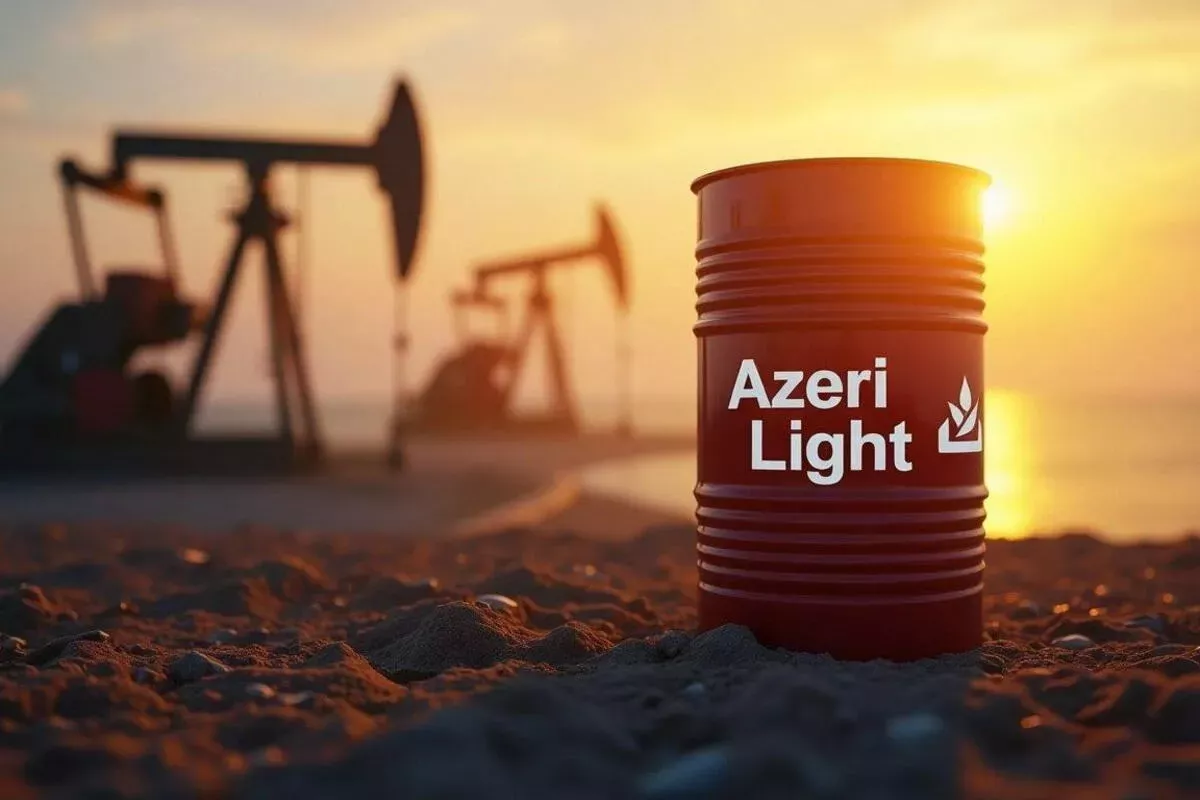
However, the current situation is fundamentally different, resembling the energy crisis of 2022. At that time, following the start of the Russia–Ukraine war and Western sanctions, soaring gas and oil prices drove domestic GDP growth to 4.6%, reaching nearly $80 billion. A similar dynamic is unfolding today amid the Gulf conflict: the price of Azerbaijan’s Azeri Light crude has exceeded $132 per barrel. By comparison, in February of this year, Azeri Light traded at around $70 per barrel — nearly a twofold increase in just a few months.
Meanwhile, natural gas prices in Europe more than doubled in March after Iran attacked LNG production facilities in Qatar with drones and missiles. It is important to note that Azerbaijan exports the lion’s share of its gas via the Southern Gas Corridor (SGC) to the high-margin European market.
With the rise in oil and gas prices, Azerbaijan is gaining additional revenues. The country’s 2026 state budget is based on an average oil price of $65 per barrel, with any “excess” revenues being set aside and reserved in the State Oil Fund. Moreover, Azerbaijan fully meets its domestic demand for oil, petroleum products, and natural gas, leaving it largely insulated from the impact of high global energy prices.
Rising oil and gas prices put pressure on energy-importing countries while simultaneously boosting the revenues of exporters such as Azerbaijan, notes a recent regional economic review published by the European Bank for Reconstruction and Development (EBRD). "Oil and gas trade surpluses reach 11 to 39 per cent of GDP in Azerbaijan, Iraq, Kazakhstan, Mongolia and Nigeria."
The EBRD expects that, in the short term, the continuation of the war and the closure of the Strait of Hormuz could push oil prices even higher. Oil demand in the coming months is relatively price inelastic, and prices could fluctuate between $150 and $200 per barrel. Over a longer horizon, oil prices could decline to around $100 per barrel — still a very comfortable level for Azerbaijan’s economy.
Amid the Gulf conflict, the EBRD forecasts a significant rise in nitrogen fertiliser prices. Even in this scenario, however, Azerbaijan stands to benefit: last year alone, export revenues from the SOCAR Carbamide plant in Sumgayit increased by nearly 45%, and profitability could rise even further this year. Moreover, SOCAR Carbamide fully meets domestic agricultural demand for fertilisers, with sales prices significantly below global levels.
Undoubtedly, the Gulf conflict carries certain inflationary risks. High prices for oil, gas, and fuel will raise production costs in industrialised countries, creating imported inflation pressures on both industrial and food products. “As energy importers far outnumber energy exporters, global growth may be reduced by at least 0.4 percentage points and inflation may rise by more than 1.5 percentage points if oil remains above US$ 100 per barrel for a prolonged period and major disruptions to supply chains involving chemicals and metals persist,” the EBRD review notes.
Such risks are significant for many developing countries. However, Azerbaijan benefits from a sufficiently diversified list of trading partners. In March, only Iran imposed restrictions on the export of many types of food as a wartime measure, which led to higher prices for Iranian products. If the crisis is prolonged, imports from Türkiye and Europe — and to some extent from China and other Asian countries — may become more expensive.
Nevertheless, Azerbaijan’s largest trading partner, Russia, is not dependent on Gulf raw materials. On the contrary, its energy sector, despite sanctions, is currently in surplus and unlikely to exert major inflationary pressure. A similar situation applies to energy-surplus countries in Central Asia.







 editor@caliber.az
 +994 55 444-88-98
 Азербайджан, Баку, ул. Низами, 203, Af Business House, 5-й этаж