










Kalbajar: From the darkness of the tunnel to the light of return They destroyed this place, but we built it
There are locations where the terrain decides the outcome of events even before the battles begin, and the Kalbajar district of Azerbaijan is one of them: squeezed between the Murovdag Ridge to the north, the border with Armenia to the west, and the then-occupied Lachin district to the south, it turned into a trap for tens of thousands of civilians in the spring of 1993.
The Kalbajar–Lachin road tunnel, located on the Lachin–Kalbajar route and constructed in 1960, connected thirty-five villages in the district with the regional centre. On March 26, 1993, when Armenian armed formations launched a large-scale offensive on Kalbajar, this very tunnel became the site of one of the most tragic events of the First Karabakh War.
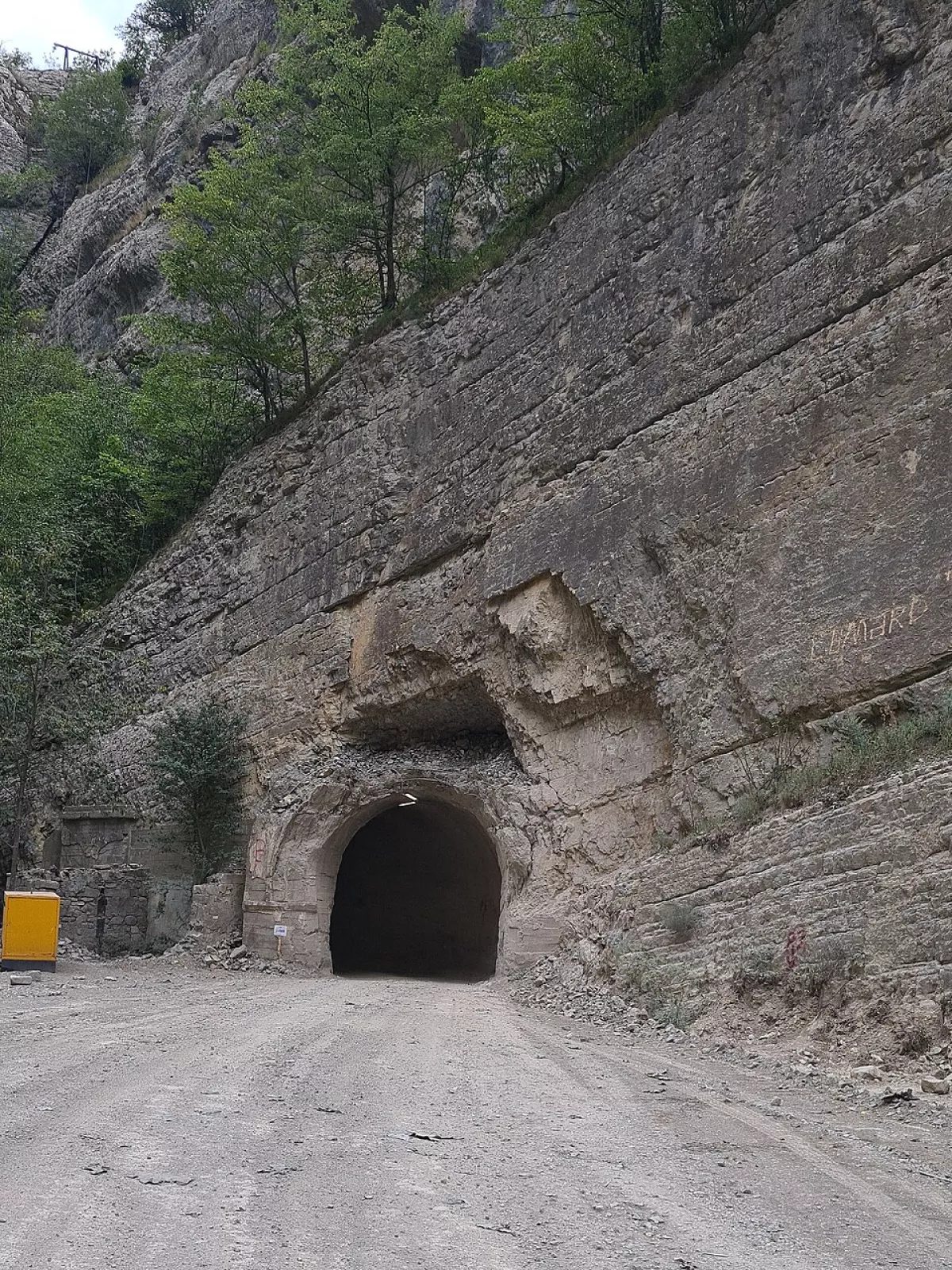
The offensive had been planned in advance. On April 1, when Azerbaijani forces captured a map belonging to Armenian Army Major S. Barsegyan, it became clear that the officer had been on the shores of Lake Sevan as early as March 2 and was already moving toward Kalbajar by the 27th. The strike came from several directions, primarily from the territory of Armenia, specifically the Vardenis district, and relied on overwhelming numerical superiority: by that time, Armenian forces in the conflict zone numbered around 18,000, with 100 tanks and 190 units of armoured vehicles. The highland villages of Kalbajar were subjected to shelling from Grad multiple rocket launcher systems and aerial bombardments.

Military historian Mammad Valimammadov describes these events in his book The Karabakh War 1991–1994: “By 16:00 on March 29, 1993, the 1st Motorised Rifle Battalion, numbering around 60 soldiers, reached the tunnel, having lost the tank that had been sent to support them. The 1st Battalion, an armoured group, and a newly formed unit of reinforcements — airlifted into the Kalbajar district by helicopters over the Murovdag Ridge — under the command of the brigade commander, launched a counterattack against the enemy in the directions of Tunnel–Charakdar, Tunnel–Baghlipeye, and Tunnel–Vang. By evening, only the armoured group with 20 soldiers returned from the battle. The 1st Battalion and the group of newly arrived soldiers remained behind enemy lines and, without communication for several days, manoeuvred to rejoin their own forces. By the morning of March 30, 1993, helicopters airlifted another group of soldiers. The brigade commander positioned them on the dominant height of Chichakli, taking control of the tunnel.
By March 30, 1993, the continuously deteriorating situation had reached a critical point. The enemy, advancing from several directions, was opposed by an armoured group consisting of 2 tanks, 3 infantry fighting vehicles, and 20 soldiers, a small detachment of reservists, one artillery piece, and a single Grad launcher positioned near the Gamishli bridge — which was almost unusable in close combat. On the Lachin–Kurdaghi–Tunnel–Omar route, the tunnel itself came under enemy artillery fire, effectively blocking the Lachin–Tunnel–Omar Pass corridor. The crews of the tanks and BMPs of the 1st Battalion, who continued to hold a key section of the Aghdara–Kalbajar highway near the village of Charakdar and hindered enemy manoeuvres, were partially destroyed and trapped behind enemy lines.
On March 31, at 8 a.m., a newly arrived group of soldiers defending the tunnel engaged in an unequal battle under crossfire. All of them were killed, and the tunnel fell into enemy hands.
From March 30 to 31, 1993, Azerbaijani forces launched counterattacks against the enemy advancing on the Gamishli bridge. All the counterattacks were personally led by Brigade Commander Azizagha Ganizade. Although nearly all soldiers were killed in these actions, the counterattacks delayed the enemy’s advance for almost a full day, allowing the evacuation of civilians to continue. Almost all of the fallen soldiers remained where they had fallen, as it was impossible to retrieve them. Everyone who went into battle directly against the enemy knew the risks they faced.”
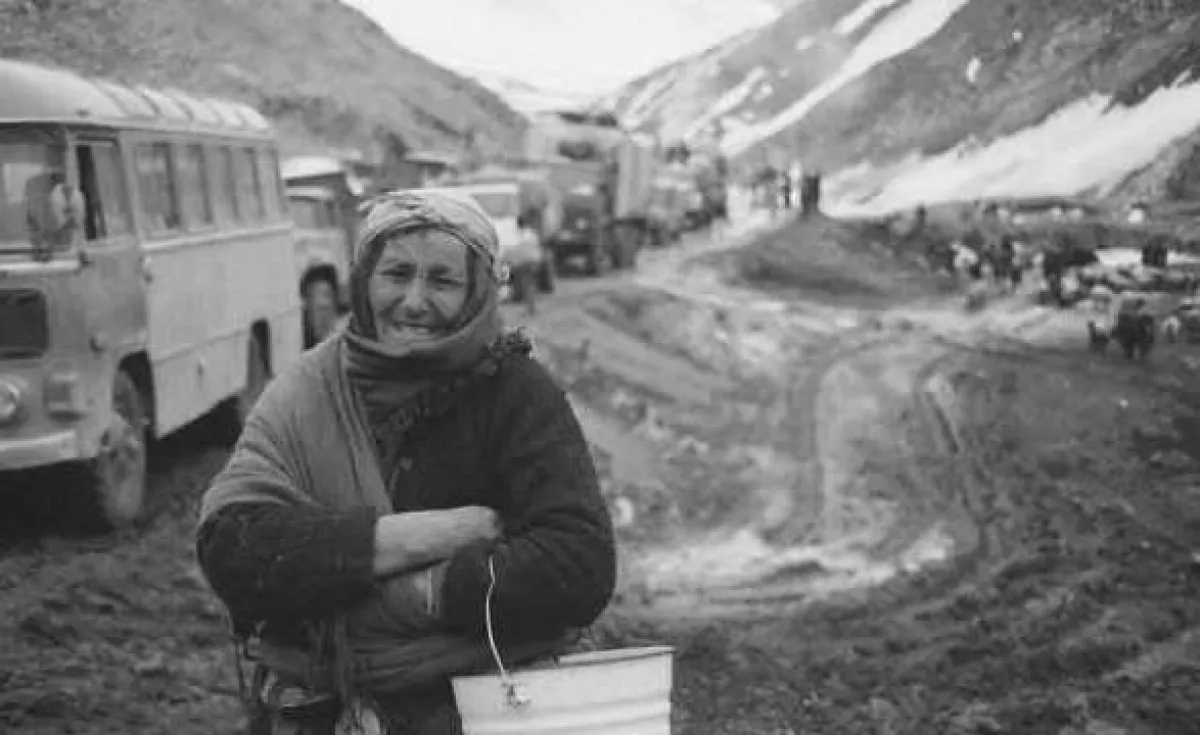
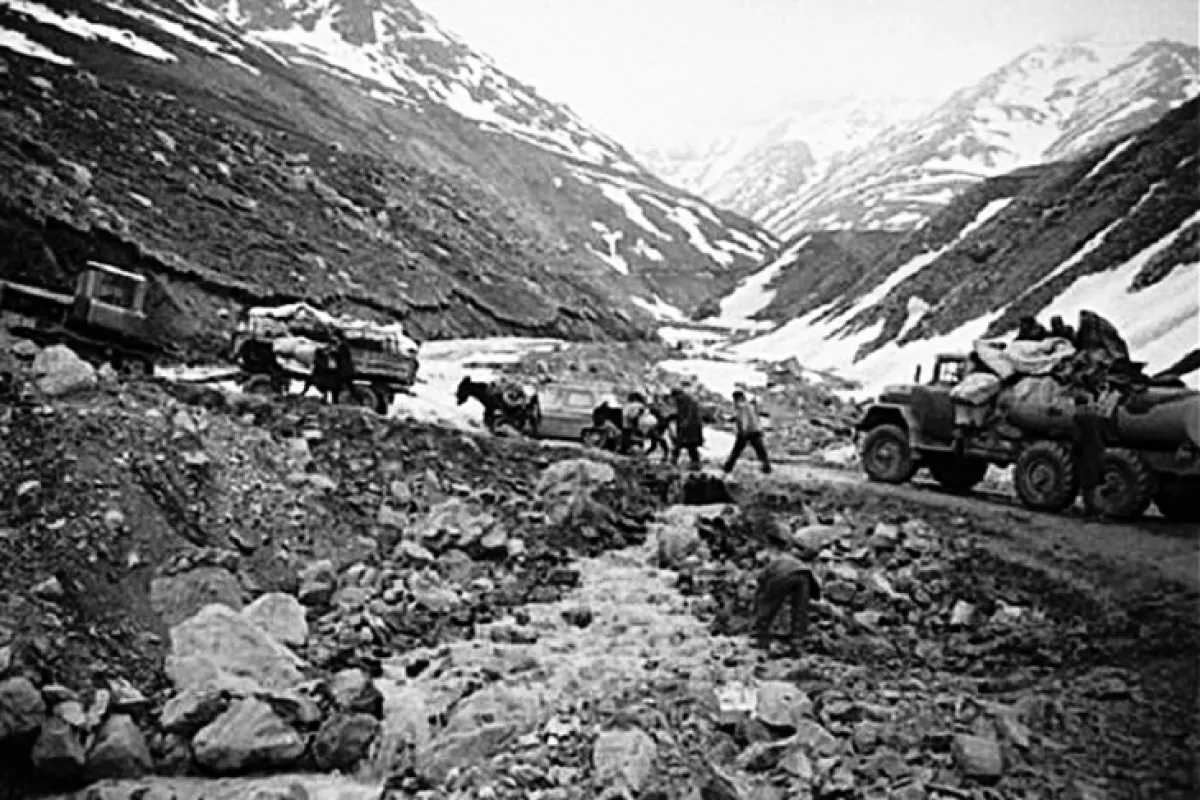
For the civilian population, the only remaining route was over the Omar Pass, at an altitude of over 3,200 metres, where deep snow still lay in early spring and temperatures dropped well below zero. Civilians were given only a few hours to evacuate. People fled, abandoning their homes and years of accumulated belongings. Many froze to death on the pass — the elderly, women, children, and those who missed the last helicopters evacuating civilians.
On April 1, Armenians attacked a truck carrying twenty-five civilians — all were killed, injured, or taken prisoner. On April 3, a strike hit the village of Bashlibel, one of the largest in the district, with a population of nearly two thousand. Armenian armed formations looted and burned houses. Sixty-two residents of the village of Bashlibel retreated to the mountains. They were able to hide in caves for 18 days. On April 18, after discovering their shelters, the Armenians launched an armed attack on the villagers. As a result, 14 people were taken hostage, and 18 were killed. The remaining 30 survivors moved to other caves within the village and continued living cut off from the outside world. After 113 days, on July 17, they managed to leave their shelters and, travelling only under the cover of darkness, escape the Armenian army’s encirclement via secret mountain paths.
In total, during the occupation of the Kalbajar district, 511 civilians were killed, and 321 were captured or went missing.
The UN Security Council adopted Resolution No. 822, demanding the unconditional withdrawal of Armenian armed forces from Kalbajar. Armenia ignored this demand for twenty-seven years.
What remained after the occupation was documented by Donatella Rovera, Senior Crisis Advisor at Amnesty International, who visited Kalbajar immediately after it was returned to Azerbaijani control. In the houses abandoned by Azerbaijanis in 1993, there were no doors, windows, or roof tiles left. At the Kalbajar cemetery, the graves of Azerbaijanis buried before the occupation had been destroyed. Twenty-seven years of total looting had turned a once-prosperous mountainous region into a wasteland. Meanwhile, the occupiers did not forget to profit for themselves — Azerbaijani mineral water Istisu was sold abroad as an Armenian brand under a different name.
As a result of Azerbaijan’s victory in the Second Karabakh War on November 25, 2020, the Kalbajar district was returned to Azerbaijan. On the same day, President Ilham Aliyev pledged to restore these lands — and he kept that promise.
Today, one of the longest road tunnels in the region passes through the Murovdag Ridge. The four-lane Murovdag Tunnel, 11.7 kilometres long, with thirty-eight connecting passages between its right and left tubes, has become the heart of the 82-kilometre Toghanali–Kalbajar–Istisu highway. Its technical opening took place in August 2025, when President Ilham Aliyev and First Lady Mehriban Aliyeva personally inspected the facility.
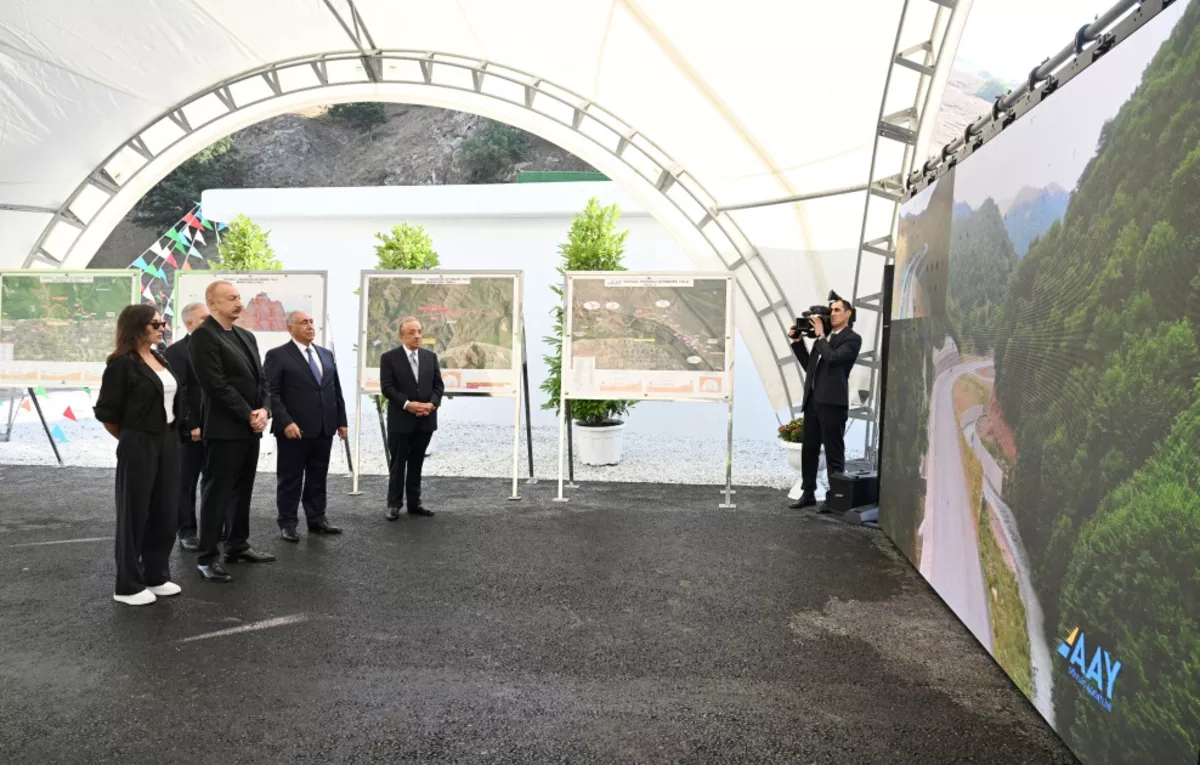
Its completion means that Kalbajar will, for the first time in history, have year-round reliable connectivity with the rest of the country — without depending on the snow-covered passes that, three decades ago, became roads of death for thousands of displaced people fleeing for their lives.
The scale of construction in the Kalbajar district goes far beyond a single road. As part of the State Programme “Great Return”, four residential complexes are being built in the city of Kalbajar in the first phase, designed to house more than 10,000 people. The first complex — covering nineteen and a half hectares, with six four-storey buildings — has already welcomed residents. All the houses are equipped with water, electricity, and high-speed internet. On August 21, 2025, President Aliyev personally handed the keys to Kalbajar residents, addressing them with the words: “You are returning to your homeland after thirty-two years.” At the same time, foundations were laid for the third and fourth complexes — twenty-nine and twenty-six buildings respectively, comprising more than eight hundred apartments. Construction also began on a city park covering eleven hectares, featuring a ski-roller track, an amphitheatre, and restaurants.
The legendary Istisu is being revived as well. On September 2, 2024, President Aliyev and First Lady Mehriban Aliyeva inaugurated the Istisu mineral water plant — a modern facility equipped with German Krones production lines, with a capacity of over one hundred million glass bottles per year.
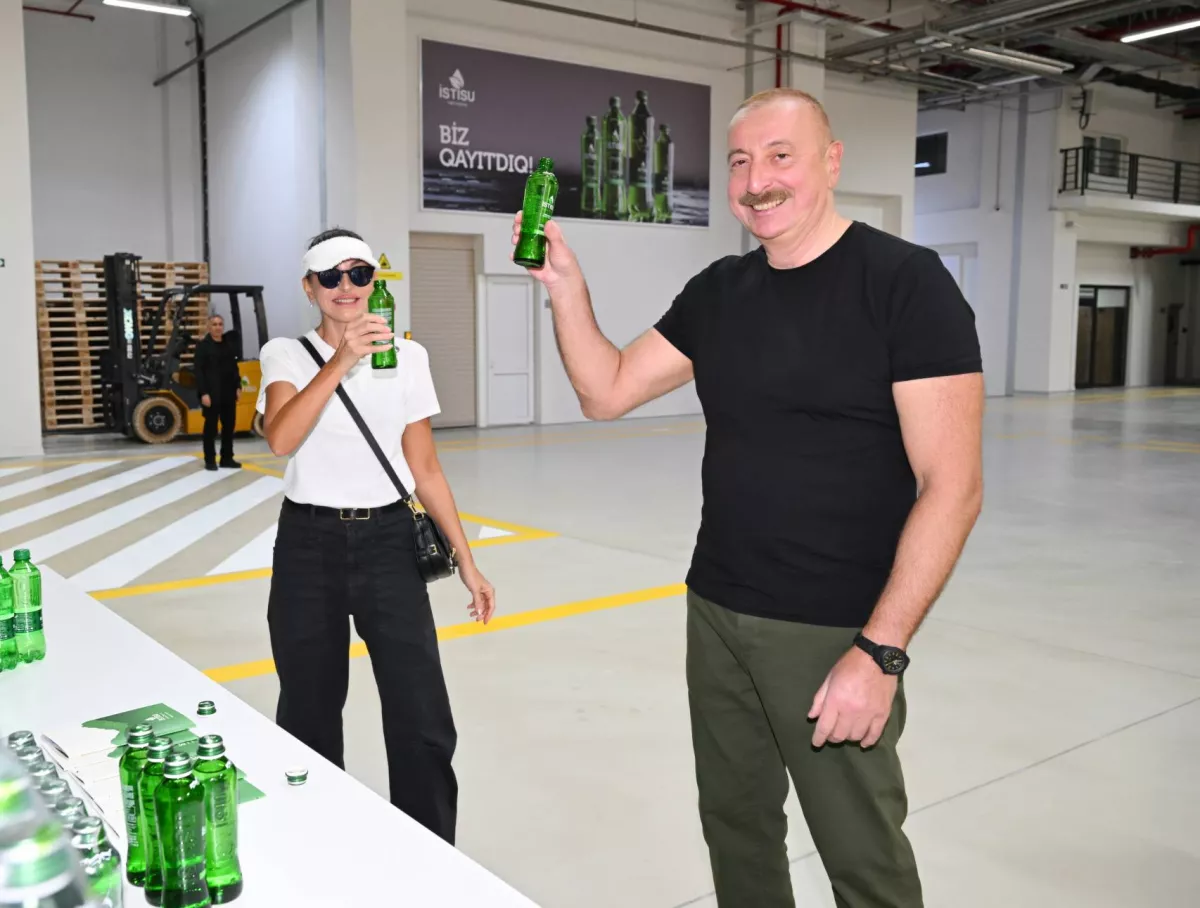
After thirty-one years, Kalbajar mineral water — once renowned across the entire Soviet Union — has returned to store shelves, now in new packaging with international certification, but retaining the same unique composition of thermal hydrocarbonate-sulphate-sodium waters, emerging at nearly sixty degrees Celsius. At the same time, restoration is underway of the Istisu health and recreation complex, covering 80,000 square metres, with a 145-bed hotel, ten cottages, and a SPA centre featuring sixteen pools for various purposes — from thermal baths to contrast therapy pools.
The district’s energy infrastructure is being built from scratch according to “green” standards. Small hydropower plants have already been commissioned in the Kalbajar district, and Azerbaijan and Türkiye have signed an agreement to restore five small HPPs with a combined capacity of nearly fourteen megawatts. A 75-kilometre road connecting Kalbajar and Lachin, featuring grand mountain tunnels, is under construction. The Kalbajar substation, with a capacity of 110/35/10 kilovolts, has been opened. From the 2025–2026 school year, the district’s first general education school began operating, and an educational complex for 528 students, with a STEAM zone and professional workshops, is currently under construction.
From 2020 to 2024, 17.5 billion manats (approximately $10.3 billion) were allocated from the state budget for the reconstruction of the liberated territories. In 2024 alone, expenditures exceeded 5 billion manats (approximately $3 billion). These are investments comparable to the budgets of entire states, directed toward a region that occupiers had systematically reduced to ruins over more than two decades.
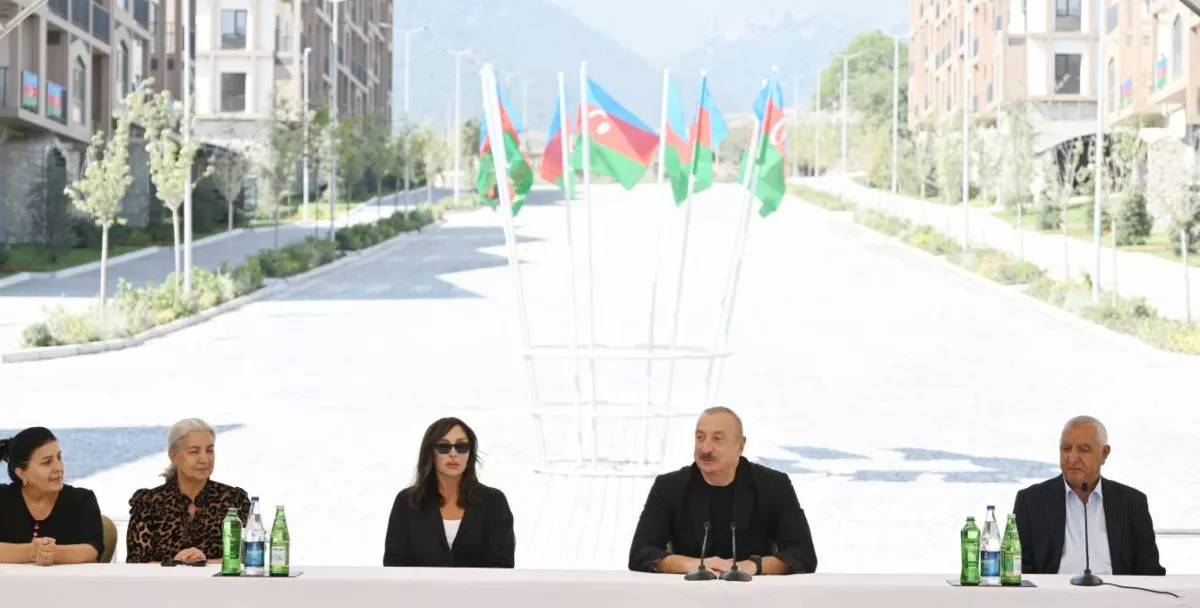
March 31 is a date forever etched in the memory of the people of Kalbajar and the entire Azerbaijani nation. On this day in 1993, soldiers died at the tunnel on the mountain road, holding the line to the very end to cover the evacuation of civilians. Today, thirty-three years later, new residential neighbourhoods are rising where destroyed homes once stood, as people return after waiting three decades for this day.
Presenting apartment keys to returning residents, President Aliyev said: “Kalbajar is one of the most beautiful districts in our country [...] Our meeting around these beautiful buildings today is also greatly symbolic. They destroyed this place, but we built it.”







 editor@caliber.az
 +994 55 444-88-98
 Азербайджан, Баку, ул. Низами, 203, Af Business House, 5-й этаж