










A friend in need is a friend indeed But Moscow and Yerevan don’t see eye to eye
April Fool’s Day is traditionally considered a day for jokes. However, the content of the talks held on that day at the Kremlin between Russian President Vladimir Putin and Armenian Prime Minister Nikol Pashinyan was the last thing resembling a prank. On the contrary, the public part of their meeting, which lasted significantly longer than the usual diplomatic timeframe, turned out to be perhaps one of the most candid in the entire history of their interactions. Beneath the polite phrasing and customary diplomatic courtesies, a tough, logically structured debate was visible, in which each interlocutor pursued their own clear and concrete objectives. To understand why the Russian president invited the Armenian prime minister just two months before Armenia’s parliamentary elections, one only needs to look at the map of the broader geopolitical confrontation, whose line is becoming increasingly clear across the South Caucasus.
Formally, the meeting’s agenda seemed standard: trade, energy, transport, and regional cooperation. Putin began with the usual statements typical for such talks — centuries of shared history, civilisational ties, and the special relationship between the two countries. However, it did not take long for a completely different tone to emerge in his speech. The Russian president presented a detailed economic overview of bilateral relations, citing specific figures, and upon closer examination, this picture took the form of a rather eloquent ultimatum, wrapped in the guise of a friendly reminder.

Putin drew attention to the fact that trade turnover between Russia and Armenia amounted to approximately $6.4 billion by the end of 2025—almost half the figure recorded a year earlier, when it exceeded $11 billion. At the same time, the Russian president emphasised that this volume still surpasses Russia’s trade with Azerbaijan, which stands at under $5 billion, specifically $4.9 billion. At first glance, this may seem like routine statistics. Yet in a diplomatic context, it sounded like an unmistakable hint: Moscow remains Armenia’s principal economic partner, and any alternative vector—be it Europe or anyone else—is objectively incapable of replacing this scale of interdependence.
However, the halving of trade turnover is a fact that requires explanation. A significant portion of the trade boom in 2022–2024 was driven by re-exports: Western high-tech goods were routed to Russia via Armenia in circumvention of sanctions, while Russian gold and precious metals moved in the opposite direction. As these schemes began to run out of steam—under the pressure of potential secondary sanctions and the narrowing of supply corridors—the figures started to return to more natural levels.
The Russian side, however, chose to explain the decline differently—by pointing to Yerevan’s pro-Western course. Thus, Russian Deputy Prime Minister Alexey Overchuk stated on Channel One that discussions about Armenia’s potential accession to the EU are, in his words, having a “colossal negative economic effect” on bilateral relations, and that Russian businesses are “becoming more cautious about dealing with Armenia.” In other words, Moscow has activated economic pressure as an instrument of political influence.
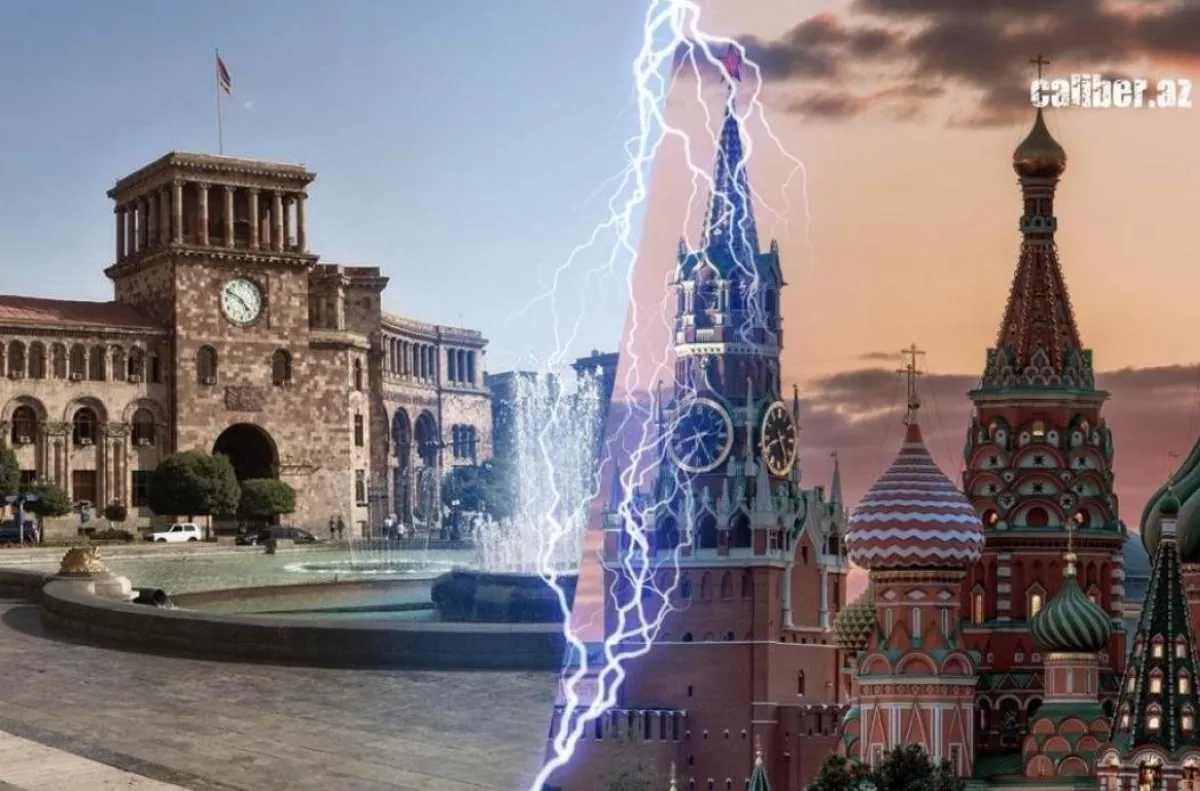
Putin reminded Pashinyan that Russia supplies gas to Armenia at a price of $177.5 per thousand cubic metres, whereas European spot prices exceed $600. The gap, one must admit, is striking. Putin immediately added a caveat: “We often argue about this as well. I know that you insist on some alternative methods for determining energy prices. But this is still a different order of magnitude: 600 and 177.5.” Yet the essence of the message was clear: Armenia’s dependence on Russian gas remains critical, and no European programme of technical assistance or institutional rapprochement is capable, in the foreseeable future, of compensating for this gap.
Another important detail: Putin pointed to the tenfold increase in Armenian exports to the countries of the Eurasian Economic Union (EAEU) in recent years. This figure contains the core of the main warning. According to him, simultaneous membership in a customs union with the European Union and with the EAEU is impossible—it is simply impossible by definition. The EAEU’s rules, including phytosanitary standards, have been built up over the years, and Armenia, as a major exporter of agricultural products, makes full use of them. Leaving the EAEU would mean losing this entire system of preferences, while any corresponding European offer currently exists only at the level of declarations and European Parliament resolutions.
All this detailed economic argumentation, presented by Putin with a level of thoroughness uncharacteristic of protocol meetings, was aimed at a very specific audience—and that audience was not in the Kremlin. It was in Yerevan.
In two months—on June 7—Armenia will hold parliamentary elections that will, quite possibly, determine the country’s foreign policy course for years to come. The ruling Civil Contract party has put forward the slogan “Real Armenia,” framed around a reassessment of the national project and the continuation of a European trajectory. The official campaign begins on April 13, but in essence, it is already underway. And Putin’s meeting with Pashinyan in Moscow has become part of it—although, of course, neither of the participants would openly acknowledge this.

The culmination of the public segment of the talks came in a moment that, in a different context, might have been perceived as a diplomatic breach of etiquette. Putin stated that Armenia has "very many friends” of Russia, “many political forces with a pro-Russian orientation,” and that Moscow would “very much like” all these parties and politicians to be able to “take part in domestic political activity during the elections.” Moreover, he added: “Some of them, I know, are in places of detention, despite the fact that they hold Russian passports.”
The formal caveat—“this is your decision, we do not interfere”—hardly altered the overall meaning of what was said. In the language of diplomacy, this amounted to a direct appeal to the internal political processes of a sovereign state—an appeal made publicly, in front of cameras.
Pashinyan did not shy away from the debate. His response was structured symmetrically: the prime minister emphasised that Armenia is a democratic country where elections are held regularly, and where social media is “one hundred per cent free.” He carefully reminded that, under the Armenian constitution, only citizens holding exclusively Armenian passports are eligible to run for public office—thus indirectly addressing Putin’s remarks about “politicians with Russian passports.”
As for European integration, Pashinyan confirmed that Yerevan is aware of the incompatibility of simultaneous membership in the EAEU and the EU. “But as long as there is an opportunity to combine these agendas, we will do so. And when the processes reach the point where a decision must be made, the citizens of Armenia will make it,” he stated. In other words, the choice is being postponed until it becomes unavoidable, while in the meantime, Yerevan intends to benefit from both directions.
This strategy may appear pragmatically rational at first glance, but it contains a serious vulnerability. For Moscow, Yerevan’s duality is a source of irritation, while for Brussels, it is a reason to refrain from making concrete commitments.
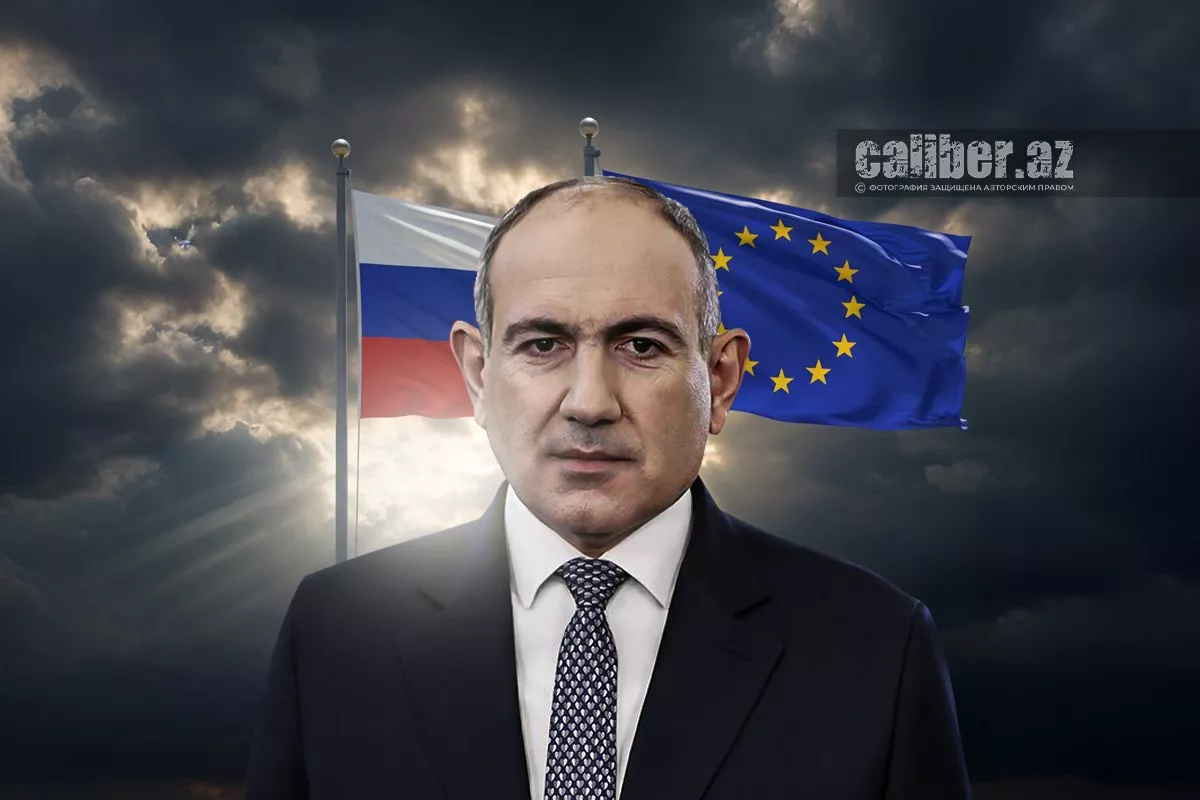
This is precisely where the main intrigue of the situation emerges. Armenia is increasingly turning into a platform for geopolitical confrontation between Russia and the West. If the “hot” phase of the conflict is unfolding on the territory of Ukraine, then the “cold” line of this global confrontation is becoming ever more distinctly drawn across the South Caucasus—above all through Armenia.
For Russia, keeping Yerevan within its orbit is not merely an economic matter, but a strategic one. The loss of Armenia would be perceived in Moscow as a serious geopolitical defeat. For the West, by contrast, Armenia’s drift towards Europe represents a case of voluntary self-determination by a post-Soviet state in favour of Euro-Atlantic structures, and Brussels is, of course, interested in making this process irreversible.
It is telling that just three weeks before the Moscow meeting, Pashinyan addressed the European Parliament in Strasbourg—for the second time since 2023. He spoke about democracy, the rule of law, and the irreversibility of the peace process, recalled the law adopted in March 2025 to initiate Armenia’s EU accession process, and stated that the parliamentary elections on June 7 should “make peace irreversible.”
For its part, the European Parliament adopted a resolution to strengthen ties with Armenia, noting its “achievements in the field of democracy.” Meanwhile, a summit of the European Political Community is scheduled to take place in Yerevan on May 5—an event whose symbolic significance is difficult to overestimate: the leadership of the European Commission will arrive in the capital of a country that formally remains a member of both the EAEU and the CSTO.
The West, however, is far from acting out of selfless altruism in its “courtship” of Yerevan. Notably, the very European institutions that, in other contexts—be it Georgia, Azerbaijan, Türkiye, or the countries of Central Asia—impose stringent requirements in the areas of human rights, the rule of law, and press freedom, display marked leniency in the case of Armenia.
Senior clerics of the Armenian Church are under detention, an anti-church campaign is gaining momentum, and opposition politicians are being prosecuted under criminal charges—yet none of this becomes a matter of “serious concern” for Brussels. The explanation is straightforward: at this stage, for the West, keeping Armenia on a pro-European trajectory is more important than verifying its compliance with the very standards it is being encouraged to adopt. Geopolitical gain outweighs human rights scruples.
Thus, Russia and the West are simultaneously engaged in Armenia’s domestic political processes, with both sides using the pre-election period to strengthen their respective positions. Russia operates through economic arguments (gas, trade, the EAEU), direct statements addressing internal political dynamics, and appeals to pro-Russian forces. The West, for its part, relies on institutional attraction (summits, resolutions, visa liberalisation), demonstrative support for Pashinyan’s democratic image, and a willingness to overlook internal contradictions.
In this configuration, the Armenian voter is faced with a choice that goes beyond ordinary electoral competition. In essence, on June 7, they will be voting for or against a shift in the country’s geopolitical vector.
Against the backdrop of this increasingly intense struggle over Armenia, the contrast with Azerbaijan appears particularly striking. In recent years, Baku has consistently pursued a foreign policy model fundamentally different from that of Armenia. President Ilham Aliyev has placed emphasis on a multi-vector approach—but one of a different quality than Yerevan’s manoeuvring between two poles. The Azerbaijani model is based on pragmatism, resource sovereignty, and the ability to build relations with all centres of power simultaneously, without becoming dependent on any of them.
Azerbaijan maintains working relations with Russia, serves as a strategic energy partner for Europe, deepens its ties with Türkiye, and develops cooperation with China, Pakistan, the countries of Central Asia, and the Gulf states. At the same time, Baku is not a member of the CSTO or the EAEU, does not seek EU membership, and does not carry the burden of obligations that would constrain the sovereignty of its foreign policy manoeuvres.
At a time when the global order is experiencing turbulence and traditional alliance structures are faltering, this model has proven remarkably resilient. Azerbaijan has succeeded in restoring its territorial integrity, launching a peace process with Armenia, advancing regionally significant transport corridors, and at the same time preserving the strategic flexibility that states bound to rigid bloc frameworks often lack.

Notably, both Putin and Pashinyan, in the course of their exchange, referred to the contribution of President Donald Trump to the stabilisation of Armenian-Azerbaijani relations and the initialling of a peace agreement. The TRIPP project—a transit corridor through Zangezur—is being discussed as a joint initiative in which the interests of Washington, Baku, and Yerevan intersect. For Azerbaijan, this project represents another link in the chain of strategic communications connecting its main territory with the Nakhchivan Autonomous Republic. For Armenia, it offers an opportunity to unblock transport routes. For Washington, it serves as a tool for consolidating American presence in the region.
Returning to the outcome of the Kremlin meeting, it is worth noting that neither Putin nor Pashinyan emerged with an obvious victory—nor, it seems, was such a goal ever set. Moscow publicly articulated its position and outlined its red lines: leaving the EAEU would come at a high cost for Armenia, Russian gas has no viable alternative, and pro-Russian forces in Armenian politics should be allowed to participate in elections.
Pashinyan, for his part, demonstrated a readiness to engage in debate and an unwillingness to accept Moscow’s terms unconditionally—yet also a reluctance to move towards a final rupture. He underscored the depth and resilience of Russian-Armenian ties, thanked Putin for his role in supporting the peace process, and expressed confidence in the continued dynamism of bilateral relations. In effect, each of the interlocutors was addressing their own audiences—both domestic and external.
The true significance of this meeting, however, lies elsewhere. It clearly demonstrated that Armenia has found itself at the intersection of two of the most powerful geopolitical currents—Russian and Western—and neither offers Yerevan partnership without conditions. Russia demands loyalty. The West expects decisiveness. The electoral cycle, coinciding with this crossroads, makes the situation even more volatile: domestic political struggles inevitably become an extension of grand geopolitics, while geopolitics itself becomes a tool for internal political pressure.
Against this backdrop, Azerbaijan—freed from the need to make a painful choice between Moscow and Brussels—continues to build its own capacity and strengthen its position as a key regional player. The Azerbaijani leadership’s approach reflects a state that determines its foreign policy based on its own national interests rather than the logic of someone else’s confrontation. In a world where small and medium-sized states increasingly find themselves between a rock and a hard place of great-power competition, this model is becoming both increasingly valuable—and increasingly rare.







 editor@caliber.az
 +994 55 444-88-98
 Азербайджан, Баку, ул. Низами, 203, Af Business House, 5-й этаж