










Britain on two fronts Keir Starmer walks a tightrope
Recently, UK Prime Minister Keir Starmer gave an interview to Sky News. The central topic of the conversation was the extent of the United Kingdom’s involvement in the US–Israel military operation against Iran. Throughout the discussion, a key motif in Starmer’s responses was his effort to distance the UK from direct involvement in the conflict and to emphasise the independence of Britain’s position.
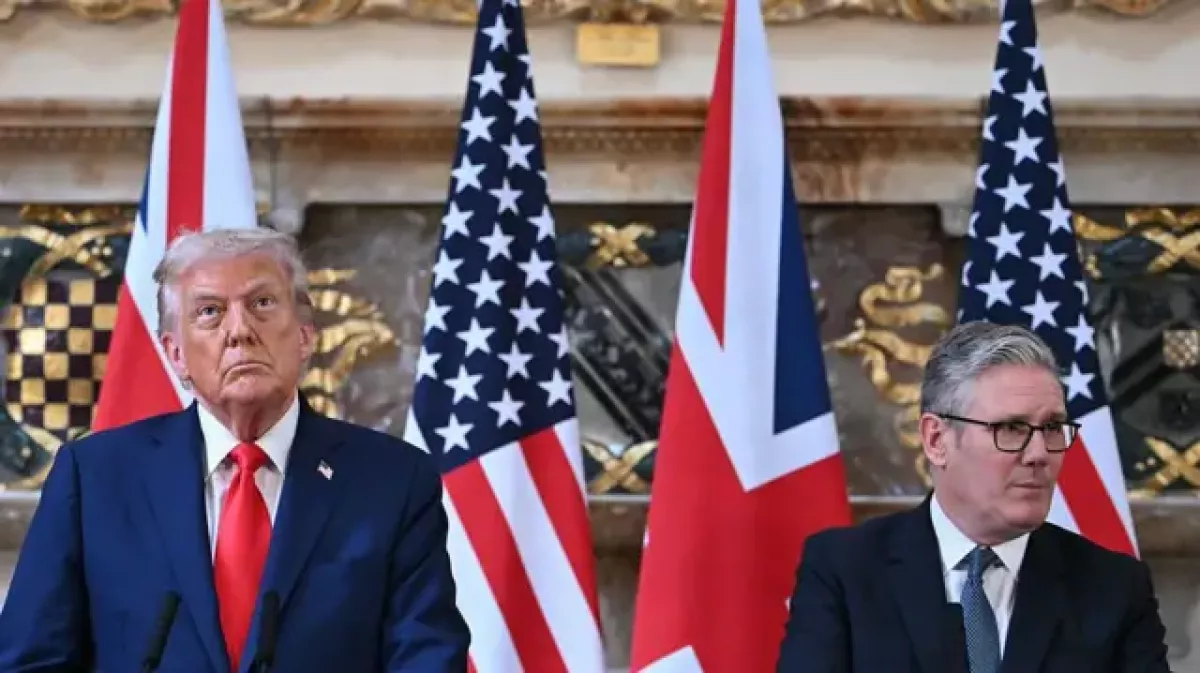
Notably, Starmer also commented on disagreements with Donald Trump. The Prime Minister stressed that the UK would not bow to pressure from Washington and intends to act solely in accordance with its own national interests.
However, a closer look at Starmer’s statements creates a somewhat contradictory impression. On one hand, he described Iran as a threat to the entire world; on the other, he emphasised that “this is not our war” and that he would not allow Britain to be drawn into combat operations. This duality raises natural questions: if the threat is truly global, it would logically affect the UK as well. In that case, the claim of a “foreign war” seems, at the very least, debatable.
The prime minister further clarified his position by stating that, in the event of attacks on British citizens or allies, London would act within the framework of collective self-defence. No to being “dragged into war”, yes to actions in the context of “collective self-defensive action,” he noted. Formally, this appears as an attempt to draw a clear line between participating in the conflict and protecting the country’s own interests.
However, in practice, this line proves far less clear. The UK is already involved in the regional dynamics: according to Starmer himself, the Royal Air Force is supporting allies by helping intercept Iranian drones and missiles. It is also known that London provides the US with access to its military bases, including Akrotiri in Cyprus, for limited defensive operations. At the same time, discussions are underway regarding the deployment of a British landing ship to assist with mine-clearing in the Strait of Hormuz.
In this context, a fundamental question arises: where is the line between defence and actual participation in a war? For instance, if Iran were to strike British military facilities, would that automatically trigger full British involvement in the conflict? And isn’t the very demonstration of military presence already a factor that increases the likelihood of such a scenario?
An additional layer of complexity in interpreting the Prime Minister’s statements comes from his remark that the West today is effectively facing a “two-front war” — in the Middle East and Eastern Europe — conceptually acknowledging the UK’s role on the side of the “forces of good” in the “great battle.” He also confirmed Britain’s intention to take a more active role in countering Russia’s “shadow fleet,” including intercepting ships that violate sanctions. This creates a certain contradiction between the stated unwillingness to be “dragged into war” and the acknowledgement of two active fronts for the UK, including the Iranian one.
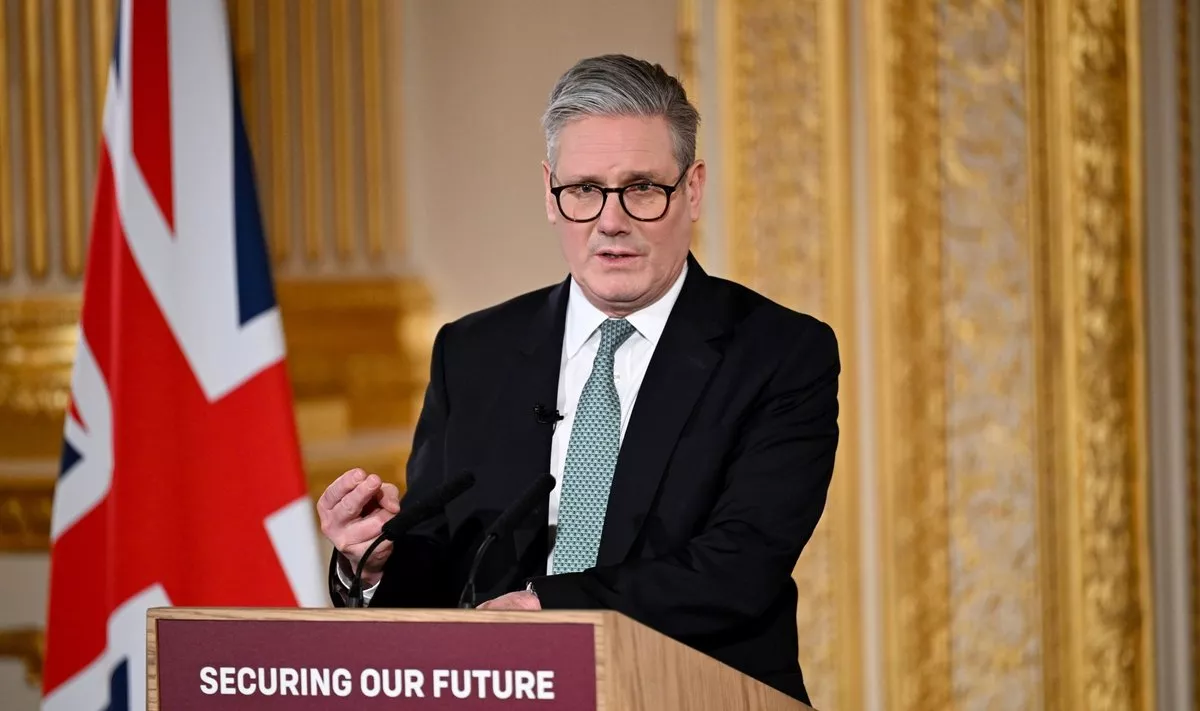
Presumably, Starmer is doing this to minimise reputational risks. Wars in both Ukraine and Iran have led to rising electricity bills and higher prices for other goods and services in Europe and the United Kingdom, negatively affecting the welfare of British citizens. From this perspective, it is crucial to explain to voters that the ongoing crisis—apparently with no end in sight—is a consequence of objective factors: “a two-front war is underway.”
Moreover, by acknowledging the existence of two wars for the UK, the prime minister can present in the most favourable light the fact that the country is refraining from offensive actions. At the same time, he leaves room for manoeuvre—circumstances could change, and the country could become more actively involved simply because there is a war. On the other hand, Donald Trump’s sharp attacks on Keir Starmer for his cautious approach further push Starmer to demonstrate steadfastness on this contentious issue; the current situation demands a firm stance against Trump’s pressure (in addition to the desire to avoid the costs of war).
For now, Starmer and the UK as a whole are managing to walk a tightrope. What comes next will only be revealed with time.







 editor@caliber.az
 +994 55 444-88-98
 Азербайджан, Баку, ул. Низами, 203, Af Business House, 5-й этаж