










Transit and revenge: what lies behind Kocharyan’s plans? Article by Vladimir Tskhvediani
On March 16, former Armenian President Robert Kocharyan was nominated by the “Armenia” bloc as its candidate for prime minister in the parliamentary elections scheduled for June 7, 2026.
Radical nationalist and revanchist forces are now consolidating around him, hoping to achieve a new redrawing of borders in the South Caucasus “by military means.” In this context, the statements made by the Armenian politician have begun to attract attention in Georgia as well — especially since they directly concern its occupied territories.
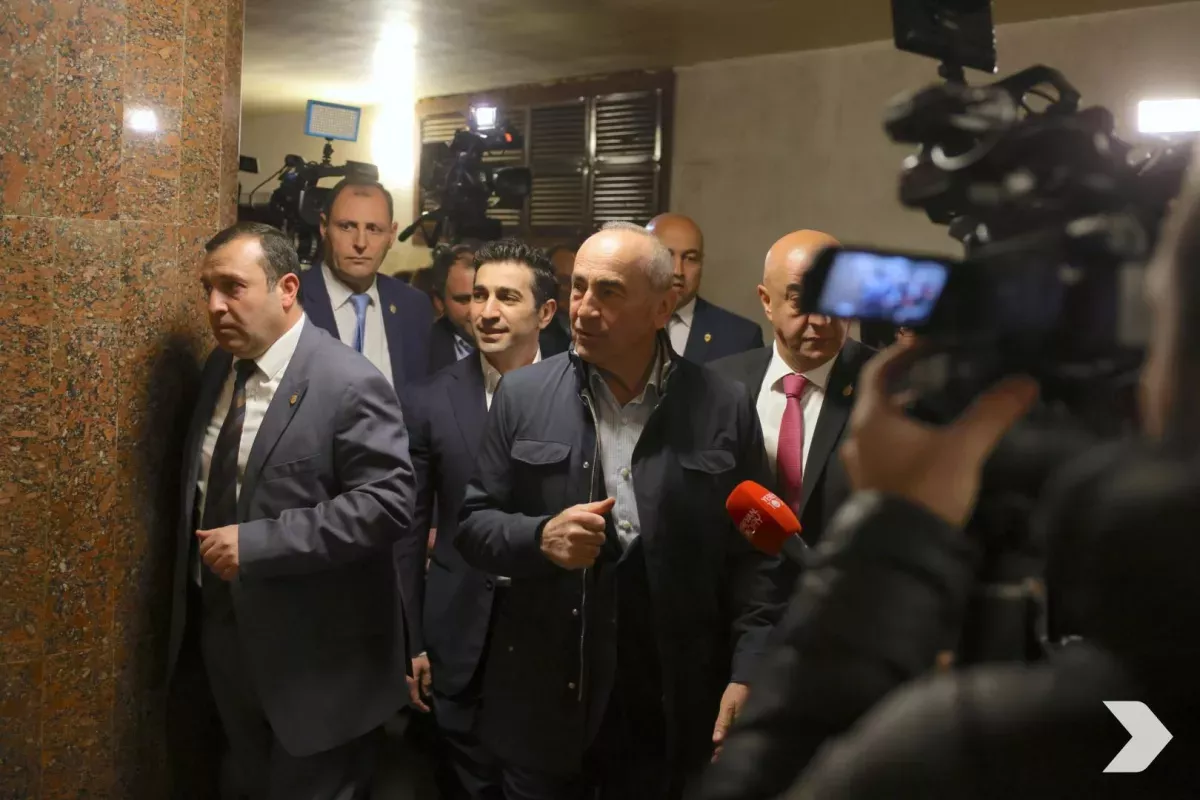
Robert Kocharyan has not only taken a firm stance against unblocking Armenia’s transport links with Azerbaijan and Türkiye, as well as against opening the Zangezur Corridor, but has also been increasingly promoting an “alternative” — the restoration of railway communication between Russia and Armenia via Georgia and Abkhazia, which remains under Russian occupation — without its de-occupation.
In essence, he is reiterating proposals that have recently become quite “persistent” on the part of the Russian side and are being addressed to Tbilisi.
Kocharyan had begun speaking about restoring Armenia–Russia transport links through Abkhazia even before being nominated as a candidate for prime minister, clearly contrasting this route with the so-called “Trump Route.”
“If the TRIPP project is not expanded to include the road to Yeraskh and does not provide a railway connection between Armenia and Iran, it will remain a minor transit route from which Armenia will gain nothing. TRIPP is an American project on Armenian territory for Azerbaijan and Türkiye. Armenia will not even benefit from this minimal transit, because it is a one-sided arrangement… No one mentions that Armenia has another potential railway connection with Russia — Yerevan–Tbilisi–Sochi–Krasnodar–Tuapse–Moscow. This railway exists but does not operate due to the Georgian–Abkhaz conflict. It is 600–700 km shorter than the route through Azerbaijan. Passenger services could also be launched along this line. Once this route opens, not a single wagon will pass through Azerbaijan. Ignoring this is simply a crime. Only a small investment is needed to restore it,” Robert Kocharyan stated in February 2026 in an interview with “Channel 5.”
It should be noted that even before the current phase of the military conflict between the United States and Israel on one side, and Iran on the other, Kocharyan paid particular attention to railway links between Armenia and Iran.
It should be recalled that the Armenia–Iran route via Yeraskh is only feasible through the Nakhchivan Autonomous Republic — a region of Azerbaijan claimed by Armenian revanchists from the “Karabakh clan,” into which Iranian drones recently “accidentally” entered.
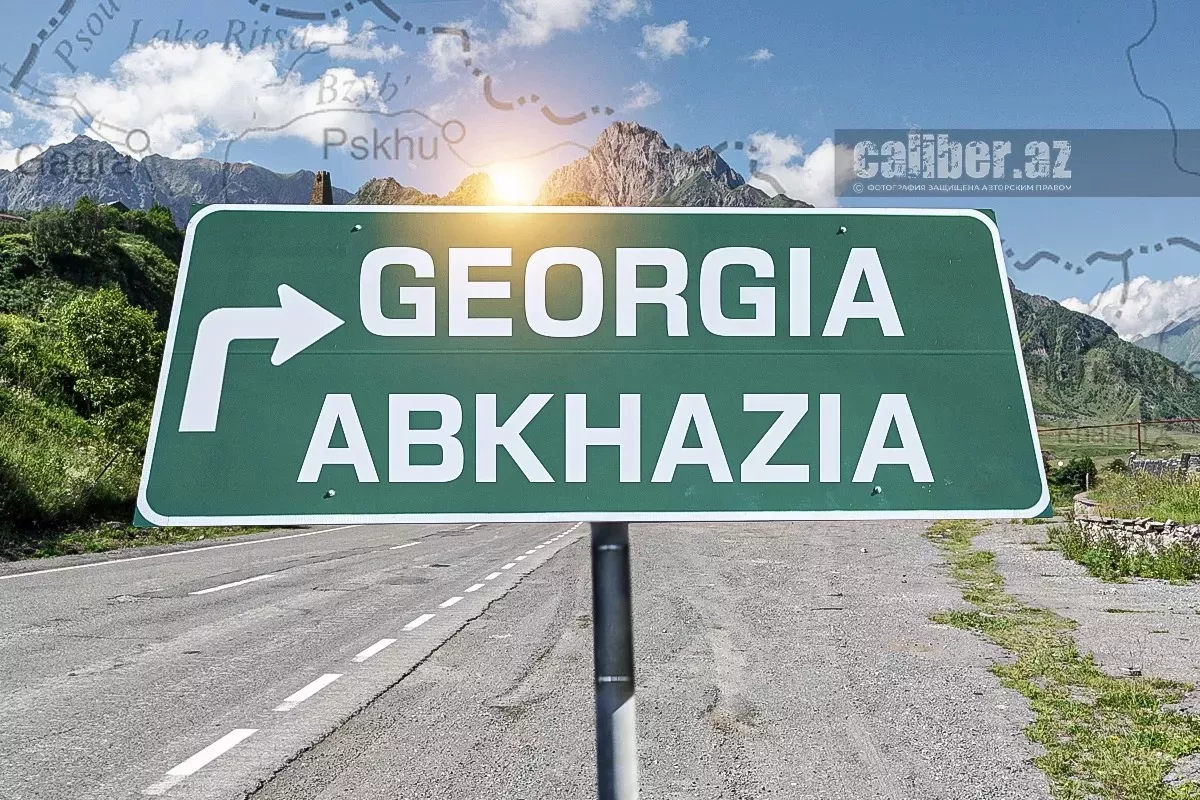
Already as a candidate for prime minister, Robert Kocharyan once again emphasised the importance of transit from Russia through the occupied Abkhazia, Georgia, and Armenia to Iran — despite the fact that, with the outbreak of the current war in the Middle East, transit through Iran has been reduced to a minimum.
“Why aren’t we focusing on opening these routes? Our main trade is with Russia; with Europe — via Georgia; with the Arab world — through Iran; and with India and China — again via the Iranian direction. What is the purpose of Azerbaijani territory at all, except for trade with Central Asian countries? Considering that Georgia’s EU accession is currently frozen, and that Georgia should have a strong interest in railway connections with Russia, and taking into account the mutual economic benefit for Georgia, Russia, and Abkhazia, the current moment is the most favourable period for negotiations in this direction. There are no serious political obstacles. So, what is the main political obstacle? Primarily — the relations between Georgia and Abkhazia. Only one thing needs to be done — separate the economic project from political disagreements,” Kocharyan stated.
Here, he effectively separates the Russian-occupied Abkhazia from Georgia, treating it as a “separate state.” However, this is hardly surprising coming from one of the key architects of separatism in the South Caucasus.
It is also clear that Kocharyan and his “Karabakh clan” are less interested in the “economic benefits” of the route through Abkhazia and Georgia to Armenia and on to Iran than in issues of revanchism. Their agenda includes the “reconquest” of Karabakh and the “expansion” into other Azerbaijan territories they claim. Armenia’s own resources are clearly insufficient to carry out such scenarios. At the same time, revanchist elements within the Armenian opposition openly count on military support — from Russia and Iran.
Thus, the railway route from Russia through occupied Abkhazia and Georgian territory is viewed by the “Karabakh clan” primarily through a military lens—as a tool for redeploying allied forces. At the same time, the potential consequences for Georgian statehood are, in effect, ignored. Moreover, given the revanchist circles’ claims on certain Georgian territories, including the Samtskhe-Javakheti region, such a scenario fits into their broader strategic plan.
The objective of the forces promoting Kocharyan and the revanchists to power in Armenia is fairly clear—to undermine not only the “Trump Route” but also the functioning of the Middle Corridor passing through Georgia. In the context of ongoing uncertainty surrounding military conflicts in Ukraine and along the Iranian direction, with a high likelihood of further escalation, such a development could effectively lead to a “cutting” of Eurasia.
In such a scenario, Georgia and the South Caucasus as a whole risk transforming from a sought-after transit and relatively stable region into a zone of military turbulence, which could have serious consequences not only for the regional but also for the global economy.
This is precisely why a potential victory of the revanchist forces in the Armenian parliamentary elections on June 7, 2026 carries significant risks for peace and stability in the South Caucasus—regardless of Kocharyan’s attempts to present initiatives, including the railway route through Abkhazia without its de-occupation, as economically justified.
By Vladimir Tskhvediani, Georgia, for Caliber.Az







 editor@caliber.az
 +994 55 444-88-98
 Азербайджан, Баку, ул. Низами, 203, Af Business House, 5-й этаж