










Defeats mount, Macron calls for France to be feared Analysis by Serhey Bohdan
Amid growing global political turbulence and the erosion of the international legal order, a number of major powers have begun acting in increasingly contradictory ways. France stands out as a particularly striking example of such inconsistency. In recent days, President Emmanuel Macron has performed a complete reversal in his policy toward Iran. At the same time, European Union diplomats rushed to reassure partners that France’s nuclear arsenal would not be spread across Europe.
These assurances followed Macron’s highly controversial proposal suggesting that French nuclear capabilities could be extended to serve the entire continent—an idea widely interpreted as bordering on nuclear sharing. Such erratic moves mirror the internal political volatility within France itself, where recent elections, marked by low voter turnout, saw increased support for more radical political forces.
France appears to be slipping beyond Macron’s full control, while his foreign policy manoeuvres risk further destabilising both European and global politics.
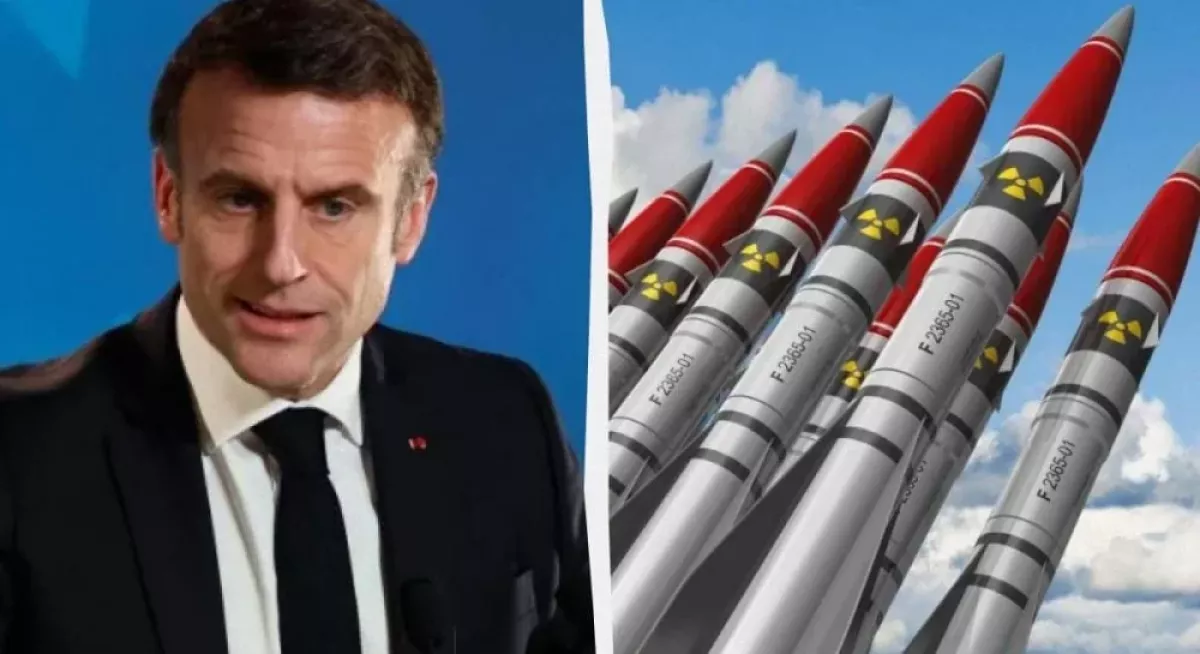
Europe is asked to pay once again for French hegemony
Following Donald Trump’s return to power in the United States in 2025, French President Emmanuel Macron sought to capitalise on growing concerns within the European Union that Washington might scale back its support in the ongoing confrontation with Russia. As early as last spring, he hastily pledged to discuss with European allies the possibility of extending French nuclear protection to them.
On March 2, Macron finally delivered a high-profile—but deeply controversial—programmatic speech on the matter. At its core was a new concept termed “forward deterrence” (dissuasion avancée).
Under this framework, Paris proposed expanding the role of its nuclear arsenal across the EU and allied countries: “Today, a new step of France’s deterrence can now be taken [...] It offers, first of all, the possibility for partners to participate in deterrence exercises. It may also involve signalling, including beyond our strict borders, or conventional participation of allies’ forces in our nuclear activities. It will finally involve the temporary deployment of elements of our strategic air forces to allied countries.
In the same way that our strategic submarines dilute naturally in the oceans, guaranteeing a permanent-strike capability, our strategic air forces will also be able to be spread deep into the European continent. This dispersal across European territory, a sort of archipelago of forces, will complicate the calculations of our adversaries and will make this forward deterrence very valuable to us. It will strengthen our defence, while giving it room to operate: it will offer it a new strategic depth, in line with the challenges of European security.”
This sounded less like an offer to share and more like a call to accept a creeping form of French hegemony in Europe—and at Europe’s expense. Emmanuel Macron did little to conceal this, as he simultaneously stressed that “there will be no sharing of the ultimate decision, nor of its planification, nor of its conduct. Under our Constitution, the decision to employ nuclear weapons rests solely with the President of the Republic, who is accountable to the French people. Therefore, there will also be no sharing of the definition of our vital interests, which will remain of sovereign assessment for our country.”
Given Paris’s frequent policy reversals and what critics describe as a growing deficit of credibility within parts of the global liberal establishment, such assurances are unlikely to have reassured many.
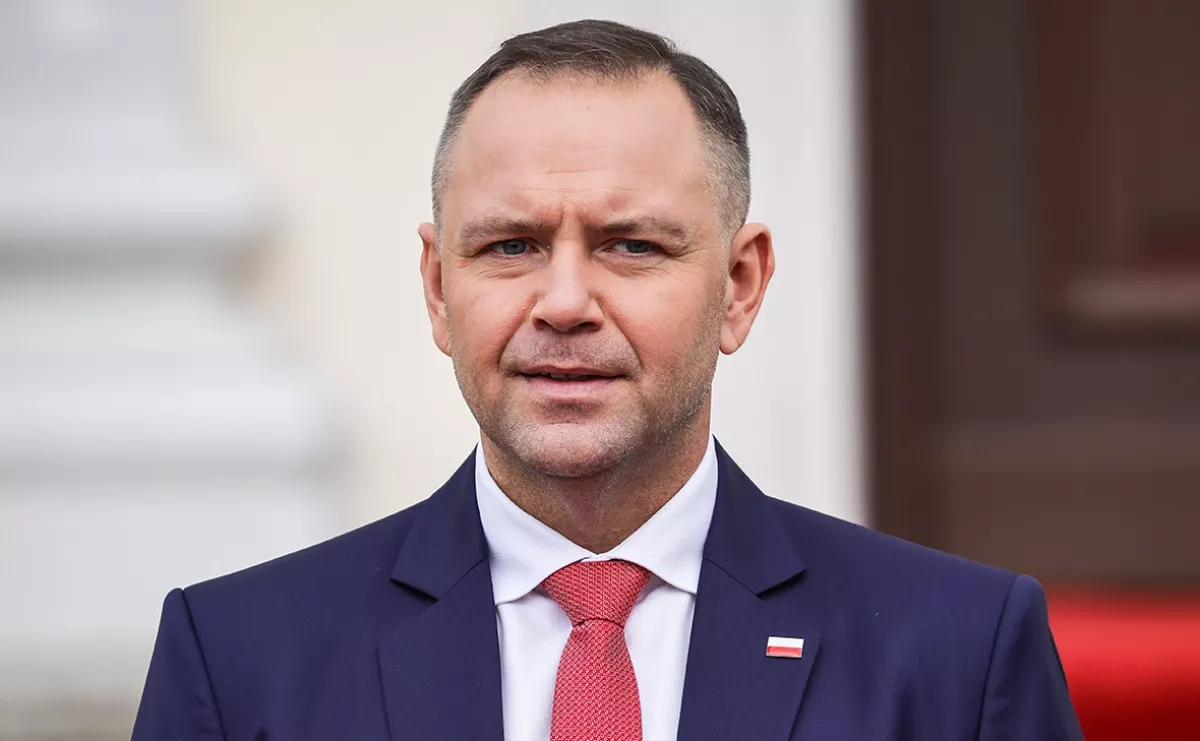
Moreover, against the backdrop of negotiations with Paris on cooperation regarding the deployment of nuclear weapons, Polish President Karol Nawrocki already spoke last September about the need to create the capability to station foreign nuclear weapons on Polish territory. While his predecessor, Andrzej Duda, had clearly called for the deployment of American nuclear weapons in Poland, Nawrocki expressed himself more vaguely regarding the ownership of these weapons, hinting at possible agreements with Macron.
It is therefore unsurprising that this week, EU diplomats even tried to persuade Russia not to take Macron’s words too seriously. They argued that, although he spoke of a new policy approach, his statements “are in line with those of his predecessors,” all levers will remain in the hands of the French president, and “French deterrence will maintain its strictly defensive character.”
Nuclear Macron: “Fear must be instilled”
According to the French leader, eight countries have already agreed to work with Paris for “forward deterrence.” These include the United Kingdom, Germany, Poland, the Netherlands, Belgium, Greece, Sweden, and Denmark.
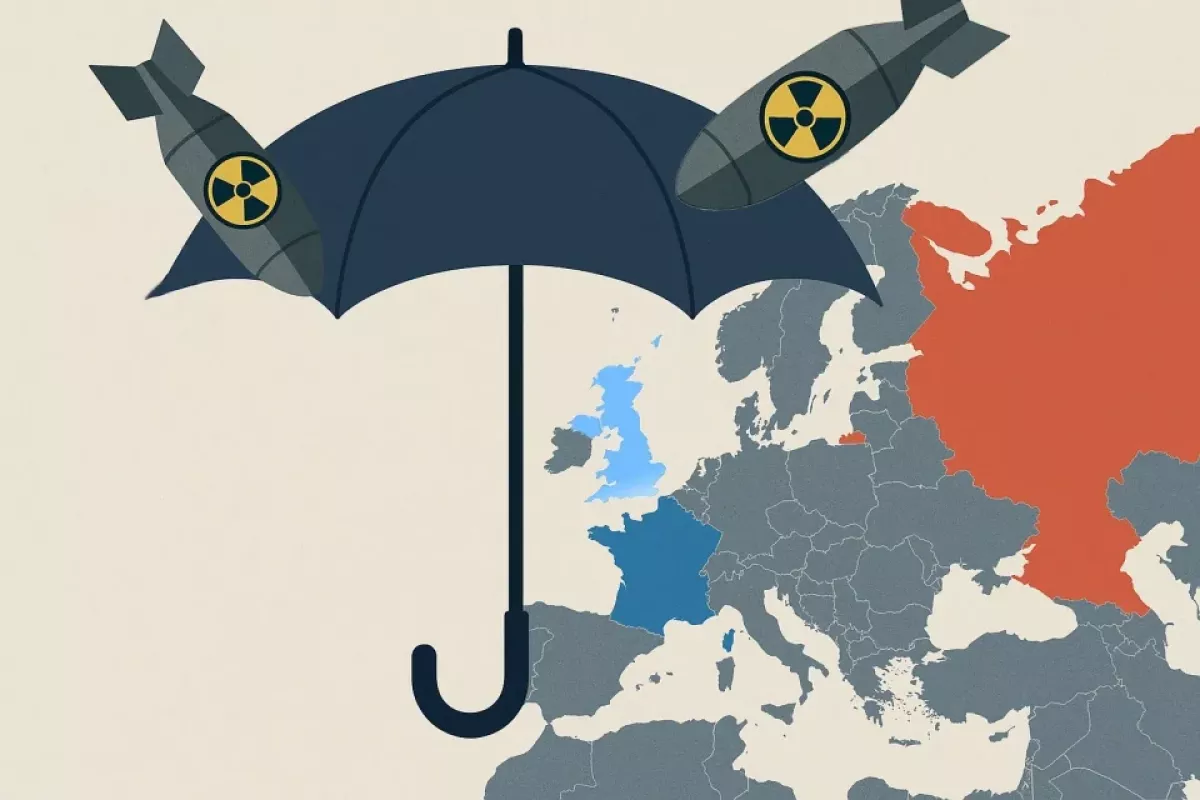
However, it quickly became clear that something was off, as the French leader specifically emphasised that his new initiative was not intended to replace, but merely to supplement, the American “nuclear umbrella” for European NATO countries.
Even more doubts about the feasibility of Macron’s plans arose when he, aboard the French strategic submarines Île-Longue (a grandiose name that should not be misleading — there are only four of them), delivered, to put it mildly, rambling tirades reminiscent of comedic dictators: “To be free, we must be feared, and to be feared, we must be powerful.”
He then effectively called on the French to become unpredictable, clarifying: “I have decided to increase the number of warheads of our arsenal. To put an end to any speculation, we will no longer release figures on our nuclear arsenal, as we have done in the past.”
And here, as they say, is where the catch lies. Macron is simply bluffing, since the basic figures reflecting the size of France’s nuclear capability show his inability to deliver on any of his promises. Even the French official sources report that France possesses only “around 290” nuclear warheads.
By comparison, Russia had nearly 6,000 in 2022, and the United States around 5,500.
Aware of these laughably small numbers relative to his stated ambitions, Macron made a point of mentioning the special relationship between Paris and London in the field of military nuclear affairs: in July of last year, he signed the so-called Northwood Declaration with UK Prime Minister Starmer, “confirming for the first time that we are coordinating our independent nuclear deterrence” between Paris and London.
But the British nuclear arsenal is minimal, if not symbolic. In theory, Paris could expand its nuclear potential, but this is almost an impossible dream — far too expensive and extremely time-consuming, making the whole venture essentially pointless.
In Paris, the hope is mostly to attract funding from “partners” or simply tap into EU money for such a project. But even if they succeed, there is no time left, as a radical change of power in the major EU countries over the next couple of years is almost inevitable, and the EU itself — along with other European partnerships, particularly Germany–France — is already showing serious cracks.
Against this backdrop, Macron’s “nuclear speech” sounded almost comical, as he threatened to confront Russia and China, not just Iran and some Asian countries — who, for their part, could not care less about the EU. In that sense, Macron could already claim a personal triumph. But it was not funny. It was a dangerous bluff by an irresponsible politician, calling for a world politics that is even more unpredictable and ready for a global conflagration.
And he did so fully aware of the monstrous threat associated with his plans — Macron coquettishly noted that a single submarine, before which he is menacing the world, “carries firepower equivalent to the sum of all bombs that fell on Europe during the Second World War”! And this does not embarrass him in the slightest; he boasts about it, declaring: “The next 50 years will be an era of nuclear weapons.”
Against the backdrop of expelling morally and economically bankrupt French neocolonialists from Africa, Paris is placing its bets on weapons and fear. Moreover, it is trying to drag others into this adventure. Speaking about the use of nuclear weapons, Macron declared: “Regarding long-range strike capabilities, Germany, the United Kingdom, and France… will work together on very long-range missile projects.” There is even a potential implicit threat to the United States here.
Yes, Paris could indeed achieve unpredictability and even push the world toward a global nuclear holocaust. But it will not be able to win, or even preserve the remaining fragments of its vile imperial grandeur — basic realities oppose it: the economies of both France and the entire EU are crumbling. It is no coincidence that after Macron persuaded German Chancellor Friedrich Merz to issue a joint statement on expanding cooperation in deterrence, all major German media questioned the realism of the plan. Some outright called Paris and London’s nuclear deterrence plans “empty dreams” (recall that the literal translation of this term from English and German is “intimidation”).
French flags over the Persian Gulf: the mirages of Napoleon and Macron
France’s disproportionate ambitions and its erratic swings in foreign policy have been a regular feature in recent years. Just a couple of weeks ago, Macron promised to send military forces to restore navigation in the Strait of Hormuz. And last weekend, Paris lashed out at Iran, accusing it of being responsible for provoking attacks — as if anything that happened in those events depended on Macron!
Watching his attempts to exploit other people’s wars, one is reminded of how Napoleon once tried to acquire the island of Khark from the Persian Shah — an island now famous for its oil-loading facilities. The French were not prepared to do anything concrete. They simply signed a deal exchanging Khark for Georgia, which Paris promised to return to the Persians by expelling the Russians. Everything looked brilliant. But it was a mirage: those born to crawl cannot fly, and French rulers are incapable of reshaping the Persian Gulf.
This time, Macron miscalculated again: it turned out that no European country with a serious navy is willing to participate in his announced venture or send forces to the Persian Gulf to seize Hormuz.
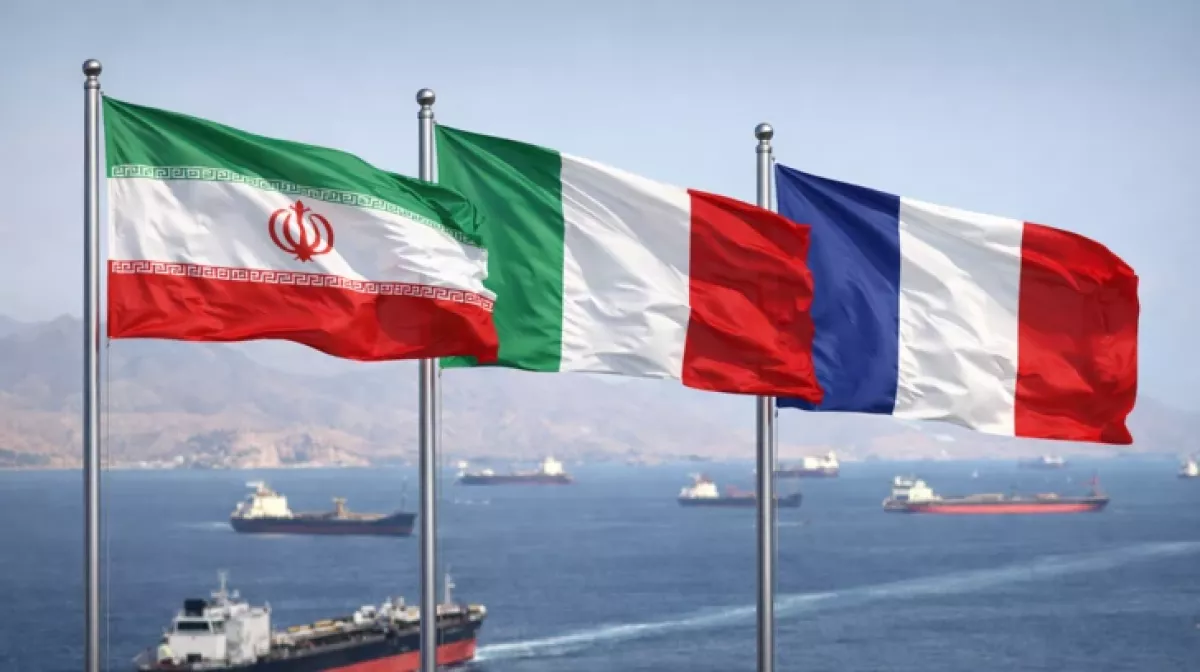
In the end, Paris and Rome quietly began negotiations with Tehran about the possibility of safe passage through the Strait of Hormuz.
Today, Macron categorically rules out any French participation in potential operations to seize the Strait, and he is even making overtures toward Tehran. On March 20, after a European Council meeting, he stated: “Once the situation is calmer, France is ready, together with other nations, to take responsibility for a ship-escort system in the strait as part of a mission that is not intended to be a use-of-force operation and that will require coordination and deconfliction with Iran.”
The sudden shift in the French leadership’s position is not due to a reassessment of mistakes, but to a crushing defeat for Paris in the foreign policy arena. This defeat was successfully concealed, although Macron’s futile attempts to influence the recent EU decision to expand the naval operation — tellingly named “Aspides” — can hardly be called anything other than a spectacular failure.
The operation was launched a couple of years ago to take control of the Red Sea and combat Yemeni Houthi rebels. The results were underwhelming — the Red Sea and the approaches to the Suez Canal remain under Houthi fire, and today the operation involves only three ships from three countries: France, Greece, and Spain. In other words, the fiasco is obvious, as is the near-zero interest of EU states in such matters. This is hardly surprising — confrontation with Russia in Eastern Europe has taken centre stage in EU policy.
Yet instead of quietly winding down this already modest operation in the Red Sea, in early March Paris attempted to push the EU to… expand it to the Strait of Hormuz and effectively enter a war with Iran!
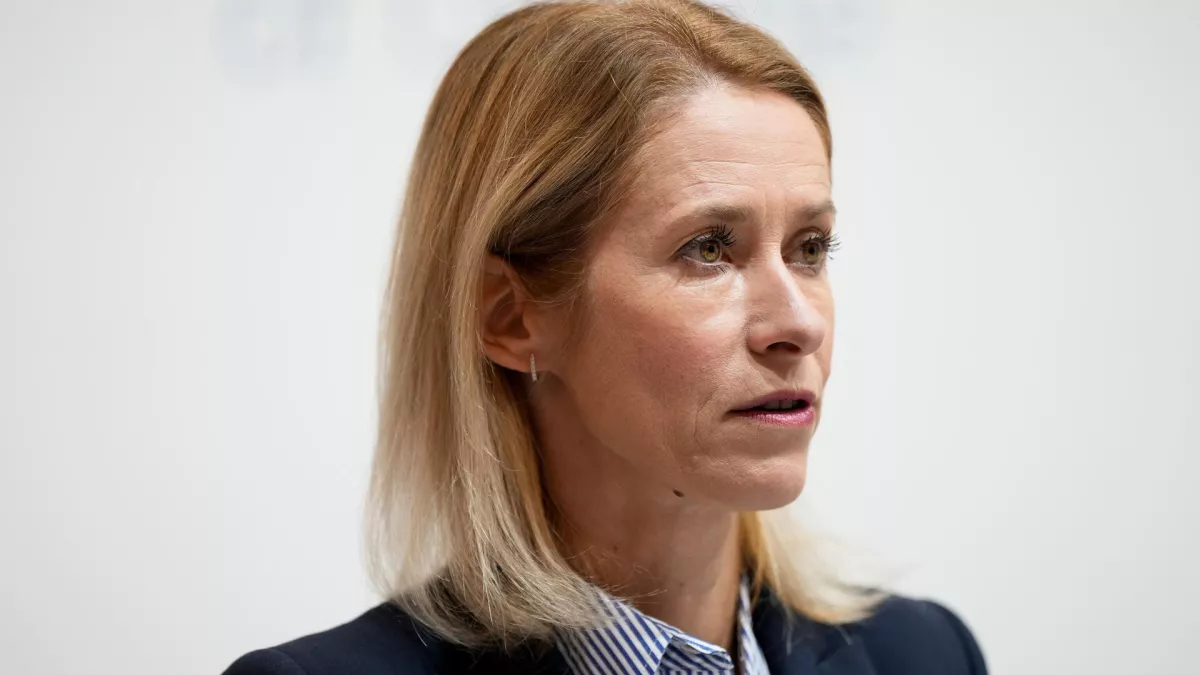
And just last weekend, even the head of the EU diplomatic service, Kaja Kallas, told Macron a resounding “no!”, publicly announcing that EU countries would not support the expansion of the operation. Following her, France’s closest ally, Greece, also backed away from these plans. This is the current state of French diplomacy: grandiose plans are announced without securing partner support or assessing the balance of forces. Later, these plans must be abandoned, but the destructive effect has already been produced — the provocation has already occurred, and Macron has already poured gasoline on the fire of global conflicts.
France slipping out of control
At the moment, it is impossible to speak of proper control over foreign policy by the French leadership. But that is not all — in domestic politics, Macron can do little as well. It is not only the rise of the new right-wing opposition and the seriously discussed scenario of a fundamental change of power in Paris, with Marine Le Pen likely to win the next presidential election. It is also the deep alienation of the French masses from the politics of the main parties of the French establishment, as shown by local elections last week.
Only 57% of eligible voters participated in these elections. For comparison, in the last “normal” local elections in Iran before the pandemic, turnout was 73% (though those were held alongside the presidential vote). Such paradoxes are rarely discussed in the Western world, especially by countries claiming to be democratic. Yet the numbers are telling — half of the French population does not want anything to do with the existing system.
But that is not all. In the first round, the far right and far left emerged victorious, and it is unlikely that the outcome will change significantly in the second round on Sunday.
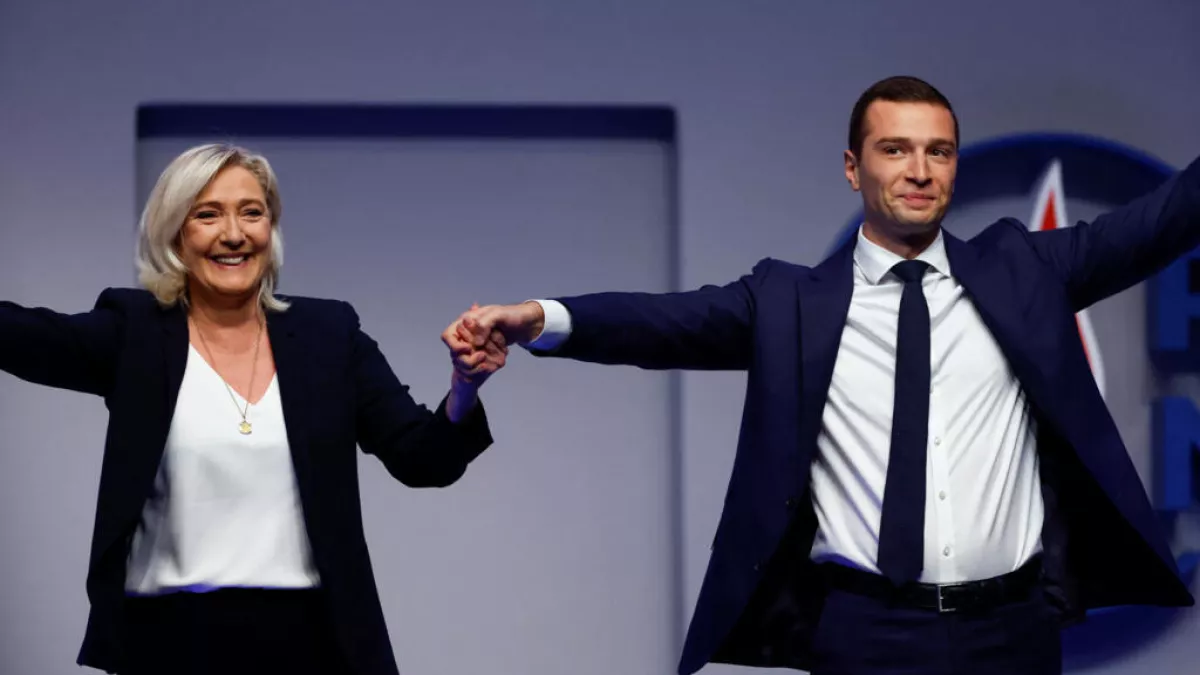
At the municipal level, the anti-system opposition took the top spots — the far-right National Rally of Marine Le Pen and Jordan Bardella, and the far-left France Unbowed of Jean-Luc Mélenchon. In liberal Paris, the situation is less dramatic for the establishment, but even there the far-left came third, and the first place went to the left-wing opponents of Macron.
In other words, Macron’s politics — and the French establishment as a whole — resemble an inverted pyramid with a rapidly narrowing base connecting it to its own country. It is detached from French society and will eventually collapse. Given France’s weight in Europe and the world, this will have serious consequences. And while these consequences may ultimately help correct global political anomalies, the process will impose costs on both Europeans and non-Europeans due to the artificial delays created by those currently clinging to power in Paris.
The anticipation of an imminent end drives them to take adventurous steps, detached from reality and conceived within the narrow circle of long-entrenched elites. Examples of this include the nuclear ambitions and Middle East interventions discussed above.
Naturally, this situation is neither unique nor limited to France — similar circumstances have been created over decades by pseudo-liberal elites monopolising power in many countries of the collective West.
The impending end of Macron’s regime is already sending a signal to new opposition movements in other states. Over the next five years, the political landscape of Europe is set to change completely.







 editor@caliber.az
 +994 55 444-88-98
 Азербайджан, Баку, ул. Низами, 203, Af Business House, 5-й этаж