










Russia–Ukraine conflict in the US spotlight Staying on track
On March 21–22, after a month-long pause, U.S.–Ukraine talks on resolving the Russia–Ukraine conflict were held in Florida. The Ukrainian delegation included Secretary of the National Security and Defence Council Rustem Umerov, Head of the Presidential Office Kyrylo Budanov, Chairman of the “Servant of the People” faction in the Verkhovna Rada David Arakhamia, and First Deputy Head of the Presidential Office Serhii Kyslytsia. The American negotiators were represented by US President’s Special Representative Steve Witkoff, businessman and Donald Trump’s son-in-law Jared Kushner, and Federal Procurement Commissioner Josh Gruenbaum.
The pause was formally linked to the escalation of tensions in the Middle East, which significantly affected Washington’s diplomatic agenda and priorities. However, those closely following the situation note that talks on the Russia–Ukraine conflict—both bilateral and trilateral—had already stalled even before the U.S. and Israel launched their military operation against Iran. The reason lies in the uncompromising positions of the parties on key issues, primarily concerning the Donbas region, the situation around the Zaporizhzhia Nuclear Power Plant, and security guarantees for Ukraine.
The latter has become something of a catch-22: Kyiv wants to receive guarantees before signing any document, while Moscow proposes to formalise them simultaneously with the agreement, while also incorporating elements of a broader security architecture. This includes demands such as Ukraine’s neutral status, refraining from joining NATO, and so-called “demilitarisation” and “denazification.”
These points have not even begun to be discussed. According to sources, this reduces Moscow’s interest in the process. At the same time, the Kremlin rejects claims that the negotiations are “running out of steam,” emphasising that the complexity of the discussions was obvious from the start. Presumably, Moscow’s interest in talks with the U.S. is driven less by a desire to reach a compromise on Ukraine and more by an aim to secure mutually beneficial economic deals with Washington.
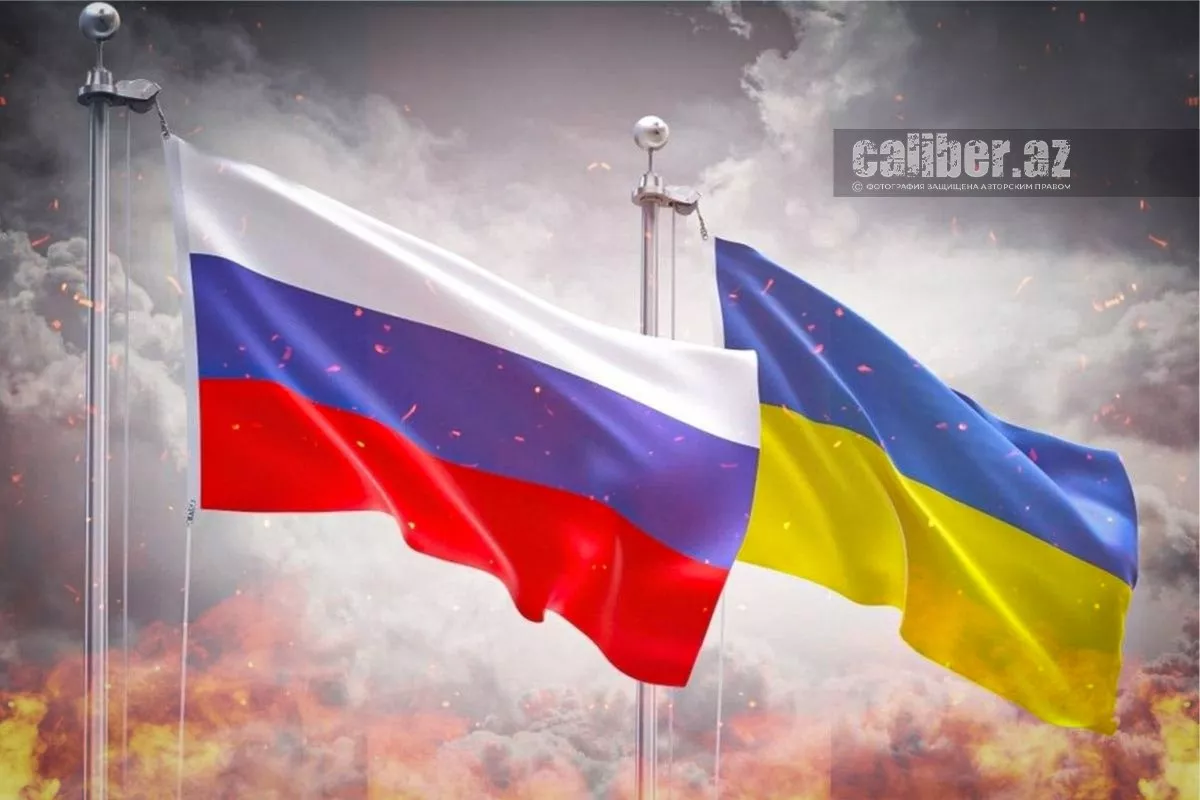
Regarding the conflict’s resolution, both Moscow and Kyiv, unable to back down on their core demands, were clearly burdened by Washington’s diplomatic zeal and, it seems, breathed a sigh of relief once the U.S. became absorbed in a major war with Iran.
As a result, the current round of talks was more an attempt to restart dialogue and affirm its continuation than to deliver quick solutions. Even the very fact of a meeting in the U.S. is seen as a signal: despite competing global crises, the Ukraine negotiation track remains active. Perhaps this matters more to the U.S. than to the warring parties themselves—the White House wants to demonstrate that even while deeply engaged in a major military operation, it can still keep a finger on the pulse of other conflicts, and even more, that it retains leverage over both sides of the Russia–Ukraine conflict.
Following the meeting between the American and Ukrainian delegations, both sides described the dialogue as constructive and reported progress in aligning their positions. It was also noted that the discussion touched on the issue of security guarantees for Ukraine. How breakthrough this discussion proves to be will become clear after the next round of talks between the American and Russian delegations. Two weeks earlier, in the same Florida venue, a closed meeting had already taken place between the Americans and the Russian delegation, led by Russia’s Presidential Special Representative for Investment and Economic Cooperation with Foreign Countries, Kirill Dmitriev.
So far, there is no indication that the parties are close to making real progress toward peace. However, the crisis around Iran, given its scale and the unpredictability of its potential consequences, could accelerate the process—just as it previously seemed to stall it.







 editor@caliber.az
 +994 55 444-88-98
 Азербайджан, Баку, ул. Низами, 203, Af Business House, 5-й этаж