










Mission of the Celestial Empire Can China mediate the US–Iran conflict?
The war between the United States and Israel on one side and Iran on the other has drawn a large number of countries into its sphere of influence, including those located thousands of kilometers away from the region of escalation. At the same time, the positions of the conflicting parties—demonstrating irreconcilability on all issues—converge more or less at one point regarding a single country. That country is China, which, judging by a number of statements, could very well become one of the mediators in resolving the armed confrontation between the U.S.–Israel bloc and the Islamic Republic.
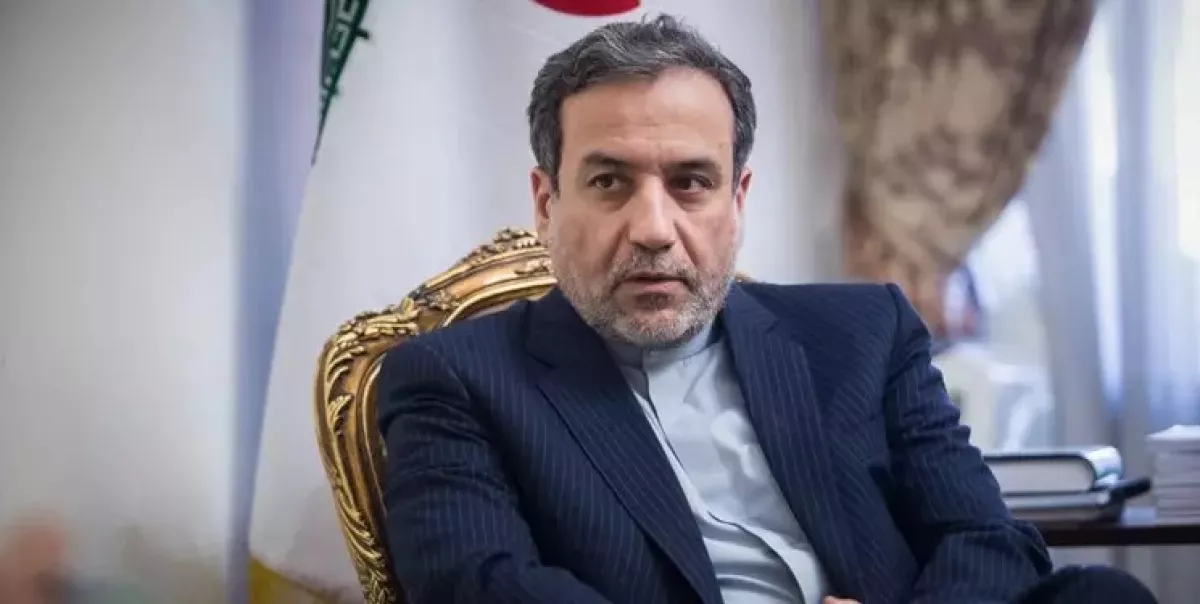
In particular, Iran’s Foreign Minister Abbas Araghchi told Al Jazeera in an interview that Tehran is ready to listen to proposals from mediator countries for ending the war, but on the condition that the issue of compensation to the Iranian side is discussed. He also emphasized that “several countries can play this role. China is one of them,” implying the role of mediator in resolving the U.S.–Iran conflict.
So, let’s try to understand why the People's Republic of China (PRC) might act as a mediator, and what this could bring to the Celestial Empire itself. To begin with, the war between the U.S. and Israel against Iran has not only threatened the security of several Arab countries due to ongoing Iranian attacks on neighboring states hosting U.S. military bases, but has also practically provoked a global energy collapse because Tehran has closed the Strait of Hormuz. The blockade also threatens disruptions in fertilizer supplies. As a result, the current situation dispels any illusions about the conflict being resolved in the near future.
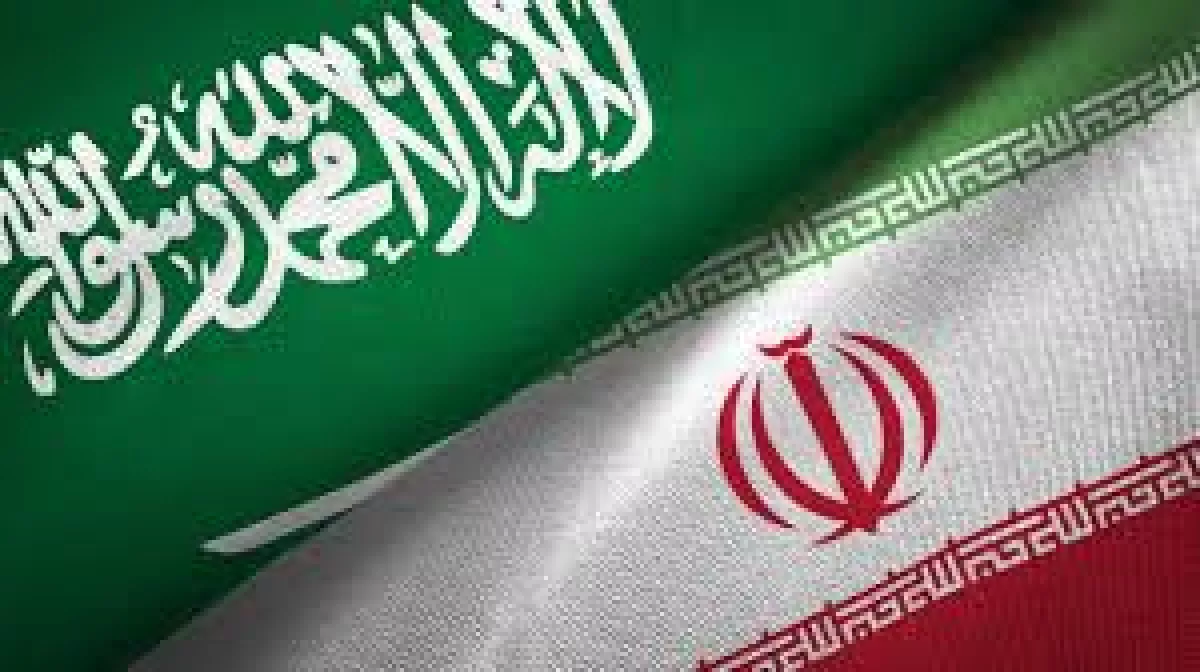
In this context, it is worth recalling China’s successful role in historically reconciling Iran and Saudi Arabia in March 2023. As a reminder, the two countries had severed all ties in 2016 following the execution of a Shiite cleric in Saudi Arabia and the subsequent attack on the Saudi diplomatic mission in the Islamic Republic. It was precisely thanks to China’s mediation that Tehran and Riyadh reached an agreement to restore diplomatic relations after seven years of complete rupture, which helped reduce tensions in the Middle East and, at the same time, demonstrated China’s growing geopolitical influence.
With regard to the current conflict in the Middle East, it should be noted that it is undoubtedly global in nature, which does not provide any full guarantee of success in resolving it in the short term. Nevertheless, China’s interest in its swift cessation is undoubtedly immense. For Beijing, stability in the Middle East is critically important, primarily due to its dependence on oil imports, especially through the Strait of Hormuz, which supplies approximately 45 per cent of the “black gold” to the Celestial Empire.
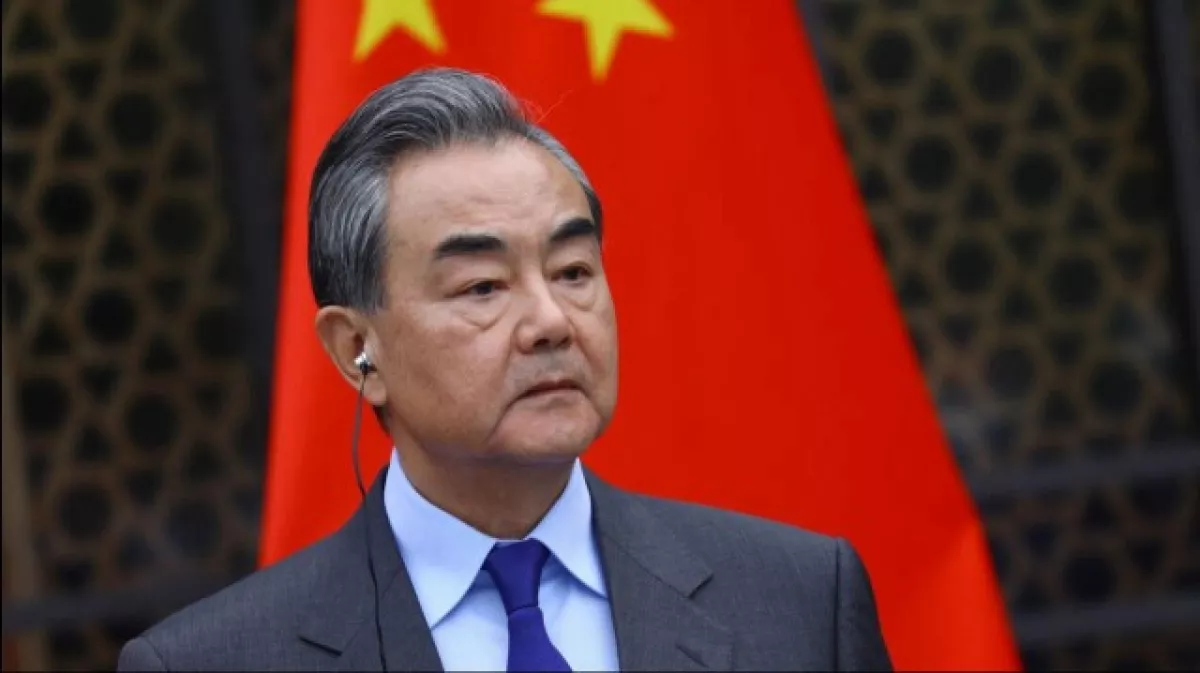
Guided by this strategic imperative, China’s Foreign Minister Wang Yi told Al Jazeera in an interview that Beijing will continue to act as a mediator in efforts to achieve a ceasefire and halt hostilities in the Middle East.
It is also quite telling that China’s foreign minister, from the very beginning of the military escalation, held phone talks with his counterparts from Russia, Iran, France, Oman, Israel, Saudi Arabia, the UAE, Kuwait, Bahrain, Pakistan, and Qatar. In other words, Beijing’s diplomatic response to the unfolding crisis was immediate.
Regarding the American position on China’s potential role as mediator, it is worth noting that, despite the competition for geopolitical influence and Washington’s skeptical view of China’s long-term objectives, under conditions of high tension, the U.S. could hypothetically give the “green light” for its mediation. Such an agreement might have been reached during Trump’s planned visit to China; however, that trip has been postponed.
Now let us consider the factors that allow China to assume the role of mediator in such a complex issue. First, its image as a neutral player, unassociated with military interventions in the region, enables Beijing to call on the parties to reconcile.
Second, the PRC is the largest buyer of Iranian oil, and this economic factor can serve as leverage in negotiations with Tehran, including on the issue of the Strait of Hormuz.
Third, China fundamentally does not interfere in the internal affairs of other countries while simultaneously maintaining friendly relations with both Iran and Israel, skillfully preserving a political balance between them.
Fourth, unlike the United States, China has no ideological agenda, which makes it entirely impartial.
All of this together forms the positive pole of China as a mediator, a role that the Chinese side is already actively using. For instance, on March 18, China’s special envoy for Middle East affairs, Zhai Jun, held meetings with the foreign ministers of Middle Eastern countries and the Secretary-General of the Arab League as part of efforts to de-escalate tensions, according to a statement by China’s Foreign Ministry on the social media platform X.
Clearly, the Celestial Empire is already taking concrete steps toward resolving the Middle East conflict, and only time will tell to what extent its mission—which could bring enormous reputational dividends to the country, if successfully implemented—will achieve its goal.







 editor@caliber.az
 +994 55 444-88-98
 Азербайджан, Баку, ул. Низами, 203, Af Business House, 5-й этаж