










Water’s second life: Baku bets on wastewater recycling Review by Khazar Akhundov
Amid the growing shortage of fresh water in recent years, the efficient use of water resources, as well as the treatment and reuse of wastewater, has become increasingly important for Azerbaijan. To address these challenges, the head of state approved the National Strategy for the Efficient Use of Water Resources for 2024–2040 the year before last, followed by the adoption last year of the State Programme for the Improvement of Water Supply, Wastewater, and Stormwater Systems in the city of Baku and the Absheron Peninsula for 2026–2035.
The State Agency of Water Resources of Azerbaijan (ADSEA) has already begun implementing these capital-intensive initiatives: treatment facilities are under construction in Boyukshor, Mushfigabad, Salyan, and Khachmaz. Modernisation of the Hovsan treatment plant is also planned, along with the construction of a similar state-of-the-art facility in Sumgayit.
According to the United Nations, around 80% of wastewater worldwide is discharged into rivers, seas, and oceans without treatment, polluting the environment and exacerbating the global shortage of clean freshwater. In this context, the UN urges that wastewater be viewed not as waste, but as a valuable and renewable resource that should be collected and safely reused in irrigation, industry, and other sectors.
Global studies confirm that the discharge of treated wastewater into rivers and reservoirs helps replenish water losses in ecosystems. Moreover, as treated water passes through water bodies, rivers, or underground sources, it undergoes natural regeneration, gradually regaining the qualities of raw water suitable for further use, including as a source of drinking water.
Moreover, treated wastewater can be directly reused as a valuable resource for municipal services, including the irrigation of parks and forested areas, agriculture, and a wide range of industrial applications. Such practices are widely used in South Africa, where reclaimed water supports the paper industry and oil refineries. In countries such as Israel, Singapore, Mexico, Spain, and India, reused water has become a critical resource for key sectors of the economy.
Reclaimed water is utilised in power plant cooling systems, oil refineries, mills, tanneries, and automotive manufacturing. In London, a significant share of drinking water is indirectly recycled through the River Thames—the capital’s primary water source. A similar system has been in place since 1965 in Windhoek, the capital of Namibia.
In Azerbaijan, these global environmental trends are fully supported, and one of the five national priorities for socio-economic development through 2030 has been defined as a “clean environment and green growth country.” The areas included under this priority include the development of renewable energy, the decarbonisation of industry, a 35% reduction in greenhouse gas emissions by 2030, and the introduction of digital and “green” technologies in the municipal sector. The efficient use of treated and recycled water resources has also been identified as a long-term national priority.
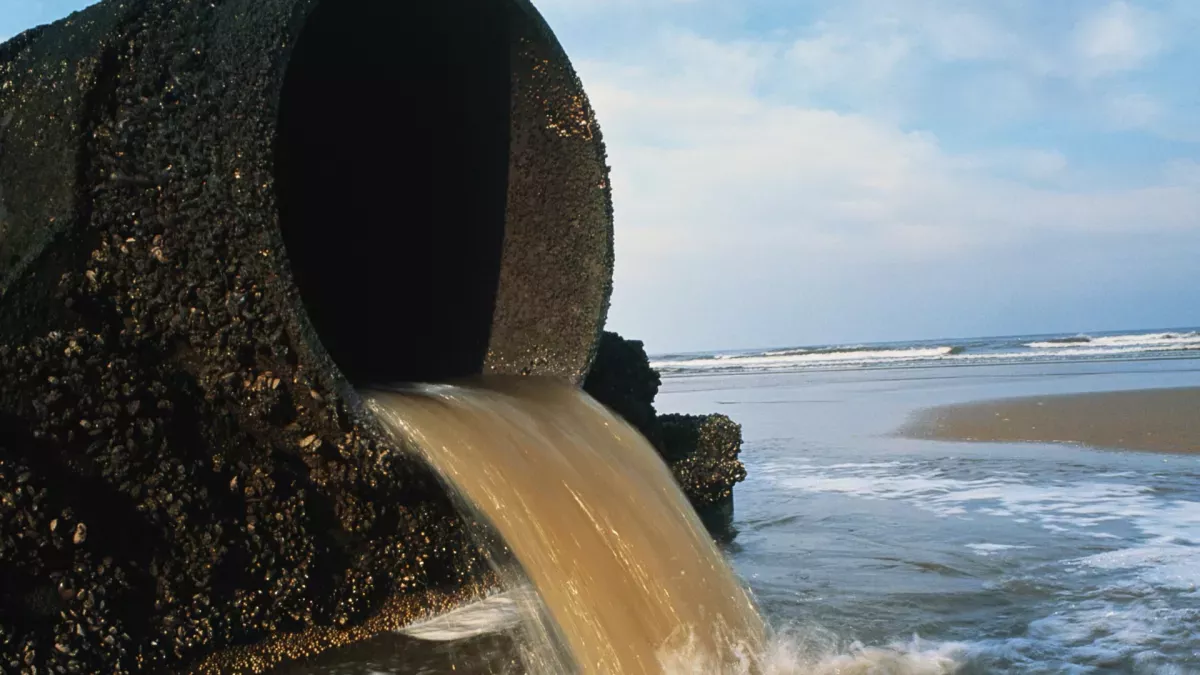
A significant step toward implementing concrete measures for the treatment and reuse of wastewater was the adoption of the National Water Strategy in 2024, followed last year by the State Programme for the Improvement of Water Supply and Sewerage Systems on the Absheron Peninsula.
The first focus will be on the capital’s sewer network: currently, only 50% of the population has access to sewerage services, but upon completion of the planned works, this figure is expected to rise to 95%. A new stormwater collector network will be constructed on thirty streets in Baku, and large-scale initiatives are planned for the full treatment of wastewater—one of the main sources of pollution in the Caspian Sea.
As the State Programme is implemented, it is expected that by 2029 the use of treated wastewater in pilot areas and the industrial sector will reach 50%. In the initial phase, these projects will be carried out in two pilot zones, with expansion to five zones planned subsequently.
To implement these and other environmental projects, concessional loans from international financial institutions (IFIs) are planned to be used. In particular, the financing of water and sewage system projects in Greater Baku was discussed by Azerbaijani President Ilham Aliyev and the President of the European Bank for Reconstruction and Development (EBRD), Odile Renaud-Basso, in January 2026 during the World Economic Forum in Davos.
International donor participation is also planned within the pilot project for the treatment and reuse of wastewater at the Hovsan aeration plant in the Absheron region. In this context, in September 2025, ADSEA and the Asian Development Bank (ADB) signed a technical assistance agreement for the modernisation of the Hovsan plant, whose capacity is expected to be increased to 200,000 cubic metres in the future. Equally important, as the use of treated water for economic purposes grows, its discharge into the Caspian Sea will be minimised.
The modernisation and expansion of the aeration plant in Sumgayit is also on the agenda: between 2027 and 2029, a new treatment facility is planned to be constructed. After the development of design and cost documentation and the receipt of expert approval, at least 40% of the construction work is expected to be completed promptly. Over the next three years, the aeration plant, with a planned capacity of 100,000 cubic metres per day, will be brought into operation primarily by ADSEA.
Alongside the construction of new reservoirs, canals, and water supply systems, and the utilisation of water resources from the Karabakh region, specialists from the Ministry of Ecology are exploring alternative methods for harvesting rainwater. Relevant technical and organisational proposals have been included in Baku’s General Plan: the system provides for the collection of water from building roofs or runoff along roads, which is then stored in reservoirs. During the summer, this rainwater can be used for tree irrigation and other purposes, significantly conserving freshwater resources.
Azerbaijan already has similar experience: thanks to the efforts of OJSC Azərlandşaft, a structure operating under the Ministry of Ecology, more than 80% of the water used for irrigating green spaces in Baku and its suburbs is treated technical water. Until recently, significant amounts of scarce drinking water were used for this purpose. Unfortunately, only a small portion of wastewater treated in the Hovsan aeration plant and other facilities is reused; the majority is simply discharged into the Caspian Sea. Moreover, many settlements on the Absheron Peninsula still lack a centralized system for sewage collection and treatment.
To address these shortcomings, the State Agency of Water Resources accelerated the construction of new wastewater treatment infrastructure in the Greater Baku region in 2026. According to Iman Rzayev, head of the construction sector for Baku and Absheron at ADSEA’s “Construction Projects Directorate,” the agency has begun building a wastewater treatment facility near Lake Boyukshor with a capacity of 157,500 cubic metres per day.
“At the same time, a water treatment plant with a capacity of 75,000 cubic metres per day and a 17.1-kilometre-long collector line are currently under construction in Mushfigabad,” Rzayev emphasised. “This line will serve Khirdalan as well as the settlements of Masazir, Ashaghi-Guzdak, 28 May, and Mushfigabad.”
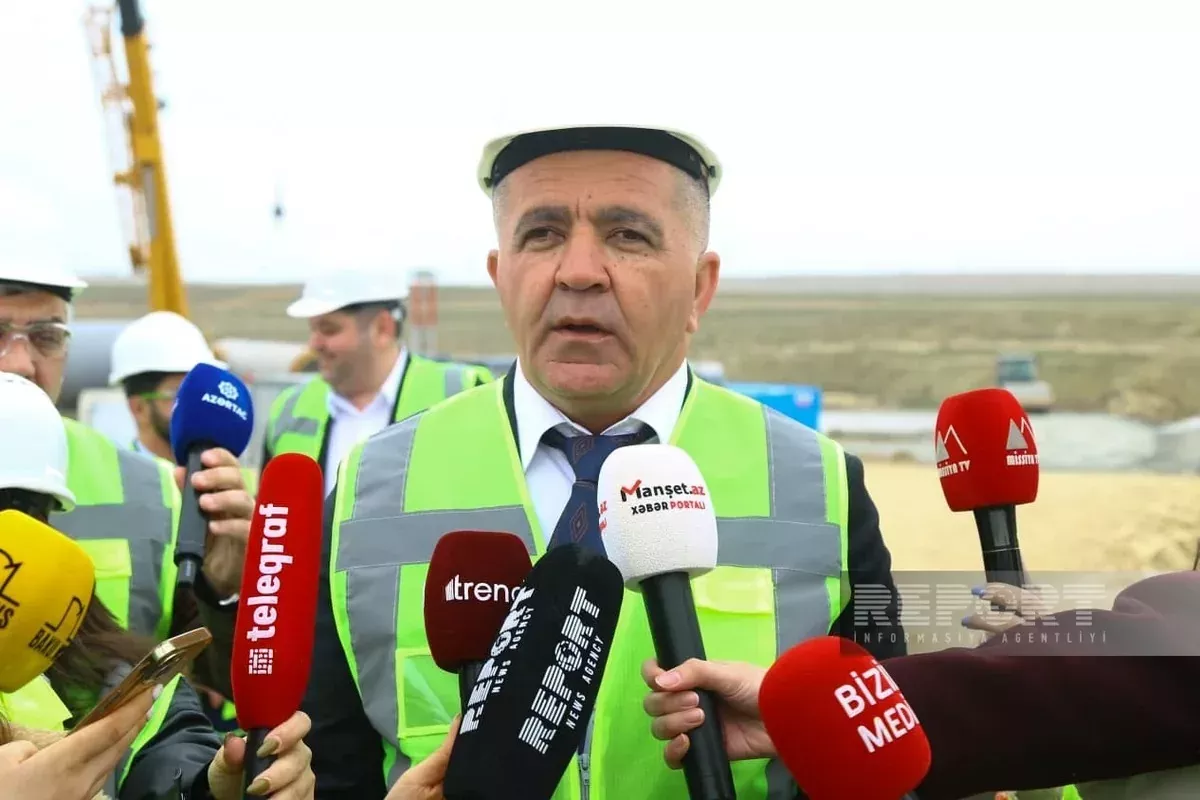
As part of a three-year project with a total cost of 237 million manats (approximately $140 million), work is being carried out across seven sites—four of which have already been completed, while three are still under construction. In the future, the capacity of the treatment plant is also planned to be increased by an additional 75,000 cubic metres.
In Baku, construction is also ongoing for seven additional water collection facilities, two treatment plants, and pumping stations. The treated wastewater from all Absheron facilities will be suitable for irrigation purposes. These measures will achieve a dual benefit: preventing environmental pollution and protecting the ecology of the Caspian Sea and numerous Absheron lakes, while simultaneously improving irrigation efficiency and significantly reducing the consumption of clean freshwater in irrigation channels.
With the involvement of ADSEA specialists, similar environmental projects are currently underway in other regions of Azerbaijan. A water and sewerage network is being developed in Karabakh and East Zangezur, construction has begun on 11 sewage pumping stations in the city of Salyan, and six small water towers are being built in Khachmaz.
Additionally, with €410 million in EBRD loan support, a project is being implemented in the city of Ganja to establish modern water supply systems, treatment plants, and infrastructure for stormwater management.







 editor@caliber.az
 +994 55 444-88-98
 Азербайджан, Баку, ул. Низами, 203, Af Business House, 5-й этаж