










Minsk and Washington on the path to a major deal Analysis by Preigerman
The Trump administration is proposing a “major deal” with Belarus, which would cover the key issues on the agenda of bilateral talks that have been ongoing for over a year. It is still difficult to say how extensive the list of areas included in such a deal might be, or when the parties will be able to finalise it. However, the very idea of a package agreement evidently seems appealing to Minsk.
On March 19, another round of Belarusian–American negotiations took place in Minsk. At the Palace of Independence, President of Belarus Alexander Lukashenko received a delegation led by US Special Envoy John Coale.
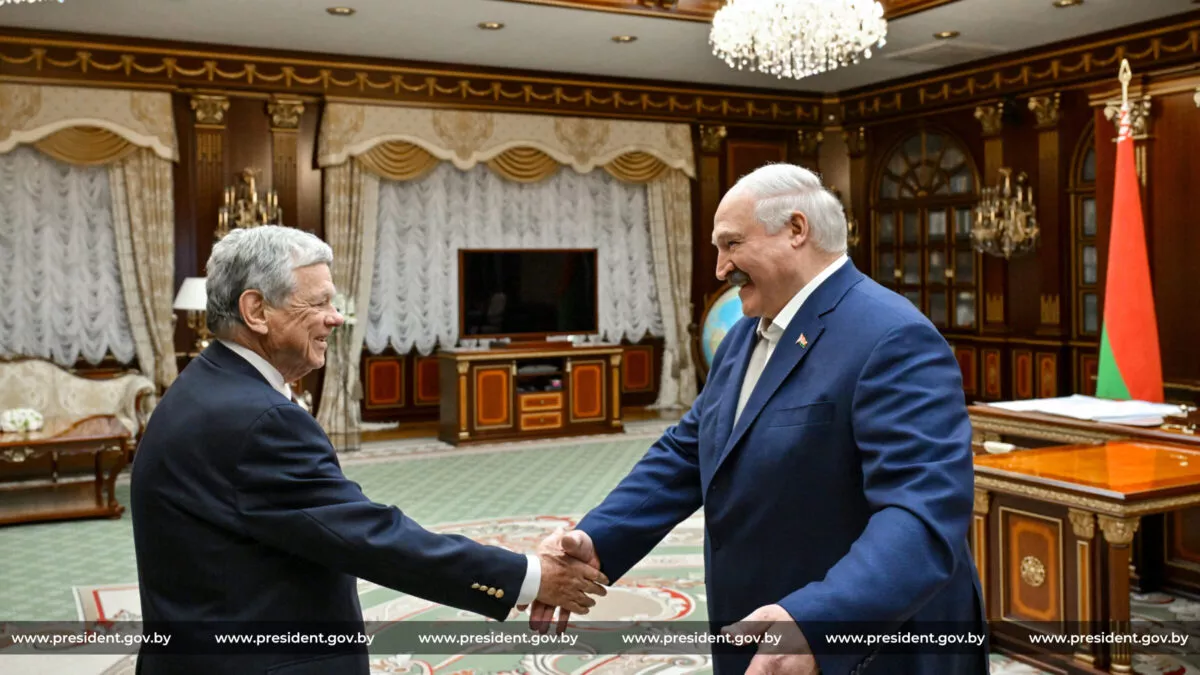
This was already the fourth public visit of American officials to Minsk. Prior to that, the parties had met several times in closed sessions. In August of last year, the two presidents held the first-ever phone conversation in history. In addition, as Alexander Lukashenko noted, Minsk and Washington maintain diplomatic correspondence between meetings.
The negotiation process continues
Since February 2025, when Minsk and Washington began an active political dialogue, rumours have circulated in the media and diplomatic circles that the process had reached a deadlock. This was the case, for example, in the autumn. In September, the US authorities decided to lift sanctions on the Belarusian national airline, Belavia, but it soon became clear that the decision was only partial. Many sanctions remained in place, and some “fine print” conditions further complicated the airline’s operational capabilities. Minsk predictably expressed dissatisfaction with this development. Among other things, it raised questions about the seriousness of Washington’s long-term intentions. On this basis, some observers concluded at the time that the Belarusian–American dialogue had quickly exhausted its potential.
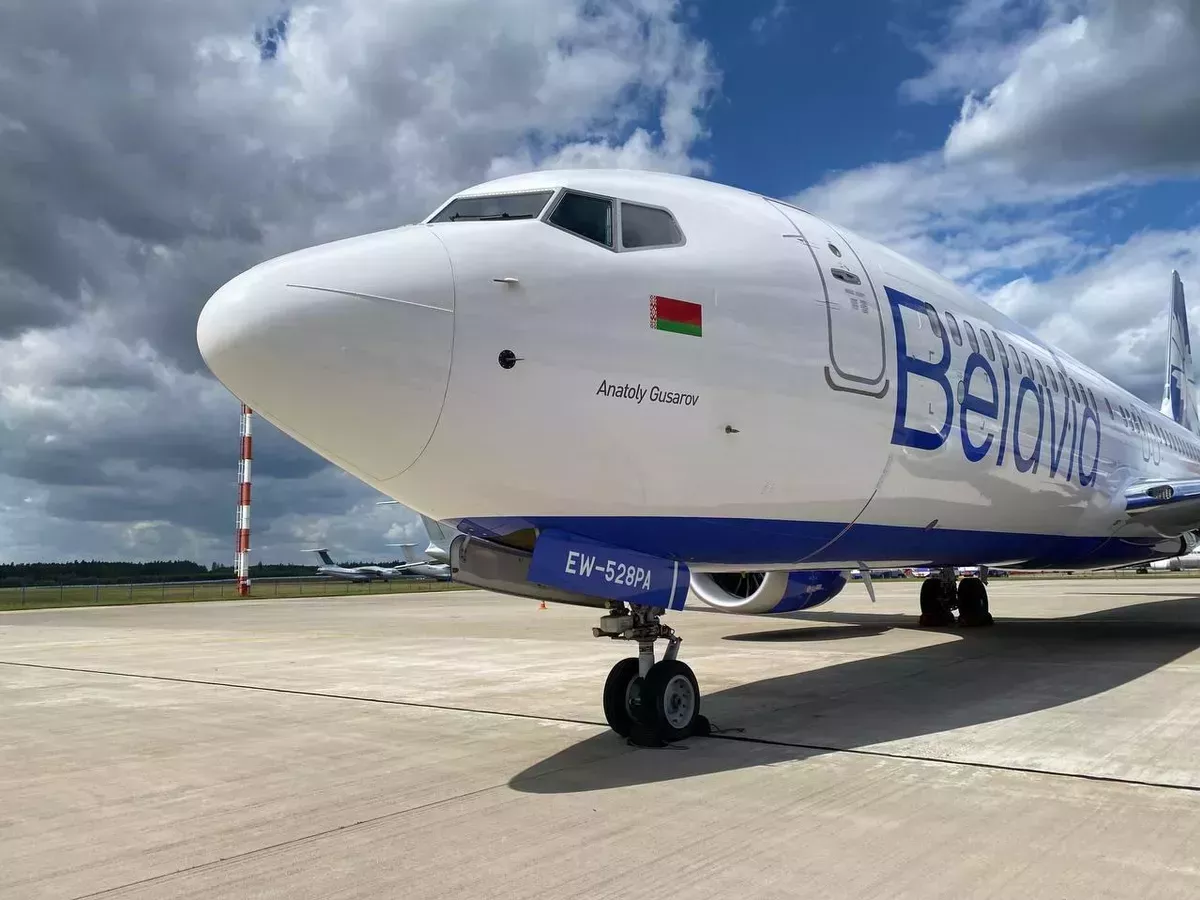
However, at the beginning of November, the Trump administration corrected the situation. Belavia was completely removed from all US sanctions lists. A few days later, the White House officially appointed Trump’s close associate, lawyer John Coale, as Special Envoy for Belarus. Both actions sent Minsk a clear signal that the United States remained interested in normalising bilateral relations and was ready to honour its commitments.
Similar rumours circulated in diplomatic circles just last month. This time, they were related to the absence of the Belarusian delegation at the inaugural meeting of the Board of Peace established by Donald Trump on February 19 in Washington.
Belarus was among the first countries to join this organisation after Alexander Lukashenko received a corresponding invitation from his American counterpart. However, the Belarusian president did not attend the Washington summit in person. As he explained during the recent talks with Coale, the main reason for declining to participate personally was a sudden and large-scale readiness inspection of the armed forces taking place in Belarus at the time. Therefore, he delegated Foreign Minister Maxim Ryzhenkov to attend on his behalf. However, the US side did not manage to issue him a visa in time. Understandably, this situation was not well received by the Belarusian leadership, and as a result, Belarus completely abstained from participating in the event.
Nevertheless, neither Minsk nor Washington made any public negative statements about each other. Belarus remained among the founding members of the organisation. Moreover, after the Board of Peace meeting, Trump, responding to journalists’ questions, stated that the US had “very good relations” with Belarus and that he “really liked” the Belarusian leader. Alexander Lukashenko, for his part, while criticising US actions in Venezuela and Iran, clearly signalled continued interest in further developing the bilateral negotiation process. He also continued to speak of his personal regard for the US president.
In this context, the recent visit of the American delegation led by John Coale was significant, among other reasons, as confirmation of these intentions on both sides. Both the talks themselves and the results achieved demonstrate that the two countries remain committed to deepening dialogue and seeking more systematic solutions for the gradual normalisation of their relations.
Results of the Minsk negotiations
From the outset, the dialogue between the Trump administration and the official Minsk authorities did not focus solely on bilateral issues. One of the main drivers on the American side was the desire to establish an additional communication channel regarding the Russian–Ukrainian conflict. As a result, the agenda of all negotiations was broader, extending beyond the Belarus–US track. The March 19 meeting was no exception. Only this time, the main international topic, for obvious reasons, was the war in the Middle East rather than the Ukrainian crisis. According to the Belarusian president, he presented his vision for ending the Iranian conflict and proposed “another option,” which he asked to be communicated to Trump.
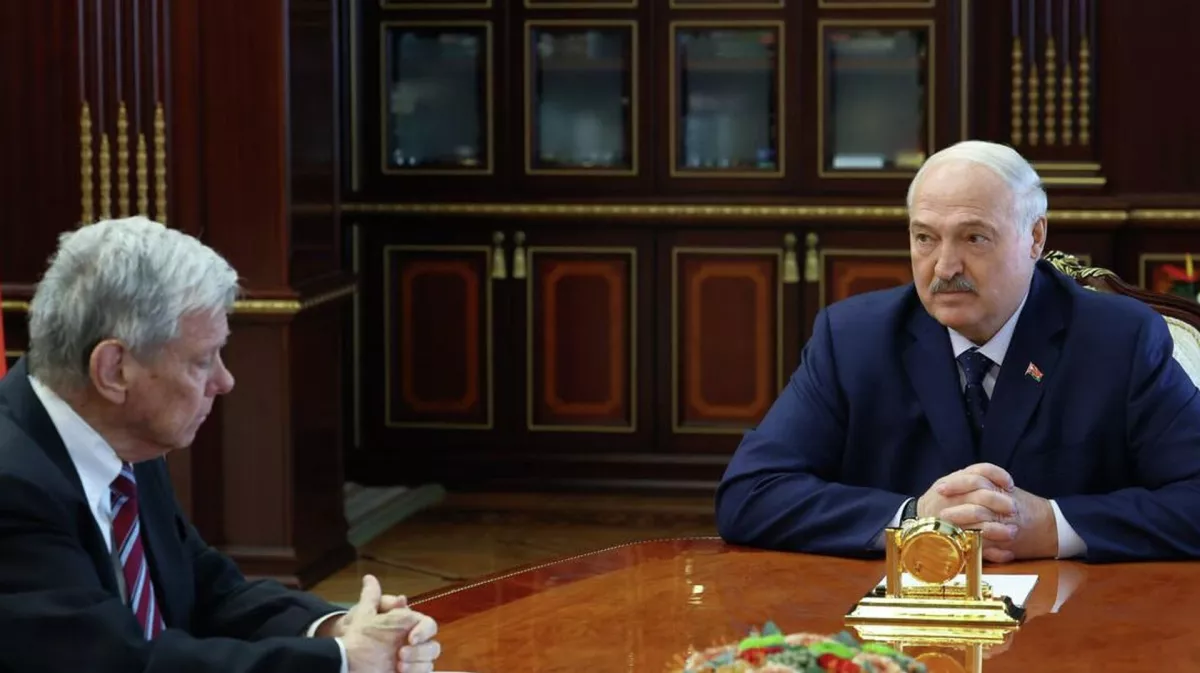
The Ukrainian war was also discussed. Alexander Lukashenko shared with the media one specific topic from the talks: US First Lady Melania Trump had asked him to discuss with Vladimir Putin the fate of Ukrainian children who had become lost in Russia. However, it appears that the primary focus this time remained on the bilateral agenda. It was on this track that some concrete results were achieved and the trajectory for further steps was outlined.
As has become customary for Belarus–US meetings in Minsk, the American delegation brought a decision to lift certain sanctions. This time, the measures primarily affected Belarus’s banking and financial sector: restrictions were removed for Belinvestbank, the Development Bank, and the Ministry of Finance. In addition, the Belarusian Potash Company and Belaruskali were permanently removed from all sanctions lists. On its side, Minsk released 250 individuals whom Washington considers political prisoners (Belarusian authorities note, however, that the country’s legislation contains no articles defining political prisoners).
The parties also, as has become customary, discussed the issue of restoring full diplomatic presence in each other’s capitals. The Belarusian embassy operates in Washington, albeit with a reduced staff and headed by a chargé d’affaires rather than an ambassador. The US embassy, meanwhile, relocated all its diplomats from Minsk to Vilnius in 2022, although it was not formally closed. Both capitals emphasise their interest in fully normalising diplomatic relations, but in practice, implementing this has proven challenging. Nevertheless, the first steps in this direction could likely be expected in the near future.
Another topic that could facilitate this process is Donald Trump’s invitation to Lukashenko to visit the United States. In particular, John Coale told the press that the Belarusian president promised to attend one of the upcoming Board of Peace meetings in person. Lukashenko also mentioned that he had received an invitation to meet the American president at Mar-a-Lago, which could become the first-ever bilateral visit of a Belarusian president to the United States.
Towards a major deal?
Summing up the meeting with the American delegation, Alexander Lukashenko stated that the Trump administration is proposing that Minsk “conclude a major deal, reflecting a number of issues that have been on the agenda of our negotiations.” He confirmed that the Belarusian leadership views this proposal positively and is ready to work in this direction.
It is still difficult to say how extensive the list of areas included in such a major deal might be, or when the parties will be able to finalise it. However, the very idea of a package agreement clearly appears attractive to Minsk. Firstly, it implies more comprehensive engagement and, accordingly, the prospect of broader benefits from cooperation with the United States than what has been possible so far. Secondly, a package approach could save diplomats from both countries a great deal of time and minimise certain risks—for example, interference from circles interested in derailing any agreements between Minsk and Washington. Thirdly, the concept of a major deal conveys the seriousness and long-term nature of the parties’ intentions.
For Belarus, of course, the goal is not to use potential package agreements with the US as a means of geopolitical reorientation. According to Lukashenko, the Trump administration fully understands this. Nevertheless, a hypothetical major deal could introduce new, important variables for Minsk that, over time, would enhance and expand the country’s geostrategic options. In this regard, the issue of potash, in particular, draws special attention.
At the end of last year, the President of Belarus stated that he had offered the Americans the opportunity to purchase one of the country’s potash mines. He has now confirmed this information, adding that the proposal is under consideration. If discussions on this matter continue and American businesses eventually enter the Belarusian potash sector, it would generate positive externalities for lifting the partial logistical blockade that neighbouring EU member states have imposed on Belarus in recent years. Such a development, in turn, would help restore the critically important political and economic foundations of Belarusian statehood.







 editor@caliber.az
 +994 55 444-88-98
 Азербайджан, Баку, ул. Низами, 203, Af Business House, 5-й этаж