










Armenia’s strategic choice: war or peace? Lessons from History
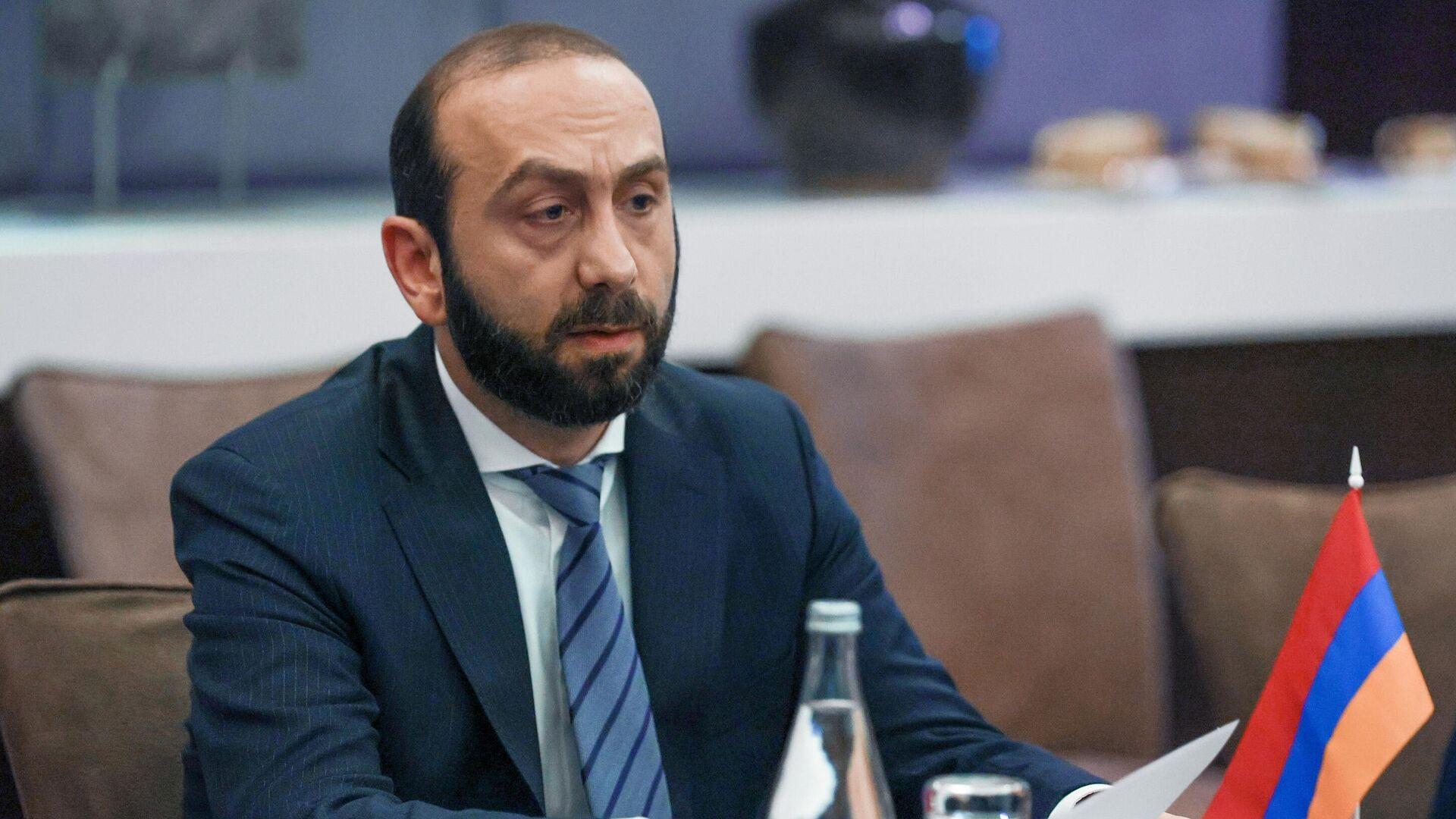
Following the August agreements in Washington, Yerevan is pursuing a political course aimed at establishing lasting peace in the region. The statements made on March 23 in the Armenian parliament by Armenia’s Foreign Minister Ararat Mirzoyan were an important continuation of this policy.
At a briefing with journalists in the National Assembly, Mirzoyan addressed a statement made by Prime Minister Nikol Pashinyan, in which he claimed that if opposition forces come to power, Armenia would face a new war no later than September 2026. When asked where the Prime Minister’s certainty about this date comes from, and whether it could be considered a form of blackmail, Mirzoyan replied:
“I think the date mentioned by the Prime Minister is conditional; he means a short period after the elections. That such a scenario could be real is unquestionable. The ideology of some opposition circles is that we have territorial issues with almost all our neighbours, territorial claims and ambitions. Obviously, if people with such a mindset come to power, they will immediately have problems with neighbouring countries. Considering the methodology countries use today to resolve issues, it is very likely that Armenia will immediately face war. We are saying that our country needs peace. In other circumstances, we are deeply convinced that it is not the success or development of Armenia that will be in doubt, but the very existence of Armenia as an independent state. Peace is our offer to the citizens, and there is a parallel proposal: ‘No, we don’t need this Armenia at all, we don’t care, we need some other Armenia.’ Do I see an element of blackmail in our proposal? No, I do not. Why do we say this? Because it is the right thing to do. This is our offer to the citizens of Armenia.”
In response to a remark that the current government of the Republic of Armenia brought war upon the people, Ararat Mirzoyan stated that their government did not bring war, and that the war is the result of more than 30 years of mistaken policies.
The essence of the statements made by the foreign minister of the neighbouring republic is crystal clear: today, Armenian society faces a strategic choice between peace and a new war. In this context, the following points deserve particular attention: the Armenian–Azerbaijani conflict has its roots in the period of the Soviet Union’s collapse, when Armenian nationalists began shaping an agenda based on territorial claims. One of the political figures of that era—Armenia’s first president, Levon Ter-Petrosyan—was not merely a witness to these developments, but an active participant. It was during his leadership that the First Karabakh War began, one of the bloodiest chapters of which was the Khojaly genocide—the mass killing of civilians in the Azerbaijani town, forever remembered in the history and memory of our people as a crime against humanity.
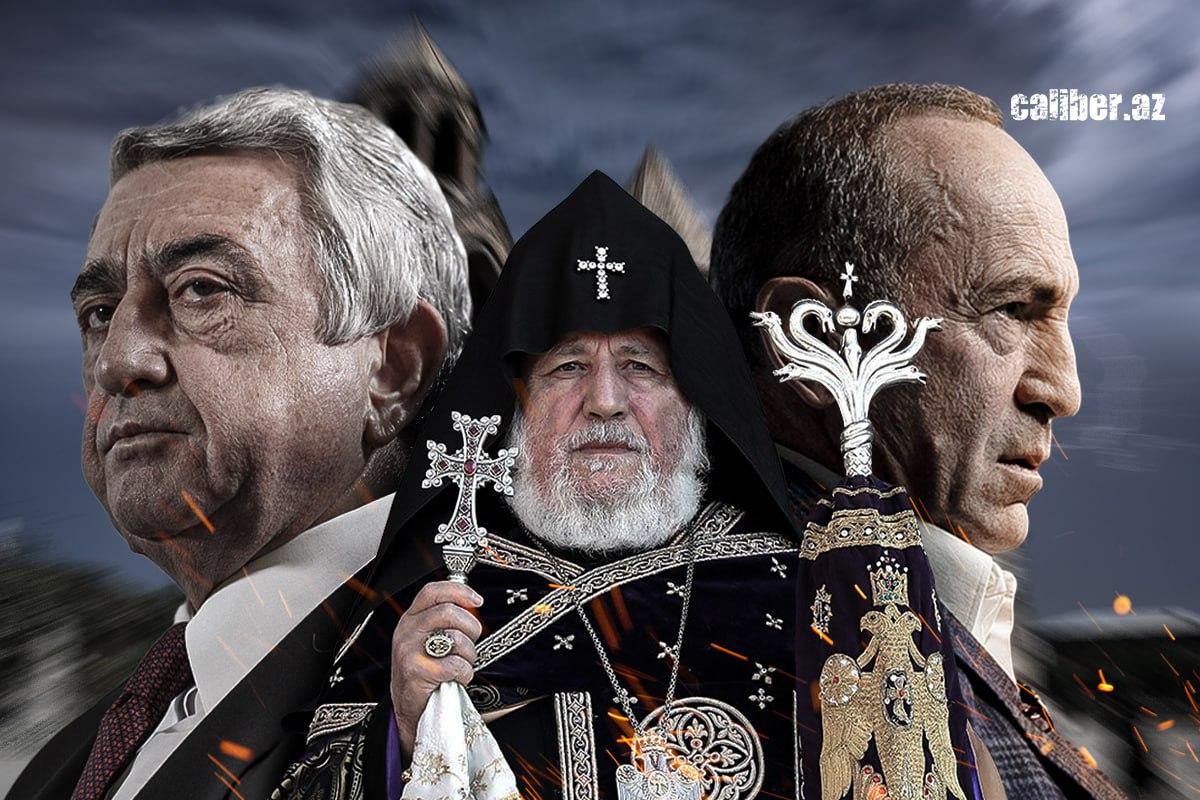
The rise to power in Armenia of the so-called Karabakh clan, represented by Kocharyan, Sargsyan, Ohanyan, and others, only reinforced and institutionalised the occupation model. For many years, the focus was on maintaining the status quo—that is, continuing the occupation of Azerbaijani territories without real steps toward compromise. The peace process existed more formally than substantively. Yerevan’s refusal to make decisions, its disregard for diplomatic opportunities, and its belief that time worked in Armenia’s favour created an illusion of stability in the consciousness of Armenian society.
However, as is well known, “frozen” conflicts do not disappear—they merely accumulate tension, which, in the case of the Armenian–Azerbaijani confrontation, inevitably had to escalate into a new war. The 44-day war in the autumn of 2020 was the logical outcome of Yerevan’s long-standing policies.
Attempts by Armenia’s former leaders—Ter-Petrosyan, Kocharyan, and Sargsyan—to distance themselves from these realities appear not only unconvincing but openly cynical. After all, it was their decisions, strategic miscalculations, and refusal to pursue a peaceful settlement that led the conflict into a deadlock, from which the only way out was a radical shift in the balance of power.
As a result, the Second Karabakh War, followed by the one-day local anti-terrorist operation conducted by the Azerbaijani army in September 2023, decisively destroyed the previous model. The status quo, on which the Armenian political elite had relied for decades, proved to be unviable.
The new reality, shaped on the battlefield and in subsequent diplomatic negotiations, is fundamentally different from the previous one. Its cornerstones are the recognition of the territorial integrity of states, the rejection of expansionist approaches, and a gradual shift toward the pragmatics of coexistence. It is precisely these realities that the current Armenian leadership is attempting to consolidate today, and the negotiation process between Yerevan and Baku demonstrates cautious but steady progress.
In particular, the supply of Azerbaijani fuel to Armenia, as well as the transit of grain and other goods to its neighbour through Azerbaijani territory, are not merely economic episodes—they are elements of a new framework of relations in which pragmatism begins to replace the ideology of conflict. Nonetheless, even against this positive backdrop, revanchist forces—represented by the Karabakh clan and the top leadership of the Armenian Apostolic Church—remain afloat in Armenia and even aim for a parliamentary majority in the National Assembly.
In the context of official Yerevan’s policy, the expansion of foreign diplomatic contacts is particularly noteworthy. As Mirzoyan noted, a process is underway to establish diplomatic relations with Pakistan—a country that for many years remained outside Yerevan’s diplomatic field precisely because of the Karabakh conflict. Equally important is the progress in Armenian–Turkish dialogue, which, according to the Armenian Foreign Minister, has reached a level that allows for the possibility of a full border opening and the establishment of diplomatic relations.
All of this constitutes components of the new reality, emerging after the breakdown of the previous status quo and grounded in international law. It is in this context that all statements by Pashinyan and Mirzoyan should be understood. This is not political rhetoric aimed at mobilising the electorate, but a very concrete warning: a return to the former logic, based on territorial claims, revanchism, and a refusal to compromise, would inevitably lead to a new war.
Moreover, any armed escalation would have far graver consequences for Armenia than previous conflicts, since the changed balance of power and the new regional configuration make such a scenario extremely risky for Armenian statehood. Thus, the choice highlighted by the Armenian authorities is perfectly clear: on one hand, the difficult but only rational path of peace, normalisation of relations, and integration into regional processes; on the other, a return to the policies of the past, which have already proven to be unviable and have led to irreparable losses.
In this context, the statements by Prime Minister Pashinyan and Foreign Minister Mirzoyan should be seen as an expression of political responsibility. They are a warning based on the lessons of history—ignoring it could prove extremely costly for Armenia.







 editor@caliber.az
 +994 55 444-88-98
 Азербайджан, Баку, ул. Низами, 203, Af Business House, 5-й этаж